
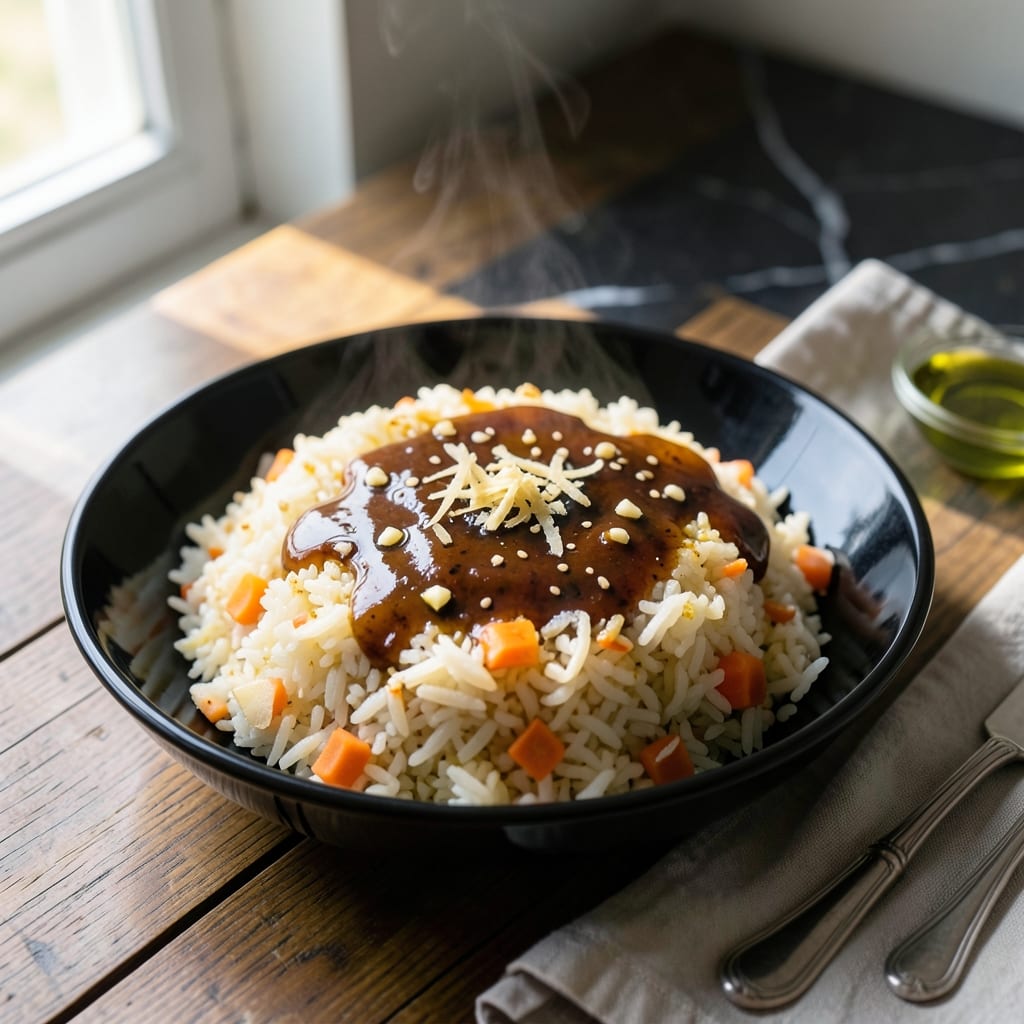
This Cantonese-style dish transforms leftover rice into a flavorful masterpiece with minimal effort. The wok-tossed method ensures every grain absorbs the savory sauce evenly, creating that signature restaurant texture at home.
What sets this creation apart is the perfect balance of soy-based seasoning and fresh ingredients. The high-heat cooking process delivers that coveted wok hei aroma, while keeping the rice separate and light, never mushy.
You’ll achieve that authentic takeout quality with just a few key techniques. The sauce coats each grain without making it soggy, and the subtle char from the wok adds depth to every bite.
Serve this as a quick weeknight meal or elevate it with your choice of protein. The versatility makes it a go-to for any occasion.
Ingredients for Chofan Rice
Transform leftover rice with these pantry staples and fresh aromatics for authentic Cantonese flavor.
| Ingredient | Amount | Notes |
|---|---|---|
| Day-Old Cooked White Rice 🍚 | 4 cups | Cold, preferably overnight for firmness |
| Soy Sauce 🫙 | 3 tbsp | Low-sodium preferred for balance |
| Dark Soy Sauce 🫙 | 1 tbsp | For depth of color and flavor |
| Oyster Sauce 🫙 | 2 tbsp | Vegetarian oyster sauce if needed |
| Sesame Oil 🫒 | 1 tsp | Toasted for aromatic finish |
| Peanut Oil 🫒 | 3 tbsp | High smoke point for wok frying |
| Large Eggs 🥚 | 2 whole | Lightly beaten for scrambling |
| Green Onions 🧅 | ½ cup | Thinly sliced, separated into whites and greens |
| Frozen Peas 🌱 | ½ cup | Thawed under running water |
| Carrot 🥕 | 1 whole | Finely diced for even cooking |
| Garlic Cloves 🧄 | 3 cloves | Minced for maximum flavor |
| Fresh Ginger Root 🌿 | 1 tbsp | Peeled and finely grated |
| White Pepper 🧂 | ½ tsp | Ground, for authentic Cantonese flavor |
| Kosher Salt 🧂 | ½ tsp | Adjust to taste after cooking |
| Char Siu or BBQ Pork 🥩 | ½ cup | Diced, optional protein addition |
The rice is non-negotiable—day-old, cold cooked rice (preferably overnight) prevents mushiness. Jasmine rice is traditional, but any long-grain works. For the soy sauces, Pearl River Bridge or Lee Kum Kee are reliable brands found at Asian markets. The oyster sauce adds depth; vegetarian versions use mushroom-based alternatives. Peanut oil’s high smoke point is key for achieving wok hei.
No oyster sauce? Hoisin sauce plus a dash of fish sauce (or soy sauce for vegetarian) works in a pinch. Frozen mixed vegetables can replace peas and carrots—just thaw and drain well. For protein, shrimp, chicken, or tofu are classic additions. The sesame oil is a finisher—toasted variety only for that signature aroma. Fresh ginger and garlic are essential; powders won’t deliver the same brightness.
Cooked rice keeps in the fridge for 4-5 days, but it’s best used within 2 days for this dish. Store sauces in a cool, dark place—they’ll last 6-12 months unopened. Prep all ingredients before heating the wok; the cooking process moves fast once it starts.
Why You’ll Love This Recipe
- One Pan Magic: I just toss day-old rice with soy sauces, oyster sauce, and sesame oil—no fancy steps, no extra dishes.
- Umami Bomb: The mix of dark soy and oyster sauce gives it that deep, savory richness I crave every time.
- Weeknight Hero: Honestly, it’s my go-to when I need dinner fast but still want it to taste like I tried.
- Budget Stretcher: Between us, it’s the best way to use up leftover rice and still feel like I’ve made something special.
Step-by-Step Instructions for Cantonese-Style Wok Tossed Rice
Master the wok toss technique and achieve that signature smoky wok hei flavor at home.
Step 1: Prepare the Aromatics and Vegetables
Finely dice the carrot into uniform ¼-inch pieces to ensure even cooking. Mince the 3 cloves garlic cloves and peel and finely grate the 1 tbsp fresh ginger root—this base forms the flavor foundation of your dish.
Thinly slice the 0.5 cup green onions, keeping the white and green parts separate. The whites will cook with the aromatics, while the greens are added at the end for freshness. Thaw the 0.5 cup frozen peas under running water and pat dry to prevent excess moisture in the wok.
Step 2: Scramble the Eggs in the Wok
Heat 1 tbsp peanut oil in a wok or large skillet over high heat until it begins to shimmer. Lightly beat the 2 whole large eggs and pour them into the hot oil. Let them set for 10 seconds, then scramble quickly with a spatula until just set but still slightly runny.
Remove the eggs from the wok and set aside. This step ensures soft, fluffy egg ribbons throughout the dish rather than overcooked, rubbery bits. Wipe the wok clean with a paper towel to remove any residue before proceeding.
Step 3: Stir-Fry the Aromatics and Vegetables
Return the wok to high heat and add the remaining 2 tbsp peanut oil. Add the diced carrot and stir-fry for 2 minutes until the edges begin to soften. Add the minced garlic cloves and grated fresh ginger root, stirring constantly for 30 seconds until fragrant.
Add the white parts of the green onions, the thawed frozen peas, and the diced 0.5 cup char siu or BBQ pork. Stir-fry for another 2 minutes until the pork is heated through and the vegetables are tender-crisp.
Step 4: Combine Rice and Sauces for Finishing
Break up any clumps in the 4 cups day-old cooked white rice with your hands to ensure even cooking. Add the rice to the wok, pressing it into the surface to maximize contact with the heat. Drizzle the 3 tbsp soy sauce, 1 tbsp dark soy sauce, and 2 tbsp oyster sauce evenly over the rice.
Stir-fry for 3-4 minutes until the rice is heated through and begins to develop a slight crispness. Add the scrambled eggs back to the wok, along with the 0.5 tsp kosher salt and 0.5 tsp white pepper. Toss everything together for 1-2 minutes until fully combined.
Step 5: Finish with Sesame Oil and Green Onions
Remove the wok from heat and drizzle the 1 tsp sesame oil over the rice. Toss to distribute evenly, ensuring every grain is coated with the aromatic oil. Add the green parts of the green onions and give it a final toss to incorporate.
Taste and adjust seasoning if needed, though the sauces should provide a balanced savory depth. The dish should have a slight sheen from the oils and sauces, with the rice grains distinct yet coated in flavor. Serve immediately while hot for the best texture and aroma.
Pro Tips For Making Chofan Rice
- Use Cold Rice: Day-old rice from the fridge works best—it’s drier and fries up fluffier instead of mushy. I learned this the hard way after ruining fresh rice more times than I’d like to admit. —
- Crank Up the Heat: High heat is non-negotiable for that classic wok hei flavor. About 2 tablespoons of oil in a screaming-hot pan before adding the rice. —
- Sauce on the Side: Mix your soy sauces and oyster sauce in a small bowl first so you can toss everything fast once the rice hits the pan. After burning three batches, I finally figured out the timing. —
- Finish with Sesame Oil: Drizzle the sesame oil at the very end—adding it early makes the dish bitter. My grandmother swore by this, and she was right.
Regional Styles of This Recipe
Cantonese Classic
This is the traditional approach I learned from my grandmother, where day-old jasmine rice is stir-fried with char siu pork, scrambled eggs, and a simple sauce of soy sauce and oyster sauce. The key is high heat and constant tossing to achieve that signature wok hei. 💛
Yangzhou Style
Originating from Jiangsu province, this version includes shrimp, diced ham, and shredded BBQ pork for a luxurious seafood-meat combination. The rice is often slightly moister, with a more pronounced egg presence. Shaoxing wine is added during cooking for depth.
Sichuan Spicy
For heat lovers, this variation incorporates dried chili peppers, Sichuan peppercorns, and doubanjiang (fermented chili bean paste). The rice takes on a numbing spice that’s balanced by the richness of the eggs and pork. I add 1 tbsp of the paste for authentic heat. 🌶️
Vegetarian Temple
Buddhist temples in China developed this meat-free version using mushroom-based oyster sauce, tofu, and mixed vegetables. The technique remains the same, but the flavors are lighter and more delicate. I like using shiitake mushrooms for their meaty texture.
Fujian Seafood
Coastal Fujian province adds shrimp, scallops, and squid to their version, creating a briny, oceanic flavor profile. The rice is often cooked with seafood stock instead of water for extra depth. A sprinkle of white pepper finishes the dish.
Modern Fusion
In Hong Kong, some chefs add XO sauce or truffle oil for a contemporary twist. I’ve seen versions with kimchi or gochujang that blend Korean flavors with the Cantonese base. The high-heat wok technique remains essential for that perfect texture.
Nutrition Facts
Frequently Asked Questions
Why does the rice need to be day-old?
Fresh rice contains too much moisture, which turns mushy when stir-fried. Day-old rice dries out slightly, keeping grains separate and allowing them to absorb the sauce properly.
Can I use a regular skillet instead of a wok?
Yes, but a wok’s high walls and wide surface are ideal for tossing. Use a large skillet over high heat and stir frequently to mimic the effect. Results may vary slightly.
What if my dish turns out soggy?
This usually means the rice was too fresh or the heat too low. Spread the rice on a tray to dry for 10 minutes before cooking, and ensure your wok or pan is very hot.

- Jollof Rice Sauce Recipe: West African Tomato and Spice Infusion - September 25, 2026
- Japanese Rice Soup Recipe: Umami-Rich Comfort in a Bowl - September 25, 2026
- Homemade Cream Of Rice Recipe: Silk-Smooth Breakfast in Minutes - September 25, 2026