
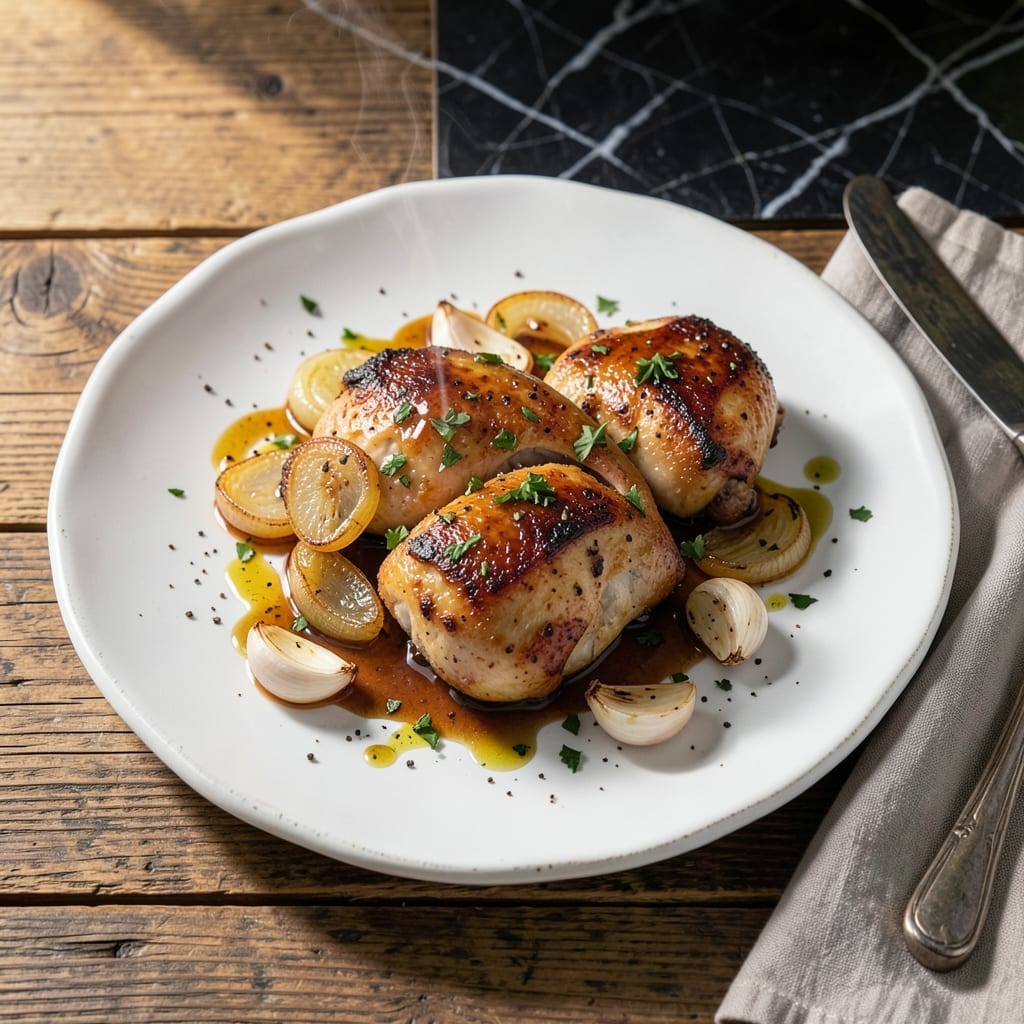
Braising chicken in cider vinegar transforms tough cuts into tender, fall-off-the-bone perfection. This method, honed in my Charleston kitchen, balances tangy acidity with rich, savory depth.
The vinegar breaks down proteins while adding layers of flavor that simple roasting can’t achieve. A slow cook at 325°F ensures the meat absorbs every note of the braising liquid.
What emerges is juicy, fork-tender chicken with a glaze that clings to each piece. The vinegar’s brightness cuts through the richness, creating a dish that’s complex yet comforting.
Serve with crusty bread to soak up every drop of the reduced sauce. This technique delivers consistent results every time.
Ingredients for Cider Vinegar Chicken
Bone-in thighs and pantry staples create this braised dish with tangy depth and richness.
| Ingredient | Amount | Notes |
|---|---|---|
| Chicken Thighs 🍗 | 2 ½ lb | Bone-in, skin-on preferred |
| Apple Cider Vinegar 🍏 | 1 ½ cups | Unfiltered for depth |
| Chicken Stock 🍲 | 1 cup | Low-sodium preferred |
| Yellow Onion 🧅 | 1 whole | Medium, thinly sliced |
| Garlic Cloves 🧄 | 4 cloves | Minced for even distribution |
| Dijon Mustard 🟡 | 2 tbsp | Smooth, whole-grain works too |
| Brown Sugar 🟤 | 2 tbsp | Light or dark variety |
| Fresh Thyme Sprigs 🌿 | 3 whole | Stems removed, leaves chopped |
| Bay Leaf 🍃 | 1 whole | Dried, for braising liquid |
| Olive Oil 🫒 | 2 tbsp | Extra-virgin for richness |
| Kosher Salt 🧂 | 1 ½ tsp | Diamond Crystal preferred |
| Black Pepper 🌶️ | 1 tsp | Freshly ground for best flavor |
| All-Purpose Flour 🌾 | 2 tbsp | For thickening sauce |
| Unsalted Butter 🧈 | 2 tbsp | For finishing sauce |
The chicken matters here. Bone-in, skin-on thighs deliver the juiciest results—breasts dry out with long braising. Source from Whole Foods or your local butcher for consistent quality. Look for vibrant color and no off odors. For the vinegar, Bragg is a reliable brand (unfiltered, with the “mother” for complexity). Charleston markets often carry artisanal cider vinegars worth trying too.
No apple cider vinegar? White wine vinegar plus 1 tsp sugar gets close. Balsamic vinegar at half the amount adds sweetness but darkens the sauce. Short on thyme? Rosemary or sage at equal amounts work well. The mustard can be yellow if that’s what’s open. For gluten-free, swap flour for cornstarch at half the quantity (mix with cold water first).
This tastes better the next day. Cool, then refrigerate submerged in sauce for up to 4 days. Freeze portions for 3 months—thaw overnight before reheating gently on the stove. The sauce thickens further when chilled (worth the extra minute to stir in a splash of water when reheating).
Why You’ll Love This Recipe
- One Pan Wonder: I toss everything in a skillet and let the apple cider vinegar and chicken stock do the work—minimal cleanup, maximum flavor.
- Tangy Comfort: The vinegar cuts through the richness of the thighs, while the garlic and onion add this warm, savory depth that’s just right.
- Meal Prep Hero: I make a big batch on Sunday and it reheats beautifully for lunches all week. Honestly, it tastes even better the next day.
- Budget Winner: Chicken thighs are cheap, and the vinegar stretches the flavor so far—feeds my family of four without breaking the bank.
Step-by-Step Instructions for Cider Vinegar Chicken
Master the technique for fall-off-the-bone chicken with vibrant tangy depth in every bite.
Step 1: Sear the Chicken Thighs to Golden Perfection
Pat the 2.5 lb Chicken Thighs dry with paper towels, then season both sides with the 1.5 tsp Kosher Salt and 1 tsp Black Pepper. This ensures a flavorful crust and prevents steaming instead of searing.
Heat the 2 tbsp Olive Oil in a large Dutch oven or heavy pot over medium-high heat until shimmering. Add the chicken thighs skin-side down and sear undisturbed for 5-6 minutes until the skin is deep golden brown and crisp. Flip and sear the other side for 3-4 minutes. Remove chicken and set aside.
Step 2: Build the Aromatic Foundation
In the same pot, reduce heat to medium. Add the thinly sliced 1 whole Yellow Onion and cook for 4-5 minutes until softened and translucent. Stir in the minced 4 cloves Garlic Cloves, chopped leaves from the 3 whole Fresh Thyme Sprigs, and the 1 whole Bay Leaf, cooking for 1 minute until fragrant.
Add the 2 tbsp Dijon Mustard and 2 tbsp Brown Sugar, stirring to coat the onions. The mustard adds tang while the sugar balances the acidity, creating a complex base for the braising liquid.
Step 3: Deglaze and Braise the Chicken
Pour in the 1.5 cups Apple Cider Vinegar and 1 cup Chicken Stock, scraping the bottom of the pot to release all the browned bits. These fond bits dissolve into the liquid, infusing it with deep, caramelized flavor.
Return the chicken to the pot, skin-side up, along with any accumulated juices. The liquid should mostly cover the chicken. Bring to a simmer, then reduce heat to low, cover, and let it braise for 45-50 minutes until the chicken is fork-tender.
Step 4: Thicken the Sauce and Finish
Remove the 1 whole Bay Leaf and transfer the chicken to a serving platter. In a small bowl, whisk the 2 tbsp All-Purpose Flour with 2 tbsp of the braising liquid to create a slurry. Stir this into the pot and simmer over medium heat for 3-4 minutes until the sauce thickens to a gravy-like consistency.
Remove from heat and stir in the 2 tbsp Unsalted Butter until fully melted. This enriches the sauce, giving it a velvety finish. Pour the sauce over the chicken and serve immediately while hot, ensuring every piece is generously coated.
Pro Tips For Making Cider Vinegar Chicken
- Brown the Thighs: Get the chicken thighs golden brown before adding liquids—I learned this the hard way after serving pale, flavorless meat. That crust is where the depth comes from.
- Use Full-Fat Vinegar: Skip the cheap stuff and grab raw, unfiltered apple cider vinegar. The cloudy bits (the “mother”) add a tangier, more complex flavor to the sauce.
- Don’t Drown the Onions: Cook the yellow onions until soft and translucent before adding the garlic, or they’ll stay sharp and undercooked. About 5 minutes on medium heat does it.
- Reduce the Stock: After simmering, let the chicken stock and vinegar reduce by half before serving. This concentrates the flavors and coats the chicken in a glossy, tangy glaze.
Serving Suggestions for This Dish
Plating Techniques
I always arrange the chicken thighs skin-side up on a warm platter, overlapping slightly for a rustic look. The glaze from the sauce creates beautiful sheen that catches the light. Garnish with fresh thyme leaves for color contrast. 💫
Bread Pairings
A crusty baguette or sourdough loaf is essential to soak up that incredible sauce. Warm the bread in a 350°F oven for 5 minutes before serving. I source mine from local Charleston bakeries.
Starch Sides
Creamy mashed potatoes or buttery egg noodles make perfect beds for the chicken and sauce. For mashed potatoes, I use Yukon Golds with ½ cup whole milk and 4 tbsp butter per 2 lbs of potatoes.
Vegetable Accompaniments
A simple green salad with a light vinaigrette balances the richness. I toss 5 oz mixed greens with 2 tbsp olive oil, 1 tbsp cider vinegar, and 1 tsp honey. The vinegar echoes the main dish’s tang.
Alternative Serving
For casual meals, serve in shallow bowls over polenta or grits. The creamy base soaks up the sauce beautifully. I use stone-ground grits from a Georgia mill, cooked with chicken stock instead of water.
Final Touch
A sprinkle of flaky sea salt like Maldon just before serving elevates all the flavors. I keep a small dish of it on my table for finishing touches. Honestly, it makes all the difference. ✨
Nutrition Facts
Frequently Asked Questions
Can I use boneless chicken thighs?
Yes, but bone-in adds more flavor. Boneless will cook faster—reduce braising time to 30-35 minutes. They may be less juicy, so avoid overcooking.
Why does the vinegar taste so strong at first?
The acidity mellows as it cooks. The 45-50 minutes braising time allows the vinegar to blend with other ingredients, creating a balanced, tangy-sweet sauce.
Can I make this in a slow cooker?
Sear the chicken first, then transfer everything to the slow cooker. Cook on low for 4-5 hours or high for 2-3 hours.
How do I fix sauce that’s too thin?
Simmer uncovered for 5-10 minutes to reduce. For quicker results, mix 1 tbsp cornstarch with 1 tbsp water, then stir into the sauce.

- Jollof Rice Sauce Recipe: West African Tomato and Spice Infusion - September 25, 2026
- Japanese Rice Soup Recipe: Umami-Rich Comfort in a Bowl - September 25, 2026
- Homemade Cream Of Rice Recipe: Silk-Smooth Breakfast in Minutes - September 25, 2026