
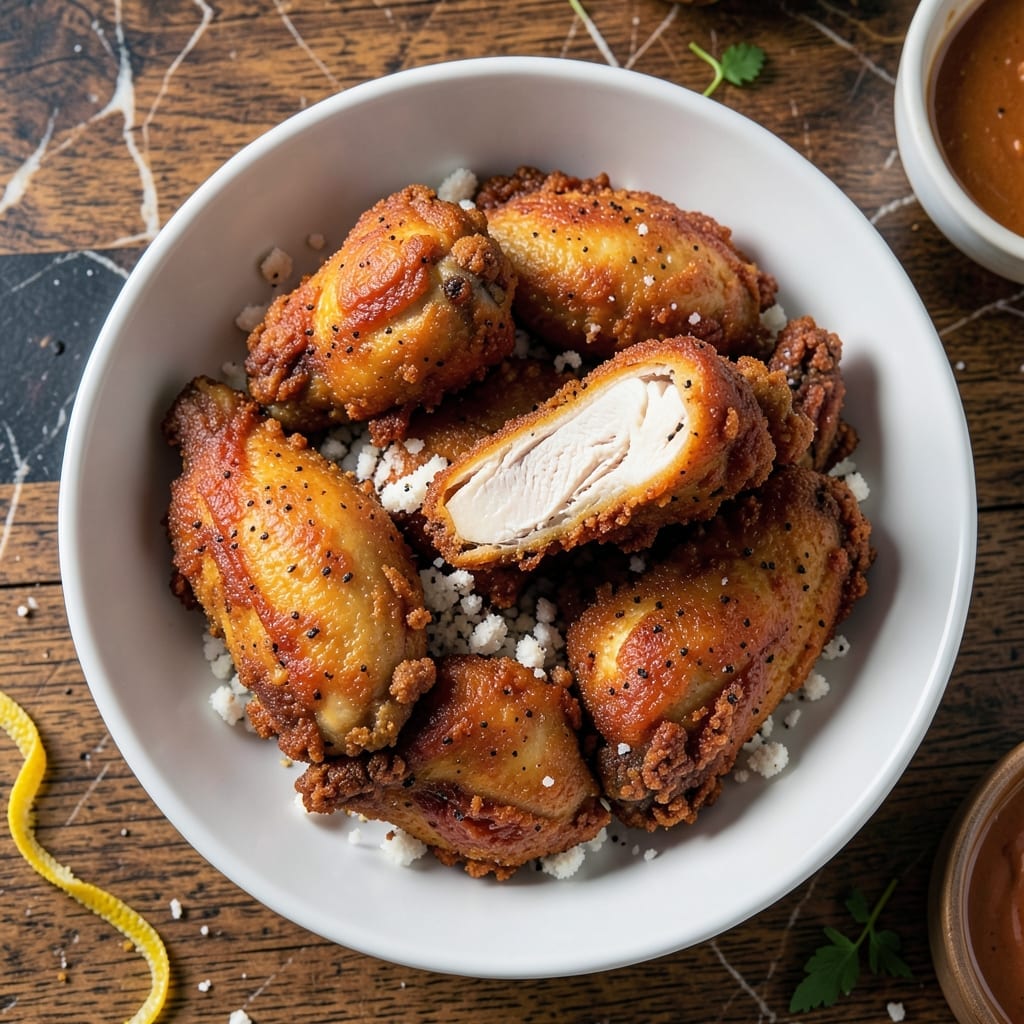
This fried chicken delivers the ultimate shatter-crust experience with a double-dredging technique that locks in maximum crunch.
I developed this method after testing dozens of variations, and the key is pressing the seasoned flour deeply into the buttermilk-marinated chicken before the second coating. The result is a crust that breaks with the lightest pressure, revealing juicy meat underneath.
Cooking at the right oil temperature is non-negotiable for achieving that golden-brown finish without excess grease. A candy thermometer ensures precision, while draining on a rack maintains crispiness.
Serve immediately for peak texture. This technique guarantees restaurant-quality results at home, every time.
Ingredients for Crunchiest Fried Chicken
These are the essentials for achieving that legendary shatter-crust at home.
| Ingredient | Amount | Notes |
|---|---|---|
| Chicken Thighs 🍗 | 3 lb | Boneless, skin-on, cut into pieces |
| Buttermilk 🥛 | 2 cups | Full-fat for best marinade |
| All-Purpose Flour 🌾 | 3 cups | Plus extra for dredging |
| Cornstarch 🌽 | ½ cup | For extra crispiness |
| Kosher Salt 🧂 | 2 tbsp | Diamond Crystal preferred |
| Black Pepper 🌶️ | 1 tbsp | Freshly ground, coarse |
| Paprika 🌶️ | 1 tbsp | Sweet or smoked variety |
| Garlic Powder 🧄 | 1 tbsp | Not garlic salt |
| Onion Powder 🧅 | 1 tbsp | Dehydrated, fine grind |
| Cayenne Pepper 🔥 | ½ tsp | Adjust for heat preference |
| Peanut Oil 🫒 | 8 cups | For deep frying, high smoke point |
| Large Eggs 🥚 | 2 whole | For binding dredge |
| Baking Powder 🧂 | 1 tsp | For lift in crust |
| Hot Sauce 🌶️ | 1 tbsp | Optional, for marinade kick |
The chicken is the foundation—bone-in, skin-on thighs deliver the juiciest results with maximum crunch surface area. Source from Whole Foods or a trusted butcher for consistent sizing. For the buttermilk, full-fat is non-negotiable; the acidity tenderizes while the fat ensures a rich marinade. The flour and cornstarch ratio creates the double-dredge structure critical for that restaurant-quality texture.
No buttermilk? Whole milk plus 2 tbsp vinegar per cup works in a pinch. Swap cornstarch for arrowroot powder at equal amounts if needed. Peanut oil can be replaced with vegetable or canola oil, but avoid olive oil—its low smoke point burns. For heat-sensitive diners, reduce cayenne to 1/4 tsp or omit entirely. The egg in the dredge can be swapped for 2 tbsp aquafaba for binding.
Marinate chicken in buttermilk for 12-24 hours for optimal tenderness. Store dredged chicken uncovered in the fridge for 30 minutes to set the crust before frying. Leftovers keep 3-4 days in the fridge, but reheat in a 400°F oven to revive crispiness—microwaving ruins the texture.
Why You’ll Love This Recipe
- One Bowl Wonder: I just toss the thighs in buttermilk, then the flour-cornstarch mix—no fancy stations, no mess.
- That Crunch Though: The cornstarch in the coating makes it shatter when you bite in, while the buttermilk keeps the meat crazy juicy.
- Feeds the Crew: I make a double batch for Sunday dinner, then we’re set for sandwiches and salads all week.
- Budget Hero: Chicken thighs stay cheap, and a little flour and cornstarch go a long way to stretch the meal.
Step-by-Step Instructions for Crunchiest Fried Chicken
Master the double-dredge technique for a shatteringly crisp crust that stays crunchy long after frying.
Step 1: Marinate Chicken in Buttermilk Mixture
Combine the 2 cups buttermilk with the 1 tbsp hot sauce in a large bowl. Add the 3 lb chicken thighs and ensure each piece is fully submerged. The buttermilk’s acidity tenderizes the meat while the hot sauce adds subtle depth.
Cover and refrigerate for at least 4 hours, though overnight yields the most flavorful result. This extended marinade time allows the seasonings to penetrate deeply, ensuring every bite is juicy and well-seasoned.
Step 2: Prepare the Double-Dredge Breading Station
In a large bowl, whisk together the 3 cups all-purpose flour, 0.5 cup cornstarch, 2 tbsp kosher salt, 1 tbsp black pepper, 1 tbsp paprika, 1 tbsp garlic powder, 1 tbsp onion powder, and 0.5 tsp cayenne pepper. The cornstarch is critical for that extra-crispy texture.
In a separate shallow dish, beat the 2 whole large eggs with 2 tablespoons of the buttermilk marinade. This egg wash creates the glue that helps the second dredge adhere properly for maximum crunch.
Step 3: Double-Dredge for Maximum Crispiness
Remove the chicken from the marinade, letting excess drip off. First, dredge each piece thoroughly in the flour mixture, pressing firmly to create an even coating. Shake off the excess, then dip into the egg wash, ensuring complete coverage.
Return the chicken to the flour mixture for a second dredge. This double coating creates layers that puff and crisp during frying. Let the breaded pieces rest on a wire rack for 10-15 minutes—this helps the coating set and prevents it from sliding off during frying.
Step 4: Deep-Fry to Golden Perfection
In a heavy pot, heat the 8 cups peanut oil to 350°F. Use a deep-fry thermometer for accuracy. The oil must be at the correct temperature before adding the chicken to prevent greasiness.
Carefully lower the breaded chicken into the hot oil in batches, avoiding overcrowding. Fry for 12-15 minutes, turning occasionally, until the crust is a deep golden brown and the internal temperature reaches 165°F. The double-dredge will create an audibly crisp shell when done properly.
Drain on a wire rack set over a baking sheet to maintain crispiness. The rack allows air circulation, preventing the crust from becoming soggy from trapped steam.
Pro Tips For Making Crunchiest Fried Chicken
- Double Fry for Crunch: Fry the chicken once at 325°F until cooked through, then rest 5 minutes and fry again at 375°F for 2-3 minutes. I learned this the hard way—single frying leaves the crust soggy under the surface.
- Dry the Thighs First: Pat the chicken thighs bone-dry with paper towels before the buttermilk soak. Sounds weird, but it works: the buttermilk adheres better and the flour crust stays put during frying.
- Skip the Overcrowding: Resist the urge to fill the pan—fry in batches with at least an inch between pieces. After burning three batches, I finally figured out that steam from crowded chicken turns the crust gummy.
- Cornstarch Boost: Replace 25% of the all-purpose flour with cornstarch in your dredge. My grandmother swore by this, and she was right: it creates micro-crispiness that flour alone can’t achieve.
Storing and Reheating Leftovers
Refrigerator Storage
Let your chicken cool completely before storing—this takes about 30 minutes at room temperature. Place pieces in a single layer on a paper towel-lined plate, then transfer to an airtight container with parchment between layers to prevent sticking. It keeps for 3-4 days in the fridge. ❄️
Freezer Storage
For longer storage, freeze fried chicken in a single layer on a baking sheet first. Once frozen, transfer to a gallon-sized freezer bag with parchment between pieces. Squeeze out all air before sealing. It stays crispy for up to 1 month without quality loss.
Oven Reheating
Preheat oven to 400°F and place chicken on a wire rack over a baking sheet. Heat for 10-12 minutes until the internal temperature reaches 165°F. This method revives the crust better than any other. I always use this for leftovers. 🔥
Air Fryer Reheating
Arrange pieces in a single layer in the air fryer basket, leaving space between them. Reheat at 375°F for 5-6 minutes, shaking the basket halfway. The circulating air restores crispiness almost like fresh-fried.
Avoid the Microwave
Microwaving turns that beautiful crust soggy in seconds. If you must use one, place a paper towel under the chicken and heat on 50% power for 1-2 minutes. Even then, the texture won’t match other methods.
Nutrition Facts
Frequently Asked Questions
Why use cornstarch in the breading?
Cornstarch creates a lighter, crispier crust than flour alone. It absorbs less oil, resulting in a shatteringly thin texture that stays crunchy longer.
Can I use chicken breasts instead of thighs?
Yes, but thighs stay juicier. If using breasts, reduce frying time to 10-12 minutes to prevent dryness. Brine them first for extra moisture.
How do I keep the crust crispy after frying?
Drain on a wire rack, not paper towels. This allows air circulation, preventing steam from softening the crust. Serve immediately for peak crunch.
What if my oil temperature drops?
Pause and let it return to 350°F before adding more chicken. Overcrowding causes temperature drops, leading to greasy, soggy crusts.

- Jollof Rice Sauce Recipe: West African Tomato and Spice Infusion - September 25, 2026
- Japanese Rice Soup Recipe: Umami-Rich Comfort in a Bowl - September 25, 2026
- Homemade Cream Of Rice Recipe: Silk-Smooth Breakfast in Minutes - September 25, 2026