
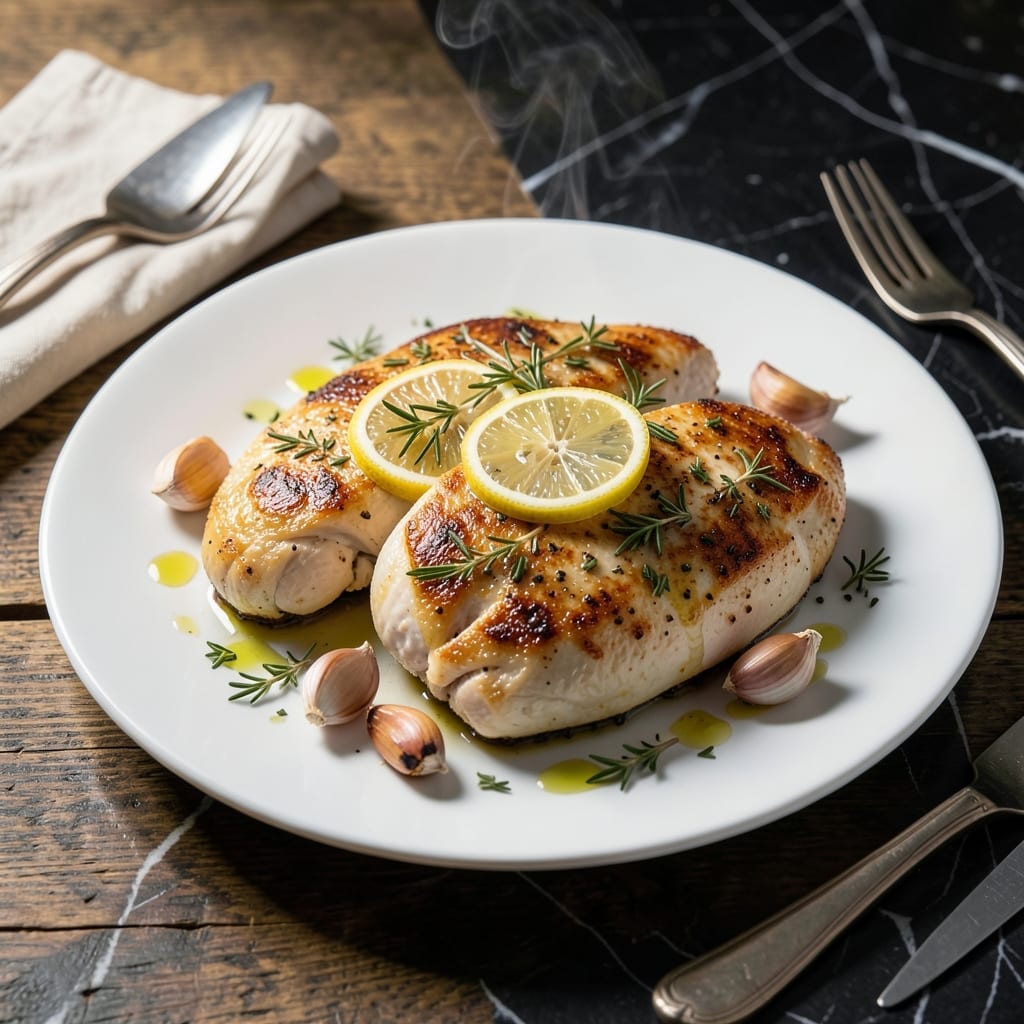
This herb-infused chicken transforms an ordinary weeknight into something special. A proven technique ensures juicy, flavorful results every time without complicated steps.
The secret lies in a simple marinade that penetrates deeply, paired with a high-heat sear for a golden crust. Fresh herbs elevate the dish while keeping prep under 30 minutes.
What emerges is tender, aromatic chicken with a perfect balance of savory and bright notes. The herbs create a fragrant crust that locks in moisture.
Serve with roasted vegetables or rice for a complete meal that feels gourmet but fits seamlessly into busy schedules.
Ingredients for Delish Chicken
Fresh herbs, bright citrus, and tender chicken create this elevated weeknight meal.
| Ingredient | Amount | Notes |
|---|---|---|
| Boneless Skinless Chicken Breasts 🍗 | 1 ½ lb | Pounded to even thickness |
| Extra-Virgin Olive Oil 🫒 | 3 tbsp | Divided for marinade and searing |
| Fresh Rosemary 🌿 | 2 tbsp | Finely chopped, stems removed |
| Fresh Thyme 🍃 | 2 tbsp | Leaves stripped from stems |
| Garlic Cloves 🧄 | 4 cloves | Minced for maximum flavor |
| Lemon Zest 🍋 | 1 tbsp | From 1 large lemon |
| Lemon Juice 🍋 | 2 tbsp | Freshly squeezed preferred |
| Dijon Mustard 🟡 | 1 tbsp | For marinade depth |
| Kosher Salt 🧂 | 1 tsp | Diamond Crystal preferred |
| Freshly Ground Black Pepper 🌶️ | ½ tsp | Coarse grind for texture |
| Honey 🍯 | 1 tbsp | For balance in marinade |
| All-Purpose Flour 🌾 | ¼ cup | For light dusting before searing |
| Unsalted Butter 🧈 | 2 tbsp | For basting during sear |
The chicken quality is paramount. Boneless, skinless breasts from Whole Foods or Costco offer consistent thickness for even cooking. Pound them to an even 1-inch thickness (a rolling pin works) to prevent dry spots. Fresh herbs—rosemary and thyme—should be vibrant green with no wilting. Look for bunches with small leaves, which pack more flavor than the woody stem varieties.
No fresh herbs? Dried at one-third the amount works, but fresh is transformative. Short on lemon? Lime zest and juice substitute nicely. Honey can be swapped for maple syrup or agave (use 1.5 tbsp for similar sweetness). For a dairy-free version, swap butter for olive oil during basting—equally delicious with a cleaner finish.
Marinate the chicken for up to 12 hours for deepest flavor penetration. Cooked chicken keeps in the fridge for 4 days or freezes well for 3 months. The herbs can be prepped a day ahead—store wrapped in damp paper towels in a sealed bag.
Why You’ll Love This Recipe
- One Pan Wonder: I toss everything on a sheet pan—chicken, garlic, rosemary, thyme—and let the oven do the work.
- Herb Infused Bliss: The rosemary and thyme make the chicken taste like it’s from a fancy restaurant, but I made it in my pajamas.
- Meal Prep Hero: It’s my Sunday staple—cook a big batch and I’ve got lunches ready for the whole week.
- Budget Friendly: Boneless chicken breasts are affordable, and a little olive oil with fresh herbs goes a long way.
Step-by-Step Instructions for Herb-Infused Chicken
Master this technique for juicy, flavorful chicken that comes together quickly on busy evenings.
Step 1: Pound and Marinate the Chicken
Place the 1.5 lb boneless skinless chicken breasts between two sheets of plastic wrap. Pound to an even ½-inch thickness using a meat mallet. This ensures uniform cooking and prevents dry, overdone edges.
In a bowl, whisk together 3 tbsp extra-virgin olive oil, 2 tbsp fresh rosemary, 2 tbsp fresh thyme, 4 cloves minced garlic cloves, 1 tbsp lemon zest, 2 tbsp lemon juice, 1 tbsp Dijon mustard, 1 tsp kosher salt, 0.5 tsp freshly ground black pepper, and 1 tbsp honey. Coat the chicken thoroughly in this marinade and let it sit for 15-20 minutes while you prep the rest.
Step 2: Dredge the Chicken in Flour
Remove the chicken from the marinade, allowing excess to drip off. Lightly dredge each piece in the 0.25 cup all-purpose flour, shaking off any excess. The flour creates a delicate crust that locks in juices during searing.
This step is crucial for texture contrast. Don’t press too hard—just a light coating. Let the dredged chicken rest for 5 minutes to allow the flour to adhere properly before cooking.
Step 3: Sear the Chicken to Golden Perfection
Heat a large skillet over medium-high heat. Add 1 tbsp extra-virgin olive oil and 2 tbsp unsalted butter. Once the butter stops foaming, add the chicken in a single layer. Cook undisturbed for 4-5 minutes per side until the crust is deep golden brown and the internal temperature reaches 165°F.
Baste the chicken with the pan juices during the final minute for extra flavor and shine. The butter should be lightly browned but not burnt—adjust heat as needed to maintain control.
Step 4: Rest and Serve Immediately
Transfer the chicken to a plate and tent loosely with foil. Let it rest for 5-10 minutes to allow the juices to redistribute. This step ensures every bite is moist and flavorful rather than dry.
Serve the chicken hot with any pan juices spooned over the top. The golden crust should be crisp, while the interior remains tender and infused with the bright, herbal notes from the marinade.
Pro Tips For Making Delish Chicken
- Pound the Breasts: Uneven thickness means uneven cooking—I learned this the hard way after serving dry, rubbery ends. Aim for 1-inch thickness all over for consistent doneness.
- Heat the Oil First: Sounds obvious, but I used to add chicken to cold oil and wondered why it stuck. Get the pan screaming hot before adding the breasts—about 2 minutes on medium-high.
- Skip Dried Herbs: Fresh rosemary and thyme actually change the outcome here. Dried versions turn bitter when cooked at high heat, and the dish loses that bright, aromatic punch.
- Rest Under Foil: Give it a solid 5-10 minutes under foil before slicing—I skip this when I’m lazy, but the juices stay put and the chicken stays moist every time.
Common Mistakes When Making Perfect Results
Uneven Thickness
Not pounding the chicken to even thickness is the most common mistake. Thicker parts cook slower, leading to dry, overdone edges by the time the center reaches 165°F. Use a meat mallet to achieve a uniform ½-inch thickness for consistent results. 🔥
Skipping the Rest
Cutting into chicken immediately after cooking causes all those precious juices to spill out onto the cutting board. Always let it rest for 5-10 minutes under foil to allow the muscle fibers to relax and reabsorb moisture.
Overcrowded Pan
Adding all pieces at once lowers the pan temperature, causing the chicken to steam instead of sear. Cook in batches if needed, giving each piece 2 inches of space for proper browning. I learned this the hard way with soggy crusts.
Under-Seasoned Marinade
Tasting your marinade before using it is crucial. It should be vibrant and balanced—salt enhances all flavors. If using Diamond Crystal kosher salt, don’t reduce the 1 tsp measurement; it’s less salty by volume than table salt.
High Heat Without Control
While medium-high heat is ideal for searing, letting the pan get too hot burns the butter and creates bitter flavors. Adjust the heat as needed to maintain a steady sizzle without smoke. A heavy-bottomed skillet helps regulate temperature.
Ignoring Internal Temp
Guessing doneness by color alone is unreliable. Use an instant-read thermometer to confirm 165°F in the thickest part. Remember that carryover cooking continues as it rests, so pull it off at 160°F if you’re unsure. 💡
Nutrition Facts
Frequently Asked Questions
Can I use chicken thighs instead of breasts?
Chicken thighs stay juicier and are more forgiving with cooking times. Reduce the searing time to 3-4 minutes per side since thighs cook faster. The flavor profile works beautifully with the same herb marinade.
How do I know when the chicken is done?
Use an instant-read thermometer to check the thickest part. It should reach 165°F internally. If you don’t have a thermometer, pierce the meat – juices should run clear, not pink.
Can I make this dairy-free?
Yes! Simply replace the butter with 2 tbsp olive oil for basting. The flavor will be slightly cleaner but equally delicious. The herbs and citrus provide plenty of richness.
How long can I marinate the chicken?
For best results, marinate for 15-20 minutes as directed. You can extend this up to 12 hours for deeper flavor, but avoid exceeding that as the acids can start to “cook” the meat.

- Jollof Rice Sauce Recipe: West African Tomato and Spice Infusion - September 25, 2026
- Japanese Rice Soup Recipe: Umami-Rich Comfort in a Bowl - September 25, 2026
- Homemade Cream Of Rice Recipe: Silk-Smooth Breakfast in Minutes - September 25, 2026