
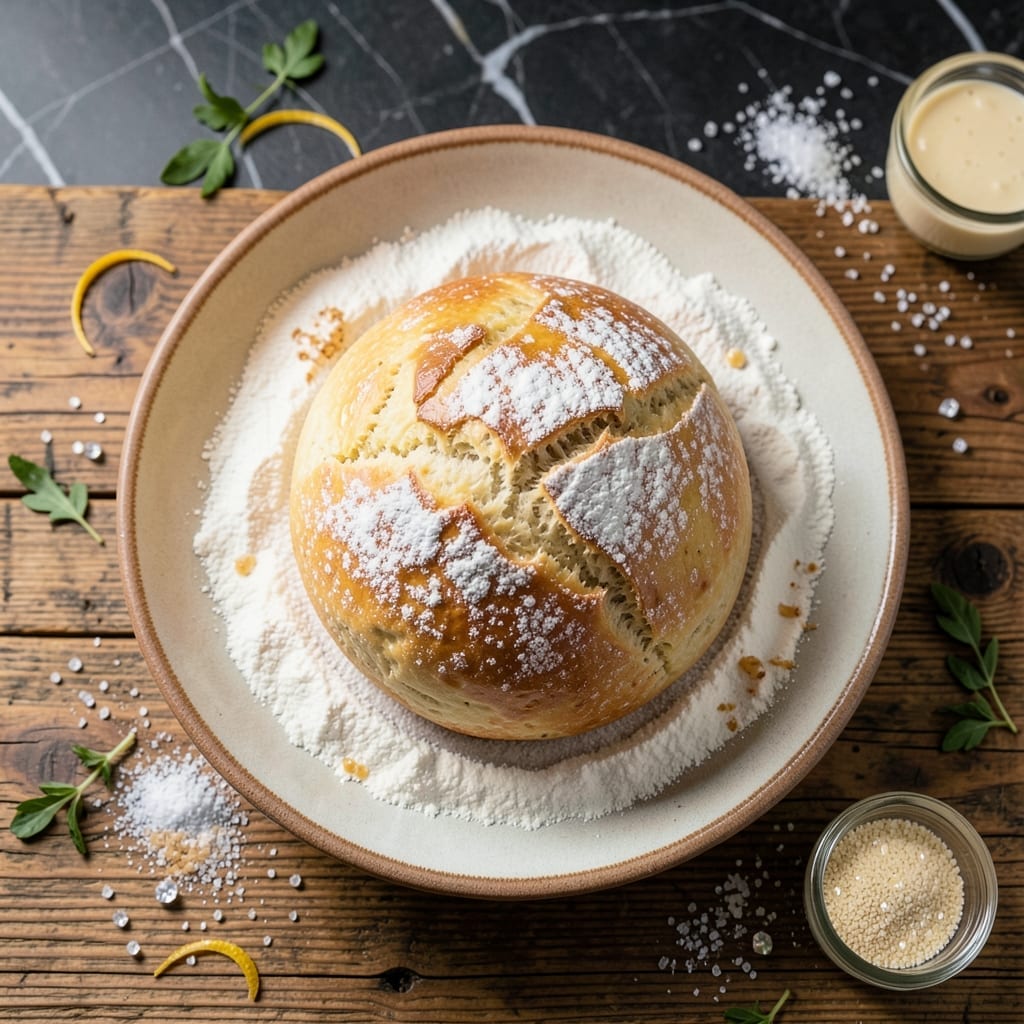
This rice bread recipe delivers gluten-free results that rival traditional loaves. The secret lies in using rice flour combined with precise mixing and baking techniques.
You’ll achieve a soft, fluffy texture without gluten. The process is straightforward, requiring only basic ingredients and standard kitchen tools.
Ingredients for Emmymade Rice Bread
Gluten-free baking requires precise ingredients for perfect texture and rise every time.
| Ingredient | Amount | Notes |
|---|---|---|
| White Rice Flour 🌾 | 2 ½ cups | Fine grain preferred for texture |
| Tapioca Starch 🌾 | ½ cup | Thickening and elasticity booster |
| Xanthan Gum 🧪 | 1 tsp | Essential for binding in gluten-free baking |
| Active Dry Yeast 🍞 | 2 ¼ tsp | One packet, proofed in warm water |
| Granulated Sugar 🍚 | 1 tbsp | Feeds the yeast for activation |
| Salt 🧂 | 1 tsp | Fine sea salt recommended |
| Warm Water 💧 | 1 ¼ cups | 110-115°F for yeast activation |
| Unsweetened Almond Milk 🥛 | ½ cup | Warm, vegan alternative to dairy |
| Extra-Virgin Olive Oil 🫒 | 2 tbsp | For moisture and richness |
| Apple Cider Vinegar 🍏 | 1 tbsp | Enhances rise and flavor |
| Psyllium Husk Powder 🌿 | 2 tbsp | Critical for structure and elasticity |
Rice flour quality is non-negotiable here. Bob’s Red Mill is widely available and consistent, but Authentic Foods superfine brown rice flour produces the most tender crumb. Ensure your xanthan gum and psyllium husk powder are fresh—these lose potency over time. Yeast should be checked for viability (foamy after 5-10 minutes in warm water with sugar). Most Whole Foods or natural grocers carry these specialty items in the baking aisle.
No psyllium husk? Ground flaxseed at a 1:1 ratio works, though the texture will be slightly denser. Xanthan gum can be replaced with guar gum at the same measurement, but avoid omitting entirely—this bread needs a binder. Almond milk can be swapped for any unsweetened plant milk. For a nut-free version, oat milk performs well. The vinegar is essential—don’t skip it, as it reacts with the baking process.
Store rice flour and starches in airtight containers in a cool, dark place for up to 6 months. Psyllium husk powder keeps for 1 year if sealed properly. Once baked, the bread stays fresh for 2-3 days at room temperature or freeze slices for up to 3 months.
Why You’ll Love This Recipe
- I’ll be real: this stays fresh for days, so I can bake once and enjoy all week.
- One Bowl Wonder: I mix the white rice flour, tapioca starch, and xanthan gum right in the same bowl—no extra dishes, no fuss.
- Sweetly Perfect: The sugar doesn’t just activate the yeast—it gives this bread a subtle, warm sweetness that’s just right.
- Gluten-Free MVP: Honestly, it’s my go-to for anyone avoiding gluten, and it still feels like real bread.
Step-by-Step Instructions for Gluten-Free Rice Bread
Master the technique for light, airy loaves that rival traditional bread in texture and rise.
Step 1: Activate the Yeast and Bloom the Psyllium
In a large mixing bowl, combine the 2.25 tsp Active Dry Yeast, 1 tbsp Granulated Sugar, and 1.25 cups Warm Water at 110-115°F. Let it sit for 5-7 minutes until foamy—this confirms the yeast is alive and active.
Meanwhile, whisk together the 2 tbsp Psyllium Husk Powder with the 0.5 cup Unsweetened Almond Milk in a separate bowl. The mixture will thicken into a gel-like consistency within 30-60 seconds, which is essential for the bread’s structure. This step mimics the elasticity that gluten would normally provide.
Step 2: Combine Dry Ingredients and Wet Mixtures
In another bowl, sift together the 2.5 cups White Rice Flour, 0.5 cup Tapioca Starch, 1 tsp Xanthan Gum, and 1 tsp Salt. The xanthan gum acts as a binder, while the tapioca starch adds elasticity to the crumb.
Once the yeast mixture is foamy, pour it into the bowl with the psyllium gel. Add the 2 tbsp Extra-Virgin Olive Oil and 1 tbsp Apple Cider Vinegar, then mix on low speed until just combined. The vinegar enhances the rise and adds a subtle tang to balance the flavors.
Step 3: Incorporate Dry Ingredients and Hydrate the Dough
Gradually add the dry ingredients to the wet mixture while mixing on low speed. Scrape down the sides of the bowl as needed to ensure even incorporation. The dough will be thick and slightly sticky—this is normal for gluten-free bread.
Increase the mixer speed to medium and beat for an additional 2-3 minutes. The dough should pull away from the sides of the bowl and form a cohesive, smooth mass. If it feels too dry, add 1 tbsp Warm Water at a time until the desired consistency is reached.
Step 4: Proof and Bake for Optimal Rise
Transfer the dough to a greased loaf pan, smoothing the top with wet hands to prevent sticking. Cover with a damp towel and let it proof in a warm, draft-free place for 45-60 minutes, or until the dough rises to the top of the pan.
Preheat the oven to 375°F during the last 15 minutes of proofing. Bake the bread for 45-50 minutes, or until the top is golden brown and the internal temperature reaches 205°F. A toothpick inserted into the center should come out clean.
Step 5: Cool Completely Before Slicing
Remove the bread from the oven and let it cool in the pan for 10 minutes. Then, transfer it to a wire rack and allow it to cool completely for at least 1 hour. Slicing too soon can result in a gummy texture, as the structure needs time to set.
The finished loaf should have a light, airy crumb with a slightly crisp crust. This bread is best enjoyed fresh but can be stored in an airtight container at room temperature for up to 3 days. For longer storage, slice and freeze individual portions.
Pro Tips For Making Emmymade Rice Bread
- Proof the Yeast: Always bloom your active dry yeast in warm water with the sugar first—I learned this the hard way after a few dense loaves that refused to rise.
- Weigh Your Flours: Rice flour and tapioca starch compact easily, so use a kitchen scale for accuracy. My first few attempts were gummy until I ditched the volume measurements.
- Skip Cold Eggs: If the recipe calls for eggs, make sure they’re room temperature. Cold eggs can shock the batter and mess with the xanthan gum’s binding magic.
- Bake Immediately: Once your batter hits the pan, get it in the oven fast—this stuff doesn’t like to wait, and the rise suffers if it sits too long.
Wine and Beer Pairings for This Dish
Crisp White Wines
A dry Sauvignon Blanc from New Zealand cuts through the bread’s subtle sweetness with its zesty citrus notes. The acidity also balances the earthy tones of rice flour. I find Kim Crawford offers consistent quality at a reasonable price. 🍷
Light Red Options
For red wine lovers, a chilled Pinot Noir from Oregon works beautifully. Its bright red fruit flavors complement without overpowering. Try Eyrie Vineyards for a classic example. Serve slightly cooler than room temperature.
Gluten-Free Beers
Pair with a crisp gluten-free lager like Omission or Glutenberg. Their light, clean profiles won’t compete with the bread’s delicate flavor. I appreciate how these beers avoid the aftertaste some GF brews can have. 🍺
Sparkling Choices
A dry Prosecco or Cava adds celebratory bubbles that cleanse your palate between bites. The effervescence enhances the bread’s airy texture. Look for Brut styles to avoid excess sweetness.
Non-Alcoholic Pairings
For a booze-free option, try sparkling apple cider with its natural sweetness and acidity. Or brew a strong black tea with lemon—its tannins complement the bread’s nuttiness beautifully. 💫
Nutrition Facts
Frequently Asked Questions
Can I use brown rice flour instead of white?
Yes, but expect a denser texture and nuttier flavor. White rice flour creates the lightest crumb. If using brown, add 1-2 tbsp extra liquid to compensate for its coarser grind.
Why is my bread gummy inside?
This usually means it wasn’t baked long enough. Check internal temperature reaches 205°F. Also, ensure it cools completely for 1 hour before slicing to finish setting.
What can I substitute for psyllium husk?
Ground flaxseed works at a 1:1 ratio, though texture will be denser. Chia seeds (ground) can also work but may add speckles. Avoid omitting entirely.
How do I store leftovers?
Keep at room temperature in an airtight container for 2-3 days. For longer storage, slice and freeze for up to 3 months. Toast slices directly from frozen.

- Five Spice Rice Recipe: Aromatic Grains With Warm Spice Balance - October 10, 2026
- Flavoured Basmati Rice Recipe: Aromatic Grains with Spiced Depth - October 10, 2026
- Fish Porridge Rice Cooker Recipe: Hands-Free Congee With Silky Depth - October 10, 2026