
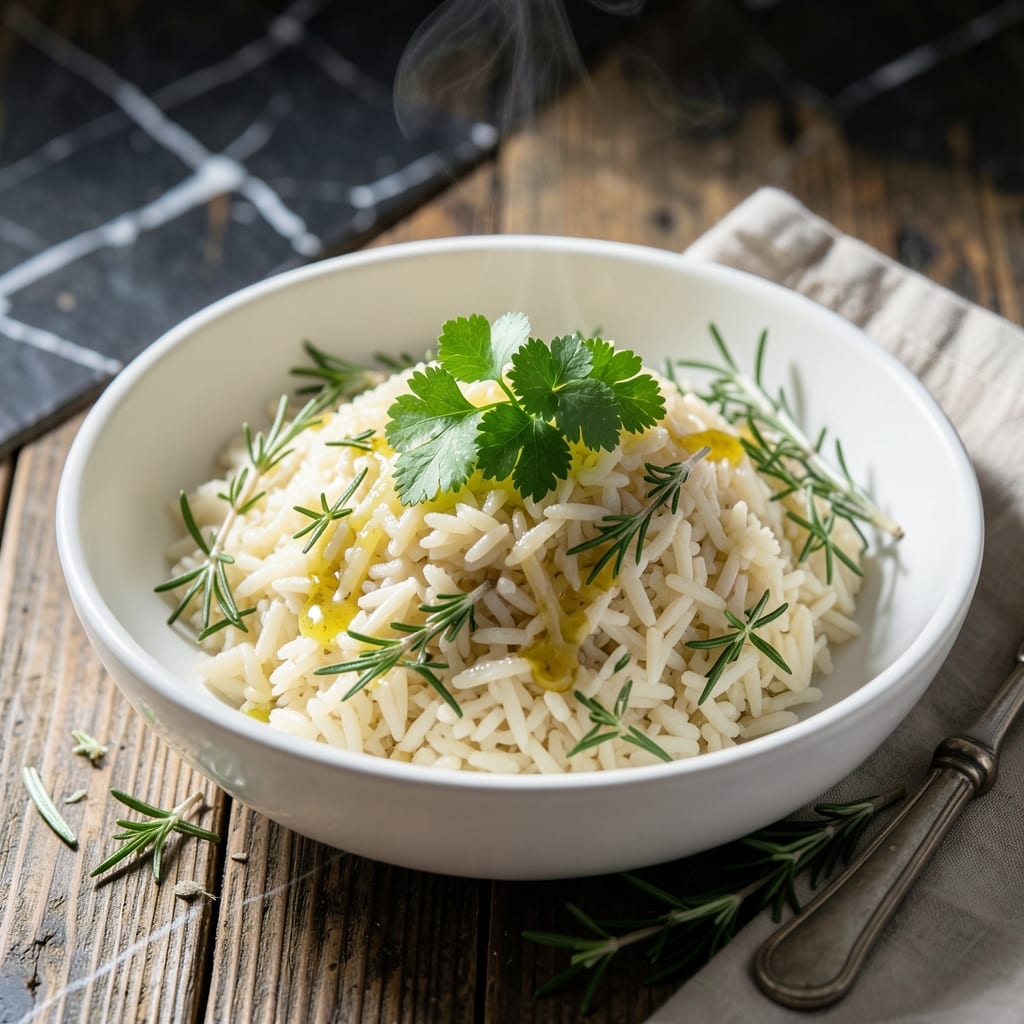
This fragrant basmati rice dish transforms simple ingredients into a sophisticated side with minimal effort. The garden herbs infuse each grain with fresh, aromatic flavor.
A foolproof method ensures perfectly fluffy rice every time, making it ideal for pairing with roasted meats or grilled vegetables. The subtle herb notes elevate this beyond ordinary rice.
Ingredients for English Rice
Fragrant basmati and garden herbs create a sophisticated side with minimal effort and maximum flavor.
| Ingredient | Amount | Notes |
|---|---|---|
| Basmati Rice 🌾 | 1 ½ cups | Rinsed until water runs clear |
| Water 💧 | 3 cups | Or vegetable stock for depth |
| Unsalted Butter 🧈 | 2 tbsp | Divided for cooking and finishing |
| Fresh Thyme Sprigs 🌿 | 4 whole | Leaves stripped from stems |
| Fresh Rosemary Sprigs 🌿 | 2 whole | Finely chopped before adding |
| Fresh Flat-Leaf Parsley 🍃 | ¼ cup | Roughly chopped for garnish |
| Garlic Cloves 🧄 | 3 cloves | Minced for aromatic base |
| Yellow Onion 🧅 | ½ whole | Finely diced for even distribution |
| Sea Salt 🧂 | 1 ½ tsp | Diamond Crystal preferred for texture |
| Freshly Ground Black Pepper 🌶️ | ½ tsp | Coarse grind for visible flecks |
| Bay Leaf 🍃 | 1 whole | Removed before serving |
| Lemon Zest 🍋 | 1 tsp | From one medium lemon |
The rice quality is paramount here. Basmati from Indian markets or Tilda at mainstream grocers offers superior fragrance and grain length. Avoid pre-rinsed varieties—they lack the starch needed for proper texture. The herbs should be fresh and vibrant; wilting sprigs won’t deliver the intended aromatic impact. For the butter, Plugrá or Kerrygold provide consistent results (the higher fat content matters).
No fresh herbs? Dried at one-third the quantity works, but add them earlier in cooking. Thyme and rosemary are non-negotiable for authenticity, but tarragon or chives could supplement the parsley. The onion can be shallot for milder flavor. For a richer version, substitute half the water with chicken stock (though vegetable stock keeps it vegetarian-friendly).
Cooked rice holds 4-5 days refrigerated in airtight containers. The herbs are best added fresh each time—store stems in water like flowers. Reheat with a splash of water and a pat of butter to revive. Freezes poorly; the grains tend to clump.
Why You’ll Love This Recipe
- One Pot Wonder: I just toss basmati rice, water, butter, and fresh herbs into a single pot and let it do its thing.
- Herb-Infused Perfection: The thyme and rosemary steep in the butter as the rice cooks, giving every bite this warm, aromatic depth.
- Meal Prep Star: It holds up beautifully in the fridge, so I make a double batch for lunches all week.
- Budget Keeper: Basmati rice and a few sprigs of herbs stretch into a filling side that costs pennies per serving.
Step-by-Step Instructions for Fragrant Basmati With Garden Herbs
Master this technique for perfectly fluffy rice with aromatic depth and vibrant herbal notes.
Step 1: Prepare and Toast the Aromatics
In a heavy-bottomed pot, melt 1 tbsp unsalted butter over medium heat. Add the finely diced yellow onion and cook for 3-4 minutes until translucent and fragrant, stirring occasionally to prevent browning.
Add the minced garlic cloves, stripped thyme leaves, and finely chopped rosemary sprigs. Sauté for 1-2 minutes until the herbs release their aroma and the garlic turns pale golden. Here’s the thing—this brief toasting deepens their flavors without bitterness.
Stir in the bay leaf and 1 tsp lemon zest, then immediately add the 1.5 cups basmati rice. Toast the rice in this mixture for 1-2 minutes, stirring constantly, until the grains appear slightly translucent at the edges.
Step 2: Add Liquids and Season
Pour in the 3 cups water and add the remaining 1 tbsp unsalted butter. The water should come to a gentle simmer almost immediately—this is your cue to add the 1.5 tsp sea salt and 0.5 tsp freshly ground black pepper.
Stir once to distribute the rice and aromatics evenly, then stop stirring. I know it seems counterintuitive, but disturbing the rice now will release too much starch and lead to a gummy texture. The liquid should be just covering the rice with a slight shimmer on the surface.
Increase heat to medium-high and wait for the mixture to reach a rolling boil. You’ll see bubbles breaking the surface vigorously across the entire pot.
Step 3: Simmer and Steam to Perfection
Once boiling, reduce heat to low, cover the pot with a tight-fitting lid, and simmer undisturbed for 12 minutes. Resist the urge to peek—every time you lift the lid, you extend the cooking time by releasing precious steam.
After 12 minutes, turn off the heat but leave the pot covered. Let it steam for an additional 10 minutes. This critical rest period allows the rice to absorb any remaining moisture and the grains to firm up properly.
You’ll know it’s ready when the rice is tender but still firm to the bite and all liquid has been absorbed. The surface should look dry with small indentations where the grains have settled.
Step 4: Fluff and Garnish
Remove the bay leaf and discard it. Using a fork, gently fluff the rice from the bottom up, separating any clumps while preserving the individual grain structure. This technique prevents crushing the delicate basmati.
Sprinkle the roughly chopped fresh flat-leaf parsley over the top and fold it in lightly with the fork. The bright green flecks add a fresh contrast to the warm, earthy tones of the dish.
Taste and adjust seasoning if needed, though the initial sea salt measurement should provide perfect balance. Serve immediately while the rice is hot and the herbs are at their most vibrant.
Pro Tips For Making English Rice
- Rinse the Rice: Soak basmati rice in cold water for 10 minutes, then drain—this removes excess starch so your grains stay separate and fluffy, not gummy.
- Bloom the Herbs: Melt the butter first, then add thyme and rosemary sprigs for 30 seconds before adding water—this pulls out their oils and actually changes the outcome.
- Skip the Lid: I learned this the hard way—covering the pot too soon traps steam and turns the rice mushy. Let it simmer uncovered until the water’s mostly absorbed.
- Use a 1:1.5 Ratio: For perfect texture every time, measure 1.5 cups water per 1 cup basmati rice—sounds simple, but it’s the thing that matters most.
Essential Equipment for Great english rice
Quality Cookware
A heavy-bottomed pot is essential for even heat distribution. I recommend All-Clad Stainless Steel or Le Creuset Dutch ovens for their superior heat retention. A 3-quart capacity works perfectly for this recipe’s volume.
Tight-Fitting Lid
Steam is the secret to fluffy rice, so your lid must seal tightly. Glass lids let you monitor progress without lifting, but I prefer stainless steel lids for better heat retention. Check that no steam escapes when the pot is covered.
Precision Tools
A wooden spoon won’t scratch your pot while stirring aromatics. For fluffing, a rice paddle or fork separates grains without crushing them. I keep both within reach when making this dish.
Measuring Accuracy
Use liquid measuring cups for water and dry cups for rice. A fine-mesh strainer helps rinse the basmati thoroughly. These small tools ensure consistency every time. 💡
Herb Preparation
A sharp chef’s knife (I prefer Wüsthof) makes quick work of herb chopping. Keep a cutting board dedicated to herbs to avoid cross-contamination with other ingredients. Freshness matters most with these delicate flavors.
Serving Essentials
Have a large serving spoon ready for portioning. A microplane makes quick work of the lemon zest. These final touches elevate the presentation of your fragrant rice creation. ✨
Nutrition Facts
Frequently Asked Questions
What’s the best rice-to-water ratio for fluffy results?
Use a 1:2 ratio—1.5 cups basmati to 3 cups water. This ensures perfect absorption without mushiness. Never stir after adding water to avoid gummy texture.
Can I make this ahead of time?
Cooked rice stays fresh for 4-5 days in an airtight container. Reheat with a splash of water and butter to restore moisture. Avoid freezing—it clumps the grains.
Why toast the rice before adding liquid?
Toasting for 1-2 minutes enhances the nutty aroma and prevents sticking. It also helps the grains absorb liquid evenly for consistent texture.
Can I substitute dried herbs?
Yes, use 1/3 the amount of dried thyme and rosemary. Add them earlier in cooking, as dried herbs need more time to release flavor.

- Cream of Wild Rice Soup Recipe: Earthy Grains in Silky Broth - October 9, 2026
- Filipino Garlic Rice Recipe: Crispy Fried Aroma With Every Bite - October 9, 2026
- Gobi Manchurian Rice Recipe: Indo-Chinese Fusion in One Bowl - October 9, 2026