
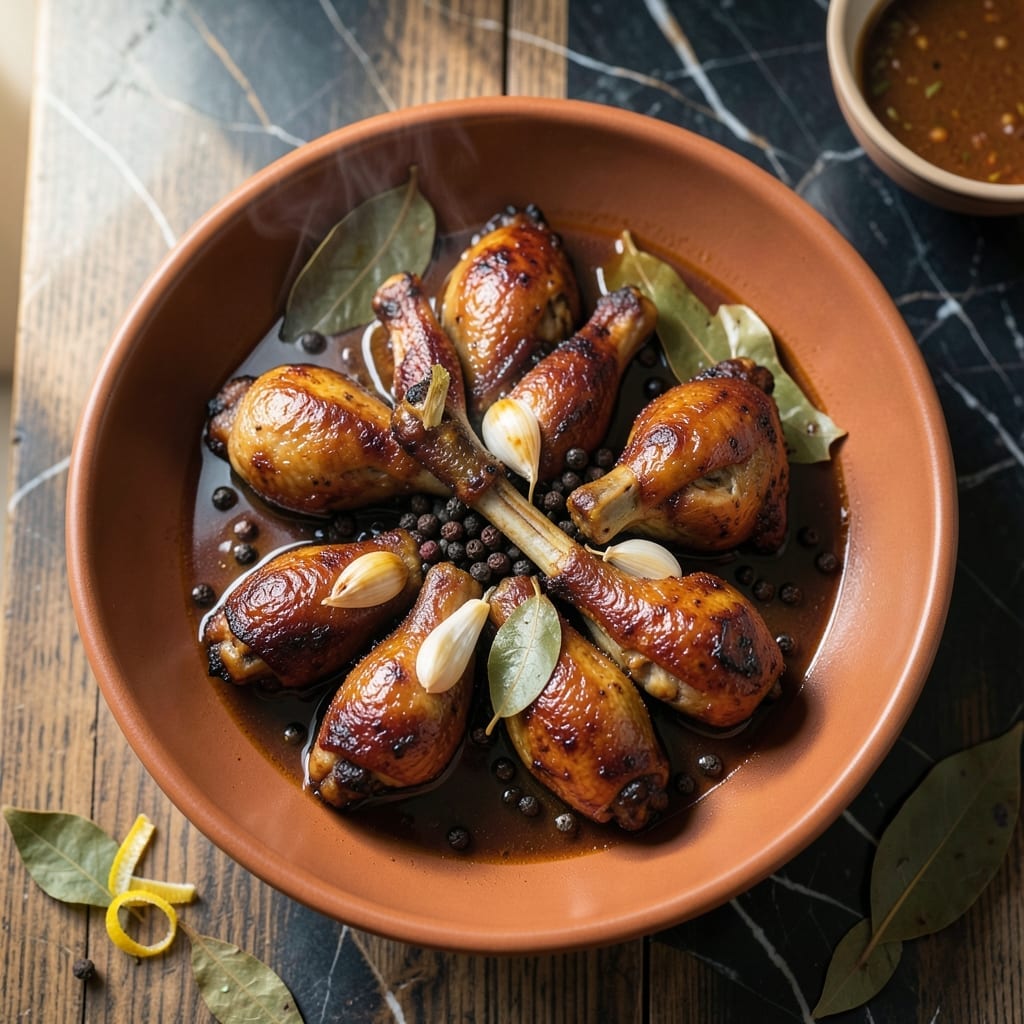
This Filipino-inspired dish transforms humble chicken thighs into something extraordinary. The secret lies in the classic adobo marinade, a perfect balance of soy sauce, vinegar, garlic, and peppercorns.
I developed this recipe after years of experimenting with different ratios and techniques. The key is marinating the chicken for at least 30 minutes, allowing the flavors to penetrate deeply while keeping the meat juicy and tender.
When cooked, the chicken develops a rich, caramelized exterior with a tangy, savory depth that’s distinctly Filipino. The sauce reduces into a glossy glaze that coats every piece beautifully.
Serve with steamed rice to soak up every drop of that incredible sauce. This is comfort food at its finest.
Ingredients for Filipino Recipe for Chicken Thighs
Transform humble chicken thighs with this vibrant adobo marinade and pantry staples.
| Ingredient | Amount | Notes |
|---|---|---|
| Chicken Thighs 🍗 | 2 lb | Boneless, skin-on preferred |
| Soy Sauce 🫒 | ¾ cup | Low-sodium or regular |
| White Vinegar 💧 | ½ cup | Or cane vinegar for authenticity |
| Garlic Cloves 🧄 | 8 cloves | Peeled, smashed lightly |
| Black Peppercorns 🌶️ | 1 tbsp | Whole, cracked |
| Bay Leaves 🍃 | 3 whole | Dried or fresh |
| Brown Sugar 🍚 | 2 tbsp | Optional for balancing acidity |
| Water 💧 | ½ cup | For marinade consistency |
| Vegetable Oil 🫒 | 2 tbsp | For searing chicken |
| Green Onions 🧅 | 4 whole | Thinly sliced for garnish |
| Steamed Rice 🍚 | 2 cups | Cooked, for serving |
| Salt 🧂 | ½ tsp | Adjust to taste |
The chicken thighs are the foundation—skin-on, bone-in delivers the richest flavor and stays juicier than boneless. Asian markets often have the best selection, but any grocery store will work. Look for thighs with good marbling. The soy sauce should be Filipino brands like Silver Swan or Datu Puti if you want authentic flavor, but any standard soy sauce will suffice in a pinch.
No cane vinegar? White vinegar works perfectly—just avoid balsamic or apple cider, which are too sweet. Short on bay leaves? Skip them rather than substituting dried thyme (it changes the flavor profile). The brown sugar is optional but highly recommended to balance the acidity. If you’re out of black peppercorns, freshly ground black pepper at half the amount is an acceptable substitute.
The marinade keeps in the fridge for 3-4 days before cooking, which actually improves the flavor. Cooked chicken stays fresh for 4-5 days refrigerated or freezes beautifully for 3 months. The sauce thickens as it cools, so reheat with a splash of water.
Why You’ll Love This Recipe
- One Pan Wonder: I toss the thighs, soy sauce, vinegar, and garlic in a pan and let the stove do the work.
- Tangy Garlic Bite: The vinegar cuts through the richness while the garlic infuses every bite with that bold Filipino flavor I crave.
- Meal Prep Hero: It reheats beautifully, so I make a big batch for lunches all week—no soggy leftovers here.
- Budget Stretcher: Chicken thighs are cheap, and this recipe turns them into something ridiculously good without fancy ingredients.
Step-by-Step Instructions for Adobo-Style Chicken Thighs
Master the technique behind this classic preparation with precision and authenticity.
Step 1: Create the Adobo Marinade Base
In a large bowl, combine the 0.75 cup soy sauce, 0.5 cup white vinegar, 0.5 cup water, and 2 tbsp brown sugar. Whisk until the sugar fully dissolves—the mixture should appear dark and slightly syrupy.
Add the 8 cloves garlic cloves (lightly smashed), 1 tbsp black peppercorns (cracked), 3 whole bay leaves, and 0.5 tsp salt. Stir to distribute the aromatics evenly throughout the liquid. The vinegar’s sharpness will mellow as it marinates.
Real talk: this balance of salty, tangy, and slightly sweet is what defines authentic adobo flavor. Don’t be tempted to reduce the vinegar—it’s essential for both taste and preservation.
Step 2: Marinate and Infuse the Chicken Thighs
Add the 2 lb chicken thighs to the marinade, ensuring each piece is fully submerged. I like to use boneless, skin-on thighs for this dish as they absorb flavor beautifully while maintaining texture. Cover and refrigerate for at least 2 hours, or ideally overnight.
The longer you marinate, the deeper the flavor penetration. For best results, turn the chicken occasionally during marinating to ensure even exposure to the liquid. You’ll notice the meat darkening as it absorbs the soy sauce.
Pro tip: If using skin-on thighs, place them skin-side up in the marinade to prevent the skin from becoming soggy. The fat cap will render beautifully during cooking.
Step 3: Sear and Braise the Chicken
Heat the 2 tbsp vegetable oil in a large, heavy-bottomed pot over medium-high heat. Remove the chicken from the marinade (reserving the liquid) and pat dry. Sear the thighs for 4-5 minutes per side until the skin is deep golden brown and crisp.
Don’t crowd the pan—work in batches if necessary. The fond (browned bits) that forms on the bottom will dissolve into your sauce later, adding incredible depth of flavor. Once all chicken is seared, set it aside temporarily.
Pour the reserved marinade into the same pot and bring to a boil. Add the chicken back in, reduce heat to medium-low, cover, and simmer for 30-35 minutes until the meat is fork-tender.
Step 4: Reduce and Finish the Sauce
Once the chicken is cooked through, remove the lid and increase heat to medium-high. Let the sauce reduce for 8-10 minutes, stirring occasionally, until it thickens to a glossy, syrupy consistency that coats the back of a spoon.
Taste and adjust seasoning if needed—remember the sauce will intensify as it reduces. The final sauce should be rich, tangy, and deeply savory with visible specks of garlic and peppercorns throughout.
The chicken should be falling-off-the-bone tender at this point. If serving immediately, skim any excess fat from the surface of the sauce for a cleaner presentation.
Step 5: Plate and Garnish for Service
Arrange the chicken thighs over a bed of 2 cups steamed rice, spooning the reduced sauce generously over the top. The contrast between the tender meat, rich sauce, and fluffy rice is what makes this dish so satisfying.
Garnish with the 4 whole green onions, thinly sliced on a diagonal for visual appeal. The fresh green color and mild onion flavor provide a perfect counterpoint to the deep, savory notes of the adobo.
Serve immediately while hot. The sauce will continue to thicken slightly as it cools, so if preparing ahead, warm it gently with a splash of water to restore the proper consistency.
Pro Tips For Making Filipino Recipe For Chicken Thighs
- Marinate Longer: Give the chicken thighs at least 30 minutes in the soy sauce, vinegar, and garlic mix—I learned this the hard way when my first batch tasted bland after just 10 minutes.
- Use Bone-In Thighs: Skip the boneless cuts; bone-in thighs stay juicier and absorb the soy-vinegar marinade better, even if they take a few minutes longer to cook.
- Simmer, Don’t Boil: Once the sauce is added, keep the heat at a gentle simmer to avoid toughening the meat and splitting the vinegar’s acidity too sharply.
- Crush Peppercorns: Lightly crush the black peppercorns before adding them—it releases more flavor without the gritty texture of ground pepper.
Best Sauces and Condiments for This Dish
Classic Adobo Sauce
The sauce from this dish is already perfect on its own—rich, tangy, and deeply savory with that signature soy-vinegar balance. I reduce it to a glossy consistency that clings beautifully to the chicken and rice. This is non-negotiable Filipino flavor. 💛
Spicy Chili Oil
For heat lovers, drizzle 1-2 tsp chili oil over each serving just before eating. I make mine with Sichuan peppercorns and dried chilies from our Portland farmers market. The numbing spice complements the adobo’s tang wonderfully.
Sweet and Sour
Balance the savory depth with a classic Filipino banana ketchup—it’s sweeter than tomato ketchup with a unique tropical note. Mix 2 tbsp with 1 tsp calamansi juice for dipping. Jufran brand is my go-to.
Creamy Coconut
Stir ¼ cup coconut milk into leftover sauce when reheating for a creamy variation. This transforms the dish into adobo sa gata, a rich coconut-based version popular in Southern Philippines. Simmer for 5 minutes to meld flavors.
Pickled Vegetables
Serve with atchara (Filipino pickled papaya) for a refreshing crunch. The vinegar in the pickles echoes the adobo’s tang while cutting through the richness. I buy mine at New Seasons Market or make it fresh with green papaya.
Citrus Brightener
Finish each serving with a squeeze of calamansi or lime. The citrus brightens all the flavors and adds authenticity. Even ½ tsp zest over the top makes a noticeable difference. This simple touch elevates the whole dish. ✨
Nutrition Facts
Frequently Asked Questions
Can I use boneless thighs instead?
Yes, but skin-on, bone-in gives the richest flavor and juiciest texture. Boneless works in a pinch—just reduce cooking time by 5-10 minutes to prevent drying out.
Why is vinegar essential in the marinade?
Vinegar tenderizes the meat and balances the soy sauce’s saltiness. It also preserves the dish naturally, a hallmark of traditional Filipino adobo. Never skip it!
Can I make this ahead?
The flavors deepen overnight. Store cooked chicken in its sauce for up to 4 days in the fridge or freeze for 3 months. Reheat gently with a splash of water.
What if my sauce is too salty?
Add 1-2 tbsp water or brown sugar to balance it. Simmer for 3-5 minutes to meld flavors. Taste as you go—Filipino adobo should be bold but not overpowering.

- Jollof Rice Sauce Recipe: West African Tomato and Spice Infusion - September 25, 2026
- Japanese Rice Soup Recipe: Umami-Rich Comfort in a Bowl - September 25, 2026
- Homemade Cream Of Rice Recipe: Silk-Smooth Breakfast in Minutes - September 25, 2026