
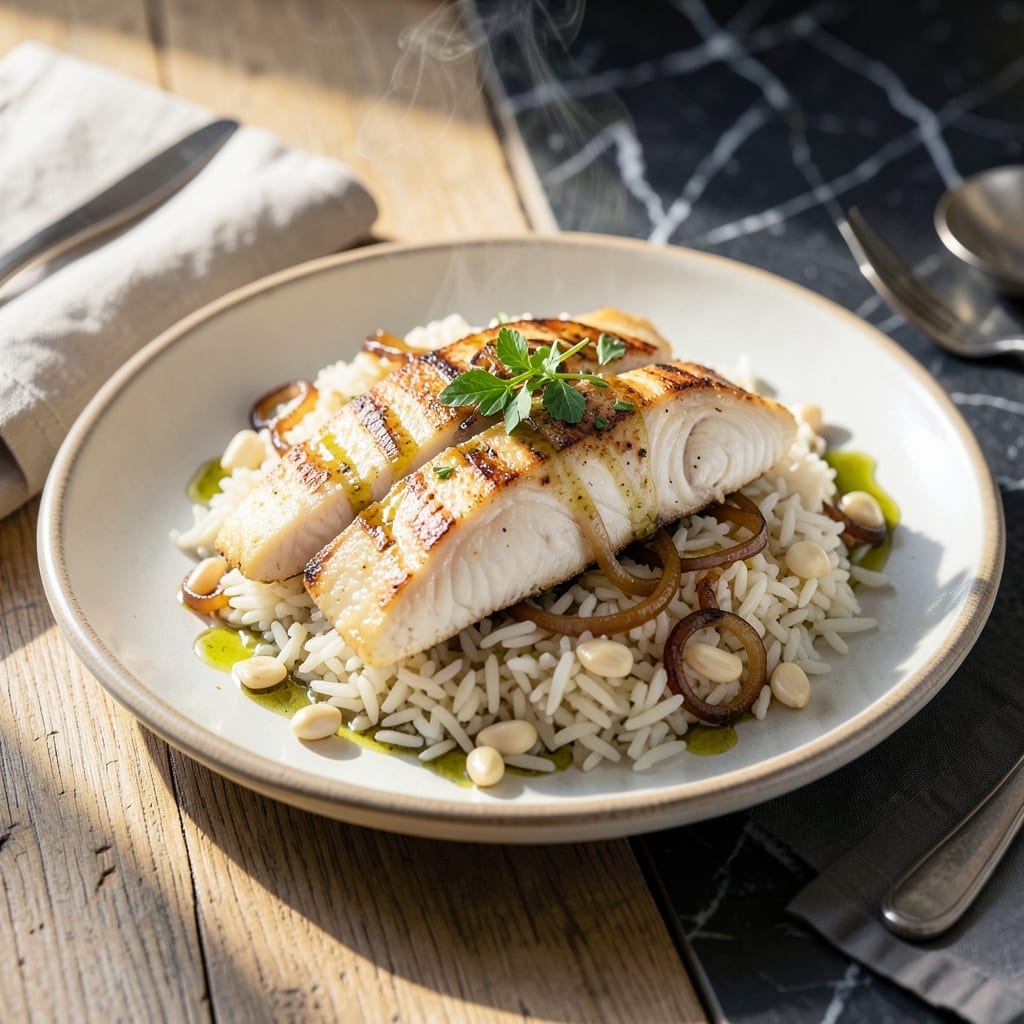
This one-pot dish brings coastal flavors to your kitchen with minimal effort. The rice absorbs the delicate fish stock, creating a perfect balance of textures and tastes.
I’ve refined this method to ensure the fish stays tender while the rice cooks to fluffy perfection. It’s a foolproof way to enjoy a traditional meal without the fuss.
Ingredients for Fish Pilaf Rice
Simple ingredients for a coastal-inspired one-pot meal with tender fish and fluffy rice.
| Ingredient | Amount | Notes |
|---|---|---|
| White Rice 🍚 | 1 ½ cups | Long-grain or basmati preferred |
| White Fish Fillets 🐟 | 1 ½ lb | Cod, haddock, or halibut |
| Fish Stock 💧 | 3 cups | Low-sodium preferred |
| Onion 🧅 | 1 whole | Medium, finely diced |
| Garlic Cloves 🧄 | 3 cloves | Minced for best flavor |
| Olive Oil 🫒 | 3 tbsp | Extra-virgin for richness |
| Butter 🧈 | 2 tbsp | Unsalted preferred |
| Lemon 🍋 | 1 whole | Zested and juiced |
| Fresh Dill 🌿 | ¼ cup | Chopped, for garnish |
| Fresh Parsley 🌿 | ¼ cup | Chopped, for garnish |
| Bay Leaf 🍃 | 2 pieces | Dried, for aroma |
| Salt 🧂 | 1 tsp | Sea salt preferred |
| Black Pepper 🌶️ | ½ tsp | Freshly ground preferred |
| Turmeric 🌿 | ½ tsp | Ground, for color |
The fish is the star here. Cod or haddock work beautifully—they hold up to the cooking process without falling apart. Whole Foods or Trader Joe’s have great fresh options, but frozen works in a pinch (just thaw completely first). For the rice, long-grain or basmati gives that light, fluffy texture. Avoid instant rice—it turns mushy. The stock should be fish-based, not chicken or veggie, for that authentic coastal flavor.
No fish stock on hand? Clam juice mixed with water (half and half) gets you close. Swap the dill for fresh tarragon if you prefer a slightly sweeter herb. The lemon zest is non-negotiable—it brightens everything up. If you can’t find fresh fish, shrimp or scallops work too (adjust cooking time). The turmeric adds a subtle golden hue, but you can skip it if you don’t have any.
Leftovers keep for 2-3 days in the fridge—reheat gently to avoid drying out the fish. This dish doesn’t freeze well, so make just enough. The herbs are best fresh, but dried can work at one-third the amount if that’s what you’ve got.
Why You’ll Love This Recipe
- One Pot Wonder: I love that everything cooks together—rice soaks up the fish stock while the fillets steam right on top.
- Garlic Infused: The onion and garlic in the stock give the rice this deep, savory base that makes every bite taste intentional.
- Weeknight Hero: Between us, I’ve served this for casual dinners and last-minute guests with zero stress.
- Budget Stretcher: White rice and affordable fish fillets mean I can feed four for the price of two takeout meals.
Step-by-Step Instructions for Fish Pilaf Rice
This one-pot method keeps cleanup minimal and flavors bold.
Step 1: Sauté Aromatics for Flavor Foundation
Heat the 3 tbsp olive oil and 2 tbsp butter in a large pot with a tight lid over medium heat. Add the finely diced onion and cook for 5-6 minutes until it turns translucent and just starts to pick up color.
Stir in the minced garlic cloves and cook for 30 seconds until fragrant. Here’s the thing—don’t let the garlic burn or it’ll turn bitter. Add the 1 tsp salt, 0.5 tsp black pepper, 0.5 tsp turmeric, and 2 pieces bay leaf next, stirring to coat the onions and garlic in the spices.
Step 2: Toast Rice and Add Liquids
Add the 1.5 cups white rice to the pot and stir for 2 minutes until the grains start to look slightly opaque and smell nutty. This toasting step ensures the rice won’t turn mushy and gives the dish depth of flavor.
Pour in the 3 cups fish stock and the juice from the 1 whole lemon. Stir well, scraping up any browned bits from the bottom. Bring the mixture to a boil over medium-high heat. This is when the rice starts absorbing all those coastal flavors we’re building.
Step 3: Add Fish and Simmer
Once boiling, reduce heat to low and carefully lay the 1.5 lb white fish fillets on top of the rice. The fillets should be mostly submerged in the liquid. Cover the pot tightly with the lid.
Let it simmer undisturbed for 15-18 minutes. You’ll know it’s ready when the rice is tender and has absorbed most of the liquid, and the fish flakes easily with a fork. Don’t peek during this time—releasing steam slows down the cooking process.
Step 4: Rest and Garnish
Turn off the heat and let the dish rest, covered, for an additional 5 minutes. This allows the fish and rice to finish cooking gently with the residual steam. The rice will continue to absorb any remaining liquid.
Gently fluff the rice with a fork, being careful not to break up the fish too much. Sprinkle the chopped 0.25 cup fresh dill and 0.25 cup fresh parsley over the top for a burst of freshness. Squeeze a little extra lemon juice on top right before serving for that bright coastal finish.
Pro Tips For Making Fish Pilaf Rice
- Toast the Rice First: Cook the rice in a little oil for 2-3 minutes until it turns slightly translucent—I learned this the hard way after my pilaf turned out mushy more times than I care to admit.
- Poach the Fish Separately: Gently cook the white fish fillets in the fish stock first, then remove and flake into the rice later. This prevents them from breaking apart into a sad, stringy mess.
- Use Room-Temp Stock: Cold fish stock added straight to hot rice can make the grains seize up. After ruining a batch, I now let the stock sit out for 15 minutes before using it.
- Sauté Onions Low and Slow: For that sweet, deep flavor base, cook the onions and garlic on medium-low for at least 8-10 minutes until golden—sounds tedious, but it actually changes the outcome.
Common Mistakes When Making This Recipe
Overcooking the Fish
The most common mistake is letting the fish cook too long. 15-18 minutes of simmering is perfect for 1.5 lb fillets—any longer and the fish turns dry and rubbery. I check for doneness by gently pressing with a fork; it should flake easily.
Skipping the Rice Toast
Don’t rush past toasting the 1.5 cups white rice for 2 minutes in the pot. This step prevents mushy rice and builds a nutty depth of flavor. I use long-grain or basmati for the best texture.
Peeking While Cooking
Every time you lift the lid, you release steam and lower the temperature, adding 5-10 minutes to your cook time. Trust the process and keep it covered until the 15-minute mark before checking.
Using the Wrong Liquid
Substituting chicken or vegetable stock for fish stock weakens the coastal flavor profile. If you’re in a pinch, use clam juice mixed with water (half and half) as a backup. The dish relies on that seafood base.
Incorrect Heat Levels
Start at medium-high heat to bring the liquid to a boil, then drop to low heat for simmering. Too high heat scorches the rice at the bottom, while too low heat leaves it undercooked. 🔥
Forgetting to Rest
Always let the dish rest for 5 minutes after turning off the heat. This allows the rice to finish absorbing liquid and the fish to stay moist. I fluff the rice gently with a fork right before serving.
Nutrition Facts
Frequently Asked Questions
Can I use a different type of rice?
Long-grain or basmati works best for fluffy texture. Avoid instant rice as it turns mushy. Jasmine rice is a good substitute if you prefer a slightly stickier result.
What if I don’t have fish stock?
Use clam juice mixed with water (half and half) as a backup. Chicken stock works in a pinch but weakens the seafood flavor. Always opt for low-sodium versions.
Can I add vegetables to this dish?
Add diced carrots or peas when sautéing onions. For leafy greens like spinach, stir them in during the last 5 minutes of cooking.
How do I prevent the fish from falling apart?
Keep fillets whole and place them gently on the rice. Avoid stirring once added. Use firm fish like cod or halibut for best results.

- Fried Rice Mix Recipe: Customizable Pantry Staple for Quick Meals - October 6, 2026
- Fruit Loop Rice Crispy Treats Recipe: Colorful Crunch With Marshmallow Magic - October 6, 2026
- Erewhon Rice Balls Recipe: Copycat Crispy and Creamy Bites - October 6, 2026