
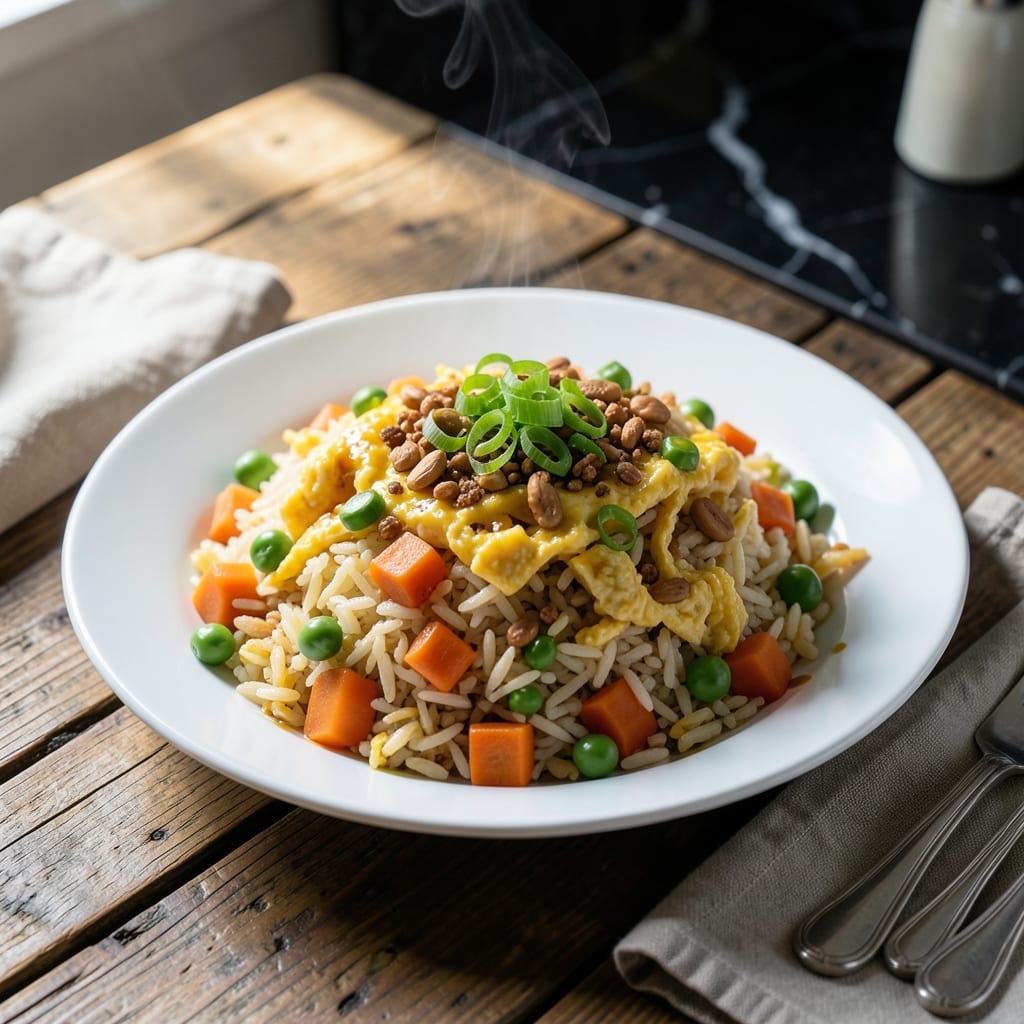
This fried rice delivers restaurant-quality results with a perfect balance of savory umami and fresh garden vegetables. The wok-searing technique creates that signature smoky depth.
Every bite combines tender rice, crisp vegetables, and a subtle seasoning that makes this dish truly five-star. Simple ingredients transform into something extraordinary with proper heat and timing.
Ingredients for Five Star Fried Rice
Day-old rice, fresh vegetables, and pantry staples create wok-seared perfection with every bite.
| Ingredient | Amount | Notes |
|---|---|---|
| Jasmine Rice 🍚 | 3 cups | Day-old, cooked and chilled |
| Eggs 🥚 | 3 whole | Large, beaten lightly |
| Peanuts 🥜 | ½ cup | Unsalted, roughly chopped |
| Carrots 🥕 | 1 cup | Small dice, uniformly cut |
| Green Onions 🧅 | ½ cup | Thinly sliced, white and green parts separated |
| Frozen Peas 🌱 | 1 cup | Thawed and drained |
| Garlic Cloves 🧄 | 4 cloves | Minced finely |
| Fresh Ginger 🌿 | 1 tbsp | Peeled and grated |
| Soy Sauce 🫒 | 3 tbsp | Low-sodium preferred |
| Oyster Sauce 🫒 | 1 ½ tbsp | For umami depth |
| Sesame Oil 🫒 | 1 tsp | Toasted variety |
| Vegetable Oil 🫒 | 3 tbsp | High smoke point for wok-searing |
| Salt 🧂 | ½ tsp | Diamond Crystal kosher salt |
| White Pepper 🌶️ | ¼ tsp | Ground, for authentic flavor |
The rice is critical—jasmine or long-grain works best, and it must be day-old and cold to prevent mushiness. For the vegetables, Costco has great pre-diced carrots and peas, but fresh from a farmers market adds vibrancy. The oyster sauce is non-negotiable for that signature umami depth; Lee Kum Kee is a reliable brand. Always use a high smoke point oil like peanut or vegetable for the wok-searing technique.
No oyster sauce? Vegetarian oyster sauce or hoisin can substitute, though the flavor will differ slightly. Tamari at half the amount boosts umami if you’re avoiding gluten. Fresh ginger is ideal, but ground ginger at one-quarter the amount works in a pinch. The peanuts add crunch—cashews or almonds are fine alternatives. For extra protein, diced chicken or shrimp can be added at the start.
Fried rice is best eaten fresh, but leftovers keep 3-4 days in the fridge. Reheat in a skillet with a splash of water to restore moisture. For meal prep, store components separately and combine just before reheating. This dish doesn’t freeze well—the rice becomes grainy.
Why You’ll Love This Recipe
- One Pan Wonder: I toss everything in a single wok—jasmine rice, scrambled eggs, and those bright green onions—and cleanup is a breeze.
- Addictive Crunch: The peanuts add this ridiculous texture that makes every bite pop with flavor.
- Weeknight Hero: I make a big batch and it’s just as good for lunch the next day, cold or reheated.
- Pantry Friendly: Between us, I always have these ingredients on hand, so it’s my go-to when the fridge looks sad.
Step-by-Step Instructions for Wok-Seared Umami Fried Rice
Master the technique with these precise steps for restaurant-quality results at home.
Step 1: Prepare the Aromatics and Protein Base
Heat 2 tablespoons of the vegetable oil in a wok or large skillet over high heat until shimmering. Add the 4 cloves garlic cloves and 1 tablespoon fresh ginger, stirring constantly for 30 seconds until fragrant but not browned. This builds the aromatic foundation that defines the dish.
Immediately add the 3 whole eggs and scramble quickly with a spatula until just set but still slightly runny. The residual heat will finish cooking them as you proceed. Remove the egg mixture from the wok and set aside—this prevents overcooking and maintains distinct texture.
Step 2: Sear the Vegetables for Optimal Texture
Add the remaining 1 tablespoon vegetable oil to the wok. When hot, add the 1 cup carrots and stir-fry for 2 minutes until the edges begin to soften but the center remains crisp. The small, uniform dice ensures even cooking and consistent texture in every bite.
Add the 1 cup frozen peas and 0.5 cup green onions (white parts only), stir-frying for an additional 1-2 minutes until the peas are heated through and the onions become translucent. The vegetables should retain their vibrant color and slight bite—overcooking will make them mushy.
Step 3: Combine Rice and Sauces for Maximum Flavor
Break up any clumps in the 3 cups jasmine rice with your hands and add it to the wok. Stir-fry for 2-3 minutes, pressing the rice against the hot surface to create slight crispness. This step revives the chilled rice and prepares it to absorb the sauces.
Drizzle the 3 tablespoons soy sauce, 1.5 tablespoons oyster sauce, and 0.5 teaspoon salt evenly over the rice. Add the 0.25 teaspoon white pepper for authentic depth. Toss everything together vigorously for 1-2 minutes until the rice is uniformly coated and glistening.
Step 4: Finish with Eggs, Peanuts, and Final Touches
Return the scrambled eggs to the wok and fold them into the rice mixture. The eggs should distribute evenly, creating ribbons of golden color throughout. Add the 0.5 cup peanuts and toss for 30 seconds to warm them through while preserving their crunch.
Remove from heat and stir in the 1 teaspoon sesame oil for a final layer of nutty aroma. Taste and adjust seasoning if needed, though the precise balance of soy and oyster sauces should provide perfect flavor. Garnish with the reserved green onion tops for freshness and color contrast.
Pro Tips For Making Five Star Fried Rice
- Chill the Rice: Use day-old jasmine rice straight from the fridge—fresh rice turns to mush. I learned this the hard way after ruining two batches with sticky, clumpy results.
- Scramble Eggs First: Push scrambled eggs to one side of the wok before adding veggies, so they don’t disappear into the rice. Sounds obvious, but I used to lose them in the mix every time.
- Toast the Peanuts: Give the peanuts 2-3 minutes in a dry pan until golden and fragrant before adding to the rice. It adds a depth that raw peanuts just can’t match.
- High Heat Only: Crank the burner to max and keep the wok smoking hot—this is the only way to get that restaurant-style sear on the rice and carrots. Lower heat just steams everything.
Dietary Considerations for five star fried rice
Gluten-Free Adaptation
Swap the soy sauce for tamari—it delivers the same umami punch without gluten. Use certified gluten-free oyster sauce (like Kikkoman’s version) to keep the depth of flavor. Double-check all labels, as some brands add wheat to their sauces. 💪
Vegetarian Variation
Replace oyster sauce with vegetarian oyster sauce (I like Lee Kum Kee’s). Add extra-firm tofu cubes for protein, searing them in the wok first. For extra richness, include shiitake mushrooms for their meaty texture.
Nut Allergy Option
Omit the peanuts entirely or substitute with toasted sesame seeds for crunch. Sunflower seeds work too if you prefer a milder flavor. Always ensure your oyster sauce is nut-free, as some brands process in facilities with peanuts.
Lower Sodium Version
Use low-sodium soy sauce and reduce the total amount by 1 tablespoon. Skip the added salt entirely since oyster sauce and soy sauce already contribute sodium. Boost flavor with extra garlic and ginger instead.
Egg-Free Alternative
Simply omit the eggs—the dish will still be delicious with the rice and vegetables as stars. For extra protein, add diced firm tofu or edamame. The texture will differ slightly but remain satisfying.
Vegan Modification
Use tofu instead of eggs and vegan oyster sauce (made from mushrooms). Replace sesame oil with toasted sesame oil labeled vegan. This keeps the dish plant-based while maintaining the signature wok-seared flavors. 🌱
Nutrition Facts
Frequently Asked Questions
Why use day-old rice?
Fresh rice contains too much moisture, causing it to turn mushy when stir-fried. Day-old rice is drier and firms up in the fridge, creating that perfect separate-grain texture.
Can I substitute other proteins?
Try diced chicken, shrimp, or tofu. Cook proteins first, then set aside before proceeding with the recipe to avoid overcooking.
What if my wok isn’t hot enough?
High heat is critical for that signature sear. If your stove is weak, cook in smaller batches to maintain high heat. Overcrowding the pan will steam the rice instead of frying it.
How do I prevent soggy results?
Ensure rice is cold and dry, use high heat, and avoid overloading the wok. Add sauces gradually and toss constantly for even coating without excess moisture.

- Glutinous Rice Flour Bread Recipe: Soft Pillows with Nutty Depth - October 12, 2026
- Green Rice Casserole Recipe: Cheesy Baked Comfort with Vibrant Herbs - October 12, 2026
- Glutinous Rice Coconut Milk Recipe: Chewy Sweetness With Tropical Depth - October 12, 2026