
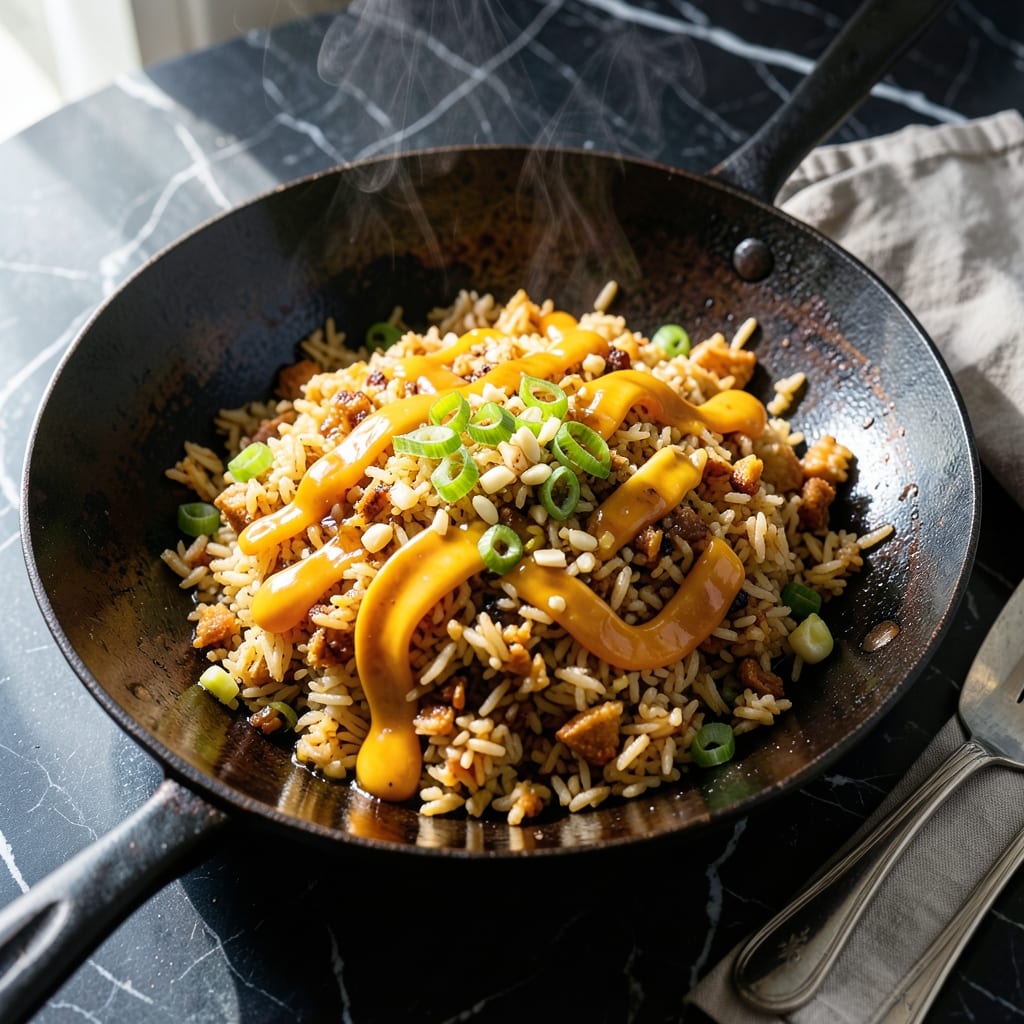
Mastering wok-fried rice at home delivers that signature smoky depth and perfectly separated grains you expect from takeout. I developed this method after countless tests in my Boston kitchen, focusing on high heat and proper wok technique.
The key is using day-old rice and cooking in small batches to prevent steaming. Each ingredient—from the eggs to the vegetables—gets its moment in the wok to develop maximum flavor before combining.
What emerges is a dish with charred aromatic notes, fluffy yet distinct rice grains, and that authentic wok hei flavor. The process moves quickly, so having all ingredients prepped and within reach is essential.
This approach works with any protein or vegetable combination, making it endlessly adaptable. The technique remains consistent regardless of variations.
Ingredients for Fried Rice Wok
High heat, day-old rice, and bold aromatics create that authentic wok-fried flavor at home.
| Ingredient | Amount | Notes |
|---|---|---|
| Day-Old Cooked White Rice 🍚 | 4 cups | Cold, dry, and separated |
| Large Eggs 🥚 | 3 whole | Lightly beaten |
| Neutral Cooking Oil 🫒 | 3 tbsp | High smoke point preferred |
| Garlic Cloves 🧄 | 4 cloves | Minced finely |
| Fresh Ginger 🌿 | 1 tbsp | Peeled and minced |
| Green Onions 🧅 | 4 whole | Thinly sliced, whites and greens separated |
| Carrot 🥕 | 1 whole | Medium, finely diced |
| Frozen Peas 🌱 | ¾ cup | Thawed and drained |
| Soy Sauce 💧 | 2 tbsp | Low-sodium recommended |
| Oyster Sauce 🍚 | 1 tbsp | Optional for depth |
| Sesame Oil 🫒 | 1 tsp | Toasted, for finishing |
| Kosher Salt 🧂 | ½ tsp | Or to taste |
| White Pepper 🌶️ | ¼ tsp | Freshly ground preferred |
| Proteins of Choice 🍗 | 1 cup | Diced chicken, shrimp, or tofu |
The rice must be day-old and completely dry—fresh rice steams instead of frying. Use a high-smoke-point oil like peanut or avocado oil for that authentic sear. For the soy sauce, low-sodium varieties from brands like Kikkoman or Pearl River Bridge let you control the seasoning. The wok itself should be carbon steel, well-seasoned, and screaming hot before ingredients hit the surface.
No day-old rice? Spread freshly cooked rice on a tray and refrigerate for 30 minutes to dry it out. Oyster sauce can be swapped for hoisin or vegetarian oyster sauce. For proteins, chicken thighs stay juicier than breasts, and extra-firm tofu (pressed and cubed) holds up best for vegetarians. Skip the sesame oil if unavailable, but the toasted variety adds irreplaceable depth.
Prep all ingredients before heating the wok—mise en place is non-negotiable for stir-frying. Leftovers keep for 3-4 days in the fridge but are best fresh. Reheat in a skillet with a splash of water to revive the texture. For extra flavor, top with a drizzle of chili oil before serving.
Why You’ll Love This Recipe
- Wok-Ready in Minutes: I can have this on the table faster than deciding what to order for takeout.
- Garlic-Ginger Magic: The sizzle of fresh garlic and ginger in hot oil makes the whole kitchen smell like a street food stall.
- Endless Customizations: I toss in whatever veggies or proteins are in the fridge—it’s a clean-out-the-fridge superstar.
- Leftover Savior: Day-old rice fries up better than fresh, so I’m actually glad when we don’t finish it all the first time.
Step-by-Step Instructions for Fried Rice
Master the wok toss technique for restaurant-quality results with smoky depth and perfect texture.
Step 1: Prepare and Heat the Wok
Place your wok over high heat and add 2 tbsp neutral cooking oil. Swirl to coat the surface evenly. The oil should shimmer and just begin to smoke—this indicates the wok is at the proper temperature for creating that signature wok hei (breath of the wok) flavor.
I always heat the wok first before adding any ingredients. Cold ingredients in a hot wok will drop the temperature too much, leading to steamed rather than seared components. The high heat is non-negotiable for achieving those charred, aromatic notes that define great fried rice.
Step 2: Cook Proteins and Aromatics
Add the 1 cup proteins of choice to the hot wok and spread in a single layer. Let it sear undisturbed for 1-2 minutes until lightly browned. Then add the minced 4 cloves garlic cloves and 1 tbsp fresh ginger, stirring constantly for 30 seconds until fragrant.
The garlic and ginger should sizzle immediately upon contact with the hot surface. If they don’t, your wok isn’t hot enough. Be careful not to burn them—burnt garlic turns bitter and ruins the dish. The proteins should be just cooked through at this stage; they’ll finish cooking when combined with the rice.
Step 3: Combine Vegetables and Rice
Push the protein mixture to one side of the wok. Add the remaining 1 tbsp neutral cooking oil to the empty side, then add the diced 1 whole carrot and 0.75 cup frozen peas. Stir-fry for 2 minutes until the carrots begin to soften.
Add the 4 cups day-old cooked white rice, breaking up any clumps with your spatula. The rice should sizzle and pop as it hits the hot surface. Distribute it evenly and press down slightly to create maximum contact with the wok. This develops the coveted crispy bits at the bottom.
Step 4: Season and Finish
Drizzle the 2 tbsp soy sauce and 1 tbsp oyster sauce over the rice. Add the 0.5 tsp kosher salt and 0.25 tsp white pepper. Toss everything together vigorously for 2-3 minutes until all ingredients are evenly distributed and the rice takes on a uniform color.
Create a well in the center of the wok. Pour in the 3 whole large eggs and scramble quickly until just set, then incorporate into the rice. The eggs should coat the individual grains rather than form large curds. Finish with the 4 whole green onions and 1 tsp sesame oil, tossing once more to combine.
Pro Tips For Making Fried Rice Wok
- Crank the Heat: Use the highest heat your wok can handle—this is non-negotiable for that smoky, restaurant-style sear. I learned this the hard way after too many soggy batches.
- Dry the Rice: Spread day-old rice on a tray and let it air-dry for 30 minutes before cooking. Sounds weird, but it works—prevents that mushy texture every time.
- Skip Crowded Pans: Resist the urge to dump all the rice in at once; cook in batches if needed. Steaming instead of frying is what ruins the texture.
- Salt the Eggs: Whisk eggs with a pinch of salt before adding to the wok—makes a real difference in flavor distribution, especially with neutral oil.
Essential Equipment for This Recipe
Wok Selection
For authentic results, use a carbon steel wok—it heats quickly and develops a natural non-stick surface over time. I recommend the Made In 14-inch wok for home cooks. Avoid non-stick woks; they can’t handle the high heat needed for proper wok hei. 🔥
Heat Source
A gas stove with at least 15,000 BTU output is ideal. My Boston apartment had a weak electric range, so I invested in a portable propane burner from Bayou Classic. Electric wok burners don’t get hot enough for that signature smoky flavor.
Essential Tools
A wok spatula (metal for carbon steel) is non-negotiable for tossing. I also keep a wok ring to stabilize the pan. Have a ladle ready for sauces and a long-handled brush for oiling the wok between batches.
Prep Station
Set up all ingredients in small bowls within arm’s reach. I use glass prep bowls from OXO for visibility. Include your soy sauce, oyster sauce, and beaten eggs. This mise en place prevents frantic searching mid-cook. 💡
Safety Gear
High heat means splatters. Keep a silicone apron and heat-resistant gloves nearby. I learned this the hard way after a hot oil incident in my tiny kitchen. Also, ensure your ventilation fan is running on high.
Alternative Setup
If space is tight, a large cast iron skillet works in a pinch. You’ll lose some wok hei but can still achieve great texture. Just preheat it for 5 minutes before adding oil to compensate for the lower heat distribution.
Nutrition Facts
Frequently Asked Questions
Can I use fresh rice instead of day-old?
Fresh rice is too moist for stir-frying. Spread it on a tray and refrigerate for 30 minutes to dry it out first. Day-old works best because it’s firmer and separates easily.
Why does my fried rice turn out mushy?
Overcrowding the wok steams the rice instead of frying it. Cook in small batches and keep the heat at maximum. Also, ensure your rice is fully dry before starting.
What’s the best oil for high heat?
Use peanut, avocado, or vegetable oil—they have high smoke points. Avoid olive oil as it burns at wok temperatures. Sesame oil is for finishing only.
How do I get that smoky wok hei flavor?
Crank your burner to maximum heat and let the wok get screaming hot before adding oil. The intense heat creates those coveted charred, aromatic notes. A gas stove works best.

- Glutinous Rice Flour Bread Recipe: Soft Pillows with Nutty Depth - October 12, 2026
- Green Rice Casserole Recipe: Cheesy Baked Comfort with Vibrant Herbs - October 12, 2026
- Glutinous Rice Coconut Milk Recipe: Chewy Sweetness With Tropical Depth - October 12, 2026