
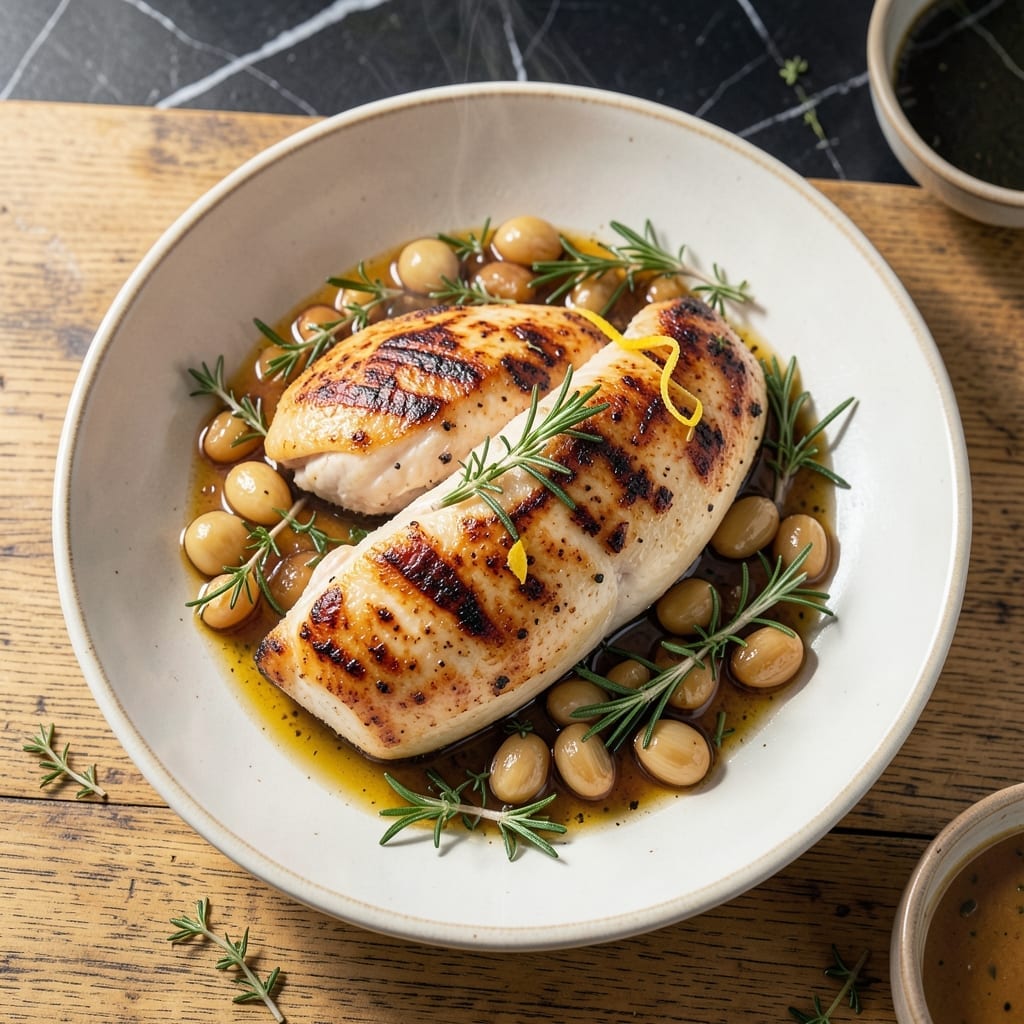
I developed this method after years of serving dry chicken at family gatherings in Georgia. The key lies in a simple brine and precise cooking temperature to lock in moisture.
This recipe transforms plain chicken breast into a juicy, herb-infused centerpiece. A quick sear followed by oven finishing ensures even cooking without over-drying the meat.
The result is tender, flavorful chicken that works for weeknight dinners or elegant entertaining. The herb crust adds a layer of complexity that elevates every bite.
Serve with seasonal vegetables or over a bed of greens for a complete meal. The technique is straightforward yet delivers impressive results.
Ingredients for Flavorful Chicken Breast
Transform plain chicken breasts into a juicy, herb-crusted centerpiece with these essential ingredients.
| Ingredient | Amount | Notes |
|---|---|---|
| Boneless Skinless Chicken Breasts 🍗 | 1 ½ lb | Pounded to even thickness |
| Kosher Salt 🧂 | ¼ cup | Diamond Crystal preferred for brining |
| Granulated Sugar 🍚 | 2 tbsp | Balances brine salinity |
| Fresh Rosemary 🌿 | 2 tbsp | Finely chopped, stems discarded |
| Fresh Thyme Leaves 🍃 | 2 tbsp | Stripped from stems |
| Garlic Cloves 🧄 | 4 cloves | Minced for herb crust |
| Extra-Virgin Olive Oil 🫒 | 3 tbsp | Divided for searing and finishing |
| Unsalted Butter 🧈 | 2 tbsp | For basting during cooking |
| Freshly Ground Black Pepper 🌶️ | 1 tsp | Coarse grind preferred |
| Dijon Mustard 🟡 | 1 tbsp | For herb crust adhesion |
| Dry White Wine 🍷 | ¼ cup | For deglazing pan |
| Chicken Stock 🥣 | ½ cup | Low-sodium preferred |
| Fresh Parsley 🌿 | ¼ cup | Chopped for garnish |
The chicken breasts must be pounded to even thickness (about 1-inch) for consistent cooking. Whole Foods or Costco offer high-quality, air-chilled breasts that retain moisture better. For the herbs, fresh is non-negotiable—dried won’t deliver the same aromatic impact. Look for vibrant green rosemary and thyme with no wilting. The brine ratio here is calibrated to Diamond Crystal kosher salt for optimal moisture retention.
No white wine? Substitute with additional chicken stock plus 1 tsp lemon juice for acidity. Fresh herbs can be swapped for dried at one-third the amount, though flavor will be less bright. Butter can be replaced with olive oil for basting, but you’ll lose some richness. For a stronger herb crust, add 1 tbsp chopped fresh sage. The Dijon mustard can be omitted, but it helps the herbs adhere during cooking.
Brined chicken stays fresh in the fridge for 2 days before cooking. Leftovers keep for 4 days refrigerated or 3 months frozen. Store herbs wrapped in damp paper towels in a sealed container. The herb crust is best applied just before cooking to preserve its vibrant color and aroma.
Why You’ll Love This Recipe
- One Pan Wonder: I just toss the chicken with salt, sugar, and fresh herbs—rosemary and thyme do all the work while it cooks.
- Herb-Infused Magic: That sweet-savory crust from the sugar and kosher salt? It locks in juice and pairs perfectly with the earthy herbs.
- Meal Prep Hero: I make a double batch on Sunday and it stays tender for days—great in salads, wraps, or straight from the fridge.
- Budget Stretch: Honestly, four chicken breasts and a few pantry staples feed my family twice, with change to spare.
Step-by-Step Instructions for Herb-Infused Chicken Breast
Master these techniques to transform simple chicken into a moist, aromatic centerpiece every time.
Step 1: Brine the Chicken for Maximum Juiciness
In a large bowl, dissolve the 0.25 cup Kosher Salt and 2 tbsp Granulated Sugar in 4 cups of warm water. Submerge the 1.5 lb Boneless Skinless Chicken Breasts in the brine and refrigerate for 1 hour. This step ensures the meat retains moisture during cooking.
The sugar balances the salt’s intensity while enhancing caramelization. I always use Diamond Crystal kosher salt for its clean flavor and consistent grain size. After brining, pat the chicken completely dry—this promotes even browning when searing.
Step 2: Create the Herb Crust
In a small bowl, combine the 2 tbsp Fresh Rosemary, 2 tbsp Fresh Thyme Leaves, 4 cloves Garlic Cloves (minced), 1 tbsp Dijon Mustard, 1 tsp Freshly Ground Black Pepper, and 1 tbsp Extra-Virgin Olive Oil. Stir until it forms a thick paste.
Rub this mixture evenly over all surfaces of the chicken breasts. The mustard acts as a binder, ensuring the herbs adhere during cooking. Let the coated chicken rest at room temperature for 10 minutes to allow the flavors to penetrate slightly before searing.
Step 3: Sear and Baste for Rich Flavor
Heat 2 tbsp Extra-Virgin Olive Oil in a large oven-safe skillet over medium-high heat until shimmering. Add the chicken and sear for 4-5 minutes per side until golden brown. Reduce heat to medium, add the 2 tbsp Unsalted Butter, and tilt the pan slightly.
Spoon the melted butter over the chicken repeatedly for 1-2 minutes to baste. This step builds a deep, aromatic crust while keeping the meat juicy. The butter should foam but not burn—adjust heat as needed.
Step 4: Deglaze and Finish with Pan Sauce
Transfer the chicken to a plate and tent with foil. Pour the 0.25 cup Dry White Wine into the skillet, scraping up any browned bits with a wooden spoon. Simmer for 2 minutes until reduced by half.
Add the 0.5 cup Chicken Stock and simmer for another 3 minutes until slightly thickened. Return the chicken to the pan, spoon the sauce over it, and let it rest in the warm liquid for 2 minutes off heat.
Step 5: Plate and Garnish
Transfer the chicken to serving plates, spooning the pan sauce over each piece. Garnish with the 0.25 cup Fresh Parsley (chopped) for a bright finish. The parsley adds freshness that cuts through the richness of the butter and herbs.
Serve immediately while the sauce is warm and glossy. Each bite should deliver tender, herb-infused meat with a balanced, savory pan sauce that ties all the flavors together.
Pro Tips For Making Flavorful Chicken Breast
- Brine with Sugar: Mix 1 tablespoon each of kosher salt and granulated sugar per cup of water for your brine—sounds weird, but it works: the sugar balances the salt and helps the herbs stick better.
- Pound to Even Thickness: I learned this the hard way—pound the chicken breasts to an even ¾-inch thickness so they cook through without drying out the thinner edges.
- Rest Before Cooking: After brining and seasoning, let the chicken sit at room temperature for 15-20 minutes—this guarantees even cooking and juicier meat.
- Use Fresh Herbs: Skip the dried stuff; fresh rosemary and thyme leaves release way more flavor, especially when you finely chop them and press them into the meat before cooking.
Creative Variations of flavorful chicken breast
Lemon-Herb Mediterranean
Swap the rosemary and thyme for 2 tbsp fresh oregano and 1 tbsp lemon zest. Add ½ tsp dried sumac to the herb paste for a bright, tangy twist. This version reminds me of the lemon-oregano chickens I enjoyed in Charleston markets. 🌿
Spicy Cajun Blackened
Replace the herb crust with 2 tbsp Cajun seasoning (I prefer Tony Chachere’s). Sear in a screaming hot cast iron skillet for 3 minutes per side. Finish with a pat of butter and a squeeze of lime—this brings the heat of my Southeast BBQ circuit days.
Honey Mustard Glaze
Mix 3 tbsp honey with 2 tbsp Dijon mustard and 1 tsp apple cider vinegar. Brush over chicken during the last 2 minutes of cooking. The glaze caramelizes beautifully, adding a sweet-tangy contrast to the savory herbs.
Bacon-Wrapped Stuffed
Butterfly the chicken and stuff with 2 oz goat cheese and 1 tbsp sun-dried tomatoes. Wrap each piece with 2 slices bacon before searing. The bacon renders fat that bastes the chicken as it cooks, keeping it moist. 💡
Asian-Inspired Ginger
Replace the herbs with 2 tbsp grated ginger, 1 tbsp soy sauce, and 1 tsp sesame oil in the paste. Deglaze with rice wine instead of white wine. Garnish with sliced scallions and sesame seeds for a fusion twist.
Parmesan Crusted
Add ½ cup grated Parmesan to the herb paste and press ¼ cup panko breadcrumbs onto the chicken before searing. The crumbs create a crispy, golden crust while the Parmesan adds umami depth to every bite.
Nutrition Facts
Frequently Asked Questions
Why is brining the chicken important?
Brining adds moisture and seasoning deep into the meat. The 1-hour soak in salt and sugar solution ensures the chicken stays juicy during cooking, even if slightly overdone.
Can I skip the Dijon mustard in the herb crust?
You can, but it helps the herbs stick to the meat. Without it, the crust may fall off during searing. The mustard also adds a subtle tang that balances the richness.
What if I don’t have an oven-safe skillet?
Use a regular skillet for searing, then transfer the chicken to a baking dish. Pour the pan juices over the chicken and finish in a preheated 375°F oven.
How do I know when the chicken is fully cooked?
Use a meat thermometer to check the thickest part. It’s done at 165°F. If you don’t have one, cut into the center—juices should run clear, not pink.

- Jollof Rice Sauce Recipe: West African Tomato and Spice Infusion - September 25, 2026
- Japanese Rice Soup Recipe: Umami-Rich Comfort in a Bowl - September 25, 2026
- Homemade Cream Of Rice Recipe: Silk-Smooth Breakfast in Minutes - September 25, 2026