
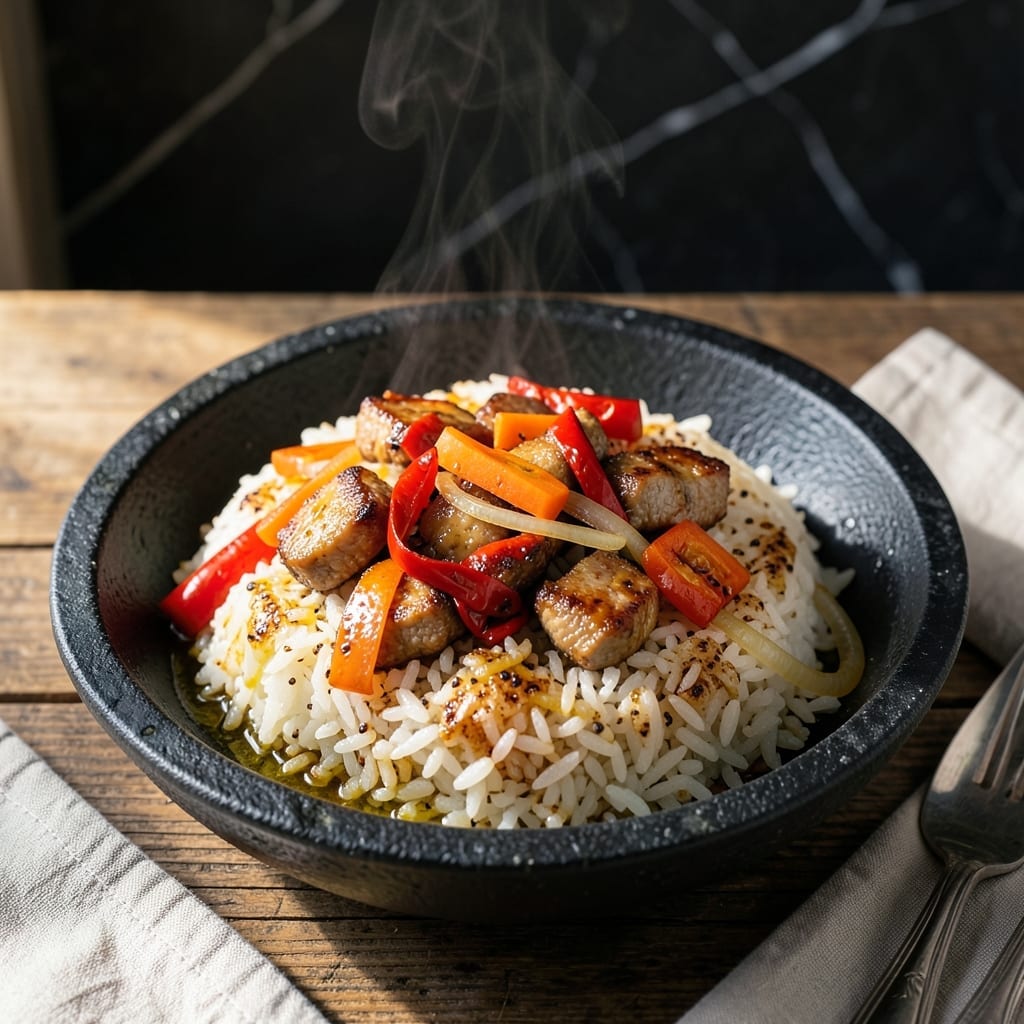
I developed this dish after a particularly challenging week in my Boston kitchen, where space and time were both limited. The solution came from embracing Korean flavors I’d grown to love, transforming simple ingredients into something extraordinary.
The key lies in using fermented kimchi for its bold, tangy depth, balanced with rice and protein. High heat and quick cooking ensure each grain stays separate, while the kimchi’s natural spice builds layers of flavor without overpowering.
You’ll achieve a dish that’s both comforting and vibrant, with crisp edges and tender bites throughout. The aroma alone—garlicky, slightly smoky—will draw everyone to the table before the first bite is even served.
Serve it straight from the wok for the best texture and temperature. This creation turns everyday leftovers into a meal worth celebrating.
Ingredients for Fried Rice Korean Style
Pantry staples and a few fresh additions create this vibrant, kimchi-packed dish.
| Ingredient | Amount | Notes |
|---|---|---|
| Cooked White Rice 🍚 | 4 cups | Day-old, chilled for best texture |
| Kimchi 🥬 | 1 ½ cups | Fermented, chopped with juices |
| Ground Pork 🍖 | ½ lb | Or substitute with tofu |
| Onion 🧅 | 1 whole | Medium, finely diced |
| Garlic Cloves 🧄 | 4 cloves | Minced for maximum flavor |
| Carrot 🥕 | 1 whole | Medium, julienned or diced |
| Zucchini 🥒 | 1 whole | Medium, diced into small cubes |
| Scallions 🌱 | 4 whole | Thinly sliced, whites and greens separated |
| Soy Sauce 🫙 | 2 tbsp | Low-sodium preferred |
| Sesame Oil 🫒 | 1 tbsp | Toasted for depth |
| Gochujang 🌶️ | 1 tbsp | Korean chili paste, adjust to taste |
| Vegetable Oil 🫒 | 2 tbsp | High smoke point, neutral flavor |
| Large Eggs 🥚 | 2 whole | Beaten for scrambling |
| Toasted Sesame Seeds 🌰 | 1 tbsp | For garnish, optional |
| Kosher Salt 🧂 | ½ tsp | Adjust to taste |
The kimchi is non-negotiable here—look for napa cabbage kimchi at an Asian market or H Mart for the best quality. It should be fermented (not fresh) and packed with bold, tangy flavor. Day-old rice is key for that perfect texture, so plan ahead. For the protein, ground pork is traditional, but chicken or firm tofu (pressed and crumbled) work just as well. Always chill your rice overnight if possible.
No gochujang? Sriracha mixed with a touch of miso gets you close, but it won’t have the same depth. The soy sauce should be low-sodium to keep the dish from getting too salty—Kikkoman is a solid choice. For a vegetarian version, swap the pork for mushrooms or tofu, and use vegetable broth if you’re adding extra liquid. The scallions add a fresh finish, so don’t skip them.
Leftover fried rice keeps well in the fridge for 3-4 days—reheat in a skillet with a splash of water to revive the texture. Freezing isn’t ideal (it’ll turn mushy), but if you must, portion it out and freeze for up to 1 month. Always cook the eggs fresh though—no reheating scrambled eggs here.
Why You’ll Love This Recipe
- One Pan Wonder: I toss everything in my skillet—rice, kimchi, pork—and it’s done in 15 minutes flat.
- Umami Bomb: The kimchi and garlic create this deep, tangy flavor that hits all the right notes.
- Feeds a Crowd: Honestly, I double the batch and pack it for lunches all week.
- Budget Hero: Ground pork and rice stretch so far, I save a ton compared to takeout.
Step-by-Step Instructions for Fried Rice Korean Style
Here’s how I create this flavor-packed dish with perfect texture every single time.
Step 1: Prep and Sauté the Vegetables and Pork
Heat 1 tablespoon Vegetable Oil in a large wok or skillet over medium-high heat. Add the Onion, Carrot, and Zucchini, stir-frying for 3-4 minutes until the vegetables soften slightly but still retain some bite. The onion should turn translucent at the edges.
Push the vegetables to one side and add the Ground Pork to the empty space. Break it up with a wooden spoon and cook for 3-4 minutes until no longer pink and starting to brown. This builds a flavorful foundation for your dish.
Add the minced Garlic Cloves and cook for 30 seconds until fragrant. Stir everything together and remove from heat temporarily.
Step 2: Scramble the Eggs and Combine
In the same pan, add the remaining 1 tablespoon Vegetable Oil. Pour in the beaten Large Eggs and scramble quickly with a spatula. Cook for 1-2 minutes until just set but still slightly soft—you want visible ribbons of egg throughout.
Return the pork and vegetable mixture to the pan. Add the chopped Kimchi with its juices, Gochujang, and Soy Sauce. Stir-fry for 2 minutes until everything is well coated and the kimchi starts to sizzle. The color will deepen to a rich, appetizing hue.
Step 3: Incorporate the Rice and Finish
Add the Cooked White Rice, breaking up any clumps with your hands as you add it. Stir-fry for 3-4 minutes until the rice is heated through and starting to crisp slightly in spots. The grains should be separate and coated with all the flavorful sauces.
Drizzle the Sesame Oil over the top and add the Kosher Salt. Toss everything together for another 1-2 minutes. Taste and adjust seasoning if needed—the kimchi and gochujang should provide a nice spicy tang.
Step 4: Garnish and Serve Immediately
Remove from heat and stir in the sliced Scallions, reserving some greens for garnish. The residual heat will soften them slightly while keeping their fresh crunch. Transfer to serving bowls and sprinkle with the remaining scallion greens and Toasted Sesame Seeds.
Serve right away while hot—the contrast of warm rice with cool garnishes is perfect. Each bite should deliver a harmony of spicy, umami, and slightly sweet flavors with a satisfying texture from the crisp-tender vegetables and fluffy rice.
Pro Tips For Making Fried Rice Korean Style
- Use Day-Old Rice: Fresh rice turns mushy—spread leftover cooked white rice on a tray and refrigerate overnight to dry it out. I learned this the hard way after making soggy fried rice way too many times.
- Pre-Cook the Pork: Brown the ground pork first, then set it aside before stir-frying the veggies. Sounds like an extra step, but it actually changes the outcome by preventing greasy rice.
- Squeeze the Kimchi: Give the kimchi a good squeeze to remove excess liquid—about 30 seconds in a colander works. Skip this and you’ll be left with a watery mess instead of crispy, flavorful bits.
- High Heat Only: Crank the burner to max and keep the wok or pan screaming hot the whole time. After burning three batches, I finally figured out that lukewarm heat is the enemy of that classic smoky wok flavor.
Wine and Beer Pairings for fried rice korean style
Crisp Lager Pairings
A cold Korean lager like Hite or OB Beer cuts through the spice beautifully with its clean, slightly sweet profile. The carbonation refreshes your palate between bites of this bold dish. I always keep a few in my Boston fridge for exactly this reason. 🍺
Light Wheat Beers
Try a Belgian witbier such as Hoegaarden—its citrus and coriander notes complement the kimchi’s tang. The wheat’s light body won’t compete with the rice’s texture. Serve at 45-50°F for the best experience.
Off-Dry White Wines
A Riesling from Washington state offers just enough sweetness to balance the heat while maintaining crisp acidity. Look for bottles labeled “off-dry” or Kabinett. The stone fruit notes harmonize with the dish’s umami depth.
Sparkling Options
Prosecco’s gentle bubbles and apple-pear flavors provide a refreshing contrast to the fried rice’s richness. I prefer La Marca for its consistent quality. Chill to 40-45°F before serving.
Non-Alcoholic Choices
For a zero-proof option, sparkling yuzu soda from an Asian market offers citrusy brightness that mirrors the dish’s flavors. Alternatively, iced barley tea provides nutty depth that pairs surprisingly well with the kimchi. 💫
Nutrition Facts
Frequently Asked Questions
Can I use fresh rice instead of day-old?
Fresh rice is too moist and will turn mushy when stir-fried. Always use day-old, chilled rice for the best texture. Spread freshly cooked rice on a tray to cool quickly if you’re in a pinch.
What can I substitute for kimchi?
Sauerkraut with a splash of rice vinegar and chili flakes offers a similar tangy kick. For more heat, add 1 tablespoon sriracha and 1 teaspoon miso to mimic kimchi’s depth.
Why does my fried rice turn out soggy?
Overcrowding the pan or using low heat steams the rice instead of frying it. Cook in batches over medium-high heat and ensure the wok is hot before adding ingredients.

- El Pollo Loco Spanish Rice Recipe: Smoky Tomato-Infused Side Dish - October 11, 2026
- Fresh Black Beans and Rice Recipe: Latin-Inspired One-Bowl Heartiness - October 11, 2026
- Empire Ghee Rice Recipe: Fragrant Basmati With Golden Clarity - October 11, 2026