
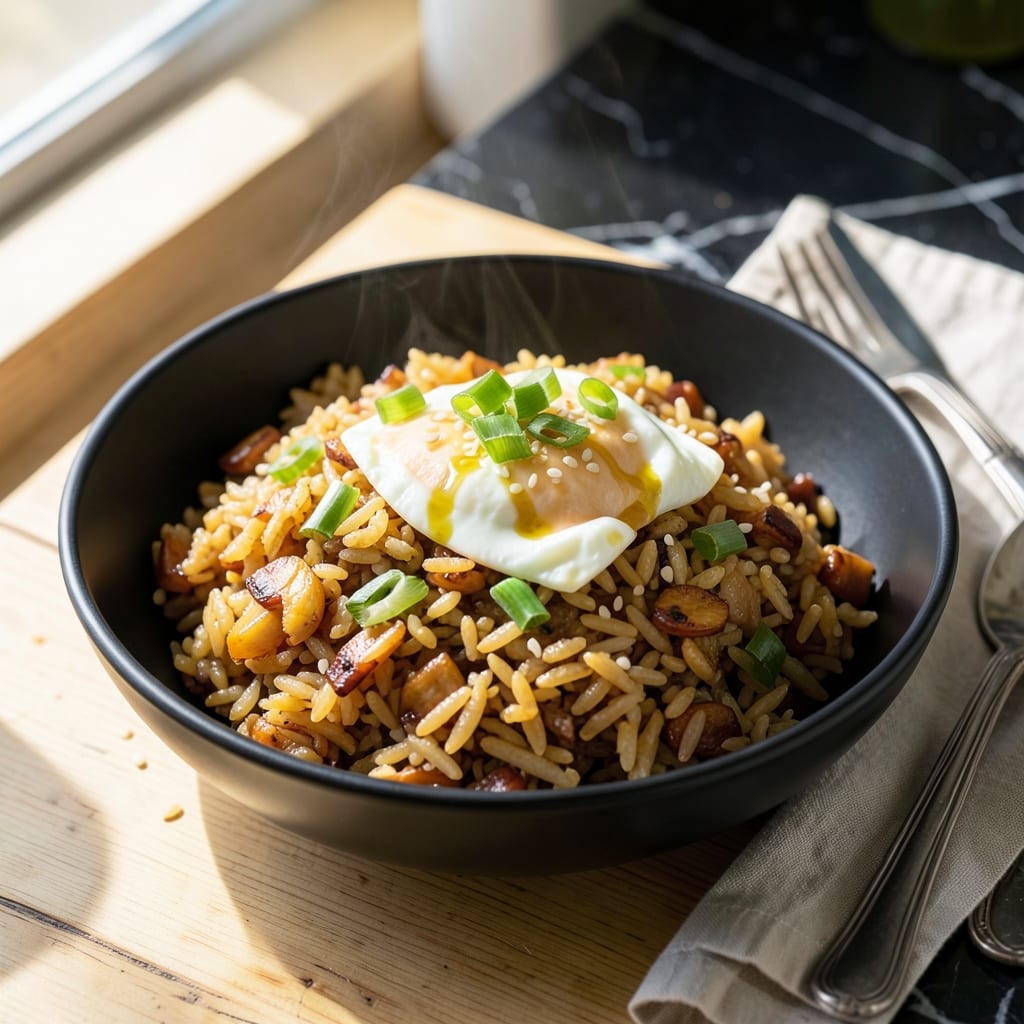
I’ve spent countless hours perfecting wok technique to achieve perfect fried rice every time. This method transforms ordinary leftovers into restaurant-quality results with precise heat control and timing.
The secret lies in high heat, proper ingredient prep, and the right sequence of cooking. Each grain stays separate yet flavorful, with that signature wok hei aroma that’s hard to replicate at home.
What emerges is a dish with distinct textures—tender rice, crisp vegetables, and just the right amount of savory depth. The technique ensures consistent results, whether you’re using day-old rice or fresh.
Master this foundation, and you’ll never settle for mediocre fried rice again. The process is as rewarding as the final dish.
Ingredients for Fried Rice Recipe Food Lab
Precision starts with quality components for this wok masterpiece with restaurant-grade results.
| Ingredient | Amount | Notes |
|---|---|---|
| Jasmine Rice 🍚 | 3 cups | Day-old, cooked and chilled |
| Peanut Oil 🫒 | 3 tbsp | High smoke point essential |
| Garlic Cloves 🧄 | 4 cloves | Finely minced for even distribution |
| Fresh Ginger 🌿 | 1 tbsp | Peeled and finely grated |
| Green Onions 🧅 | 4 whole | Thinly sliced, white and green parts separated |
| Large Eggs 🥚 | 3 whole | Lightly beaten for scrambling |
| Carrots 🥕 | ¾ cup | Finely diced for quick cooking |
| Frozen Green Peas 🌱 | ¾ cup | Thawed for even integration |
| Soy Sauce 💧 | 3 tbsp | Low-sodium preferred for control |
| Sesame Oil 🫒 | 1 tsp | Toasted, added at the end |
| Diamond Crystal Kosher Salt 🧂 | ¾ tsp | Adjust to taste at finish |
| White Pepper 🌶️ | ½ tsp | Freshly ground for authenticity |
| Shaoxing Wine 🍶 | 1 tbsp | Optional for depth of flavor |
The rice is non-negotiable—day-old jasmine from a trusted Asian market (or Trader Joe’s in a pinch) yields the ideal dry, separate grains. Peanut oil with its high smoke point is critical for achieving wok hei; avoid olive oil. For the Shaoxing wine, Koon Chun is the gold standard. Fresh ginger and garlic should be firm and fragrant, never shriveled or sprouting.
No Shaoxing wine? Dry sherry works as a substitute. For a vegetarian version, mushroom soy sauce replaces regular soy. The peas and carrots can be swapped for bell peppers or corn, but keep the dice uniform for even cooking. If avoiding eggs, silken tofu scrambled with turmeric mimics the texture. Always use low-sodium soy to control seasoning precisely.
Cooked rice can be refrigerated for up to 3 days before using—any longer and it dries out. Prepared fried rice keeps in the fridge for 4-5 days but is best consumed immediately. The peanut oil and soy sauce store indefinitely in a cool, dark place. Freeze portions for up to 3 months if making ahead.
Why You’ll Love This Recipe
- 20-Minute Meal: I can have this on the table faster than takeout arrives—just rice, a hot pan, and those fragrant garlic and ginger cloves doing the heavy lifting.
- Aroma Bomb: Honestly, the sizzle of peanut oil hitting fresh ginger and garlic fills the kitchen with a smell that makes everyone hover near the stove.
- Fridge Cleaner: It’s my sneaky way to use up leftover jasmine rice and whatever veggies are lurking in the crisper.
- Pennywise Plate: Between us, this feeds my family for less than the cost of one delivery container, and tastes twice as good.
Step-by-Step Instructions for Perfect Fried Rice
Master the wok technique with these precise steps for restaurant-quality results every time.
Step 1: Prepare and Heat the Wok
Place your wok over high heat and add 2 tbsp Peanut Oil. The oil should shimmer and just begin to smoke—that’s your signal it’s ready. I always use peanut oil for its high smoke point, which is essential for achieving that signature wok hei flavor.
Add the 4 cloves Garlic Cloves and 1 tbsp Fresh Ginger, stirring constantly for 15-20 seconds until fragrant but not browned. This quick cook preserves their aromatic qualities without burning. The white parts of the 4 whole Green Onions go in next, cooking for 30 seconds until slightly softened.
Step 2: Scramble the Eggs and Add Vegetables
Push the aromatics to one side of the wok and add the remaining 1 tbsp Peanut Oil. Pour in the 3 whole Large Eggs and scramble quickly with a spatula until just set but still slightly runny. This takes about 30-45 seconds—you want soft curds, not fully cooked eggs.
Add the 0.75 cup Carrots and 0.75 cup Frozen Green Peas, stirring to combine everything. Cook for 1-2 minutes until the carrots begin to soften and the peas are heated through. The vegetables should retain some bite—they’ll continue cooking when you add the rice.
Step 3: Incorporate the Rice and Season
Add the 3 cups Jasmine Rice, breaking up any clumps with your spatula. Press down firmly and let it sit undisturbed for 20-30 seconds to develop a slight crust on the bottom. This creates that desirable texture contrast in your finished dish.
Pour the 3 tbsp Soy Sauce and 1 tbsp Shaoxing Wine around the edges of the wok, then stir to distribute evenly. Season with 0.75 tsp Diamond Crystal Kosher Salt and 0.5 tsp White Pepper. The rice should be uniformly coated and starting to take on a light golden color.
Step 4: Finish and Serve
Cook for an additional 2-3 minutes, stirring constantly, until everything is heated through and the rice has absorbed most of the liquid. The grains should be separate and slightly glossy, not mushy or dry.
Remove from heat and stir in the 1 tsp Sesame Oil. The green parts of the Green Onions go in last for freshness. Taste and adjust seasoning if needed. Serve immediately while hot—the texture changes as it cools, and this dish is best enjoyed fresh from the wok.
Pro Tips For Making Fried Rice Recipe Food Lab
- Use Day-Old Rice: Fresh rice turns to mush—spread leftover jasmine rice on a tray and refrigerate overnight to dry it out. I learned this the hard way after my first three batches turned into a gluey mess.
- Crank the Heat: Peanut oil has a high smoke point, so get your wok or pan screaming hot before adding ingredients. After burning two batches, I finally figured out that medium heat just won’t cut it.
- Prep Everything First: Have your garlic, ginger, and green onions minced and ready to go—fried rice cooks fast, and you won’t have time to chop once the oil’s shimmering. My grandmother swore by this, and she was right.
- Toast the Aromatics: Let the garlic and ginger sizzle in the peanut oil for 10-15 seconds until fragrant before adding anything else. Sounds weird, but it works—this builds the base flavor that makes the dish sing.
Regional Styles of This Recipe
Cantonese Style
This version focuses on subtle, balanced flavors. I use 2 tbsp light soy sauce with 1 tsp dark soy sauce for color, plus 1 tsp sugar to round out the taste. The eggs are scrambled until just set, then removed before adding other ingredients.
Thai Basil
Add 1 cup Thai basil leaves at the end for a fragrant twist. I also include 1 tbsp fish sauce and 1 tsp chili paste for that authentic Thai kick. The basil wilts beautifully into the hot rice, releasing its anise-like aroma. 🌿
Korean Kimchi
Stir in 1 cup chopped kimchi with its juices after the rice goes in. I add 1 tbsp gochujang for extra heat and depth. The kimchi’s tang cuts through the richness, and its probiotics add a healthy boost.
Yangzhou Style
This luxurious version includes ½ cup diced ham, ½ cup shrimp, and ½ cup BBQ pork. I cook the proteins first, then set them aside before adding back at the end. The variety of textures makes every bite exciting.
Indonesian Nasi Goreng
Sweet and savory with 2 tbsp kecap manis (sweet soy sauce) and 1 tsp shrimp paste. I top it with a fried egg and serve with krupuk (shrimp crackers) for crunch. The caramelized sauce gives it a distinctive deep color. 🔥
Japanese Chahan
Simpler than others, focusing on 1 tbsp soy sauce, 1 tsp sake, and 1 tsp mirin. I add 2 tbsp finely chopped pickled ginger for a refreshing contrast. The clean flavors let the rice itself shine through.
Nutrition Facts
Frequently Asked Questions
Why use day-old rice?
Day-old rice is drier, preventing mushiness when stir-fried. Fresh rice contains too much moisture, leading to clumping instead of separate grains.
Can I substitute the peanut oil?
Use any oil with a high smoke point, like vegetable or avocado oil. Avoid olive oil—it burns at wok temperatures.
How do I get that smoky wok hei flavor at home?
Crank your burner to maximum and let the oil smoke briefly before adding ingredients. A well-seasoned wok helps too.
What if my rice is still clumpy?
Break it up with your hands before adding to the wok. If needed, press it into the hot pan and let it crisp for 20-30 seconds before stirring.

- Gobi Fried Rice Recipe: Spiced Cauliflower Wok Delight - October 8, 2026
- Glutinous Rice Roll Recipe: Chewy Pillows With Savory Fillings - October 8, 2026
- Garlic Jasmine Rice Recipe: Fragrant Grains with Aromatic Depth - October 8, 2026