
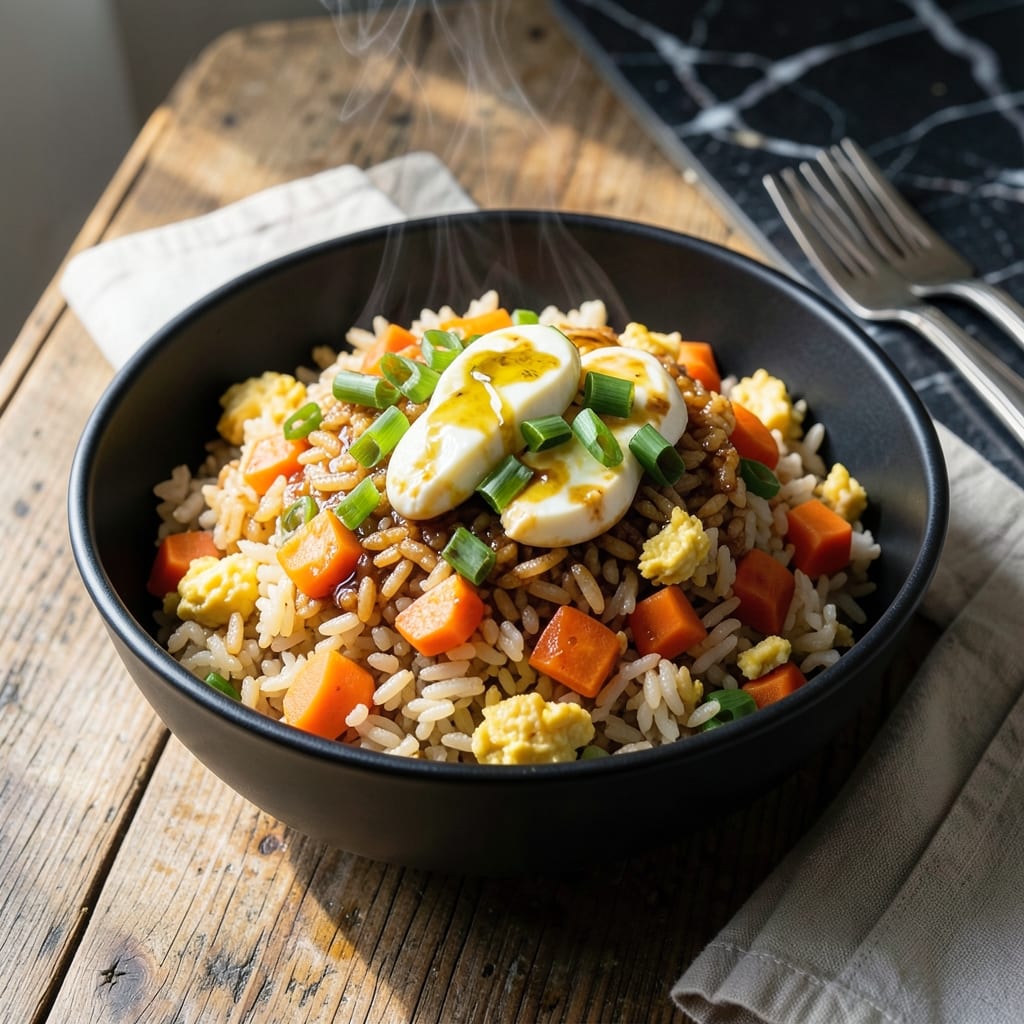
Achieving perfect wok-tossed fried rice at home starts with one secret ingredient: mirin. This sweet Japanese rice wine transforms ordinary rice into a caramelized, deeply flavorful dish with minimal effort.
High heat and constant stirring are key to replicating takeout texture. The mirin adds subtle sweetness that balances savory soy sauce, creating a restaurant-quality result every time.
Ingredients for Fried Rice Recipe Mirin
Perfect wok-tossed fried rice requires quality ingredients and one star: mirin.
| Ingredient | Amount | Notes |
|---|---|---|
| Jasmine Rice 🍚 | 3 cups | Cooked and day-old preferred |
| Mirin 🍶 | 3 tbsp | Sweet Japanese rice wine |
| Soy Sauce 🫒 | 3 tbsp | Low-sodium recommended |
| Vegetable Oil 🫒 | 2 tbsp | High smoke point preferred |
| Large Eggs 🥚 | 2 whole | Lightly beaten |
| Green Onions 🧅 | ½ cup | Thinly sliced, whites and greens separated |
| Garlic Cloves 🧄 | 3 cloves | Minced finely |
| Carrots 🥕 | ½ cup | Finely diced |
| Frozen Peas 🌱 | ½ cup | Thawed |
| Sesame Oil 🫒 | 1 tsp | Toasted for finishing |
| Ginger Root 🌿 | 1 tbsp | Freshly grated |
| Salt 🧂 | ½ tsp | Kosher or sea salt |
| Black Pepper 🌶️ | ¼ tsp | Freshly ground |
The mirin is non-negotiable for authentic flavor. Kikkoman Aji-Mirin (available at Whole Foods or Asian markets) delivers the right balance of sweetness and depth. Jasmine rice, with its fragrant, slightly sticky texture, is ideal—avoid freshly cooked rice as it’s too moist. Day-old rice from the fridge works best (the grains firm up overnight). Vegetable oil with a high smoke point, like peanut or avocado oil, ensures clean wok-tossing without burning.
Out of mirin? 1 tbsp sugar plus 1 tbsp rice vinegar mimics the flavor in a pinch. No jasmine rice? Long-grain white rice works, but rinse it well to remove excess starch. For a protein boost, swap eggs for tofu or shrimp. The soy sauce can be tamari for gluten-free needs, but reduce by half—it’s saltier. Green onions add freshness; if unavailable, shallots or chives substitute nicely.
Cooked rice keeps in the fridge for 3-4 days—perfect for planning ahead. Leftovers reheat best in a skillet with a splash of water to restore moisture. The dish freezes well for up to 3 months, though texture may soften slightly. Always store mirin in a cool, dark place to preserve its delicate flavor.
Why You’ll Love This Recipe
- One Pan Meal: I toss everything in a single skillet—rice, eggs, mirin—and it’s done in 15 minutes flat.
- Sweet-Savory Magic: The mirin adds this subtle sweetness that balances the soy sauce perfectly, making every bite ridiculously good.
- Feeds the Crew: I make a big batch on Sunday and it reheats like a dream for lunches all week.
- Pantry MVPs: Jasmine rice, eggs, and a splash of mirin—ingredients I always have, so it’s my go-to when the fridge looks sad.
Step-by-Step Instructions for Sweet and Savory Fried Rice
Master the wok-tossed technique to achieve perfectly balanced sweetness and savory depth in every bite.
Step 1: Prepare and Heat the Wok
Begin by heating the 2 tbsp vegetable oil in a wok or large skillet over medium-high heat until it shimmers but does not smoke. I use a carbon steel wok for optimal heat distribution and that classic wok hei flavor.
Add the 3 cloves garlic cloves and 1 tbsp ginger root, stirring constantly for 30-45 seconds until fragrant. This aromatic base is crucial for building layers of flavor. Watch carefully to prevent burning, as garlic can scorch quickly at high heat.
Step 2: Cook the Vegetables and Protein
Add the 0.5 cup carrots and stir-fry for 2-3 minutes until they begin to soften. Then incorporate the 0.5 cup frozen peas and the white parts of the 0.5 cup green onions, cooking for another 1-2 minutes until all vegetables are tender-crisp.
Create a well in the center of the wok and pour in the 2 whole large eggs. Scramble them quickly with a spatula until just set, then mix into the vegetables. This method ensures the eggs remain tender and don’t form large curds.
Step 3: Combine Rice and Seasonings
Add the 3 cups jasmine rice to the wok, breaking up any clumps with your spatula. The rice should be day-old and cold, as fresh rice tends to turn mushy when stir-fried.
Drizzle the 3 tbsp mirin and 3 tbsp soy sauce evenly over the rice. Add the 0.5 tsp salt and 0.25 tsp black pepper. Stir-fry for 4-5 minutes until the rice is heated through and begins to develop a slight crust on the bottom of the wok.
Step 4: Finish and Serve
Remove from heat and stir in the green parts of the 0.5 cup green onions. Drizzle with the 1 tsp sesame oil and toss gently to combine. The sesame oil adds a nutty aroma that complements the sweetness of the mirin.
Taste and adjust seasoning if needed. The finished dish should have a glossy appearance with distinct grains of rice, vibrant vegetable pieces, and a harmonious balance of sweet and savory flavors. Serve immediately while hot, as fried rice continues to cook from residual heat.
Pro Tips For Making Fried Rice Recipe Mirin
- Use Day-Old Rice: Fresh rice is too moist and will turn to mush—I learned this the hard way after making a sad, gummy batch. Spread leftover jasmine rice on a tray and refrigerate it overnight for the perfect dry texture.
- Heat the Oil Hot: Crank the heat to high and let the vegetable oil shimmer before adding anything. Sounds basic, but it’s the only way to get that classic wok-fried sear on the rice and eggs.
- Scramble Eggs First: Push the rice to one side, pour a little oil in the empty space, and scramble the eggs quickly before mixing everything together. This keeps them fluffy instead of rubbery.
- Add Mirin Last: Mirin’s sweetness can caramelize too fast if added early, so drizzle it in at the end with the soy sauce. After burning a batch or two, I finally figured out this timing actually changes the outcome.
Flavor Customization for This Dish
Spice It Up
Add 1-2 tsp sriracha or 1 tbsp gochujang for heat. The mirin’s sweetness balances the spice beautifully. I start with ½ tsp and adjust to taste. 🌶️
Extra Veggie Boost
Swap in bell peppers or broccoli florets for the carrots. Dice into ¼-inch pieces for even cooking. Zucchini works too but needs 1 extra minute to soften.
Protein Variations
Add ½ lb diced chicken or shrimp with the vegetables. Cook through before adding eggs. For tofu, press and cube 14 oz firm tofu for the best texture.
Umami Depth
Boost flavor with 1 tbsp oyster sauce or 1 tsp fish sauce. These add complexity without overpowering the mirin. I prefer Lee Kum Kee oyster sauce for consistency.
Sweet Adjustments
For more sweetness, add 1 tsp honey or brown sugar with the mirin. Pineapple chunks (about ½ cup) add natural sweetness and a tropical twist. 💡
Garnish Ideas
Finish with 1 tbsp toasted sesame seeds or crushed peanuts for crunch. Fresh cilantro (about ¼ cup chopped) adds a bright, herbal note.
Nutrition Facts
Frequently Asked Questions
Can I use a substitute for mirin?
Yes, mix 1 tbsp sugar with 1 tbsp rice vinegar for each 1 tbsp mirin needed. The combination mimics mirin’s sweet and tangy profile well.
Why use day-old rice?
Day-old rice is drier, so it fries up fluffy instead of mushy. Fresh rice contains too much moisture, leading to clumpy results.
How do I prevent soggy texture?
Cook over medium-high heat and stir constantly. Use a large wok or skillet to avoid overcrowding. Crispy bits add flavor!
Can I add other proteins?
Try ½ lb shrimp or diced chicken. Cook them first, then set aside and add back at the end.

- Gobi Fried Rice Recipe: Spiced Cauliflower Wok Delight - October 8, 2026
- Glutinous Rice Roll Recipe: Chewy Pillows With Savory Fillings - October 8, 2026
- Garlic Jasmine Rice Recipe: Fragrant Grains with Aromatic Depth - October 8, 2026