
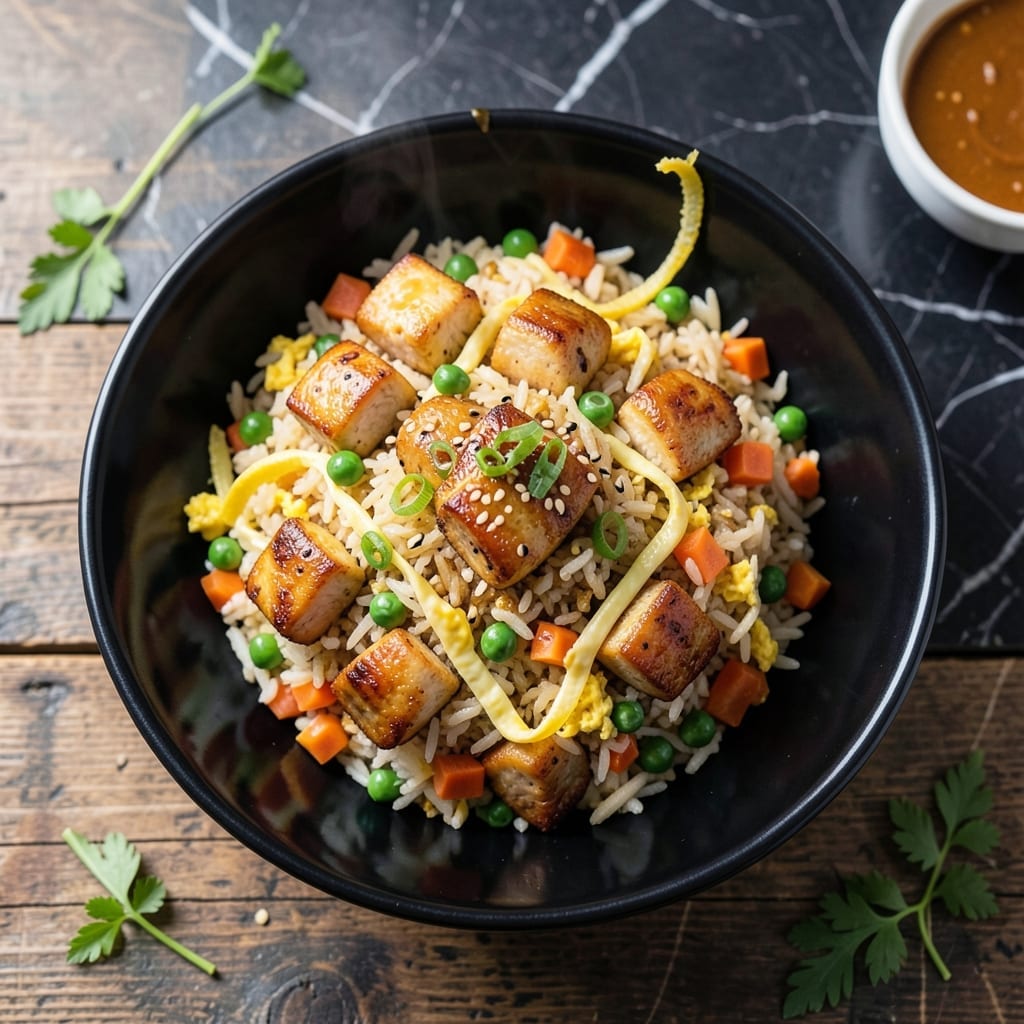
I perfected this chicken fried rice after years of takeout disappointments. The key is high heat and proper prep—every ingredient must be ready before the wok touches the flame.
Day-old rice works best, as fresh rice turns mushy when stir-fried. The chicken needs a quick velveting treatment with cornstarch for that tender texture, and the eggs must be scrambled separately to prevent overcooking.
This method delivers that signature wok hei flavor with each grain distinct yet coated in savory sauce. The process moves fast, so organization is everything.
You’ll end up with a dish that rivals your favorite restaurant version—restaurant-quality results in your own kitchen.
Ingredients for Chicken Fried Rice Recipe at Home
Pantry staples meet fresh ingredients for that takeout classic at home.
| Ingredient | Amount | Notes |
|---|---|---|
| Day-Old Cooked White Rice 🍚 | 4 cups | Chilled overnight preferred |
| Boneless Chicken Thighs 🍗 | 1 lb | Cut into small uniform pieces |
| Cornstarch 🌾 | 2 tbsp | For velveting chicken |
| Large Eggs 🥚 | 3 whole | Beaten lightly for scrambling |
| Vegetable Oil 🫒 | 3 tbsp | High smoke point required |
| Garlic Cloves 🧄 | 3 cloves | Minced finely |
| Fresh Ginger 🌿 | 1 tbsp | Peeled and minced |
| Green Onions 🧅 | 4 whole | Thinly sliced, whites and greens separated |
| Frozen Peas and Carrots 🥕 | 1 cup | No need to thaw |
| Soy Sauce 💧 | 3 tbsp | Low-sodium preferred |
| Oyster Sauce 🫒 | 1 tbsp | Optional but recommended |
| Sesame Oil 🫒 | 1 tsp | For finishing flavor |
| Kosher Salt 🧂 | ½ tsp | Adjust to taste |
| Ground White Pepper 🌶️ | ¼ tsp | Classic wok flavor |
The rice is non-negotiable—day-old from the fridge (or even slightly dried out) gives you those separate, chewy grains. For the chicken, thighs stay juicier than breasts through the high heat. I grab mine from Whole Foods or the local Asian market, where they’ll often cube it for you. The cornstarch velveting is what gives that restaurant-quality tenderness (don’t skip it).
No oyster sauce? Hoisin or extra soy works in a pinch. Fresh ginger is ideal but ground ginger at half the amount saves time. The veggies can be swapped—bell peppers or broccoli hold up well. If using fresh peas, blanch them first. The sesame oil is for finishing only—never cook with it (it burns easily).
Everything prepped ahead? Store in the fridge for up to 2 days before cooking. Leftovers keep 4-5 days and reheat beautifully in a skillet. Freeze portions for up to 3 months—perfect for quick meals later.
Why You’ll Love This Recipe
- One Pan Wonder: I toss everything into my wok and it’s done in 15 minutes flat—no extra pots, no fuss.
- Crave-Worthy Bites: The chicken thighs get this tender, juicy texture from the cornstarch, and the eggs add that classic fried rice richness.
- Meal Prep Hero: I make a big batch on Sunday and it reheats beautifully for lunches all week.
- Budget Stretcher: Honestly, using day-old rice and a few thighs keeps costs low while still feeling like a takeout treat.
Step-by-Step Instructions for Chicken Fried Rice
This method delivers restaurant-quality results with crisp-tender vegetables and perfectly seasoned rice every time.
Step 1: Velvet the Chicken for Maximum Tenderness
Cut the 1 lb boneless chicken thighs into ½-inch uniform pieces. Toss them with the 2 tbsp cornstarch and ½ tsp kosher salt in a bowl until each piece is evenly coated. I’ve found this velveting technique creates incredibly tender chicken that stays juicy during the high-heat stir-fry.
Let the chicken marinate for 10 minutes while you prepare the other ingredients. The cornstarch will absorb some of the chicken’s moisture, which helps create that signature velvety texture when cooked. Don’t skip this step—it makes a noticeable difference in the final dish.
Step 2: Scramble the Eggs and Aromatics
Heat 1 tbsp of the vegetable oil in a wok or large skillet over medium-high heat until it shimmers. Add the 3 beaten large eggs and scramble quickly with a spatula until just set but still slightly runny—about 45 seconds. Remove the eggs to a plate and set aside.
In the same pan, add the remaining 2 tbsp vegetable oil. When hot, add the 3 minced garlic cloves, 1 tbsp minced fresh ginger, and the white parts of the 4 green onions. Stir-fry for 30 seconds until fragrant but not browned. The aroma should be intoxicating at this point—this is your flavor base.
Step 3: Cook the Chicken and Vegetables
Increase the heat to high and add the marinated chicken in a single layer. Let it sear undisturbed for 1 minute to develop a light crust, then stir-fry for another 2-3 minutes until the chicken is opaque and cooked through. The cornstarch coating will create a light, crispy exterior.
Add the 1 cup frozen peas and carrots directly from the freezer—no need to thaw. Stir-fry for 2 minutes until the vegetables are heated through and the chicken is lightly browned. The peas should turn bright green and the carrots should soften slightly but retain some bite.
Step 4: Combine Everything with the Sauce
Add the chilled 4 cups day-old cooked white rice, breaking up any clumps with your spatula. The rice should be cold and dry—this prevents it from turning mushy during cooking. Stir-fry for 2 minutes to heat the rice through and combine all the ingredients.
Pour in the 3 tbsp soy sauce and 1 tbsp oyster sauce around the edges of the pan, then stir to distribute evenly. Add the scrambled eggs back to the pan along with the green onion tops. Cook for another 1-2 minutes until everything is well combined and heated through.
Step 5: Finish and Serve
Remove from heat and drizzle with the 1 tsp sesame oil. Sprinkle with the ¼ tsp ground white pepper and toss one final time. The sesame oil adds a nutty aroma that ties all the flavors together, while the white pepper provides a subtle, authentic warmth.
Taste and adjust seasoning if needed, though the combination of soy and oyster sauce should provide perfect balance. Serve immediately while hot, with the green onion tops adding a fresh, oniony finish to each bite. The rice grains should be separate and slightly crisp, with every element distinctly flavorful.
Pro Tips For Making Chicken Fried Rice Recipe At Home
- Chill the Rice: Use day-old rice straight from the fridge—it’s drier and fries up fluffier. I learned this the hard way after making mushy fried rice with fresh rice more times than I’d like to admit.
- Velvet the Chicken: Toss the chicken thighs in cornstarch before cooking. Sounds weird, but it keeps them tender and gives that restaurant-style texture.
- Hot Wok, Quick Cook: Crank the heat to high and cook in small batches. After burning three batches, I finally figured out that crowding the pan steams the food instead of frying it.
- Scramble Eggs First: Push the rice and chicken to one side, add a little oil, then scramble the eggs in the empty space. My grandmother swore by this, and she was right: it distributes the egg evenly without turning the dish into a clumpy mess.
Health Benefits of This Dish
Protein Powerhouse
The 1 lb boneless chicken thighs in this dish provide about 50 grams of protein per serving, supporting muscle maintenance and repair. I love that chicken thighs stay juicier than breasts during high-heat cooking, making them perfect for stir-frying. 💪
Complex Carbohydrates
The 4 cups day-old white rice offers sustained energy through complex carbs. This is the fuel your body needs for daily activities. Using day-old rice also ensures each grain stays separate and perfectly textured.
Vitamin-Rich Vegetables
Your 1 cup frozen peas and carrots deliver essential vitamins like vitamin A from carrots and vitamin K from peas. These nutrients support vision, immune function, and blood health.
Healthy Fats Balance
The combination of vegetable oil and sesame oil provides beneficial unsaturated fats. These support heart health while adding rich flavor. I always finish with sesame oil for its nutty aroma.
Low-Calorie Density
This creation packs flavor without excess calories—about 400-450 calories per serving when portioned correctly. The high protein and fiber content help you feel satisfied longer. Perfect for a balanced meal! ✨
Nutrient Absorption Boost
The 3 minced garlic cloves and 1 tbsp fresh ginger contain compounds that enhance nutrient absorption. Plus, they add immune-boosting properties that have been valued in traditional medicine for centuries.
Nutrition Facts
Frequently Asked Questions
Why use day-old rice for fried rice?
Fresh rice contains too much moisture, which turns mushy when stir-fried. Day-old rice is drier, allowing it to stay separate and absorb flavors better. For best results, spread cooked rice on a tray and refrigerate uncovered for 4-12 hours.
Can I substitute chicken breast for thighs?
Yes, but thighs stay juicier. If using breasts, cut into ½-inch pieces and velvet with cornstarch to prevent dryness. Cook for 1-2 minutes less since breast meat cooks faster.
How do I prevent soggy fried rice?
Use high heat and cook in batches if needed. Overcrowding the pan steams the rice instead of frying it. Also, ensure all ingredients are dry before adding to the wok.
What can I use instead of oyster sauce?
Hoisin sauce or an extra 1 tbsp soy sauce with a pinch of sugar works well. For a vegetarian option, try mushroom stir-fry sauce. Each adds a different depth of flavor.

- Jollof Rice Sauce Recipe: West African Tomato and Spice Infusion - September 25, 2026
- Japanese Rice Soup Recipe: Umami-Rich Comfort in a Bowl - September 25, 2026
- Homemade Cream Of Rice Recipe: Silk-Smooth Breakfast in Minutes - September 25, 2026