
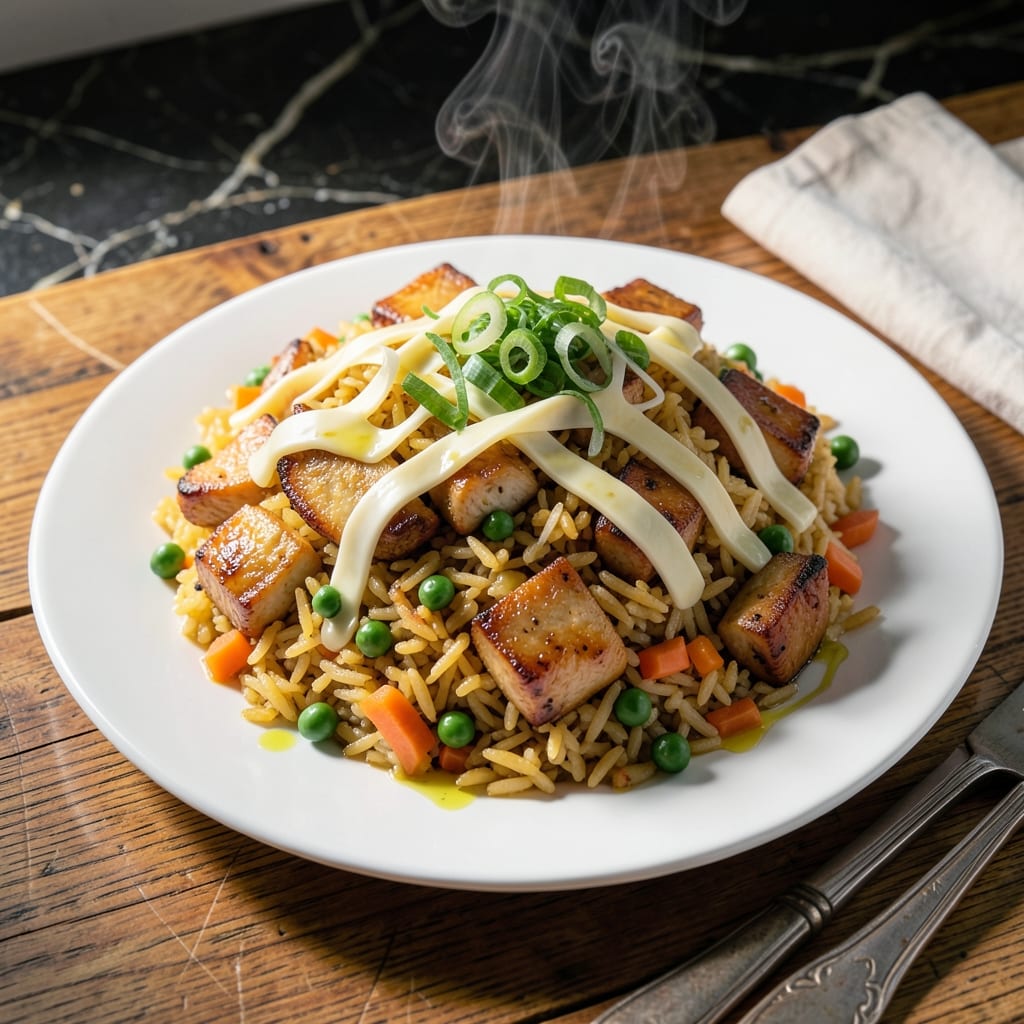
Achieving that signature wok-hei flavor at home isn’t impossible—it just requires the right technique and ingredients. I’ve tested this method in my own kitchen to replicate the smoky depth of restaurant-style fried rice.
High heat and day-old rice are non-negotiable for that perfectly charred texture and distinct aroma. A well-seasoned wok and the right oil make all the difference in capturing authentic flavor.
This version stays true to tradition without cutting corners. The rice should be dry, the vegetables crisp, and the soy sauce balanced—no shortcuts, just proven methods.
Serve it hot, straight from the wok, for the closest experience to your favorite takeout spot.
Ingredients for Fried Rice Recipe Like Chinese Restaurant
Day-old rice, high heat, and a handful of staples—this is restaurant-quality in your kitchen.
| Ingredient | Amount | Notes |
|---|---|---|
| Day-Old Cooked Jasmine Rice 🍚 | 4 cups | Cold, dry, preferably overnight |
| Peanut Oil 🫒 | ⅓ cup | High smoke point essential |
| Large Eggs 🥚 | 3 whole | Lightly beaten for scrambling |
| Boneless Chicken Thighs 🍗 | ¾ lb | Diced into small pieces |
| Carrots 🥕 | 2 whole | Peeled, finely diced |
| Green Onions 🧅 | 6 whole | Thinly sliced, whites and greens separated |
| Frozen Peas 🌱 | 1 cup | No need to thaw |
| Garlic Cloves 🧄 | 4 cloves | Minced for maximum flavor |
| Light Soy Sauce 💧 | 3 tbsp | Low-sodium preferred for balance |
| Dark Soy Sauce 💧 | 1 tbsp | Adds depth and color |
| Sesame Oil 🫒 | 2 tsp | Toasted, for finishing |
| Kosher Salt 🧂 | ½ tsp | Adjust to taste at end |
| White Pepper 🌶️ | ½ tsp | Traditional choice for authenticity |
| MSG (optional) ✨ | ½ tsp | Enhances umami flavor |
The rice is everything here. Jasmine rice is traditional, but any long-grain works if it’s been in the fridge overnight (the good stuff, not the pre-cooked kind). Peanut oil handles the high heat without smoking—Costco sells it in big bottles. For the chicken, thighs stay juicier than breasts through the aggressive stir-frying. Grab boneless, skinless and dice them yourself for even cooking (worth the extra minute).
No peanut oil? Vegetable or canola oil at a pinch, but avoid olive oil—it’ll burn. Swap chicken for shrimp or char siu pork if you’re feeling fancy. Fresh peas instead of frozen? Sure, but they won’t have that pop. Low-sodium soy sauce keeps the dish from getting too salty, but regular works if you adjust the salt. The dark soy is non-negotiable for that deep color (find it at Asian markets).
Leftovers taste even better the next day. Store in an airtight container for up to 4 days in the fridge, or freeze for 3 months. Reheat in a skillet with a splash of water to bring it back to life—microwaving works, but the wok method keeps the texture right.
Why You’ll Love This Recipe
- One Pan Marvel: I toss everything in my wok and it’s done in 15 minutes—no extra dishes, just a spatula and peanut oil.
- Restaurant-Quality Taste: That wok-hei from the peanut oil and day-old jasmine rice gives it the exact savory depth I crave.
- Feeds the Week: I make a double batch on Sunday and it reheats beautifully for lunch or a quick dinner.
- Budget Stretcher: Boneless chicken thighs and carrots keep it cheap, and I use up leftover rice every time.
Step-by-Step Instructions for Chinese Restaurant-Style Fried Rice
Here’s the method. Straightforward, tested, works every time.
Step 1: Prep Ingredients and Heat the Wok
First, have all your ingredients ready—diced boneless chicken thighs, peeled and finely diced carrots, thinly sliced green onions (whites and greens separated), minced garlic cloves, frozen peas, and lightly beaten large eggs. Mise en place is non-negotiable for fried rice; once you start cooking, there’s no time to chop or measure.
Place a wok over high heat and add 0.33 cup peanut oil. This high-smoke-point oil is essential for achieving that signature wok hei, or “breath of the wok.” Swirl the oil to coat the sides and let it heat until it shimmers—this takes about 1-2 minutes. You want it almost smoking but not quite.
Step 2: Cook the Chicken and Vegetables
Add the 0.75 lb diced boneless chicken thighs to the hot oil and stir-fry for 3-4 minutes until the pieces are opaque and lightly browned. Push the chicken to one side of the wok and add the diced carrots and whites of the green onions. Stir-fry for another 2 minutes until the carrots start to soften.
Next, add the minced garlic cloves and frozen peas. Stir-fry for 1 minute until the garlic is fragrant and the peas are heated through. The beauty of frozen peas is that they cook quickly and retain their bright color. At this point, your kitchen should smell incredible.
Step 3: Scramble the Eggs and Add the Rice
Push all the chicken and vegetables to one side of the wok and pour the 3 whole lightly beaten large eggs into the empty space. Scramble the eggs quickly with a spatula until they’re just set but still slightly runny—about 30-45 seconds. Break them into small pieces as they cook.
Now, add the 4 cups day-old cooked jasmine rice, breaking up any clumps with your spatula. The rice should be cold and dry—this is critical for achieving the right texture. Stir-fry everything together for 2-3 minutes until the rice is heated through and starting to crisp slightly in spots.
Step 4: Season and Finish
Drizzle the 3 tbsp light soy sauce and 1 tbsp dark soy sauce over the rice. The light soy sauce adds saltiness and umami, while the dark soy sauce gives the dish its characteristic deep color. Add the 0.5 tsp kosher salt, 0.5 tsp white pepper, and 0.5 tsp MSG (optional) for that authentic restaurant flavor.
Stir-fry for another 2 minutes until everything is evenly coated and the rice has a slightly charred appearance. Turn off the heat and stir in the green onion greens and 2 tsp sesame oil. The sesame oil adds a nutty aroma that ties everything together. Taste and adjust seasoning if needed.
Pro Tips For Making Fried Rice Recipe Like Chinese Restaurant
- Crank the Heat: Use the highest heat your stove allows—peanut oil should shimmer but not smoke. I learned this the hard way after too many batches of soggy rice.
- Dry the Rice: Spread day-old jasmine rice on a tray and let it sit uncovered for 30 minutes before frying. Sounds weird, but it works: the drier the rice, the better it fries.
- Skip the Crowding: Cook chicken thighs in batches so the wok stays hot. Steer clear of overloading or you’ll end up steaming instead of searing.
- Scramble Eggs First: Push the rice and veggies aside, add a little more oil, then scramble the eggs right in the wok. This isn’t the prettiest method, but it’s the tastiest.
Dietary Considerations for These Flavors
Gluten-Free Adaptations
For a gluten-free version, swap the light and dark soy sauces for tamari—it’s naturally gluten-free and delivers similar depth. I’ve tested San-J brand tamari with great results. Always check labels to confirm gluten-free status.
Vegetarian Options
Replace the chicken with extra-firm tofu, pressed and cubed. Stir-fry until golden before adding to the wok. You can also add bell peppers or broccoli florets for extra texture and color. The key is keeping the ingredients dry to avoid soggy rice.
Low-Sodium Considerations
Reduce sodium by using low-sodium soy sauce and skipping the added kosher salt. Boost flavor with fresh herbs like cilantro or extra minced garlic. The MSG is optional but adds umami without excess salt. 💡
Egg-Free Alternative
Omit the eggs entirely and add 1 cup diced mushrooms for a similar texture. Alternatively, use a chickpea-based egg substitute. The dish will still taste authentic if you maintain the high-heat stir-frying technique.
Peanut Allergy Substitute
Replace peanut oil with avocado oil or vegetable oil—both have high smoke points. Avoid oils like olive or coconut, as they’ll burn at the required temperatures. Safety first, flavor second.
MSG-Free Version
Skip the MSG and enhance umami with a splash of fish sauce or extra dark soy sauce. Mushroom powder is another great option for depth. I find the dish still shines without it. ✨
Nutrition Facts
Frequently Asked Questions
Why must the rice be day-old?
Day-old rice is drier, preventing mushiness when stir-fried. Fresh rice contains too much moisture and will turn to paste in the wok. Spread leftover rice on a tray and refrigerate overnight for best results.
Can I use a regular skillet instead of a wok?
Yes, but a wok’s high sides and wide surface are ideal. Use a heavy-bottomed skillet on high heat and work in batches to avoid steaming. The flavor won’t be identical, but it’ll still be delicious.
How do I get that smoky wok hei flavor at home?
Crank the heat to maximum and use peanut oil with a high smoke point. Stir-fry in small batches to maintain high temperatures. A well-seasoned wok helps, but even a cast-iron skillet can achieve good results.
What if my fried rice turns out soggy?
Start with drier rice and cook on higher heat. Avoid overcrowding the pan—cook in batches if needed. If it’s already soggy, spread it on a tray and broil for 2-3 minutes to crisp it up.

- Fresh Turmeric Rice Recipe: Golden Grains with Earthy Warmth - October 7, 2026
- French Onion Brown Rice Recipe: Umami-Rich Grains With Caramelized Depth - October 7, 2026
- Rice Noodle Soup Recipe: Aromatic Broth with Silky Strands - October 7, 2026