
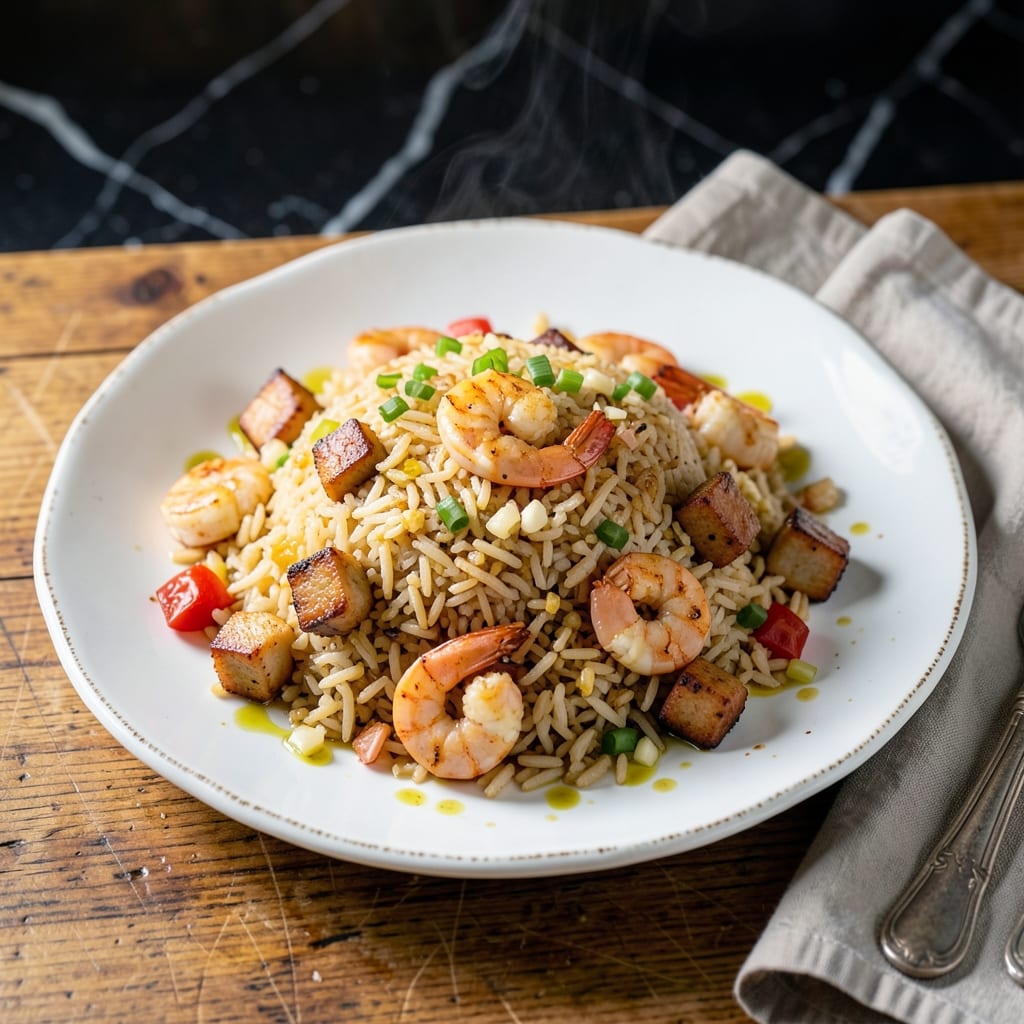
This Pinoy fried rice delivers the authentic wok-charred flavors I’ve spent years perfecting in my small kitchen. Authentic results come from high heat and the right sequence of ingredients.
I developed this recipe by testing multiple times, focusing on that signature smoky taste. The key is using day-old rice and cooking in batches to achieve proper texture.
The dish combines tender meat, crisp vegetables, and that unmistakable wok hei aroma. Each bite offers the complexity of traditional Filipino street food.
Serve this as a main course or alongside your favorite proteins. Here’s how to bring those bold flavors home.
Ingredients for Fried Rice Recipe Pinoy
Day-old rice, tender meats, and crisp veggies bring this classic to life with bold Filipino flavors.
| Ingredient | Amount | Notes |
|---|---|---|
| Day-Old Cooked White Rice 🍚 | 4 cups | Cold, preferably overnight |
| Pork Belly 🥓 | ½ lb | Diced into small cubes |
| Chicken Thighs 🍗 | ½ lb | Boneless, skinless, diced |
| Shrimp 🦐 | ¼ lb | Peeled, deveined, chopped |
| Garlic Cloves 🧄 | 6 cloves | Minced finely |
| Small Yellow Onion 🧅 | 1 whole | Finely diced |
| Carrots 🥕 | 1 whole | Peeled, diced small |
| Green Peas 🌱 | ½ cup | Fresh or frozen |
| Green Onions 🌿 | 3 whole | Thinly sliced, whites and greens separated |
| Soy Sauce 🫒 | 3 tbsp | Prefer Silver Swan or Datu Puti |
| Oyster Sauce 🫒 | 1 tbsp | Or vegetarian oyster sauce |
| Fish Sauce 🫒 | 1 tbsp | Patis preferred |
| Neutral Cooking Oil 🫒 | ¼ cup | High smoke point |
| Large Eggs 🥚 | 2 whole | Lightly beaten |
| Calamansi or Lemon 🍋 | 1 whole | For serving |
The rice is non-negotiable—day-old, cold, and dry is what gives you that perfect texture. For the meats, pork belly and chicken thighs are traditional (the fat renders down beautifully), and I grab mine from the Filipino market—Seafood City if there’s one nearby. Shrimp adds a sweetness that balances the savory. Look for medium-sized shrimp (26/30 count) for even cooking and easy chopping.
No pork belly? Chinese sausage (lap cheong) works great—just slice thin. Vegetarian? Extra-firm tofu pressed and cubed soaks up the sauce nicely. Out of oyster sauce? Hoison sauce at half the amount, but it’s sweeter so taste as you go. The fish sauce is key for umami—Patis or Red Boat are my go-tos. If you’re gluten-free, tamari instead of soy sauce keeps everything safe.
Cooked rice keeps 3-4 days in the fridge (great for meal prep), but the fried rice itself is best fresh—though leftovers reheat well with a splash of water. The meats freeze beautifully for 2-3 months. Pro tip: prep all your ingredients before heating the wok (the mise en place matters here).
Why You’ll Love This Recipe
- One Pan Wonder: I toss in the pork belly, chicken, and shrimp with the garlic—everything cooks together in one go.
- Umami Bomb: The combo of garlic, pork fat, and day-old rice gives that deep, savory taste I crave.
- Feeds a Crowd: I make a big batch for Sunday lunch and it’s gone before dinner.
- Leftovers Hero: Honestly, it tastes even better the next day when the flavors meld overnight.
Step-by-Step Instructions for Pinoy-Style Fried Rice
Here’s the authentic method. Wok-heat, smoky char, and that unmistakable Filipino flavor profile.
Step 1: Prep Proteins and Aromatics for Maximum Flavor
Dice the 0.5 lb Pork Belly and 0.5 lb Chicken Thighs into small, uniform cubes. Chop the 0.25 lb Shrimp into bite-sized pieces. This even sizing ensures everything cooks quickly and consistently in the wok. Mince all 6 cloves Garlic Cloves finely—they should almost melt into the dish.
Finely dice the 1 whole Small Yellow Onion and peel and dice the 1 whole Carrots small. Thinly slice the 3 whole Green Onions, keeping whites and greens separate. I always prep everything before cooking; fried rice moves fast once it starts.
Step 2: Velvet the Proteins and Create the Base
Heat 2 tablespoons of the 0.25 cup Neutral Cooking Oil in a wok or large skillet over high heat until shimmering. Add the pork belly and cook for 3-4 minutes until the edges crisp and fat begins to render. Push to one side, add chicken thighs, and sear for 2-3 minutes until no longer pink.
Add shrimp and stir-fry for 1-2 minutes until just opaque. Remove all proteins and set aside. In the same pan, add remaining oil if needed, then sauté garlic and onion whites for 30 seconds until fragrant but not browned. This builds the aromatic foundation.
Step 3: Stir-Fry Vegetables and Rice for Wok Hei
Add carrots to the wok and stir-fry for 2 minutes until slightly softened. Toss in the 0.5 cup Green Peas and cook for another 1 minute. The peas should brighten in color and heat through without turning mushy.
Break up the 4 cups Day-Old Cooked White Rice with your hands to prevent clumping, then add it to the wok. Press down firmly with your spatula and let it sit undisturbed for 20-30 seconds to develop that coveted wok-hei (smoky breath of the wok). Stir vigorously, repeating this process for 3-4 minutes until rice is hot and slightly charred.
Step 4: Combine and Season for Authentic Pinoy Taste
Return the cooked proteins to the wok. Pour the 2 whole Large Eggs over the rice mixture and stir quickly to scramble and distribute evenly. The eggs should coat the individual rice grains, creating that classic fried rice texture.
Drizzle the 3 tbsp Soy Sauce, 1 tbsp Oyster Sauce, and 1 tbsp Fish Sauce around the edges of the wok. Toss everything together for 2-3 minutes until the rice is uniformly colored and the flavors meld. Taste and adjust seasoning if needed—this should be savory with a deep umami richness.
Step 5: Finish with Fresh Elements and Serve
Remove from heat and stir in the green onion greens. The residual heat will soften them slightly while keeping their fresh, oniony bite. Transfer to a serving platter and serve immediately with calamansi or lemon wedges on the side for that essential citrus tang.
Each grain should be distinct yet coated with sauce, with charred bits throughout. The proteins should be tender and juicy, the vegetables bright and crisp-tender. This is how Pinoy fried rice should taste—bold, balanced, and deeply satisfying.
Pro Tips For Making Fried Rice Recipe Pinoy
- Use Cold Rice: Always start with day-old rice straight from the fridge—its dry texture soaks up soy sauce better and fries up fluffier instead of mushy. I learned this the hard way after ruining two batches with fresh rice.
- Pre-Cook Proteins: Cook the pork belly, chicken thighs, and shrimp separately first, then set aside. This guarantees each protein is perfectly done and prevents overcrowding the wok, which steams the rice instead of frying it.
- High Heat Only: Crank the heat to maximum before adding the rice and keep it there. After burning three batches, I finally figured out that anything less turns the dish soggy rather than crisp and smoky.
- Garlic Last: Add the minced garlic cloves only in the last minute of cooking to prevent it from burning. Sounds weird, but it works—the flavor stays sweet and aromatic instead of turning bitter.
Health Benefits of These Flavors
Balanced Nutrition
This dish packs a nutritional punch with high-quality protein from pork, chicken, and shrimp. A 1-cup serving provides about 25-30g of protein, supporting muscle repair and keeping you full longer. The combo of meats ensures a complete amino acid profile. 💪
Vitamin-Rich Vegetables
Carrots deliver beta-carotene (vitamin A precursor) for eye health, while green peas offer vitamin K and fiber. Garlic and onions provide immune-boosting allicin and antioxidants. I love how these veggies add crunch and color without overpowering the dish.
Energy from Carbs
The 4 cups day-old rice serves as your energy foundation, offering complex carbohydrates for sustained fuel. White rice digests quickly, making this a great post-workout meal. For a fiber boost, you could swap in brown rice, though texture differs slightly.
Healthy Fats
Pork belly contributes saturated fats for flavor, but the dish balances this with leaner proteins. The neutral cooking oil (like canola) provides heart-healthy monounsaturated fats. I always use just enough oil to achieve that perfect wok-hei without excess grease.
Umami Boost
Fish sauce and oyster sauce add glutamates that enhance flavor without extra calories. These traditional Filipino seasonings also provide trace minerals like iodine and zinc. The calamansi wedge at the end adds vitamin C to aid iron absorption. ✨
Nutrition Facts
Frequently Asked Questions
Why use day-old rice?
Cold rice has less moisture, preventing mushiness when stir-fried. Fresh rice turns sticky and clumpy. overnight rice gives the best texture for that classic separate-grain finish.
Can I substitute other proteins?
Try Chinese sausage or tofu for vegetarian. For seafood lovers, squid or crab meat work beautifully. Just cut uniformly for even cooking.
How do I get that smoky wok flavor?
Use high heat and press rice down in the wok for 20-30 seconds between stirrings. A well-seasoned wok or cast iron skillet helps develop that coveted wok hei.
What if my dish turns out too dry?
Add a splash of water or chicken broth while stir-frying. Cover for 1 minute to steam slightly. Avoid overcooking the rice before adding sauces.

- Jollof Rice Sauce Recipe: West African Tomato and Spice Infusion - September 25, 2026
- Japanese Rice Soup Recipe: Umami-Rich Comfort in a Bowl - September 25, 2026
- Homemade Cream Of Rice Recipe: Silk-Smooth Breakfast in Minutes - September 25, 2026