
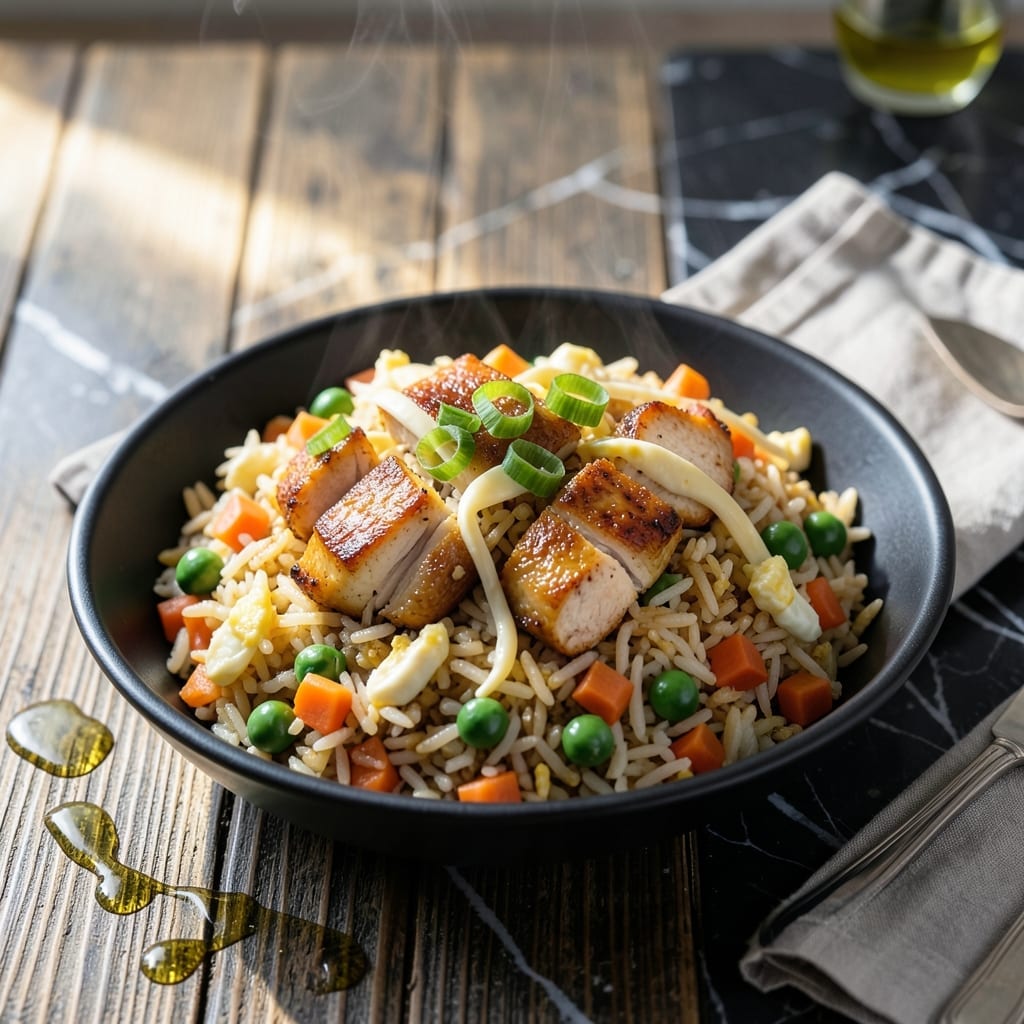
This fried rice delivers restaurant-quality results with every bite, packed with protein and bold flavors. I developed this method after years of perfecting the balance between texture and taste.
High heat and quick cooking are key to achieving that signature wok-seared character. The protein integrates seamlessly, whether you choose chicken, shrimp, or tofu, adding heartiness without overwhelming the dish.
Each grain stays distinct yet absorbs the savory sauce perfectly. The result is a dish that’s both satisfying and versatile, ready in 30 minutes with minimal effort.
Serve it as a main course or alongside your favorite Asian-inspired dishes. Here’s how to make it right every time.
Ingredients for Fried Rice Recipe Protein
Pantry staples plus a few fresh picks. Nothing complicated, just bold flavor builders.
| Ingredient | Amount | Notes |
|---|---|---|
| Cooked White Rice 🍚 | 4 cups | Day-old, chilled for texture |
| Chicken Breast 🍗 | 1 lb | Boneless, skinless, diced small |
| Large Eggs 🥚 | 3 whole | Beaten for scrambling |
| Frozen Peas 🌱 | 1 cup | Thawed and drained |
| Carrots 🥕 | 2 whole | Medium dice, blanched |
| Green Onions 🧅 | 4 whole | Thinly sliced, white and green parts separated |
| Garlic Cloves 🧄 | 3 cloves | Minced finely |
| Soy Sauce 🫒 | 3 tbsp | Low-sodium preferred |
| Sesame Oil 🫒 | 1 tbsp | Toasted for depth |
| Vegetable Oil 🫒 | 2 tbsp | High smoke point for frying |
| Ground Ginger 🌿 | ½ tsp | Freshly grated preferred |
| Salt 🧂 | ½ tsp | Kosher or sea salt |
| Black Pepper 🌶️ | ½ tsp | Freshly ground |
| Oyster Sauce 🫒 | 1 tbsp | Optional for umami depth |
The rice is the foundation—use day-old, chilled white rice (jasmine or long-grain) for that perfect non-sticky texture. Trader Joe’s has great pre-cooked frozen rice that works in a pinch. For the chicken, boneless, skinless breasts or thighs both work, but thighs stay juicier. If you’re using shrimp, buy peeled and deveined from the seafood counter at your local grocery store.
Swap chicken for shrimp or cubed tofu (press the tofu first to remove excess water). No soy sauce? Tamari or coconut aminos work at a 1:1 ratio. Missing sesame oil? A few drops of toasted sesame seeds in the oil adds similar flavor. Frozen veggies can replace fresh—just thaw and drain well. For extra richness, add a splash of fish sauce (if not vegetarian).
Leftovers keep 4-5 days in the fridge but taste best fresh. Store in an airtight container. Reheat in a skillet over medium heat with a splash of water to revive the texture. Freezes for up to 3 months—perfect for quick meals.
Why You’ll Love This Recipe
- One Pan Wonder: I love that I only need a single skillet—rice, chicken, eggs, and veggies all cook together in stages.
- That Umami Punch: The soy sauce and chicken create this deep, savory flavor that makes every bite ridiculously good.
- Meal Prep MVP: Honestly, it reheats perfectly for lunches all week, and the protein keeps me full for hours.
- Budget Stretcher: I use leftover rice and whatever veggies I have, so it’s cheap but still packed with flavor.
Step-by-Step Instructions for Protein-Packed Fried Rice
Here’s the method that transforms everyday ingredients into a wok-seared masterpiece.
Step 1: Prep and Sear the Chicken
Heat 2 tbsp vegetable oil in a large wok or skillet over high heat until it shimmers. Add the diced 1 lb chicken breast and season with 0.5 tsp salt and 0.5 tsp black pepper. Spread the chicken in a single layer and let it sear undisturbed for 2-3 minutes until the edges are golden brown.
Stir-fry for another 2 minutes until the chicken is cooked through and no longer pink inside. Remove the chicken from the wok and set it aside—the residual heat will keep it warm while you cook the rest. This two-stage cooking process ensures perfectly tender, juicy chicken every time.
Step 2: Scramble the Eggs and Sauté Aromatics
In the same wok, add the 3 cloves minced garlic cloves and 0.5 tsp ground ginger. Stir for 30 seconds until fragrant—just until the raw aroma disappears but before it browns. Push the aromatics to one side of the wok.
Pour in the 3 whole beaten large eggs and scramble them gently with a spatula. Cook for 1-2 minutes until they’re just set but still slightly soft. You want small, fluffy curds that will distribute evenly throughout the dish. The eggs should look moist, not dry or rubbery.
Step 3: Combine Vegetables and Rice
Add the 2 whole diced carrots, 1 cup thawed frozen peas, and the white parts of the 4 whole green onions to the wok. Stir-fry for 2 minutes until the vegetables are hot and the carrots begin to soften slightly.
Increase the heat to maximum and add the 4 cups cooked white rice, breaking up any clumps with your spatula. Press the rice against the hot wok surface for 1 minute to create some crispy bits—this adds texture contrast to the finished dish. The rice should sizzle audibly when it hits the wok.
Step 4: Season and Finish
Return the cooked chicken to the wok. Drizzle 3 tbsp soy sauce and 1 tbsp oyster sauce over the top. Stir everything together vigorously for 2 minutes until all ingredients are evenly coated and heated through.
Finish by adding 1 tbsp sesame oil and the green parts of the green onions. Toss once more to distribute the sesame oil’s nutty aroma. The dish is ready when everything is piping hot and the rice has absorbed most of the liquid from the sauces, creating that characteristic glossy sheen.
Taste and adjust seasoning if needed, though the combination of soy and oyster sauces typically provides perfect balance.
Pro Tips For Making Fried Rice Recipe Protein
- Chill the Rice: Use day-old, cold rice straight from the fridge—fresh rice turns to mush in the wok. I learned this the hard way after my first three attempts came out gummy.
- Velocity Cooking: Crank the heat to high and keep everything moving. Chicken needs 2-3 minutes to cook through, but if you let it sit, it’ll steam instead of sear.
- Salt the Chicken First: Toss the diced chicken breast with ½ teaspoon salt and let it sit for 10 minutes before cooking. It holds onto moisture better and actually tastes like something.
- Eggs Last: Push the rice and veggies to one side, add a little more oil, then scramble the eggs in the empty space—this keeps them soft instead of rubbery from overcooking.
Storing and Reheating This fried rice recipe protein
Refrigerator Storage
Let your fried rice cool completely before transferring to airtight containers. I use glass containers with locking lids from my local Italian specialty deli. Store in the fridge at 40°F or below for up to 4-5 days. The flavors meld beautifully overnight, making leftovers taste even better the next day. ❄️
Freezer Storage
For longer storage, freeze in quart-sized freezer bags laid flat to save space. Squeeze out excess air to prevent freezer burn. This dish freezes well for up to 3 months without losing texture or flavor. I always label with the date to keep track.
Stovetop Reheating
My preferred method: heat a skillet over medium heat, add a splash of water or chicken broth, then add the fried rice. Stir-fry for 3-4 minutes until heated through. The steam revives the rice grains perfectly, restoring that fresh-cooked texture.
Microwave Reheating
For quick meals, microwave individual portions covered with a damp paper towel. Heat on 70% power for 2-3 minutes, stir, then continue in 30-second intervals until reaching 165°F. Add a few drops of vegetable oil if it looks dry.
Reviving the Texture
If your rice seems dry after storage, sprinkle 1-2 tbsp water over it before reheating. The moisture will absorb into the grains. For extra freshness, toss in a few fresh green onions after reheating to brighten the flavors. 💡
Nutrition Facts
Frequently Asked Questions
What’s the best protein for this dish?
Chicken breast works perfectly with its mild flavor. For variety, try shrimp for a seafood twist or tofu for a vegetarian option. Each protein cooks quickly at high heat and absorbs the sauce beautifully.
Can I use fresh rice instead of day-old?
Day-old, chilled rice is ideal because it’s drier and won’t turn mushy. If using fresh, spread it on a baking sheet and refrigerate for 1 hour to remove excess moisture. This prevents a sticky texture.
How do I keep the eggs from getting rubbery?
Cook the beaten eggs gently over high heat for just 1-2 minutes, stirring constantly. Remove them from the wok while still slightly soft—they’ll finish cooking when combined with the hot rice.

- Gambia Jollof Rice Recipe: West African One-Pot Spice Fusion - October 5, 2026
- Cream of Wild Rice Soup Recipe Minnesota: Northwoods Creaminess With Foraged Grains - October 5, 2026
- Frozen Cauliflower Fried Rice Recipe: Quick Low-Carb Wok Magic - October 5, 2026