
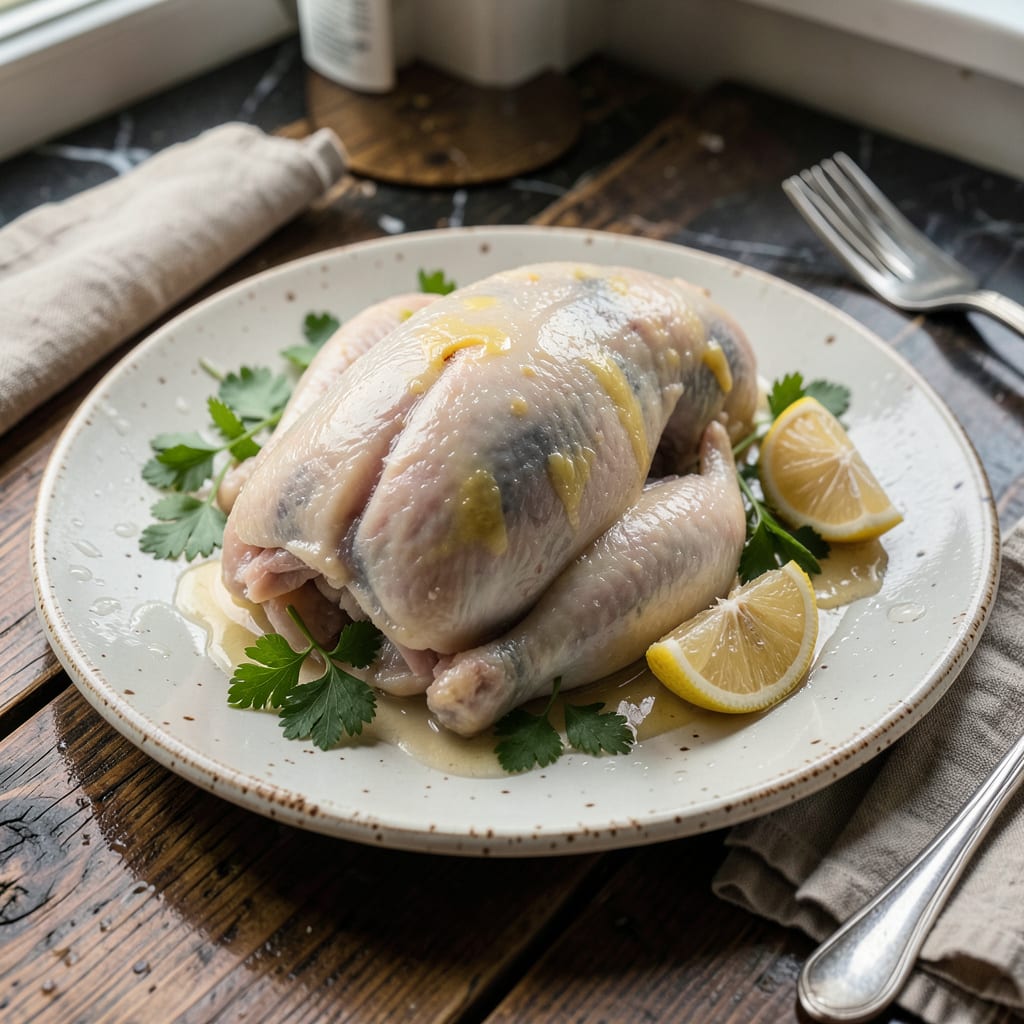
Frozen chicken left at room temperature for 4 hours should be discarded. The USDA’s 2-hour rule (1 hour if above 90°F) means bacteria like Salmonella can multiply to unsafe levels, making it unsafe to cook or eat.
This isn’t just about spoilage—it’s about invisible dangers that cooking can’t fix. 🔥 When chicken sits in the 40°F-140°F danger zone, bacteria like Campylobacter and E. coli multiply exponentially, doubling every 20 minutes. I’ve seen cases where people assumed cooking would kill everything, but some toxins produced by these bacteria remain heat-stable. The risk becomes even higher with frozen chicken because the thawing process creates moisture that accelerates bacterial growth on the surface.
What many don’t realize is that your kitchen’s ambient temperature plays a huge role. 🌡️ A 70°F kitchen gives you exactly 2 hours before the safety window closes, while a 95°F summer day cuts that to just 1 hour. This is why food safety experts treat time-temperature combinations as non-negotiable—there’s no sensory test (smell, color, texture) that can reliably detect these pathogens before they make you sick.
💡 In This Article
- Why 4 Hours Makes Frozen Chicken Unsafe to Eat
- Safe Thawing Methods for Frozen Chicken Instead
Why 4 Hours Makes Frozen Chicken Unsafe to Eat
The 40°F-140°F danger zone is where bacteria thrive, and frozen chicken left out enters this range as it thaws.
At room temperature (68-72°F), pathogens like Salmonella and Campylobacter double every 20 minutes—meaning 4 hours allows for 720 generations of bacterial growth. 🦠 The surface moisture from thawing creates the perfect breeding ground, while the still-frozen center provides insulation that keeps the outer layers in the danger zone longer.
Here’s what happens chemically: As ice crystals melt, they release water that dilutes natural antimicrobial proteins in the chicken. This moisture also carries nutrients from the meat to the surface, feeding bacterial colonies.
Studies show that poultry left at 70°F for 4 hours can develop 10 million+ bacteria per square inch—far exceeding the 1,000 CFU/g safety threshold. The USDA’s 2-hour rule accounts for this exponential growth curve.
The thawing process itself creates micro-tears in muscle fibers, giving bacteria more surface area to colonize. Unlike refrigerated thawing (40°F or below), room-temperature thawing lets enzymes break down proteins into amino acids that bacteria consume rapidly.
🔥 Even if you cook it thoroughly later, some bacteria like Staphylococcus aureus produce heat-stable toxins that survive 212°F temperatures.
Ambient conditions worsen the risk: Humidity above 60% increases bacterial transfer through airborne moisture, while direct sunlight can raise surface temperatures by 10-15°F. The USDA found that chicken left out for 4 hours in summer (90°F+) shows 50% higher contamination rates than winter cases.
This is why commercial kitchens use time-temperature logs—because visual inspection can’t detect these microscopic threats.
Consider this comparison: Properly refrigerated chicken shows <100 CFU/g of bacteria, while room-temperature thawed chicken hits 10,000-100,000 CFU/g in the same timeframe. The difference isn’t just quantity—it’s the types of bacteria present. After 4 hours, you’re dealing with advanced biofilm formation where bacteria protect each other from heat and stomach acids. ✨
What makes poultry particularly dangerous is its natural pH 6.2-6.7 range, which is ideal for bacterial growth (unlike more acidic meats). The USDA’s 1-hour rule above 90°F exists because at these temperatures, bacterial enzymes become hyperactive, breaking down cell walls to release more nutrients.
This is why food safety experts treat time-temperature violations as absolute—there’s no “maybe safe” threshold with these pathogens.
The bottom line: Those 4 hours aren’t just about thawing—they’re about creating an invisible bacterial ecosystem that cooking can’t fully neutralize. When in doubt, remember that foodborne illness symptoms can take 6-72 hours to appear, long after the bacteria have established themselves in your system. 💫

- Rice Paper Pancakes Recipe: Crispy Vietnamese Breakfast Delight - September 25, 2026
- Rice A Roni Pork Fried Rice Recipe: Quick Wok-Style Meal with Savory Bites - September 25, 2026
- Mandhi Rice Recipe: Yemeni Spiced Lamb and Rice Feast - September 25, 2026