
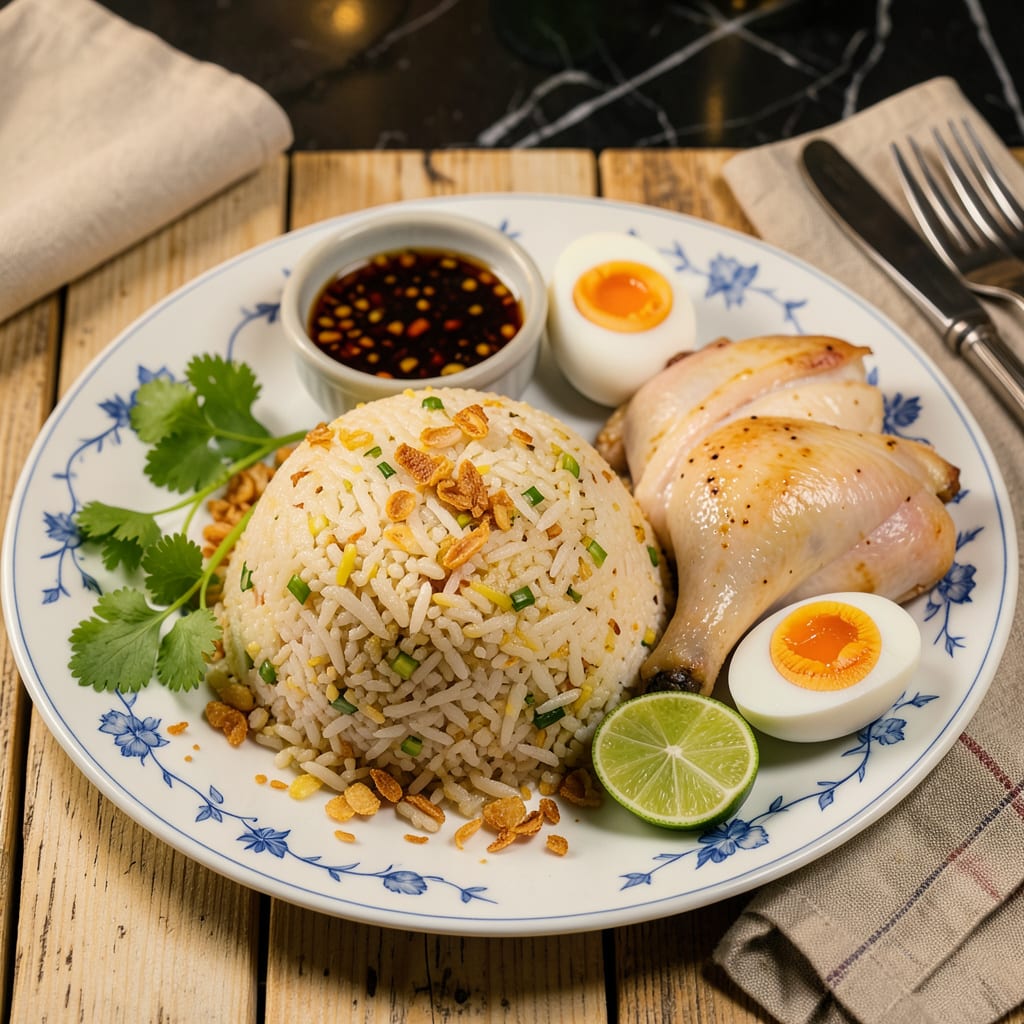
Hainanese chicken rice paste is a fragrant blend of garlic, ginger, pandan leaves, and spices like coriander and white pepper, cooked in chicken fat or oil. It forms the aromatic base for both the poached chicken and the signature rice.
This flavor foundation is what gives the dish its soul—think of it as the secret handshake between the tender chicken and the fragrant jasmine rice. The paste isn’t just about taste; it’s about layered aromatics that infuse every bite with depth. When I make it, I focus on balancing the earthy warmth of coriander with the bright, citrusy notes from pandan. The chicken fat (or oil) acts like a flavor magnet, pulling all those spices into a cohesive, umami-rich experience. ✨
What’s fascinating is how this simple paste transforms basic ingredients into something extraordinary. The slow cooking process allows the garlic and ginger to mellow while the spices bloom, creating a complexity that’s both comforting and sophisticated. It’s the kind of detail that separates good Hainanese chicken rice from the unforgettable kind. 💫
💡 In This Article
- Core Ingredients That Define Hainanese Chicken Rice Paste
- Step-by-Step Guide to Making the Perfect Paste at Home
Core Ingredients That Define Hainanese Chicken Rice Paste
This paste isn’t just a mix of ingredients—it’s a carefully calibrated flavor system. The foundation starts with garlic and ginger in a 2:1 ratio, which creates a pungent yet balanced base.
When these alliums are slowly cooked in chicken fat (or neutral oil for a lighter version), their natural sugars caramelize while their sharp edges mellow. The real magic happens when you add pandan leaves, which contribute a floral, vanilla-like aroma that’s impossible to replicate with substitutes. 🔥
The spice blend typically includes 1 tablespoon coriander seeds, 1 teaspoon white pepper, and sometimes a pinch of cinnamon or star anise for warmth.
These spices are toasted before grinding to release their essential oils—what you’re smelling when the paste hits the pan is actually volatile aromatic compounds like linalool (from coriander) and piperine (from pepper) becoming more soluble in fat. Regional variations exist: Singaporean versions often emphasize ginger, while Malaysian recipes might include lemongrass for brightness. ✨
What most people overlook is how the paste’s texture affects the final dish. A properly made version should be smooth but not oily, with ingredients finely ground to maximize surface area for flavor extraction.
The chicken fat serves as both a cooking medium and flavor carrier—its emulsifying properties help distribute aromatic compounds evenly through the rice and poaching liquid. This is why authentic versions have such a lingering, mouth-coating richness that neutral oils can’t quite match. 💫
Temperature control during cooking is critical. The paste should sizzle gently at 275-300°F—hot enough to extract flavors but not so high that the garlic burns (which happens above 320°F). I’ve found that cooking for 15-20 minutes allows the flavors to meld without developing bitterness.
The finished paste should be golden-brown, not dark brown, with a consistency similar to wet sand that holds its shape when pressed. ⚡
Here’s what changes when you adjust the ingredients:
- More ginger: Creates a brighter, slightly citrusy profile (common in southern Chinese versions)
- Extra pandan: Intensifies the floral notes but can overpower if using more than 3 leaves
- Neutral oil substitute: Produces a cleaner taste but loses the umami depth from chicken fat
- Added shallots: Sweetens the paste naturally, reducing the need for sugar in the final dish
The paste’s true test comes when you use it: properly made, it should make your kitchen smell like a Hainanese street stall within minutes of heating. The aroma isn’t just strong—it’s complex and evolving, with top notes of pandan giving way to the warm base of toasted spices.
This layered fragrance is what makes the dish so crave-worthy, as the paste infuses every component from the chicken to the rice to the accompanying soup. 🌟

- Jollof Rice Sauce Recipe: West African Tomato and Spice Infusion - September 25, 2026
- Japanese Rice Soup Recipe: Umami-Rich Comfort in a Bowl - September 25, 2026
- Homemade Cream Of Rice Recipe: Silk-Smooth Breakfast in Minutes - September 25, 2026