
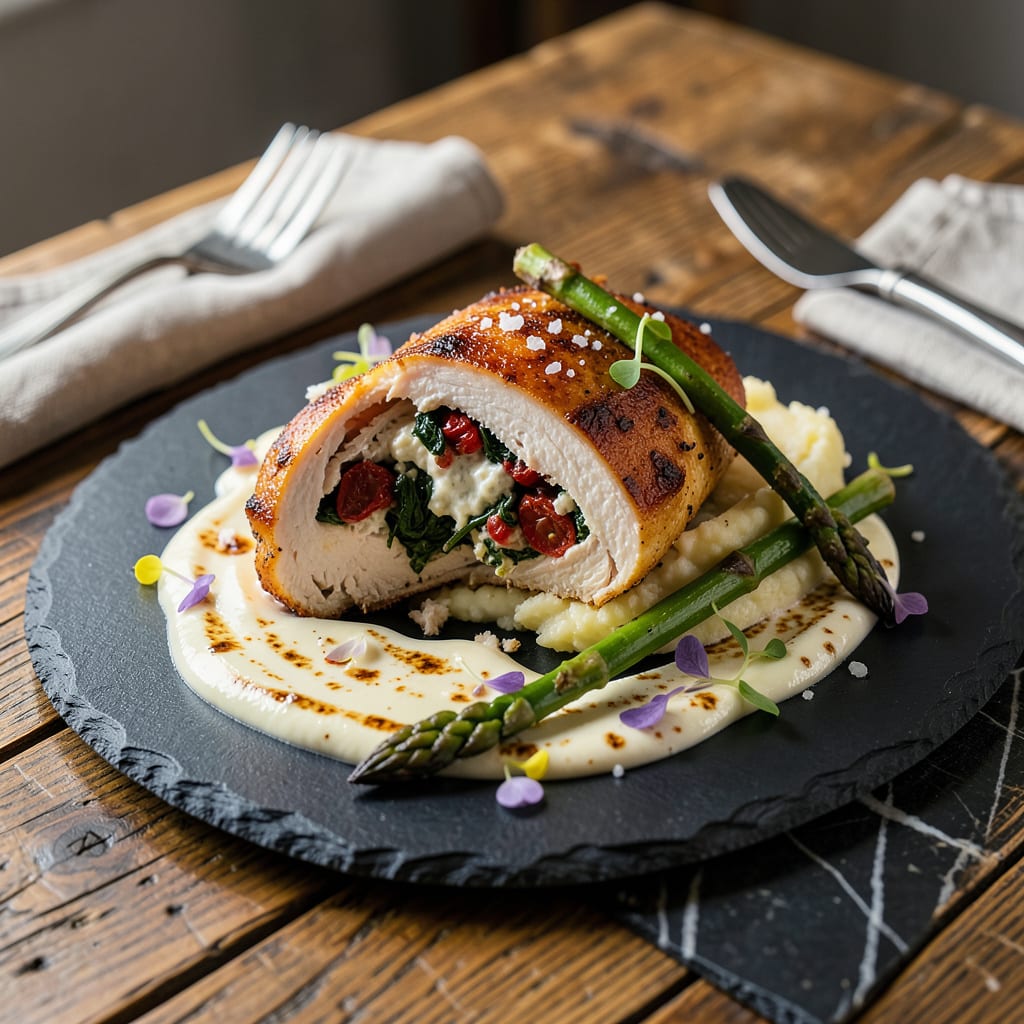
Ruth’s Chris stuffed chicken features a creamy crab and cheese filling wrapped in tender chicken breast, pan-seared, and finished with a rich lemon butter sauce. Recreate it at home using high-quality lump crabmeat, cream cheese, and fresh herbs for that signature restaurant flavor.
This dish stands out because of its perfect balance between richness and brightness. The pan-searing creates a golden crust that locks in juices, while the lemon butter sauce cuts through the decadence of the crab and cheese filling. I’ve found that using real lump crabmeat (not imitation) makes all the difference in texture and flavor complexity. 🔥
What most home cooks miss is the timing between searing and sauce application—restaurants use precise heat control to prevent the filling from drying out while achieving that crisp exterior. The fresh herbs aren’t just for garnish; they add necessary aromatic contrast to the dish’s creamy core.
💡 In This Article
- Key Techniques Behind Ruth’s Chris Stuffed Chicken Flavor
- Top YouTube Channels for Ruth’s Chris Copycat Recipes
Key Techniques Behind Ruth’s Chris Stuffed Chicken Flavor
The magic starts with the Maillard reaction during pan-searing. When chicken hits a 400°F skillet, proteins and sugars transform into hundreds of new flavor compounds, creating that deep golden crust. Ruth’s Chris chefs use clarified butter for searing because its higher smoke point (450°F) prevents burning while developing maximum crispiness.
The key is maintaining consistent heat—too low and you steam the chicken, too high and you carbonize the exterior before the interior cooks through.
What elevates this dish is the lemon butter sauce’s emulsion science. Cold butter cubes whisked into hot pan juices create a stable emulsion where fat molecules suspend in water. The acid from fresh lemon juice (1-2 tablespoons) doesn’t just add brightness—it lowers the sauce’s pH, helping proteins in the butter bind with water molecules.
This prevents separation and gives that signature velvety texture that clings perfectly to the chicken and filling.
The crab filling’s texture comes from using lump crabmeat (not flake or imitation). Real lump crab contains intact muscle fibers that provide resistance when bitten, while imitation crab’s processed surimi turns mushy when heated.
The cream cheese base (typically 8 oz per 1 lb crab) needs to be room temperature before mixing to prevent a dense, gummy filling. Fresh chives and parsley add necessary green notes that cut through the richness.
Timing is everything with stuffed proteins. Ruth’s Chris chefs butterfly the chicken to an even ½-inch thickness, ensuring the filling cooks through without overcooking the breast. The chicken rests 5-7 minutes after searing—this allows juices to redistribute while the residual heat finishes cooking the center.
Serving immediately would cause all those carefully developed juices to spill onto the plate.
Here’s what most home cooks overlook: the herb garnish isn’t decorative. Fresh tarragon or thyme contains volatile oils that release when hit by the hot sauce, adding aromatic complexity. The restaurant uses a 3:1 ratio of butter to lemon juice in their sauce—enough acid to balance without curdling the emulsion.
This precise balance is why their version tastes luxurious rather than heavy.
For that true restaurant experience, serve on pre-heated plates. The temperature contrast keeps the sauce fluid longer and prevents the crispy crust from steaming and softening. The difference between a good copycat and a great one often comes down to these small but critical temperature control details throughout the entire process. 🔥

- Jollof Rice Sauce Recipe: West African Tomato and Spice Infusion - September 25, 2026
- Japanese Rice Soup Recipe: Umami-Rich Comfort in a Bowl - September 25, 2026
- Homemade Cream Of Rice Recipe: Silk-Smooth Breakfast in Minutes - September 25, 2026