
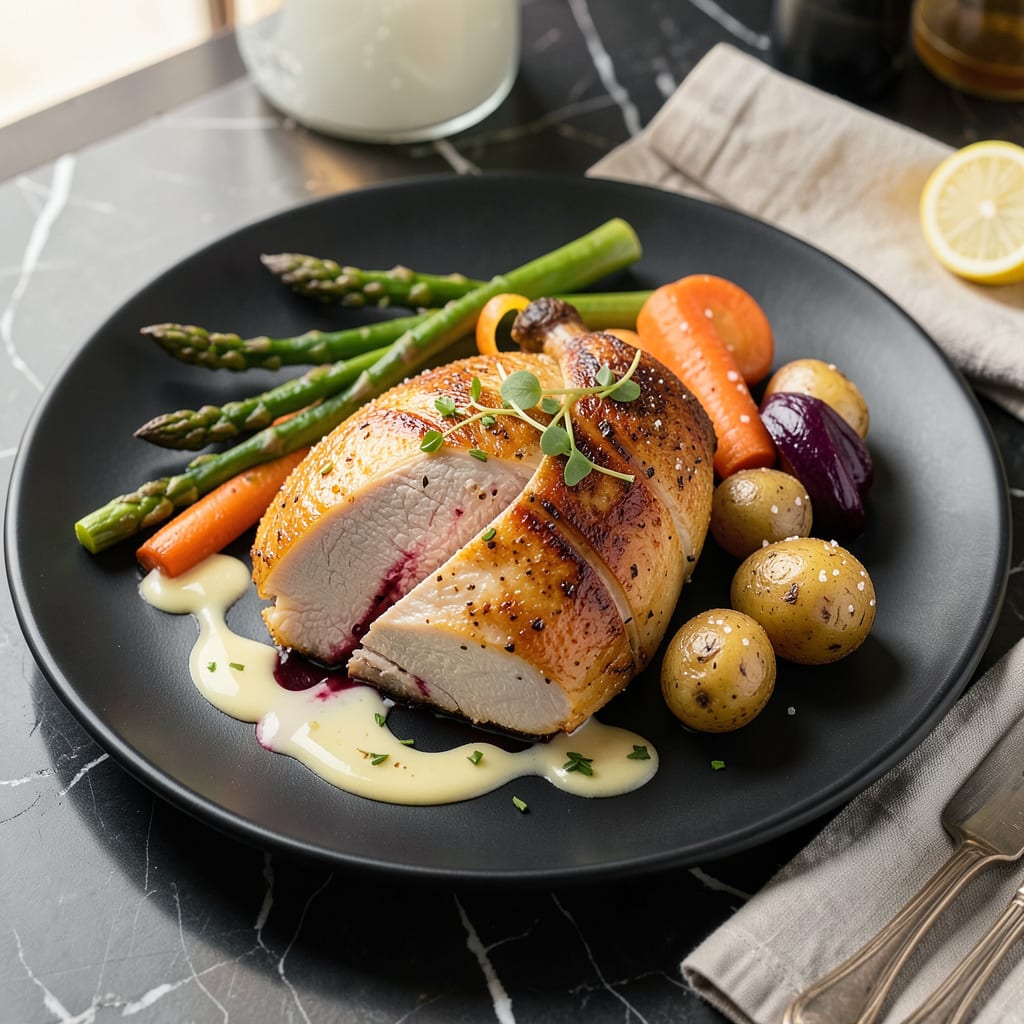
Red liquid in cooked chicken is usually myoglobin, a protein—not blood. It’s safe to eat if the chicken reaches 165°F internally. True blood indicates undercooking and potential bacteria, so discard it if present.
This common kitchen mystery often causes unnecessary alarm. 🔥 The myoglobin protein—similar to what gives rare steak its red juices—intensifies in older birds or near bones, even when fully cooked. I’ve seen many home cooks mistakenly toss perfectly safe chicken because they confused this natural pigment with actual blood.
What’s crucial to understand is that real blood would appear thinner and more watery, often pooling in the packaging before cooking. The USDA confirms that properly cooked poultry can still show pinkish liquid while being completely safe, as long as that 165°F threshold is met throughout. ✨
💡 In This Article
- Why Cooked Chicken Sometimes Shows Red Liquid
- How to Check Chicken Doneness and Avoid Risks
Why Cooked Chicken Sometimes Shows Red Liquid
The red liquid you see isn’t blood—it’s primarily myoglobin, a protein that stores oxygen in muscle tissue. This protein changes color when exposed to heat, but doesn’t disappear completely. In younger chickens, myoglobin levels are lower, while older birds (especially free-range) develop more of this protein, making the red liquid more noticeable.
The concentration is highest near bones and joints, where muscles work hardest.
What’s fascinating is how myoglobin reacts differently than hemoglobin (the protein in actual blood). When chicken cooks, myoglobin denatures at temperatures above 140°F, turning brown—but some residual pigment remains. Bone marrow can also appear red even when fully cooked, as it contains iron-rich compounds that don’t break down at typical cooking temperatures.
I’ve noticed this is particularly common in thigh meat, which has more connective tissue than breast meat.
The age of the bird plays a surprising role too. Commercial broilers (typically 6-8 weeks old) show less red liquid than heritage breeds raised for 12+ weeks. The difference comes from muscle development—older birds have more myoglobin because their muscles work harder.
This is why you might see more redness in organic or pasture-raised chicken compared to conventional grocery store birds.
Here’s what’s actually happening during cooking: As temperatures rise, myoglobin releases its iron atom, which can create a pinkish hue when it reacts with other compounds. This reaction is completely harmless and doesn’t indicate undercooking.
The USDA confirms that chicken can remain pink at safe temperatures, especially in the 165-180°F range where proteins coagulate but pigments persist. 🔥
You’ll often see this red liquid pooling around bones because that’s where blood vessels were most concentrated during the bird’s life. Even after thorough cooking, these areas can retain more pigment.
The key distinction is that actual blood would be thinner and more watery, while myoglobin-rich liquid has a slightly thicker, more gelatinous consistency when cooled.
Pro tip: If you’re ever unsure, check the liquid’s behavior. Myoglobin-rich juices will coagulate slightly when chilled, while actual blood remains liquid. This simple test can save you from unnecessarily discarding perfectly good chicken! The science here is similar to why rare steak has red juices—it’s all about muscle proteins, not blood. ✨

- Rice Cake Cereal Recipe: Crunchy Homemade Breakfast Delight - September 25, 2026
- Pancake Recipe Using Rice Flour: Light and Airy Gluten-Free Stacks - September 25, 2026
- Japanese Rice Porridge Recipe: Silky Congee With Umami Depth - September 25, 2026