
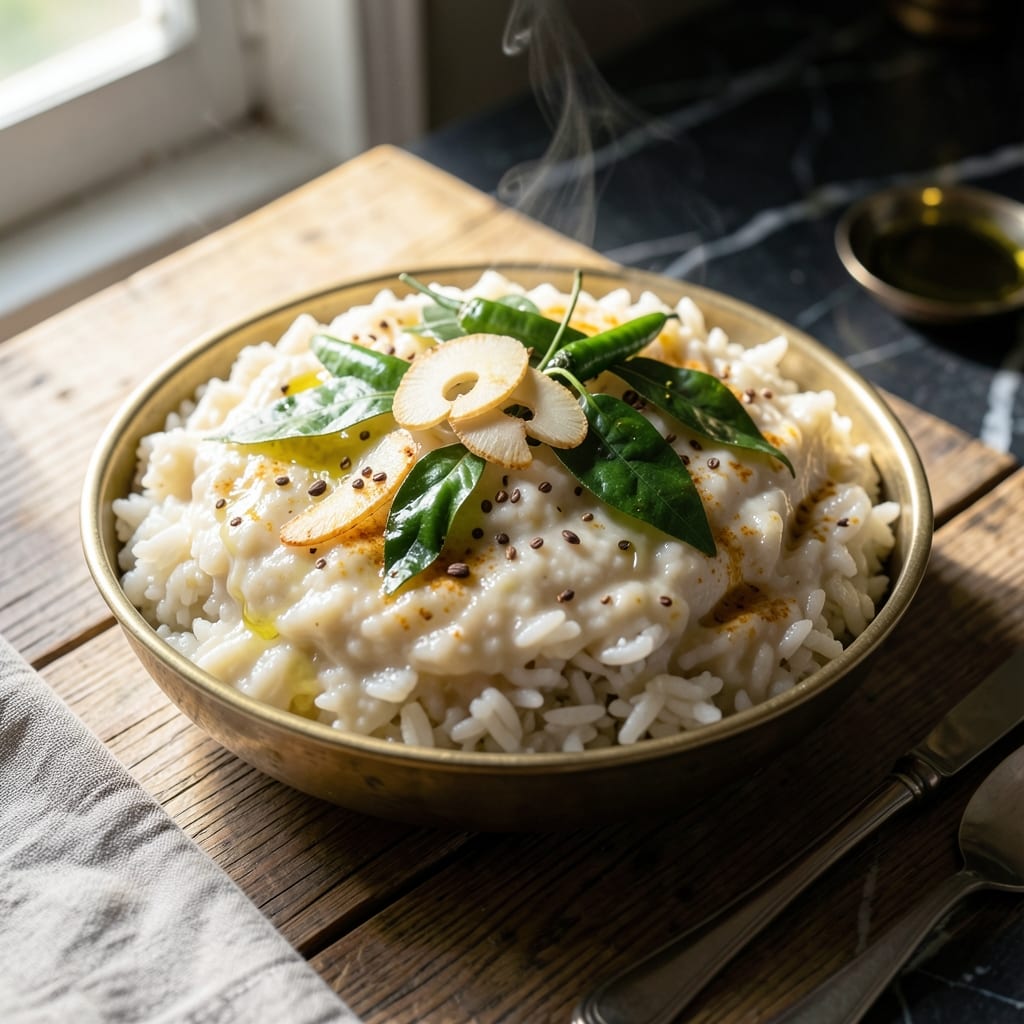
This traditional South Indian conjee transforms simple rice and water into a comforting, spiced porridge. I’ve refined this method to highlight its natural healing properties while keeping the preparation straightforward.
The dish relies on gentle simmering to break down the grains into a smooth, nourishing consistency. A blend of cumin, ginger, and other warming spices enhances its soothing qualities, making it ideal for recovery or light meals.
Ingredients for Ganji Rice
Simple rice and water transform into this nourishing porridge with healing spices at its core.
| Ingredient | Amount | Notes |
|---|---|---|
| White Rice 🍚 | 1 cup | Short or medium grain preferred |
| Water 💧 | 6 cups | For simmering rice thoroughly |
| Cumin Seeds 🌿 | 1 tsp | Lightly toasted for aroma |
| Fresh Ginger 🌱 | 1 tbsp | Finely grated or minced |
| Green Chilies 🌶️ | 2 whole | Slit lengthwise, seeds removed |
| Fresh Curry Leaves 🍃 | 8 pieces | Roughly torn for flavor |
| Asafoetida 🌿 | ¼ tsp | Optional for authentic taste |
| Turmeric Powder 🌶️ | ½ tsp | For color and earthiness |
| Salt 🧂 | 1 tsp | Adjust to personal preference |
| Fresh Cilantro 🍃 | ¼ cup | Chopped, for garnish and brightness |
| Lemon Juice 🍋 | 1 tbsp | Freshly squeezed for acidity |
| Ghee or Coconut Oil 🥥 | 1 tbsp | Vegan: use coconut oil only |
The rice quality matters here. Short or medium grain varieties like sona masoori or jasmine break down beautifully into a creamy texture. Indian grocery stores carry authentic options, but standard supermarket rice works fine. Fresh ginger and curry leaves are non-negotiable for authentic flavor—look for bright green leaves without brown spots. Asafoetida adds depth but can be omitted if unavailable.
No fresh curry leaves? Dried curry leaves at half the amount work, though the flavor is milder. Green chilies can be swapped for serrano peppers or reduced for less heat. Missing asafoetida? A pinch of garlic powder adds similar savory depth. The coconut oil is essential for vegan prep, but neutral oils like avocado work in a pinch. Turmeric is key for color—no substitutions here.
This conjee keeps well for 2-3 days refrigerated, though it thickens over time—just add water when reheating. Freezing isn’t ideal as the texture changes. Always use fresh ginger and cilantro for the brightest flavor. Store spices in airtight containers away from light for maximum potency.
Why You’ll Love This Recipe
- I’ll be real: I make a big batch on Sunday, and it reheats like a dream all week long.
- One Pot Wonder: Honestly, it’s just rice, water, and a handful of pantry staples—no fancy prep or hard-to-find ingredients.
- Zesty Comfort: The cumin seeds and fresh ginger give it this warm, aromatic kick that’s crave-worthy with every bite.
- Feeds a Crowd: I’ll be real: I make a big batch on Sunday, and it reheats like a dream all week long.
Step-by-Step Instructions for Ganji Rice
This traditional method ensures a comforting, spiced congee with perfect texture every time.
Step 1: Temper and Toast the Spices
Heat the 1 tbsp ghee or coconut oil in a heavy-bottomed pot over medium heat. Add the 1 tsp cumin seeds and toast for 30-45 seconds until they sizzle and release their aroma. Be careful not to burn them—this happens quickly.
Immediately add the 0.25 tsp asafoetida, 1 tbsp fresh ginger, 2 whole green chilies, and 8 pieces fresh curry leaves. Sauté for 1-2 minutes until the ginger turns slightly golden and the curry leaves become crisp. This tempering process is crucial for building the flavor base of this dish.
Step 2: Bloom the Turmeric and Rice
Stir in the 0.5 tsp turmeric powder and cook for 20 seconds until fragrant. This brief cooking time enhances the earthy notes of the turmeric without making it bitter.
Add the 1 cup white rice and stir to coat each grain with the spiced oil. Toast the rice for 2-3 minutes until it turns slightly translucent at the edges. This step prevents the rice from becoming mushy and ensures each grain absorbs the flavors evenly.
Step 3: Simmer to Porridge Consistency
Pour in the 6 cups water and add the 1 tsp salt. Stir well to combine, then bring to a gentle boil over medium-high heat.
Once boiling, reduce the heat to low and simmer uncovered for 30-35 minutes, stirring occasionally. The mixture will thicken gradually to a porridge-like consistency. The rice should be completely soft and the liquid should have a creamy texture.
Step 4: Finish and Rest
Remove the pot from heat. Stir in the 1 tbsp lemon juice and half of the 0.25 cup fresh cilantro. This adds a bright, fresh note to balance the earthy spices.
Let the ganji rice rest for 5-10 minutes before serving. This allows the flavors to meld together and the porridge to reach its ideal thickness. Garnish with the remaining cilantro just before serving.
Pro Tips For Making Ganji Rice
- Soak the Rice: Give the white rice a good 15-minute soak in water before cooking—it softens the grains and cuts the cooking time nearly in half.
- Toast the Cumin: Heat the cumin seeds in a dry pan for 30 seconds until fragrant before adding anything else; I learned this the hard way after tasting bland ganji too many times.
- Ginger and Chili Prep: Finely grate the ginger and slit the green chilies lengthwise so they infuse the water evenly without overpowering single bites.
- Simmer Low and Slow: Once boiling, drop to the lowest heat and cover tightly—resist the urge to peek or stir, or you’ll end up with mushy, uneven ganji.
Essential Equipment for ganji rice
Heavy-Bottomed Pot
I always use a 3-4 quart stainless steel pot or enameled Dutch oven for even heat distribution. Thin pots can cause hot spots that burn the tempering spices. My go-to is a Le Creuset Dutch oven for its heat retention and easy cleaning. 🔥
Wooden Spoon
A wooden spoon is essential for stirring the tempering spices and rice without scraping the pot. I prefer a 12-inch spoon with a flat edge. Avoid metal utensils which can react with acidic ingredients like lemon juice.
Spice Storage
Keep your cumin seeds and turmeric powder in airtight glass containers away from light. I store mine in a dark pantry to preserve freshness. Freshly ground spices make a noticeable difference in this dish.
Measuring Tools
Accurate measurements matter—use a standard 1 cup measure for rice and a measuring spoon set for spices. I recommend OXO Good Grips tools for their durability and ease of use.
Serving Bowls
This porridge is best served in deep, wide bowls to showcase its creamy texture. I love handmade ceramic bowls that retain heat. Pre-warm your bowls with hot water for a restaurant-quality presentation.
Optional Tools
A mortar and pestle comes in handy if you want to crush the cumin seeds lightly before tempering. I also use a microplane for finely grating the ginger. These small investments elevate your spice game. ✨
Nutrition Facts
Frequently Asked Questions
Can I use brown rice instead of white?
Yes, but it will require 45-50 minutes of simmering and more water. The texture will be slightly chewier. White rice breaks down better for this porridge consistency.
Why do we toast the rice first?
Toasting for 2-3 minutes enhances flavor and prevents mushiness. It helps the grains absorb spices evenly, creating a more complex taste in the final dish.
How can I make it creamier?
Simmer longer (up to 40 minutes) or blend half before serving. Stirring more frequently also helps break down the rice into a smoother texture.
Can I skip the asafoetida?
While it adds depth, the dish remains flavorful without it. A pinch of garlic powder can provide similar savory notes if desired.

- Jollof Rice Sauce Recipe: West African Tomato and Spice Infusion - September 25, 2026
- Japanese Rice Soup Recipe: Umami-Rich Comfort in a Bowl - September 25, 2026
- Homemade Cream Of Rice Recipe: Silk-Smooth Breakfast in Minutes - September 25, 2026