
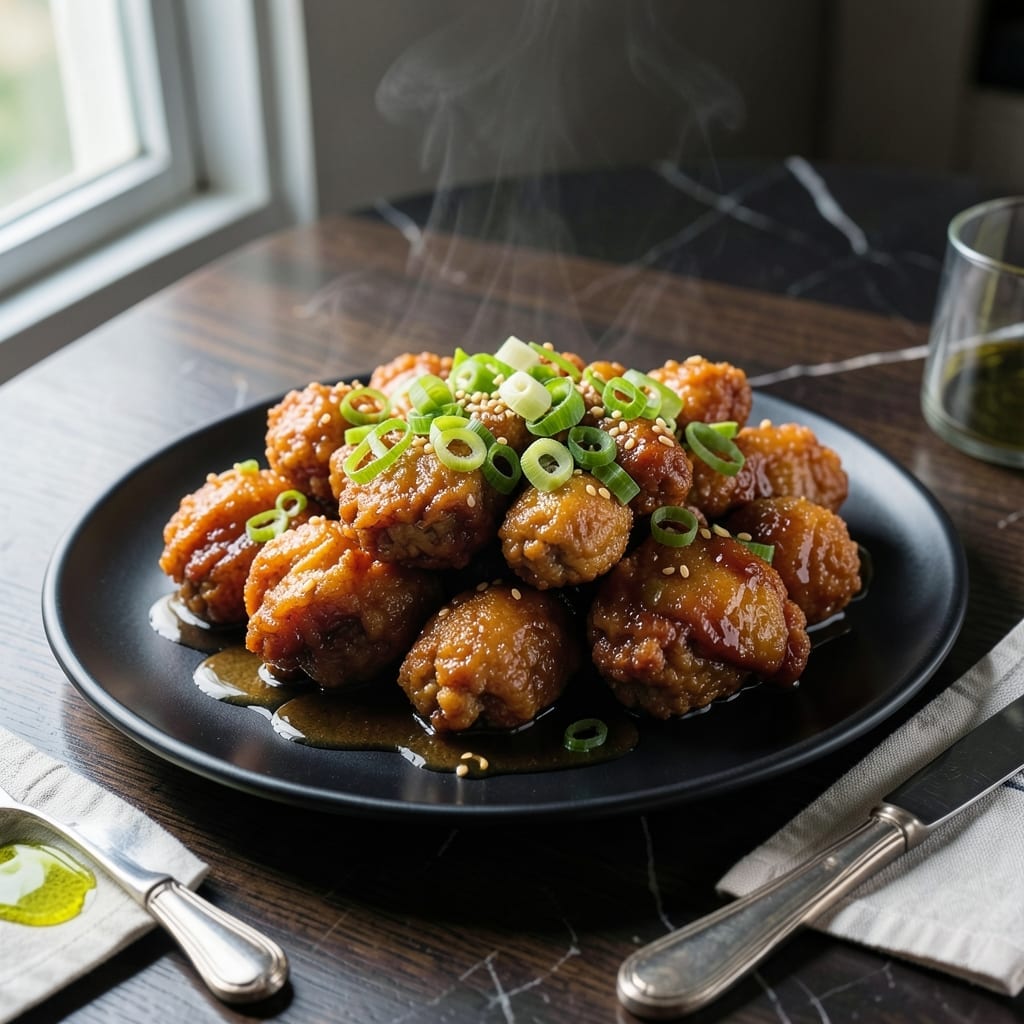
Achieving that crispy exterior with tender interior is what makes this Korean-inspired dish so satisfying. The secret lies in the double-cooking method that guarantees perfect texture every time.
This version takes the classic General Tso’s concept and infuses it with Korean flavors, creating a balanced sweet-spicy sauce that clings beautifully to each piece. Simple ingredients come together to create complex flavors.
The result is pieces of chicken that are crispy on the outside, juicy inside, all coated in a glossy, flavorful sauce. The dish is ready to serve in under an hour.
Serve it with steamed rice and steamed broccoli for a complete meal. The sauce thickens as it cools, making it perfect for coating every bite.
Ingredients for General So Chicken
Korean-inspired twist on a takeout favorite with bold flavors and crispy texture.
| Ingredient | Amount | Notes |
|---|---|---|
| Boneless Skinless Chicken Thighs 🍗 | 1 ½ lb | Cut into bite-sized pieces |
| Cornstarch 🌾 | ½ cup | For crispy coating |
| All-Purpose Flour 🌾 | ¼ cup | Lightly coats chicken |
| Vegetable Oil 🫒 | 2 cups | For frying, high smoke point |
| Soy Sauce 💧 | ⅓ cup | Low-sodium preferred |
| Rice Vinegar 💧 | 2 tbsp | Balances sweetness |
| Gochujang 🌶️ | 2 tbsp | Korean chili paste |
| Honey 🍯 | 3 tbsp | Adds glossy sweetness |
| Brown Sugar 🍚 | 2 tbsp | Packed, for depth |
| Garlic Cloves 🧄 | 4 cloves | Minced for flavor base |
| Fresh Ginger 🌿 | 1 tbsp | Grated, enhances spice |
| Sesame Oil 🫒 | 1 tsp | Toasted, for aroma |
| Green Onions 🧅 | 3 whole | Thinly sliced for garnish |
| Sesame Seeds 🌾 | 1 tsp | Toasted, for crunch |
| Red Pepper Flakes 🌶️ | ½ tsp | Adjust for heat preference |
The chicken thighs are key for juicy, crispy results. Boneless, skinless ensures even cooking and maximum crunch. Look for fresh, high-quality thighs at Whole Foods or your local butcher—avoid pre-frozen if possible. The cornstarch is non-negotiable for that signature crispy coating, and vegetable oil with a high smoke point prevents burning during frying.
No gochujang? Sriracha plus 1 tsp miso paste mimics the depth (use half the amount of sriracha for similar heat). Swap honey for maple syrup if needed. Fresh ginger is ideal, but ground ginger at one-fourth the amount works in a pinch. The soy sauce can be tamari for gluten-free, though the flavor will be slightly less complex.
Fry the chicken in batches to avoid crowding the pan—this keeps it crispy rather than steamed. The sauce thickens as it cools, so let it sit for 5 minutes before serving. Leftovers keep for 3 days in the fridge (reheat in the oven to revive the crunch).
Why You’ll Love This Recipe
- One Bowl Wonder: I mix the cornstarch and flour right in the same bowl I’ll use for dredging—no extra dishes, no fuss.
- Crispy Soy Bite: The cornstarch gives the chicken that addictive crunch while the soy sauce soaks in for that salty-sweet kick.
- Weeknight Hero: Between us, this is my Tuesday night lifesaver when I need dinner fast but still want flavor.
- Stretches Far: Boneless thighs stay juicy even reheated, so leftovers actually taste better the next day.
Step-by-Step Instructions for Korean-Spiced Crispy Chicken
Master this method for perfectly crispy chicken with a glossy, spicy-sweet Korean-inspired glaze every time.
Step 1: Coat the Chicken for Maximum Crispiness
Cut the 1.5 lb boneless skinless chicken thighs into 1-inch pieces. Pat them completely dry with paper towels—this removes excess moisture that would prevent crisping. I can’t emphasize this enough: dry chicken is the foundation of a perfect crust.
In a large bowl, toss the chicken with the 0.5 cup cornstarch and 0.25 cup all-purpose flour until every piece is evenly coated and no dry spots remain. The cornstarch creates an ultra-crispy exterior, while the flour provides structure. Let the coated pieces rest for 5 minutes while you heat the oil.
Step 2: Fry Until Deep Golden Brown
Heat the 2 cups vegetable oil in a large, deep skillet over medium-high heat until it reaches 350°F. To test without a thermometer, drop in a pinch of the coating—it should sizzle immediately and float to the surface.
Working in batches to avoid crowding, carefully add the chicken pieces. Fry for 5-6 minutes, turning occasionally, until they’re deep golden brown and crispy all over. The coating should look like a light, airy shell. Use a slotted spoon to transfer the fried chicken to a wire rack set over a paper towel-lined plate to drain excess oil.
Step 3: Prepare the Korean-Inspired Glaze
In a small saucepan, combine the 0.33 cup soy sauce, 2 tbsp rice vinegar, 2 tbsp gochujang, 3 tbsp honey, and 2 tbsp brown sugar. Bring to a gentle simmer over medium heat, stirring until the honey and sugar dissolve completely.
Add the 4 cloves minced garlic cloves and 1 tbsp grated fresh ginger, then reduce heat to low. Let it simmer for 2-3 minutes until the sauce thickens slightly and becomes glossy. Stir in the 1 tsp sesame oil and 0.5 tsp red pepper flakes just before removing from heat.
Step 4: Toss and Garnish for Serving
Place all the fried chicken in a large bowl and pour the warm glaze over it. Toss gently but thoroughly with a silicone spatula until every piece is evenly coated. The glaze should cling to the crispy exterior, creating a beautiful shiny finish.
Transfer to a serving platter and sprinkle with the thinly sliced 3 whole green onions and 1 tsp sesame seeds. Serve immediately while the chicken is still hot and crispy. The contrast of textures—crunchy exterior, tender interior, and sticky glaze—is what makes this dish truly special.
Pro Tips For Making General So Chicken
- Double Coat the Chicken: Dust the thighs with cornstarch first, then dip in flour—this two-layer approach locks in moisture and creates that signature crispy texture.
- Hot Oil Only: I learned this the hard way—wait until the oil is shimmering but not smoking (about 350°F) before adding the chicken, or it’ll absorb oil instead of frying.
- Don’t Overcrowd: Skip the urge to fit all the pieces in at once; cook in batches so each thigh gets properly crispy instead of steaming in a crowded pan.
- Rest Before Sauce: Let the fried chicken rest 2-3 minutes on a rack before tossing in soy sauce—this keeps the coating from turning soggy.
Perfect Pairings for This Recipe
Side Dish Pairings
Steamed jasmine rice is my go-to for soaking up that glossy sauce. I use 1 cup rice to 1.5 cups water for perfect fluffiness. For a healthier option, try cauliflower rice—it creates a nice contrast with the crispy chicken. 🥗
Vegetable Companions
Steamed broccoli florets add freshness and crunch to balance the dish. I blanch 2 cups broccoli in boiling water for 2 minutes, then shock in ice water. Alternatively, stir-fried bok choy with garlic brings an authentic Korean touch.
Beverage Matches
An ice-cold Korean lager like Hite or OB cuts through the heat beautifully. For non-alcoholic options, barley tea (boricha) offers a nutty complement. I always keep both on hand when serving this dish. 🍺
Spice Balancers
Quick-pickled cucumbers cool the palate between spicy bites. Thinly slice 1 English cucumber and marinate in ¼ cup rice vinegar with 1 tsp sugar for 30 minutes. The tangy crunch is the perfect counterpoint.
Extra Garnishes
Set out small bowls of kimchi and extra green onions for customization. I love adding crushed roasted peanuts for crunch. These toppings let everyone personalize their plate to their preferred heat level.
Nutrition Facts
Frequently Asked Questions
Can I use chicken breast instead of thighs?
Thighs stay juicier, but breasts work if cut into 1-inch pieces. Brine them in saltwater for 30 minutes first to prevent dryness. The texture will be slightly less tender but still delicious.
How do I make the sauce less spicy?
Reduce the gochujang to 1 tablespoon or omit the red pepper flakes. Add 1 extra tablespoon honey to balance the heat. Taste as you go and adjust to preference.
Can I bake instead of frying?
Toss coated pieces with 1 tablespoon oil and bake at 400°F for 20-25 minutes, flipping halfway. The texture won’t be as crispy but still tasty.

- Jollof Rice Sauce Recipe: West African Tomato and Spice Infusion - September 25, 2026
- Japanese Rice Soup Recipe: Umami-Rich Comfort in a Bowl - September 25, 2026
- Homemade Cream Of Rice Recipe: Silk-Smooth Breakfast in Minutes - September 25, 2026