
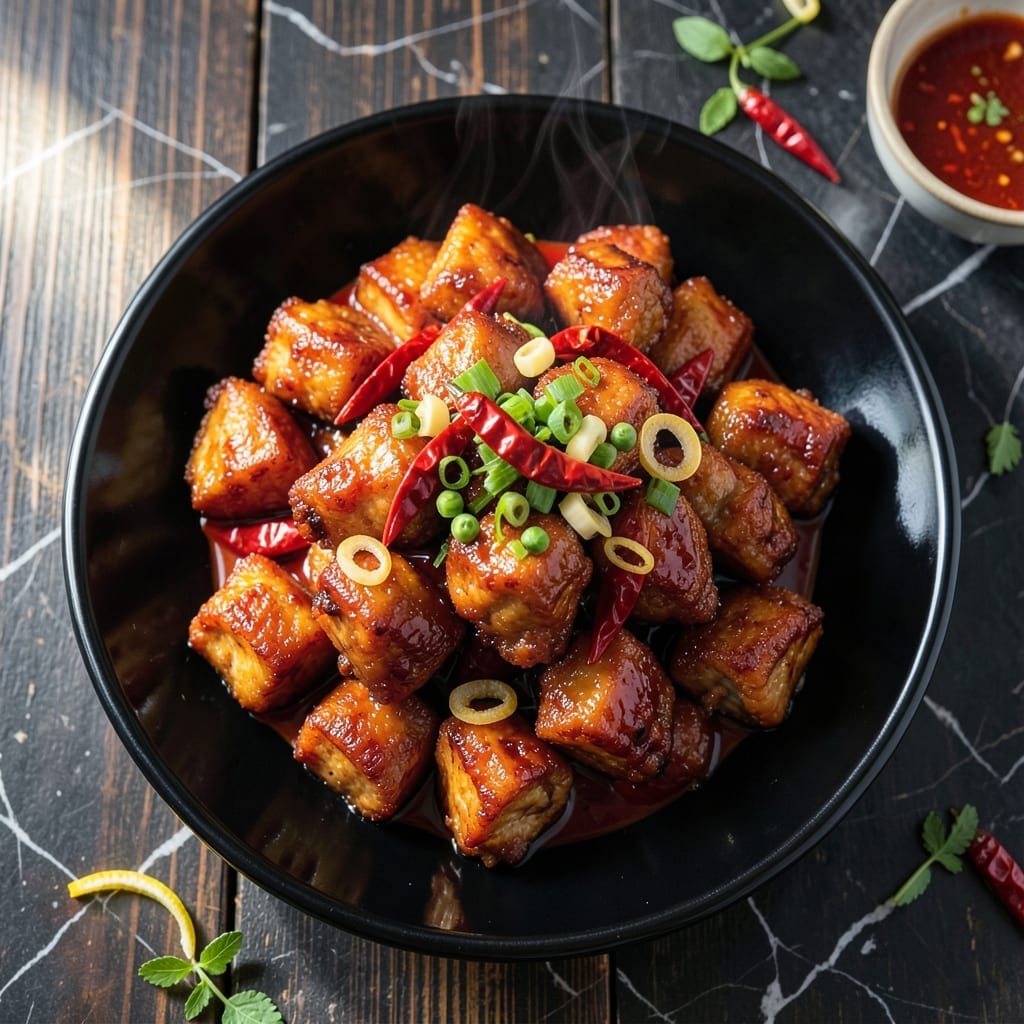
This Chongqing chicken delivers the crispy texture and bold mala flavors that define authentic Sichuan cuisine. The dish balances numbing Sichuan peppercorns with fiery chili oil in a way that’s addictive from the first bite.
I developed this method to achieve restaurant-quality results at home by double-frying the chicken for maximum crispiness. The key is using cornstarch in the marinade, which creates a shatteringly crisp coating that holds up to the saucy finish.
What you’ll get is golden, crispy chicken pieces tossed in a complex sauce that’s smoky, spicy, and slightly numbing. The aroma alone—garlic, ginger, and chili—will transport you straight to Chongqing.
Serve it immediately while the chicken stays crispy, with steamed rice to balance the heat. Here’s how to make it right.
Ingredients for Chongqing Chicken
Golden crispy chicken meets fiery mala sauce with numbing Sichuan peppercorns and chili heat.
| Ingredient | Amount | Notes |
|---|---|---|
| Boneless Skinless Chicken Thighs 🍗 | 1 ½ lb | Cut into bite-sized pieces |
| Cornstarch 🌾 | ½ cup | For crispy coating |
| Soy Sauce 🫒 | 2 tbsp | Light or all-purpose |
| Shaoxing Wine 🍶 | 1 tbsp | Or dry sherry substitute |
| Garlic Cloves 🧄 | 6 cloves | Minced finely |
| Fresh Ginger 🌿 | 1 tbsp | Minced or grated |
| Dried Red Chilies 🌶️ | 15 pieces | Whole, stems removed |
| Sichuan Peppercorns 🌿 | 1 tsp | Whole, for mala flavor |
| Chili Oil 🔥 | 3 tbsp | With chili flakes preferred |
| Light Brown Sugar 🧈 | 1 tbsp | Balances heat and salt |
| Rice Vinegar 💧 | 1 tbsp | Black or Chinkiang vinegar works |
| Green Onions 🧅 | 4 whole | Sliced, white and green parts |
| Peanuts 🥜 | ½ cup | Roasted, unsalted |
| Vegetable Oil 🫒 | 4 cups | For deep frying |
The chicken thighs are non-negotiable here—dark meat stays juicy through double-frying. Find them at any major supermarket (Whole Foods has great organic options). For Sichuan peppercorns, Asian markets are your best bet, but Amazon works in a pinch. Look for plump, aromatic pods—old ones lose that signature numbing quality (and the good stuff, not the pre-ground dust).
No Shaoxing wine? Dry sherry at equal amount is the closest swap. Fresh ginger is ideal, but ground ginger at one-third the amount works. For the chilies, Thai bird’s eye or arbol bring the heat if you can’t find Chinese dried chilies. The peanuts can be swapped for cashews or almonds (raw or roasted). Skip the sugar if you prefer it less sweet, but it balances the heat beautifully.
Fry in batches so the oil temp stays high—this keeps everything shatteringly crispy. Leftover chicken? Reheat in a dry skillet to revive the crunch. The sauce can be made 1 day ahead and reheated gently. Best eaten fresh, but keeps 2-3 days in the fridge in a sealed container.
Why You’ll Love This Recipe
- One Pan Wonder: I toss the chicken with cornstarch, sear it, then let the garlic and Shaoxing wine work their magic—all in the same pan.
- Flavor Bomb: The garlic cloves and soy sauce create this deep, savory punch that coats every crispy bite of chicken.
- Meal Prep Hero: It reheats like a dream, so I make a big batch for lunches all week. Honestly, it tastes even better the next day.
- Budget Friendly: Boneless thighs are cheap, and a little cornstarch goes a long way to make this dish feel like a restaurant splurge.
Step-by-Step Instructions for Chongqing Chicken
Here’s the method I use to achieve that signature crispy texture and mala heat every time.
Step 1: Velvet and Coat the Chicken
Cut the 1.5 lb Boneless Skinless Chicken Thighs into 1-inch bite-sized pieces. This size ensures quick, even cooking without drying out. In a bowl, combine the chicken with 2 tbsp Soy Sauce, 1 tbsp Shaoxing Wine, and 0.5 cup Cornstarch.
I mix this with my hands to ensure every piece is evenly coated—the cornstarch creates that essential crispy shell. The marinade should look thick and slightly clumpy. Let it rest for 10 minutes while you prep the rest; this helps the coating adhere during frying.
Step 2: Double-Fry for Maximum Crispiness
Heat the 4 cups Vegetable Oil in a wok or deep pot to 350°F. Fry the chicken in batches for 3-4 minutes until just cooked through but not yet browned. This first fry cooks the meat gently without burning the coating.
Remove with a slotted spoon and drain on a wire rack. Once all batches are done, increase the oil temperature to 375°F and fry again for 1-2 minutes until deep golden brown and ultra crispy. That second fry is what gives Chongqing chicken its legendary crunch.
Step 3: Toast the Aromatics and Nuts
In a clean wok, heat 3 tbsp Chili Oil over medium-high heat. Add the 15 pieces Dried Red Chilies, 1 tsp Sichuan Peppercorns, 0.5 cup Peanuts, 6 cloves Garlic Cloves, and 1 tbsp Fresh Ginger. Stir constantly for 1-2 minutes until the garlic turns light golden and the peanuts deepen in color.
Be careful not to burn the aromatics—burnt garlic turns bitter. The oil should be fragrant and the chilies should start to darken slightly. This step builds the foundation of that complex mala flavor profile we’re after.
Step 4: Toss Everything Together
Add the twice-fried chicken to the wok with the aromatics. Drizzle over 1 tbsp Light Brown Sugar and 1 tbsp Rice Vinegar. Toss vigorously for 1-2 minutes until every piece is coated in the glossy, spicy oil and the sugar has dissolved into a light glaze.
The chicken should glisten with a thin layer of sauce clinging to its crispy exterior. Taste and adjust seasoning if needed. Finish with the 4 whole Green Onions tossed in just before serving to add a fresh contrast to the rich, spicy flavors.
Pro Tips For Making Chongqing Chicken
- Velvet the Chicken: Toss the chicken thighs with cornstarch and 1 tbsp Shaoxing wine for 15 minutes before cooking—I learned this the hard way, but it’s the only way to get that tender, silky texture.
- High Heat Only: Crank the wok to smoking hot before adding the chicken, then don’t touch it for 2 minutes. After burning three batches, I finally figured out that lower heat just steams it instead of searing.
- Dry the Thighs: Pat the chicken bone dry with paper towels before velveting—sounds weird, but it works: wet meat steams instead of frying, and you’ll end up with a sad, soggy mess.
- Smash the Garlic: Lightly smash the garlic cloves with the side of your knife instead of mincing—this keeps them from burning in the hot oil while still infusing that sharp, aromatic flavor into the dish.
Dietary Considerations for These Flavors
Gluten-Free Adaptation
This dish is naturally gluten-free if you use tamari instead of regular soy sauce. I recommend San-J Tamari for the best flavor match. Also, ensure your cornstarch is certified gluten-free to avoid cross-contamination. The rest of the ingredients are naturally safe for gluten-sensitive diners. 💪
Keto Considerations
The cornstarch coating won’t work for strict keto, but you can use almond flour or crushed pork rinds for a crispy alternative. Skip the sugar and use a keto-friendly sweetener like erythritol if needed. The chicken itself is perfectly keto-friendly with its high fat content.
Allergen Notes
This recipe contains peanuts, so it’s not safe for those with nut allergies. For a nut-free version, simply omit the peanuts or substitute with roasted sesame seeds. The dish also contains soy from the sauce, so use coconut aminos if avoiding soy.
Vegetarian Option
For a vegetarian take, swap the chicken for extra-firm tofu pressed and cut into cubes. Follow the same coating and frying method. The tofu will absorb the mala flavors beautifully while maintaining a crispy exterior.
Lower Heat Version
To reduce the spice level, cut the dried chilies to 5 pieces and use 1 tbsp chili oil instead of 3 tbsp. Keep the Sichuan peppercorns for that signature numbing effect without overwhelming heat. You’ll still get authentic flavor with less fiery intensity.
Sodium Awareness
The soy sauce and chili oil contribute significant sodium. For a lower-sodium version, use low-sodium soy sauce and reduce the chili oil to 1 tbsp. The dish will still pack plenty of flavor from the garlic, ginger, and Sichuan peppercorns. 🌟
Nutrition Facts
Frequently Asked Questions
Why do I need to fry the chicken twice?
Double-frying creates the signature crispiness. The first fry at 350°F cooks the meat through, while the second at 375°F develops that shatteringly crisp exterior. It’s the secret to authentic texture.
Can I use chicken breast instead?
I don’t recommend it. Breast meat dries out during frying. Thighs stay juicy and flavorful. If you must, reduce the second fry to 30 seconds to prevent toughness.
What if I can’t find Sichuan peppercorns?
They’re essential for the mala effect. Try Asian markets or online. No substitute perfectly replicates that numbing spice, but black peppercorns add some depth.
How do I store leftovers?
Keep in an airtight container for 2-3 days. Reheat in a dry skillet over medium heat to revive crispiness. Microwaving makes it soggy.

- Jollof Rice Sauce Recipe: West African Tomato and Spice Infusion - September 25, 2026
- Japanese Rice Soup Recipe: Umami-Rich Comfort in a Bowl - September 25, 2026
- Homemade Cream Of Rice Recipe: Silk-Smooth Breakfast in Minutes - September 25, 2026