
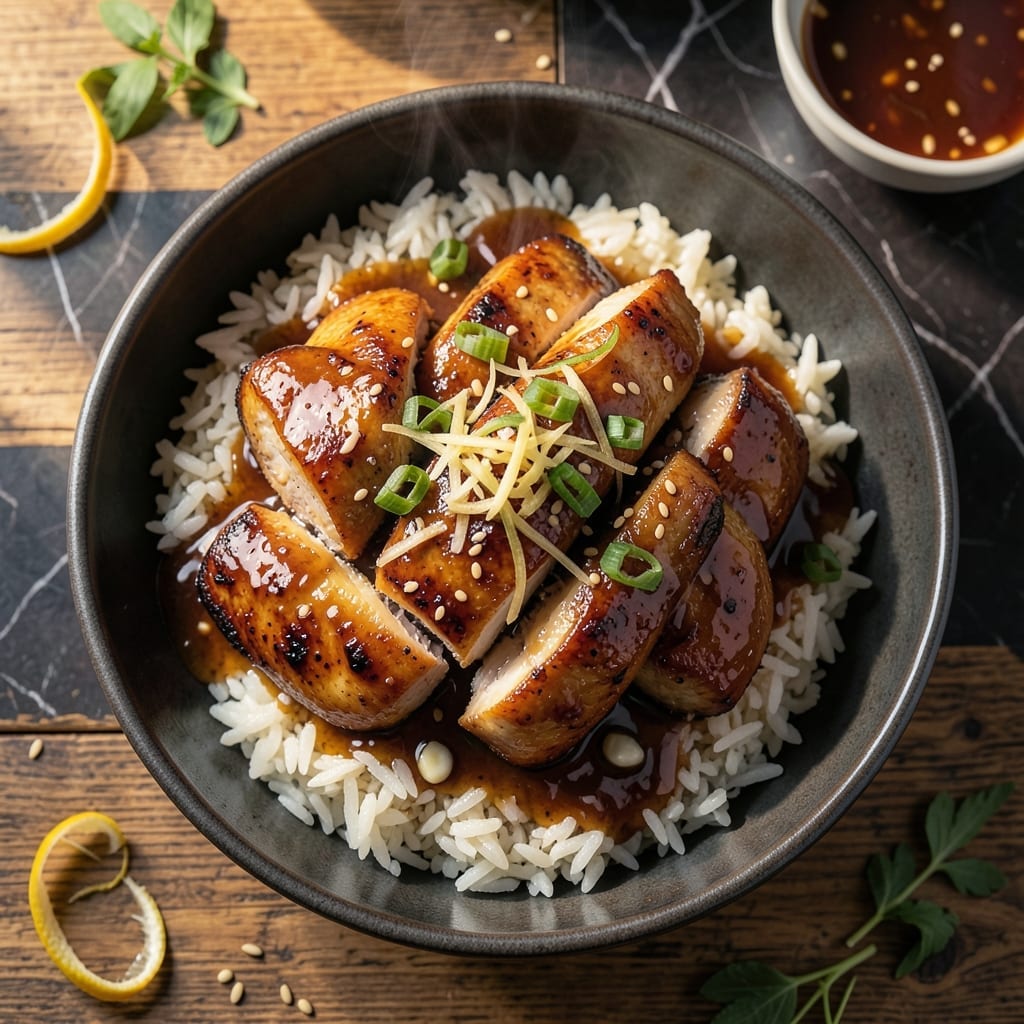
This ginger soy chicken delivers restaurant-quality flavor with minimal effort, perfect for busy weeknights.
The secret lies in the marinade—a balance of fresh ginger, soy sauce, and a touch of sweetness that creates a sticky glaze as it cooks. The chicken stays juicy while developing a caramelized crust that’s impossible to resist.
After testing countless variations, I perfected this method for tender meat with deep, layered flavors. The sauce reduces into a glossy coating that clings to every bite.
Ready in under 30 minutes, this dish proves flavorful meals don’t require hours in the kitchen.
Ingredients for Ginger Soy Chicken
A handful of pantry staples and fresh aromatics create this glossy, caramelized dish.
| Ingredient | Amount | Notes |
|---|---|---|
| Boneless Skinless Chicken Thighs 🍗 | 1 ½ lb | Patted dry for crispiness |
| Fresh Ginger Root 🌿 | 2 tbsp | Peeled and finely grated |
| Soy Sauce 🫒 | ½ cup | Low-sodium preferred |
| Honey 🍯 | 3 tbsp | For sticky glaze |
| Garlic Cloves 🧄 | 4 cloves | Minced for maximum flavor |
| Rice Vinegar 🍶 | 2 tbsp | Balances sweetness |
| Sesame Oil 🫒 | 1 tbsp | Toasted for depth |
| Cornstarch 🌾 | 1 tbsp | Thickens the glaze |
| Vegetable Oil 🫒 | 2 tbsp | High smoke point for searing |
| Green Onions 🧅 | 4 whole | Thinly sliced for garnish |
| Sesame Seeds 🌰 | 1 tbsp | Toasted for crunch |
| Red Pepper Flakes 🌶️ | ½ tsp | Adjust to spice preference |
The chicken thighs are non-negotiable here—bone-in works too but takes longer to cook. Costco has excellent quality at a good price, or hit Whole Foods for organic options. Look for skinless to avoid excess grease. Fresh ginger is a must; those jars of powdered stuff won’t deliver the same bright, zesty kick. The soy sauce should be low-sodium so you can control the saltiness yourself.
No honey? Maple syrup or agave work in a pinch. Out of rice vinegar? Apple cider vinegar at half the amount substitutes adequately. For a gluten-free version, tamari instead of soy sauce does the trick. The sesame oil adds depth, but if you’re in a bind, a neutral oil plus a pinch of toasted sesame seeds scattered on top mimics the flavor (just not as well).
Marinate the chicken for up to 24 hours if prepping ahead—flavors deepen overnight. Leftovers keep 4-5 days refrigerated or freeze for 3 months. Reheat gently to keep the glaze from tightening too much.
Why You’ll Love This Recipe
- One Pan Magic: The chicken and sauce come together in a single skillet—no extra dishes, just easy flavor.
- Sticky Sweet Heat: The honey and ginger create this glossy, finger-licking glaze that’s just the right balance of sweet and spicy.
- Meal Prep MVP: I make a big batch on Sunday and it tastes even better reheated for lunches all week.
- Thighs Save Money: Boneless, skinless thighs stay juicy and cost way less than breasts—here’s what sold me—no trade-off on taste.
Step-by-Step Instructions for Ginger Soy Chicken
Here’s the method. Straightforward, tested, works every time.
Step 1: Prepare the Marinade Base
In a medium bowl, whisk together the 0.5 cup soy sauce, 3 tbsp honey, 2 tbsp rice vinegar, 2 tbsp finely grated fresh ginger root, and 4 minced garlic cloves until fully combined. This balance of salty, sweet, and tangy creates the foundation.
Then stir in the 1 tbsp sesame oil and 0.5 tsp red pepper flakes. The sesame oil adds a deep, nutty aroma while the red pepper flakes introduce a subtle heat. I always let this mixture sit for 5 minutes to allow the flavors to meld before using it.
Step 2: Coat and Marinate the Chicken
Pat the 1.5 lb boneless skinless chicken thighs completely dry with paper towels. This ensures a good sear and helps the coating adhere. Place the chicken in a large bowl and pour half of the marinade over it, reserving the rest for later. Toss to coat evenly.
Sprinkle the 1 tbsp cornstarch over the chicken and toss again until each piece is lightly coated. The cornstarch creates that coveted sticky, glossy texture on the finished dish. Let the chicken marinate for 15-20 minutes at room temperature.
Step 3: Sear and Cook the Chicken
Heat the 2 tbsp vegetable oil in a large skillet over medium-high heat until shimmering. Working in batches if necessary, add the chicken in a single layer and sear for 4-5 minutes per side until golden brown and cooked through to 165°F.
Don’t overcrowd the pan—this causes the chicken to steam instead of sear. The chicken should release easily from the pan when it’s ready to flip. Transfer the cooked chicken to a plate and set aside.
Step 4: Create the Glaze and Finish
Pour the reserved marinade into the same skillet and bring to a boil over medium heat. Let it simmer for 2-3 minutes until slightly thickened and reduced by about a third. The sauce should coat the back of a spoon.
Return the chicken to the skillet, turning each piece to coat in the sauce. Cook for an additional 1-2 minutes until everything is heated through and the chicken is lacquered with a glossy, sticky glaze.
Step 5: Garnish and Serve
Transfer the ginger soy chicken to a serving platter. Drizzle any remaining sauce from the pan over the top. Sprinkle with the 4 thinly sliced green onions and 1 tbsp toasted sesame seeds for freshness and crunch.
Serve immediately while hot. The chicken should have a deep mahogany color with a sticky, finger-licking glaze. Each bite delivers the perfect balance of sweet, salty, and umami with a gentle ginger warmth.
Pro Tips For Making Ginger Soy Chicken
- Sear Chicken First: Brown the chicken thighs in a hot pan before adding the sauce—this builds a deep flavor base that soaks up the ginger and soy beautifully.
- Grate the Ginger: Fresh ginger releases more juice when finely grated, giving your sauce a stronger, more aromatic punch than minced or sliced.
- Reduce the Sauce: After cooking, let the soy-honey mixture simmer for 2-3 minutes to thicken slightly, so it clings to the chicken instead of pooling at the bottom.
- Slice Against Grain: Cut the chicken thighs against the grain before serving—makes each bite tender, even if you accidentally overcook them a little.
Dietary Considerations for These Flavors
Gluten-Free Option
For a gluten-free version, simply swap the soy sauce for tamari—it has a similar depth of flavor. I recommend San-J brand for its consistent quality. The cornstarch is naturally gluten-free, but verify it’s not processed in a facility with wheat if you have celiac disease.
Lower Sodium Choice
Use low-sodium soy sauce or coconut aminos to reduce the salt content. The honey and ginger will still provide plenty of flavor. I often cut the soy sauce by 25% and boost the garlic to compensate.
Dairy-Free and Nut-Free
This dish is naturally dairy-free and nut-free, making it safe for most allergies. Just double-check your soy sauce label, as some brands contain trace amounts of nuts. The sesame seeds are optional—omit them if needed. 💪
Sugar Alternatives
Replace honey with maple syrup or agave nectar for a vegan-friendly version. Use the same 3 tbsp measurement—the texture and sweetness will be nearly identical. Brown sugar works too, but dissolve it in 1 tbsp warm water first.
For a sugar-free option, try monk fruit sweetener, though the glaze may be less sticky.
Protein Swaps
Tofu or tempeh can replace chicken for a vegetarian version. Press and cube 1 lb extra-firm tofu, then marinate and cook as directed. The cornstarch helps it crisp up beautifully.
Nutrition Facts
Frequently Asked Questions
Can I use chicken breasts instead of thighs?
Yes, but they cook faster and can dry out. Reduce searing time to 3-4 minutes per side and check internal temp reaches 165°F. Thighs stay juicier.
How long can I marinate the chicken?
Marinate for 15-20 minutes at room temperature or up to 24 hours refrigerated. Longer marinating deepens flavor but don’t exceed 1 day.
What if my glaze isn’t thick enough?
Simmer the sauce longer—it should reduce by 1/3 and coat a spoon. If too thin, mix 1 tsp cornstarch with water and stir in.

- Jollof Rice Sauce Recipe: West African Tomato and Spice Infusion - September 25, 2026
- Japanese Rice Soup Recipe: Umami-Rich Comfort in a Bowl - September 25, 2026
- Homemade Cream Of Rice Recipe: Silk-Smooth Breakfast in Minutes - September 25, 2026