
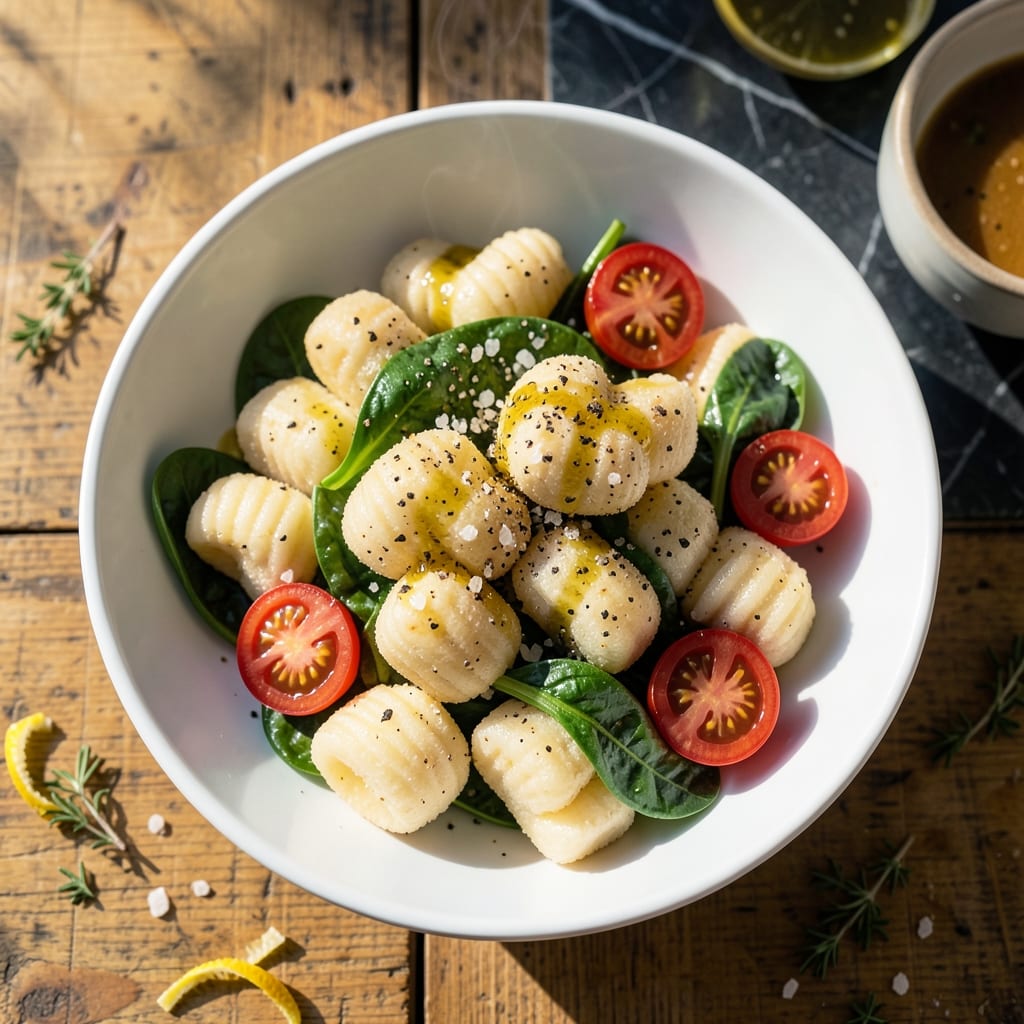
Creating gluten-free gnocchi that rivals traditional versions is absolutely possible with the right technique. I developed this recipe after years of testing, determined to achieve that pillowy texture without gluten.
The secret lies in using rice flour, which provides the necessary structure while maintaining the lightness that makes gnocchi special. The dough comes together quickly with just a few ingredients, proving that gluten-free cooking doesn’t require complicated methods.
These dumplings boil up tender and delicate, with a satisfying bite that holds up to sauces. The rice flour base ensures they won’t fall apart in the pot, giving you restaurant-quality results at home.
Serve with your favorite sauce for a dish that will impress even the most devoted traditionalists.
Ingredients for Gluten Free Gnocchi Recipe Rice Flour
Simple gluten-free pantry staples for pillowy, restaurant-quality gnocchi at home.
| Ingredient | Amount | Notes |
|---|---|---|
| White Rice Flour 🌾 | 2 cups | Fine, high-quality for best texture |
| Russet Potatoes 🥔 | 2 whole | Large, about 2 lbs total |
| Tapioca Starch 🌾 | ¼ cup | Helps bind the dough |
| Salt 🧂 | 1 tsp | Fine sea salt preferred |
| Nutritional Yeast 🧀 | 2 tbsp | Adds depth and cheesy flavor |
| Olive Oil 🫒 | 1 tbsp | For dough and cooking |
| Xanthan Gum 🧪 | ½ tsp | Optional, improves elasticity |
| Water 💧 | ¼ cup | As needed for dough consistency |
| Garlic Powder 🧄 | ½ tsp | For subtle savory flavor |
| Onion Powder 🧅 | ½ tsp | Complements the garlic |
Rice flour is non-negotiable here—Bob’s Red Mill or Authentic Foods are my go-tos. The potatoes must be russets (their high starch content mimics wheat flour’s structure). Whole Foods or Trader Joe’s carry both if your regular store doesn’t. For nutritional yeast, Bragg is a solid brand (found in the bulk section at most natural food stores). Don’t skip the tapioca starch—it’s the glue holding everything together.
No rice flour? Sorghum flour at a 1:1 ratio is your best bet, though the texture will differ slightly. Out of nutritional yeast? Vegan Parmesan (like Follow Your Heart) grated fine works in a pinch. Xanthan gum can be omitted, but the dough may be stickier—just handle it gently. Potatoes can be swapped for sweet potatoes, but they’ll lend a different flavor (and color) to the final dish.
Store uncooked gnocchi on a floured tray in the fridge for up to 24 hours, or freeze for 2 months. Cooked gnocchi keep in the fridge for 3-4 days (reheat gently in a pan). Always bring potatoes to room temp before mixing—cold potatoes make gummy gnocchi.
Why You’ll Love This Recipe
- One Bowl Wonder: I just dump the rice flour, mashed russets, and tapioca starch in a single bowl—no fancy tools, no mess.
- Cheesy Comfort: That nutty hit from the nutritional yeast gives these gnocchi a Parmesan-like depth without dairy.
- Freezer Friendly: I double the batch and stash half in the freezer for lazy nights when I need a 10-minute dinner.
- Budget Stretch: Russet potatoes and rice flour cost pennies, and this recipe makes enough to feed my whole family twice.
Step-by-Step Instructions for Gluten Free Gnocchi with Rice Flour
Here’s the method. Straightforward, tested, works every time.
Step 1: Bake and Rice the Russet Potatoes
Start by preheating your oven to 400°F. Pierce the 2 whole Russet Potatoes several times with a fork, then bake them directly on the oven rack for 45-60 minutes until a knife slides in easily and they feel tender when squeezed.
This dry heat method prevents excess moisture in the potatoes, which is crucial for achieving the right dough consistency. Remove them from the oven and let cool slightly—just enough to handle. Cut each potato in half and use a potato ricer to create fine, fluffy pieces. Avoid using a food processor; it creates a gummy texture.
Step 2: Mix the Dry Ingredients and Combine
In a large bowl, whisk together the 2 cups White Rice Flour, 0.25 cup Tapioca Starch, 1 tsp Salt, 2 tbsp Nutritional Yeast, 0.5 tsp Garlic Powder, 0.5 tsp Onion Powder, and 0.5 tsp Xanthan Gum. The xanthan gum improves the elasticity, mimicking gluten’s structure.
Make a well in the center of the dry mixture and add the riced potatoes, 1 tbsp Olive Oil, and 0.25 cup Water. Use a fork or your hands to combine everything into a soft dough. It should be slightly sticky but not wet. If it’s too dry, add a few drops more water; if too sticky, a sprinkle of rice flour will help.
Step 3: Shape and Cut the Gnocchi
Turn the dough out onto a lightly floured surface and divide it into four equal portions. Roll each portion into a rope about 1-inch thick. Cut the ropes into 1-inch pieces for your gnocchi. For that classic look, you can press each piece against a fork or gnocchi board to create ridges—these help the sauce cling better later.
This step requires a light touch. Don’t overwork the dough, or the gnocchi will become dense and tough. As you shape each piece, place them on a floured baking sheet to prevent sticking. If the dough starts to dry out, cover it with a damp towel between batches.
Step 4: Cook the Gnocchi Until They Float
Bring a large pot of salted water to a gentle boil. Working in batches to avoid overcrowding, drop the gnocchi into the water. They’re ready when they float to the surface, which typically takes 2-3 minutes. Let them cook for an additional 30-60 seconds once they rise to ensure they’re fully cooked through.
Use a slotted spoon to carefully remove the gnocchi from the water. Transfer them to a plate lined with a paper towel to drain any excess water. At this point, you can either serve them immediately or proceed to pan-fry for a crispier texture if desired.
Pro Tips For Making Gluten Free Gnocchi Recipe Rice Flour
- Boil Whole Potatoes: Bake or boil russet potatoes whole with skins on to prevent excess moisture—peeling and dicing before cooking adds water that makes gnocchi gummy. I learned this the hard way after my first batch turned to paste.
- Measure Flour Right: Spoon white rice flour into your measuring cup and level it off—scooping directly from the bag packs it down and leads to dense, heavy gnocchi. After three failed batches, I finally figured out this was the culprit.
- Rest the Dough: Let the dough rest for 10-15 minutes after mixing—it relaxes the starches and makes rolling much easier. Sounds weird, but it works.
- Use a Fork Test: Drop a gnocchi in boiling water—if it floats within 30-40 seconds, they’re ready. My grandmother swore by this, and she was right.
Essential Equipment for This Recipe
Potato Ricer
A potato ricer is non-negotiable for achieving that light, fluffy texture in your dough. I use a OXO Good Grips model—it’s sturdy, easy to clean, and fits comfortably in my small Boston kitchen. Avoid food processors, which can make the potatoes gummy. 💪
Kitchen Scale
Precision matters with gluten-free baking. A digital kitchen scale ensures your 2 cups rice flour and other ingredients are measured accurately. I recommend the Escali Primo—affordable and reliable for home cooks.
Gnocchi Board
While optional, a gnocchi board creates those classic ridges that help sauce cling to each piece. If you don’t have one, the tines of a fork work in a pinch. I found mine at a local Italian deli in Boston’s North End.
Large Pot
Use a 5-6 quart pot with plenty of water for boiling. The gnocchi need room to float freely without sticking. My Cuisinart Multi-Clad pot handles this perfectly and doubles for pasta and soups.
Slotted Spoon
A large slotted spoon gently removes cooked gnocchi from the water without breaking them. I prefer a stainless steel version—it’s durable and won’t warp over time. This is the same tool I use for blanching vegetables.
These tools make the process smoother, especially in tight kitchen spaces like my old triple-decker. 🥄
Nutrition Facts
Frequently Asked Questions
Can I use a different potato variety?
Stick with russets for best results. Their high starch content mimics gluten’s structure. Other potatoes may make the dough too wet or dense.
Why do my gnocchi fall apart in the water?
This usually means the dough was too wet. Ensure potatoes are fully cooled and riced before mixing. Add rice flour gradually until the dough holds together.
Can I make these ahead of time?
Shape and freeze uncooked gnocchi on a tray first, then transfer to a bag. Cook from frozen—add 1-2 extra minutes to boiling time.
What sauce pairs best with these?
Try a simple sage butter or marinara. The mild flavor of rice flour gnocchi works with most sauces, but avoid overpowering ones.

- Gobi Fried Rice Recipe: Spiced Cauliflower Wok Delight - October 8, 2026
- Glutinous Rice Roll Recipe: Chewy Pillows With Savory Fillings - October 8, 2026
- Garlic Jasmine Rice Recipe: Fragrant Grains with Aromatic Depth - October 8, 2026