
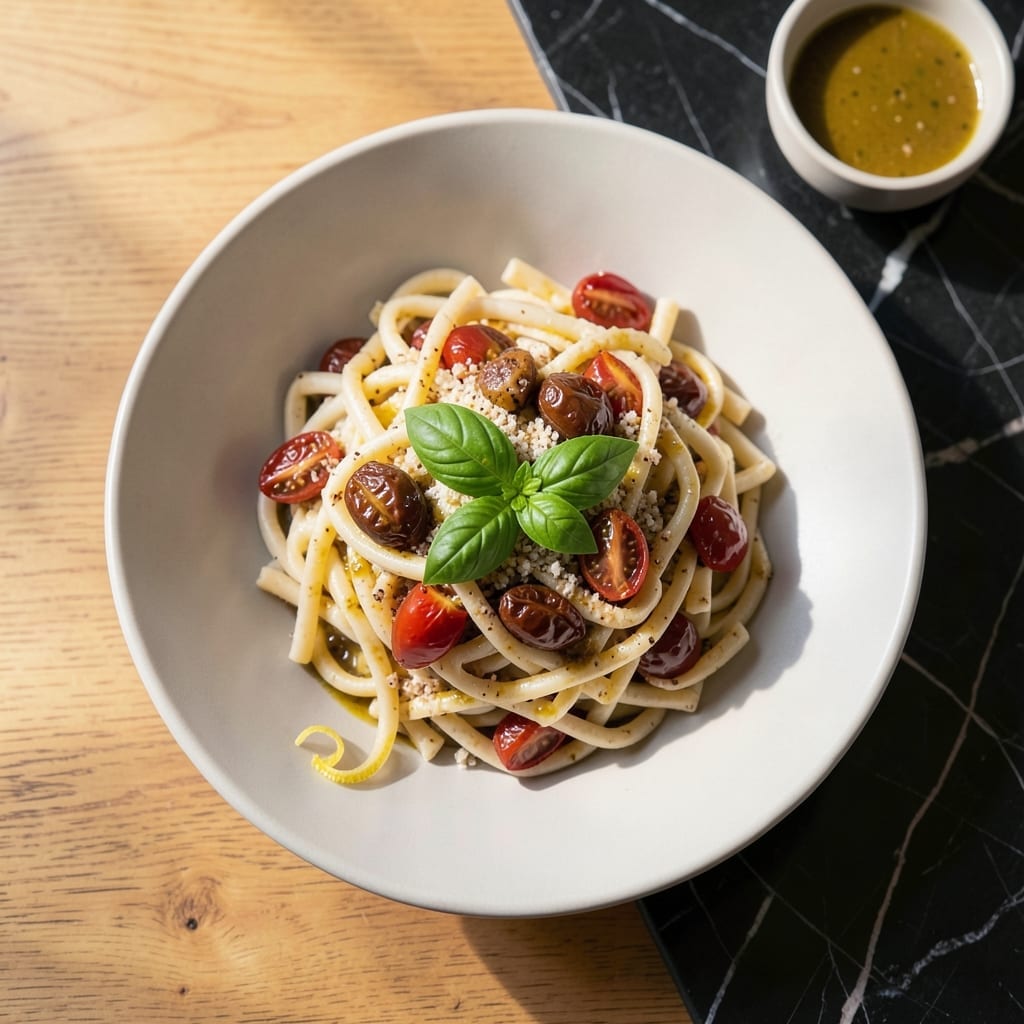
Making gluten-free pasta that actually holds its shape and texture is a game-changer for anyone avoiding wheat. This rice flour version delivers perfect al dente results without the gummy aftertaste.
With just a few simple ingredients and the right technique, you’ll achieve tender, firm pasta that stands up to any sauce. The secret is in the resting time and proper rolling thickness.
Ingredients for Gluten Free Pasta Recipe Rice Flour
Nine ingredients transform into pasta that holds its shape and texture beautifully.
| Ingredient | Amount | Notes |
|---|---|---|
| White Rice Flour 🌾 | 2 cups | Super-fine for smooth texture |
| Brown Rice Flour 🌾 | ½ cup | Adds structure and nuttiness |
| Tapioca Starch 🌾 | ½ cup | Bind and elasticity provider |
| Xanthan Gum 🧪 | 1 tsp | Stabilizer for cohesion |
| Salt 🧂 | 1 tsp | Fine sea salt preferred |
| Water 💧 | 1 cup | Warm for better dough formation |
| Olive Oil 🫒 | 1 tbsp | Extra-virgin for flavor depth |
| Egg Replacer 🥚 | 2 tbsp | Mixed with 6 tbsp water |
| Garlic Powder 🧄 | 1 tsp | Optional for extra flavor |
| Dried Oregano 🌿 | ½ tsp | Optional for Italian flavor |
The rice flour is non-negotiable here. Bob’s Red Mill super-fine white rice flour is the gold standard (available at Whole Foods or Amazon). Brown rice flour adds body—look for Anthony’s Goods brand if you want organic. Tapioca starch (sometimes called tapioca flour) is your binding agent—Thai Kitchen is reliable and widely available. Don’t skip the xanthan gum; it’s the magic that prevents crumbling.
No xanthan gum? Psyllium husk powder at one-third the amount works as a substitute. If you can’t find rice flour, try sorghum flour but expect slightly grittier texture. The egg replacer can be flax eggs (1 tbsp ground flax + 3 tbsp water per egg) if preferred. For extra flavor, a pinch of turmeric adds color without taste (useful for picky eaters).
Store rice flours in airtight containers in a cool, dark place—they’ll keep for 6 months. Xanthan gum lasts 2-3 years unopened. Once made, cook the pasta immediately or dust with extra rice flour and refrigerate for up to 24 hours before rolling.
Why You’ll Love This Recipe
- One Bowl Wonder: I mix the rice flours and tapioca starch right in the same bowl I’ll roll the dough in—no extra dishes, no fuss.
- Nutty Depth: The brown rice flour adds this subtle toasty note that makes the pasta taste way more interesting than plain white rice versions.
- Freezer Friendly: I double the batch, cut the fresh pasta into nests, and freeze them on a tray—dinner in 10 minutes any night.
- Pantry Staples: All it takes is stuff I already keep on hand: white and brown rice flours, tapioca starch, xanthan gum, and salt.
Step-by-Step Instructions for Gluten Free Pasta
Here’s the method. Straightforward, tested, works every time.
Step 1: Mix Dry Ingredients for Even Texture
In a large bowl, whisk together the 2 cups White Rice Flour, 0.5 cup Brown Rice Flour, and 0.5 cup Tapioca Starch. This combination creates the perfect balance of structure and elasticity for gluten-free pasta.
Add the 1 tsp Xanthan Gum and 1 tsp Salt to the flour mixture. Whisk thoroughly for 1-2 minutes until fully incorporated and no lumps remain. The xanthan gum is crucial—it mimics gluten’s binding properties, ensuring your pasta holds together beautifully during cooking.
Step 2: Prepare Wet Ingredients and Combine
In a separate bowl, mix the 2 tbsp Egg Replacer with 6 tbsp water (as specified in the ingredients) until smooth. Then add the 1 cup Water and 1 tbsp Olive Oil. The warm water helps activate the egg replacer while the olive oil adds richness and helps create a pliable dough.
Slowly pour the wet ingredients into the dry mixture while stirring with a wooden spoon. The dough will start to come together and pull away from the sides of the bowl. If it feels too dry, add water 1 teaspoon at a time—but don’t exceed the total 1 cup specified in the recipe.
Step 3: Knead and Rest the Dough
Turn the dough out onto a clean surface dusted with White Rice Flour. Knead for 5-7 minutes until smooth and elastic. The dough should be slightly tacky but not stick to your hands. If it sticks, dust with more White Rice Flour, but use sparingly to avoid drying it out.
Wrap the dough in plastic wrap and let it rest at room temperature for 30 minutes. This resting period allows the flours to fully hydrate and the xanthan gum to work its magic, resulting in a more workable dough that won’t spring back when you roll it out.
Step 4: Roll, Cut, and Shape the Pasta
Divide the rested dough into 4 equal portions (for 4 servings). Working with one portion at a time, roll the dough through a pasta machine starting at the widest setting. Fold the sheet in thirds and repeat 2-3 times before narrowing the setting and rolling again.
Continue this process, gradually thinning the pasta sheet, until you reach your desired thickness (typically setting #5 or #6 for most pasta shapes). For flavored pasta, sprinkle 1 tsp Garlic Powder and 0.5 tsp Dried Oregano over the sheets before the final roll to incorporate evenly. Cut into your preferred shape—fettuccine, tagliatelle, or squares for ravioli.
Step 5: Cook to Al Dente Perfection
Bring a large pot of salted water to a rolling boil. Add the fresh pasta and cook for 2-3 minutes until it floats to the surface and is al dente. Gluten-free pasta cooks faster than traditional wheat pasta, so test a piece at 2 minutes to avoid overcooking.
Drain immediately and toss with your favorite sauce or a drizzle of Olive Oil to prevent sticking. The pasta should have a slight bite with a smooth texture, holding its shape beautifully without falling apart. Serve immediately for the best texture and flavor.
Pro Tips For Making Gluten Free Pasta Recipe Rice Flour
- Knead Longer: I learned this the hard way—rice flour dough needs a good 8-10 minutes of kneading to develop elasticity, otherwise your pasta will crumble when cooking.
- Weigh Your Flours: Sounds tedious, but rice flours compact differently in cups. 120g of white rice flour and 80g of brown rice flour per cup is the sweet spot I use every time.
- Skip Cold Water: After ruining a batch with cold water, I now always use warm (not hot) water—about 110°F—to help the xanthan gum activate properly and bind the dough.
- Rest the Dough: Give it a solid 20 minutes wrapped in plastic—this lets the starches hydrate fully so the pasta holds its shape when boiling.
Flavor Customization for This Dish
Herb Infusions
Add 1 tsp dried basil or 1 tsp rosemary to the dry ingredients for an aromatic twist. The herbs distribute evenly through the dough during kneading. I love the earthy note rosemary adds to fettuccine.
Spice It Up
For heat lovers, mix ½ tsp cayenne pepper or 1 tsp smoked paprika into the flour blend. The paprika also gives the pasta a subtle orange hue. Just ¼ tsp black pepper adds depth without overwhelming.
Citrus Zest Boost
Incorporate 1 tbsp lemon zest or 1 tbsp orange zest for bright, fresh notes. The oils in the zest infuse beautifully during resting. This pairs wonderfully with pesto or cream sauces. 💛
Spinach Green Pasta
Blend ½ cup cooked spinach (well-drained) with the wet ingredients before combining. You may need to add 1-2 tbsp extra rice flour to compensate for moisture. The result is vibrant green pasta with a subtle vegetable sweetness.
Roasted Garlic Flavor
Replace the garlic powder with 1 tbsp roasted garlic paste in the dough. The mellow, caramelized flavor shines through. I make a big batch of roasted garlic on Sunday to use all week.
Cheesy Addition
For non-vegan versions, add ¼ cup grated Parmesan or ¼ cup nutritional yeast to the dry mix. The umami depth elevates simple olive oil and garlic sauces. Both options melt beautifully into the dough. ✨
Nutrition Facts
Frequently Asked Questions
Can I make this without a pasta machine?
Yes! Roll the dough 1/8-inch thick between parchment paper using a rolling pin. Cut with a knife for flat shapes, or use a pizza cutter for quick strips.
Why does my pasta turn out gummy?
Overworking the dough or skipping the 30-minute rest are common culprits. Also, ensure your water is hot enough—2-3 minutes max for cooking.
What sauces pair best with rice flour pasta?
Light, creamy sauces like pesto or alfredo work beautifully. Avoid heavy tomato sauces that can weigh down the delicate texture.

- Fresh Turmeric Rice Recipe: Golden Grains with Earthy Warmth - October 7, 2026
- French Onion Brown Rice Recipe: Umami-Rich Grains With Caramelized Depth - October 7, 2026
- Rice Noodle Soup Recipe: Aromatic Broth with Silky Strands - October 7, 2026