
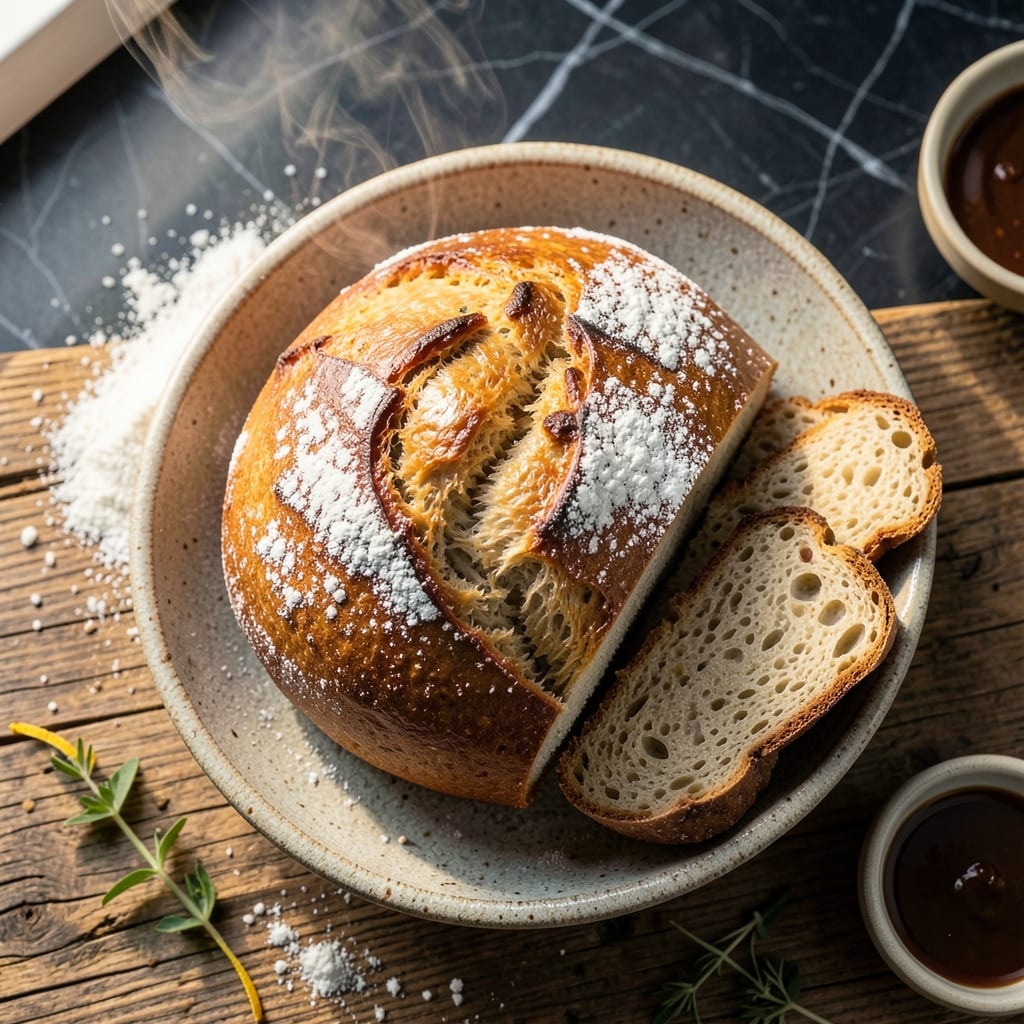
This gluten-free bread delivers a soft and light texture without yeast or traditional flour. The rice flour base creates a tender crumb that rivals conventional bread.
With a simple mixing method and no rising time, this loaf comes together quickly. The result is a versatile bread perfect for sandwiches or toast, with a mild flavor that lets toppings shine.
Ingredients for Gluten Free Rice Flour Bread
A few pantry staples create this tender, yeast-free gluten-free loaf with a light crumb.
| Ingredient | Amount | Notes |
|---|---|---|
| White Rice Flour 🌾 | 2 ½ cups | Superfine grind preferred |
| Tapioca Starch 🌾 | ¾ cup | Also called tapioca flour |
| Potato Starch 🥔 | ½ cup | Not potato flour |
| Xanthan Gum 🧪 | 2 tsp | Essential for structure |
| Baking Powder 🍞 | 2 tsp | Aluminum-free preferred |
| Salt 🧂 | 1 tsp | Fine sea salt |
| Sugar 🍚 | 2 tbsp | Coconut sugar or cane sugar |
| Unsweetened Almond Milk 🥛 | 1 ½ cups | Room temperature preferred |
| Apple Cider Vinegar 🍏 | 1 tbsp | For acidity and lift |
| Coconut Oil 🥥 | ¼ cup | Melted, or vegetable oil |
| Flaxseed Meal 🌿 | 2 tbsp | Mixed with 6 tbsp water |
| Psyllium Husk Powder 🌾 | 2 tsp | Binds without eggs |
Rice flour quality matters here. Bob’s Red Mill superfine white rice flour works best for that soft texture—avoid gritty or coarse grinds. Tapioca starch and potato starch add elasticity, so don’t skip them. Whole Foods or well-stocked grocery stores carry these in the gluten-free section. Check expiration dates; old starches lose binding power.
No xanthan gum? Psyllium husk powder at double the amount works in a pinch, but texture differs slightly. For the milk, oat or soy milk can replace almond milk at a 1:1 ratio. Coconut oil can be melted vegan butter or even neutral avocado oil. If you’re out of apple cider vinegar, lemon juice or white vinegar works too.
Store the loaf wrapped in a clean towel at room temperature for 2-3 days, or slice and freeze for up to 3 months. For best texture, warm slices briefly in a toaster. The flaxseed mixture should gel slightly before adding—this ensures proper binding.
Why You’ll Love This Recipe
- One Bowl Magic: I just dump the rice flour, starches, and xanthan gum in a single bowl—no fancy steps, no fuss.
- Warm, Mild Sweetness: The blend of white rice flour and tapioca starch gives it that soft, slightly sweet flavor that’s hard to resist.
- Sandwich Savior: Honestly, it’s my go-to for lunches all week—holds up to fillings without crumbling.
- Budget Stretcher: A bag of rice flour and a few starches make multiple loaves, and it’s way cheaper than store-bought gluten-free bread.
Step-by-Step Instructions for Gluten Free Rice Flour Bread
Follow this precise method to achieve a perfectly risen, tender loaf without traditional wheat flour.
Step 1: Prepare the Flaxseed Gel and Activate the Psyllium
Combine the 2 tbsp Flaxseed Meal with 6 tbsp water in a small bowl. Stir well and set aside to thicken for 5 minutes—it should resemble a gel-like consistency. This replaces eggs as a binder while adding moisture and structure to your bread.
In a separate small bowl, whisk together the 1.5 cups Unsweetened Almond Milk, 1 tbsp Apple Cider Vinegar, and 2 tsp Psyllium Husk Powder. Let this mixture sit for 5 minutes until it thickens slightly. The vinegar reacts with the almond milk to create lift, while the psyllium acts as a glue to hold everything together.
Step 2: Combine Dry Ingredients for Optimal Texture
In a large mixing bowl, sift together the 2.5 cups White Rice Flour, 0.75 cup Tapioca Starch, 0.5 cup Potato Starch, 2 tsp Xanthan Gum, 2 tsp Baking Powder, 1 tsp Salt, and 2 tbsp Sugar. Sifting prevents clumps and ensures even distribution of the xanthan gum, which is critical for proper elastic texture in gluten-free baking.
Whisk the dry ingredients thoroughly for 30 seconds to fully integrate the xanthan gum. This step prevents gummy or dense pockets in the final loaf. The combination of rice flour and starches mimics the structure of wheat flour, while the sugar adds subtle sweetness and aids in browning.
Step 3: Mix Wet and Dry Ingredients into a Smooth Batter
Create a well in the center of your dry ingredients. Pour in the thickened flaxseed gel, the psyllium-almond milk mixture, and the 0.25 cup Coconut Oil (ensure it’s melted but not hot). Using a silicone spatula, fold the ingredients together gently until just combined—overmixing can make the bread dense.
The batter will be thick but pourable, similar to pancake batter. If it seems too stiff, add a splash of warm water, but no more than 2 tbsp. Let the batter rest for 10 minutes; this allows the psyllium and xanthan gum to fully hydrate, improving the bread’s rise and crumb structure.
Step 4: Bake to Golden Perfection
Preheat your oven to 350°F and grease a 9×5-inch loaf pan lightly with coconut oil or line it with parchment paper. Pour the batter into the pan and smooth the top with a wet spatula. This helps prevent cracking on the surface as it bakes.
Bake on the center rack for 50-60 minutes, or until the loaf is golden brown and a toothpick inserted into the center comes out clean. If the top browns too quickly, tent the pan with aluminum foil. The internal temperature should reach 205°F for a fully set crumb.
Step 5: Cool Completely Before Slicing
Remove the loaf from the oven and let it cool in the pan for 10 minutes. Then, transfer it to a wire rack to cool completely for at least 2 hours. Slicing too soon can result in a gummy texture, as the structure sets as it cools.
Once cooled, the bread should have a soft, slightly springy texture with a light, airy crumb. Store it in an airtight container at room temperature for up to 3 days, or slice and freeze for longer storage. Reheat slices in a toaster for best results.
Pro Tips For Making Gluten Free Rice Flour Bread
- Preheat the Oven: I learned this the hard way—crank it to 375°F and give it a full 15 minutes to stabilize. Gluten-free bread needs that consistent heat to rise properly.
- Measure Starches Correctly: Scoop tapioca and potato starch into the cup, then level off—don’t pack them down. Too much turns the loaf dense and gummy.
- Skip Cold Eggs: After my first few loaves came out flat, I realized room-temperature eggs incorporate better with the rice flour. Just set them out 30 minutes before mixing.
- Add Vinegar: Sounds weird, but it works: a teaspoon of apple cider vinegar reacts with the baking powder for a slightly taller, less crumbly loaf.
Wine and Beer Pairings for This Dish
Light White Wines
A crisp Sauvignon Blanc from New Zealand pairs beautifully, with its citrus and herbal notes complementing the bread’s mild flavor. I love Kim Crawford or Oyster Bay for this combo. The acidity cuts through any richness from the coconut oil. 🍷
Sparkling Options
For celebratory moments, try a dry Prosecco or Cava. The bubbles cleanse your palate between bites. La Marca Prosecco offers consistent quality at a reasonable price point. Serve well-chilled for maximum refreshment.
Light Beers
A Belgian-style witbier like Blue Moon or Hoegaarden brings citrus and spice notes that enhance the bread’s subtle sweetness. The light body won’t overwhelm the delicate crumb. I always keep a few bottles on hand for casual gatherings. 🍺
Gluten-Free Beers
For strict gluten-free needs, Glutenberg Blonde Ale or Omission Lager pair well. These craft options have the complexity to match your homemade loaf. Check local specialty stores for these brands.
Non-Alcoholic Pairings
A chilled sparkling apple cider like Martinelli’s offers the same palate-cleansing effect as wine. The natural sweetness complements the bread’s slight sugar content. I often serve this for family-friendly meals.
Nutrition Facts
Frequently Asked Questions
Can I use brown rice flour instead of white?
Yes, but it creates a denser, nuttier loaf. For best results, use superfine white rice flour to keep the crumb light. You may need extra 1-2 tbsp liquid to compensate for brown rice flour’s heavier texture.
Why did my bread collapse in the middle?
This usually means the structure wasn’t set before cooling. Ensure your oven is fully preheated to 350°F and don’t open the door during baking. The toothpick test should come out clean at 205°F internal temperature.
Can I make this without xanthan gum?
Use 2 tsp psyllium husk powder as a substitute, but expect a slightly different texture. The bread may be more crumbly without xanthan gum’s elastic properties. Let the batter rest 10 minutes before baking.
How do I store leftovers?
Keep wrapped at room temperature for 2-3 days. For longer storage, slice and freeze for up to 3 months. Toast slices directly from frozen for best texture.

- Glutinous Rice Flour Bread Recipe: Soft Pillows with Nutty Depth - October 12, 2026
- Green Rice Casserole Recipe: Cheesy Baked Comfort with Vibrant Herbs - October 12, 2026
- Glutinous Rice Coconut Milk Recipe: Chewy Sweetness With Tropical Depth - October 12, 2026