
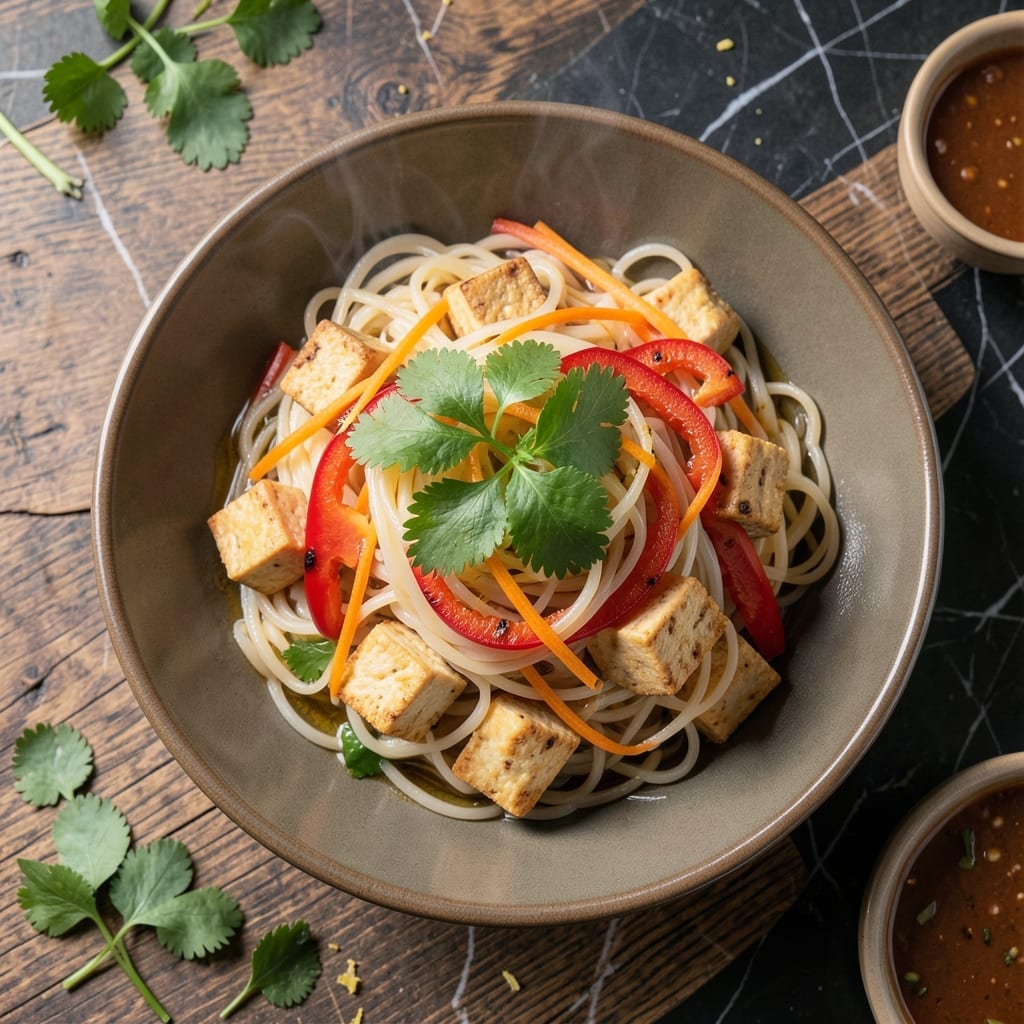
This gluten-free dish proves that stir-fried rice noodles can be both flavorful and light. Fresh herbs and lime brighten every bite without overpowering.
With a few simple ingredients and 15 minutes of cooking time, you’ll achieve tender noodles coated in a vibrant, aromatic sauce. The result is a dish that’s naturally free from gluten yet packed with authentic taste.
Ingredients for Gluten Free Rice Noodle
Flat rice noodles, crisp vegetables, and bold herbs create this vibrant gluten-free stir-fry.
| Ingredient | Amount | Notes |
|---|---|---|
| Rice Noodles 🍜 | 8 oz | Flat, gluten-free variety |
| Firm Tofu 🧈 | 14 oz | Pressed, cubed for protein |
| Red Bell Pepper 🌶️ | 1 whole | Thinly sliced for crunch |
| Carrots 🥕 | 2 whole | Julienned for texture |
| Fresh Cilantro 🌿 | ½ cup | Chopped, for garnish |
| Fresh Thai Basil 🍃 | ½ cup | Chopped, essential for aroma |
| Green Onions 🧅 | 3 whole | Sliced, white and green parts |
| Lime 🍋 | 2 whole | Juiced and zested |
| Garlic Cloves 🧄 | 4 cloves | Minced for depth |
| Tamari 🫒 | 3 tbsp | Gluten-free soy sauce |
| Rice Vinegar 💧 | 2 tbsp | For tangy brightness |
| Maple Syrup 🍁 | 1 tbsp | Natural sweetener balance |
| Sesame Oil 🫒 | 1 tbsp | Toasted for nutty aroma |
| Peanut Oil 🫒 | 2 tbsp | High smoke point for frying |
| Salt 🧂 | ½ tsp | Sea salt preferred |
The rice noodles must be 100% rice—check labels for hidden wheat. Trader Joe’s and Thai Kitchen brands are reliable. For tofu, extra-firm holds its shape best during stir-frying. Press it for at least 20 minutes to remove excess moisture (worth the extra minute). The fresh herbs are non-negotiable—look for bright, unblemished leaves at your local Asian market or well-stocked grocery.
No tamari? Use coconut aminos at a 1:1 ratio. Out of Thai basil? Regular basil works in a pinch (though the flavor profile shifts slightly). Peanut oil can be swapped for avocado oil or sunflower oil. For heat, add a sliced jalapeño or red pepper flakes. The maple syrup balances the tamari—don’t skip it, but agave nectar is a fine substitute.
Prep all ingredients before cooking—stir-frying happens fast. Leftovers keep 3-4 days in the fridge but are best eaten fresh. The noodles will absorb sauce over time, so store with a splash of water to loosen before reheating. Not freezer-friendly due to the tofu texture.
Why You’ll Love This Recipe
- Minimal Chopping Required: I just slice the tofu, bell pepper, and carrots—no fancy knife skills needed.
- Crave-Worthy Combo: The crisp tofu and fresh cilantro with those chewy rice noodles? Honestly, I make extra for lunch the next day.
- Meal Prep Hero: It keeps beautifully for days, and I love packing it cold or reheated.
- Budget-Friendly Feast: Rice noodles and tofu stretch far, and a little cilantro goes a long way.
Step-by-Step Instructions for Gluten Free Stir-Fried Rice Noodles
Master the technique for perfectly tender noodles with vibrant, fresh flavors every time.
Step 1: Soak Rice Noodles and Press Tofu
Place the 8 oz Rice Noodles in a large bowl and cover with hot water. Soak for 8-10 minutes until pliable but still slightly firm—they’ll finish cooking in the wok. Drain and rinse with cold water to stop the cooking process.
Meanwhile, cube the 14 oz Firm Tofu and press between paper towels with a heavy pan on top for 15 minutes to remove excess moisture. This ensures the tofu achieves a golden crust when cooked.
Step 2: Sauté Aromatics and Vegetables
Heat the 2 tbsp Peanut Oil in a wok or large skillet over medium-high heat. Add the 4 cloves Garlic Cloves and stir until fragrant, about 30 seconds. Immediately add the 1 whole Red Bell Pepper (thinly sliced) and 2 whole Carrots (julienned), stirring for 3-4 minutes until crisp-tender.
Push the vegetables to one side and add the pressed tofu. Cook undisturbed for 2-3 minutes per side until golden brown. The tofu should release easily from the pan when ready to flip.
Step 3: Combine Noodles and Sauce
Add the drained rice noodles to the wok along with the 3 tbsp Tamari, 2 tbsp Rice Vinegar, 1 tbsp Maple Syrup, and 1 tbsp Sesame Oil. Toss everything together for 2-3 minutes until the noodles are fully tender and coated in the sauce.
The sauce should glaze the noodles lightly without pooling at the bottom. If the mixture seems dry, add a splash of water and continue tossing.
Step 4: Finish with Fresh Herbs and Lime
Remove from heat and stir in the 0.5 cup Fresh Cilantro, 0.5 cup Fresh Thai Basil, and 3 whole Green Onions (sliced). The herbs should wilt slightly but retain their bright color and aroma. Season with the 0.5 tsp Salt and adjust to taste.
Squeeze the juice of 2 whole Lime over the dish and zest one lime for an extra burst of citrus. Serve immediately while hot, garnished with additional herbs and lime wedges.
Pro Tips For Making Gluten Free Rice Noodle
- Soak Noodles First: I learned this the hard way—cover rice noodles in warm water for 10-15 minutes before cooking, or they’ll turn out gummy. They should be pliable but still slightly firm.
- Press the Tofu: Wrap firm tofu in a clean towel, place a heavy pan on top for 15 minutes, then cube it. Sounds tedious, but it actually changes the outcome—no more soggy tofu in your stir-fry.
- Slice Thin, Cook Fast: Cut bell peppers and carrots into thin, even strips so they cook through in 2-3 minutes over high heat. Resist the urge to crowd the pan, or they’ll steam instead of sear.
- Add Cilantro Last: Toss in the fresh cilantro right before serving—adding it earlier turns the leaves sad and wilted. My grandmother swore by this, and she was right.
Troubleshooting This Recipe
Noodles Too Soft
If your noodles turn mushy, you likely over-soaked them. Soak for only 8-10 minutes in hot water until pliable but still firm. I always set a timer—it’s easy to get distracted and leave them too long. 💡
Sticky Noodle Clumps
Rinse the soaked noodles with cold water immediately after draining. This removes excess starch that causes sticking. Toss them with 1 tsp oil before adding to the wok as an extra precaution.
Sauce Too Thin
If the sauce pools at the bottom, let it cook down uncovered for 1-2 minutes over medium-high heat. Alternatively, mix 1 tsp cornstarch with water and stir in to thicken instantly.
Tofu Not Browning
Press the tofu for the full 15-20 minutes and ensure your pan is hot before adding it. Use medium-high heat and avoid stirring too frequently—let it develop a crust. I swear by my cast-iron wok for this. 🔥
Bland Flavor
Boost the umami by adding an extra 1 tbsp tamari or a splash of fish sauce (check for gluten-free). Finish with a squeeze of fresh lime and extra herbs to brighten the dish.
Vegetables Too Soft
Stir-fry the veggies for just 3-4 minutes until crisp-tender. Add them back at the very end if they overcook. The bell pepper and carrots should retain a slight bite for texture.
Nutrition Facts
Frequently Asked Questions
Can I use a different type of noodle?
Stick to 100% rice noodles to keep it gluten-free. Some “rice stick” noodles contain wheat, so always check labels carefully.
How do I prevent the noodles from sticking?
Rinse soaked noodles with cold water to remove excess starch, then toss with 1 tsp oil before cooking. This creates a protective barrier in the pan.
What can I substitute for tamari?
Use coconut aminos at a 1:1 ratio for identical flavor. In a pinch, gluten-free soy sauce works too, but may taste slightly saltier.
Can I make this ahead of time?
Best eaten fresh, but leftovers keep 3-4 days in the fridge. Store with a splash of water to prevent drying out when reheating.

- Five Spice Rice Recipe: Aromatic Grains With Warm Spice Balance - October 10, 2026
- Flavoured Basmati Rice Recipe: Aromatic Grains with Spiced Depth - October 10, 2026
- Fish Porridge Rice Cooker Recipe: Hands-Free Congee With Silky Depth - October 10, 2026