
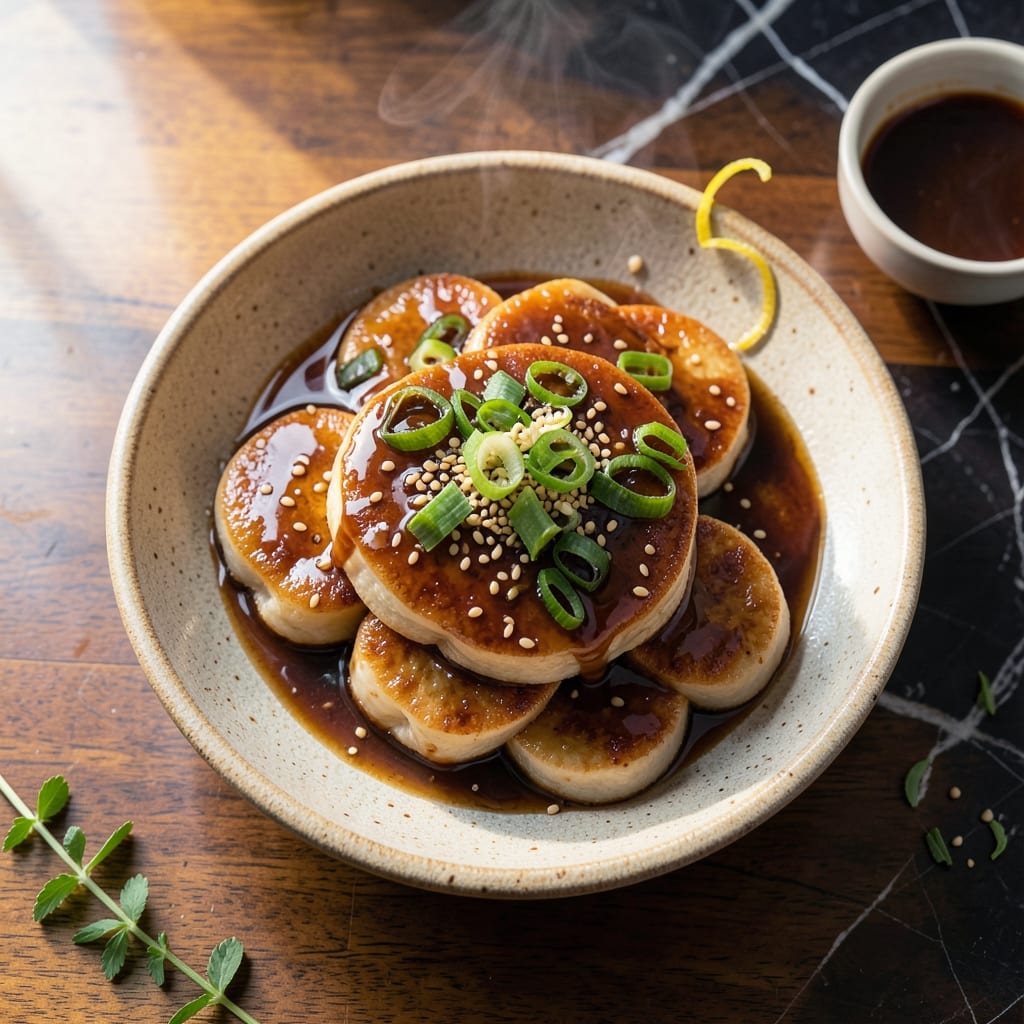
This Korean flat rice cake stir-fry delivers the perfect balance of chewy texture and sweet-savory flavor in every bite. A staple in Korean cuisine, this dish transforms simple rice cakes into something extraordinary with just a few key ingredients.
The magic lies in the sauce—a glossy, sweet soy glaze that coats each piece of rice cake and infuses it with rich, umami depth. Soy sauce, brown sugar, and sesame oil create a harmony of flavors that’s both comforting and deeply satisfying.
Cooking the rice cakes quickly over high heat ensures they stay tender inside while developing a slight char on the outside. The result is a dish that’s as enjoyable to make as it is to eat, with minimal effort and maximum reward.
Serve it as a main course or a hearty side, and watch it disappear. This creation is ready in under 30 minutes.
Ingredients for Korean Flat Rice Cake
Transform simple rice cakes into something extraordinary with these flavor-packed ingredients.
| Ingredient | Amount | Notes |
|---|---|---|
| Korean Rice Cakes 🍚 | 1 lb | Cylindrical or flat, soaked if hard |
| Soy Sauce 🫒 | ½ cup | Low-sodium preferred for balance |
| Brown Sugar 🍫 | 3 tbsp | Light or dark works equally |
| Sesame Oil 🫒 | 1 tbsp | Toasted for authentic flavor |
| Garlic Cloves 🧄 | 4 cloves | Minced for maximum impact |
| Green Onions 🧅 | 4 whole | Thinly sliced for garnish |
| Vegetable Oil 🫒 | 2 tbsp | High smoke point for stir-frying |
| Gochujang 🌶️ | 1 tbsp | Korean chili paste optional |
| Rice Vinegar 🍶 | 1 tbsp | Balances sweetness in sauce |
| Sesame Seeds 🌰 | 1 tsp | Toasted for garnish |
| Red Bell Pepper 🌶️ | 1 whole | Thinly sliced for color |
| Carrot 🥕 | 1 whole | Julienned for texture |
| Ground Black Pepper 🌶️ | ½ tsp | Freshly ground preferred |
The rice cakes are the foundation here. Look for Korean rice cakes (tteok) at Asian markets or the international aisle—cylindrical or flat both work, but avoid the instant microwave kind. Soak hard rice cakes in warm water for 10-15 minutes if they feel rock-solid. The soy sauce should be Korean or Japanese for authentic flavor; I like Kikkoman for consistency and availability.
No gochujang? Sriracha mixed with a little miso paste gets you close to that spicy-sweet depth. Brown sugar can be swapped for honey or maple syrup if you’re okay with a slightly different flavor profile. For a gluten-free version, tamari replaces soy sauce without sacrificing depth. The vegetables are flexible—zucchini, cabbage, or mushrooms all work beautifully.
Store rice cakes in the fridge for up to 1 week or freeze for 3 months (thaw before using). The sauce keeps well in a jar for 5 days—just give it a shake before using. Prep all ingredients before cooking; this dish comes together fast once the heat is on.
Why You’ll Love This Recipe
- One Pan Wonder: I toss everything in a skillet—rice cakes, soy sauce, brown sugar—and let the sauce thicken while I set the table.
- Sweet-Savory Magic: The brown sugar caramelizes with the soy sauce, and the garlic? It’s the flavor bomb that makes these irresistible.
- Weeknight Hero: Honestly, it’s my go-to when I need dinner fast but still want something that feels special.
- Budget Stretcher: A bag of rice cakes feeds four for pennies, and leftovers reheat beautifully for lunch the next day.
Step-by-Step Instructions for Korean Flat Rice Cake Stir-Fry
This method ensures perfectly chewy rice cakes with a glossy, balanced sweet-savory glaze.
Step 1: Soak and Prep the Rice Cakes
If using hard, dry Korean rice cakes, soak the 1 lb Korean Rice Cakes in warm water for 15-20 minutes until soft and pliable. Drain thoroughly and pat dry with a clean towel—excess moisture will prevent proper searing.
Thinly slice the 1 whole Red Bell Pepper and julienne the 1 whole Carrot into matchstick pieces. Keep these separate from the rice cakes until cooking to maintain their crisp texture.
Step 2: Create the Sweet Soy Glaze
In a small bowl, whisk together the 0.5 cup Soy Sauce, 3 tbsp Brown Sugar, 1 tbsp Gochujang, 1 tbsp Rice Vinegar, and 0.5 tsp Ground Black Pepper until the brown sugar fully dissolves. The glaze should be smooth and slightly thick, with a deep amber color.
Mince the 4 cloves Garlic Cloves finely and thinly slice the 4 whole Green Onions, separating the white and green parts. Set aside the green portions for garnishing later.
Step 3: Stir-Fry the Vegetables and Rice Cakes
Heat 2 tbsp Vegetable Oil in a large skillet or wok over medium-high heat until shimmering. Add the minced garlic and white parts of the green onions, stir-frying for 30 seconds until fragrant but not browned.
Add the sliced red bell pepper and julienned carrot, stir-frying for 3-4 minutes until the vegetables soften slightly but retain a bit of crunch. Push the vegetables to one side and add the rice cakes, cooking for 2-3 minutes until they develop a light golden color on the edges.
Step 4: Combine with Glaze and Finish
Pour the prepared glaze over the rice cakes and vegetables. Stir everything together gently but thoroughly to ensure the rice cakes are fully coated. Cook for an additional 3-4 minutes until the sauce thickens and glazes the rice cakes.
The rice cakes should be chewy with a slight bounce, and the sauce should cling to them in a glossy layer. Avoid over-stirring at this stage, as it can cause the rice cakes to break apart.
Step 5: Garnish and Serve
Drizzle the 1 tbsp Sesame Oil over the stir-fry and sprinkle with the reserved green onion slices and 1 tsp Sesame Seeds. Toss gently to distribute the sesame oil and seeds evenly.
Serve immediately while hot. The rice cakes will continue to absorb the sauce slightly as they sit, so transfer to plates promptly for the best texture. Each serving should feature a mix of chewy rice cakes, tender-crisp vegetables, and a glossy, flavorful sauce.
Pro Tips For Making Korean Flat Rice Cake
- Soak the Rice Cakes: I learned this the hard way—dry rice cakes turn gummy. Soak them in warm water for 10-15 minutes before cooking to guarantee a tender, chewy texture.
- Bloom the Garlic: Cook minced garlic in sesame oil for 30 seconds until fragrant before adding other ingredients. Sounds simple, but it actually changes the outcome, giving the sauce depth.
- Skip the Boiling: Resist the urge to boil the rice cakes aggressively. A gentle simmer keeps them intact and prevents mushiness—I ruined two batches before figuring this out.
- Toast the Sugar: Lightly toast the brown sugar in the pan for 1 minute before adding soy sauce. My grandmother swore by this, and it adds a subtle caramelized richness to the glaze.
Health Benefits of korean flat rice cake
Energy Boost
This dish delivers a steady energy release from the carbohydrates in rice cakes, making it perfect for active days. The 1 lb of rice cakes provides about 60g of carbs per serving, fueling your body without the crash of refined sugars. 💪
Digestive Health
The fiber from vegetables like bell pepper and carrot supports healthy digestion. Each serving includes about 4g of fiber, aiding gut health while keeping you full longer. I notice this dish leaves me satisfied for hours.
Protein Source
While not meat-heavy, this creation offers 6-8g of protein per serving from the rice cakes and soy sauce. For extra protein, I sometimes add tofu or shrimp to make it a complete meal. The amino acids help with muscle repair.
Low in Fat
At only 5-7g of fat per serving, this is a heart-healthy option. The sesame oil adds flavor without excess calories. It’s a great choice for anyone watching their fat intake but still wanting bold flavors.
Vitamin Rich
The colorful veggies pack vitamin A from carrots and vitamin C from bell peppers. These antioxidants support immune function and skin health. I love how this dish nourishes while delighting the taste buds. 🥕
Gluten-Free Option
Simply swap regular soy sauce for tamari to make this gluten-free. The rice cakes themselves are naturally gluten-free, making this an easy adaptation for those with sensitivities. Always check labels to be sure.
Nutrition Facts
Frequently Asked Questions
Do I need to soak the rice cakes?
Only if they’re hard and dry. Soak in warm water for 15-20 minutes until pliable. Pre-soaked or fresh rice cakes can go straight into the pan.
Can I make this dish spicier?
Add extra gochujang or a pinch of red pepper flakes. For serious heat, stir in 1 tsp sriracha with the glaze.
What if my sauce is too thin?
Simmer uncovered for 1-2 minutes to reduce. A cornstarch slurry (mix 1 tsp cornstarch with cold water) can thicken it instantly.
Can I use frozen rice cakes?
Yes, but thaw completely first. Frozen rice cakes release moisture, so pat them dry before cooking to avoid a watery stir-fry.

- Jollof Rice Sauce Recipe: West African Tomato and Spice Infusion - September 25, 2026
- Japanese Rice Soup Recipe: Umami-Rich Comfort in a Bowl - September 25, 2026
- Homemade Cream Of Rice Recipe: Silk-Smooth Breakfast in Minutes - September 25, 2026