
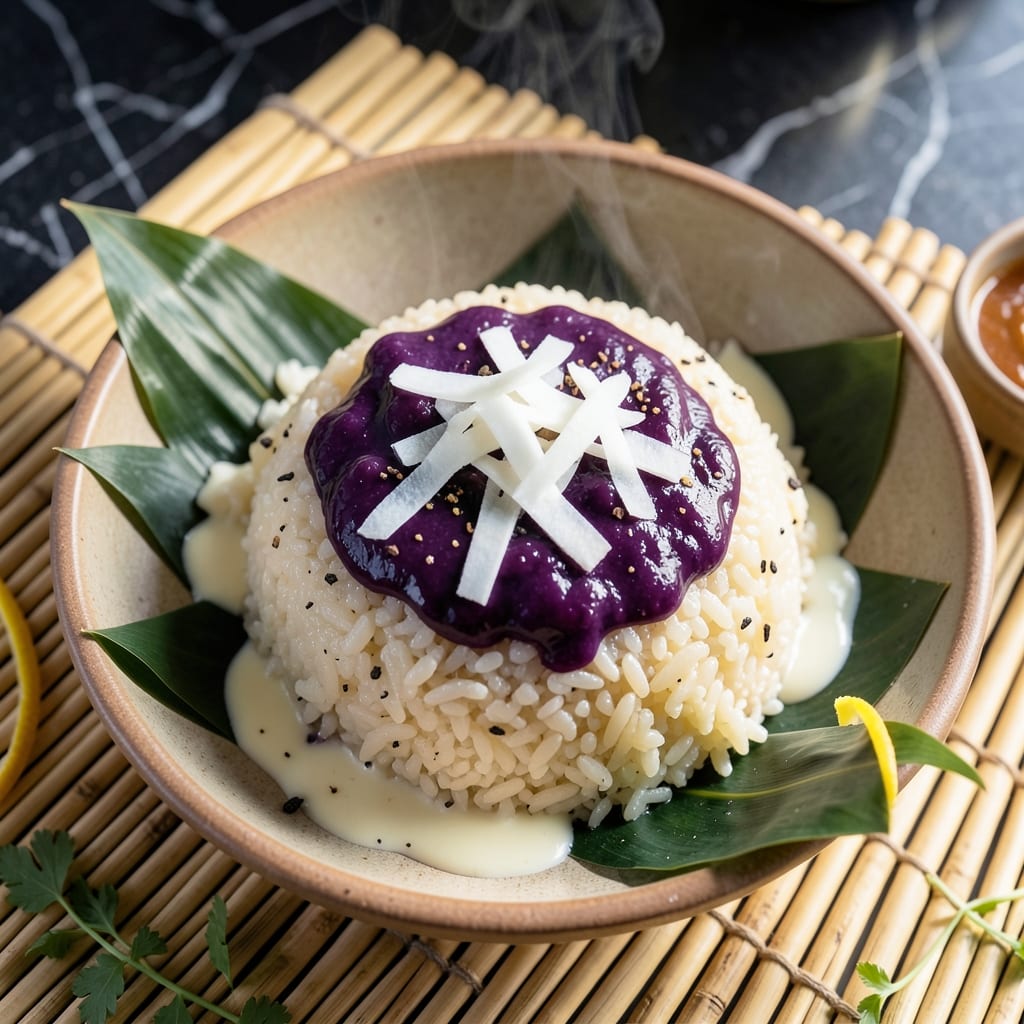
This vibrant purple creation combines the natural sweetness of ube with the sticky texture of glutinous rice for a dessert-like main dish that’s impossible to resist.
I developed this recipe to showcase how simple ingredients can transform into something extraordinary. The rice absorbs the ube’s rich color and flavor, delivering a treat that’s as beautiful as it is delicious.
Ingredients for Glutinous Rice Ube
Vibrant purple ube meets sticky glutinous rice in this dessert-like dish with simple ingredients.
| Ingredient | Amount | Notes |
|---|---|---|
| Glutinous Rice 🍚 | 2 cups | Rinsed and soaked overnight |
| Ube Halaya 🟪 | 1 ½ cups | Purple yam jam, store-bought or homemade |
| Coconut Milk 🥥 | 1 cup | Full-fat for creaminess |
| Coconut Sugar 🍚 | ½ cup | Adjust to taste preference |
| Pandanus Leaves 🌿 | 2 pieces | Optional for aroma |
| Vanilla Extract 🌿 | 1 tsp | Pure for best flavor |
| Salt 🧂 | ¼ tsp | Fine sea salt preferred |
| Vegan Butter 🧈 | 2 tbsp | Melted for topping |
| Toasted Coconut Flakes 🥥 | ¼ cup | For garnish and texture |
| Mung Bean Starch 🌾 | 2 tbsp | Thickening agent if needed |
| Water 💧 | 2 cups | For soaking and cooking rice |
| Ube Extract 🟪 | 1 tsp | For intensified purple color |
The ube halaya is non-negotiable here. Asian markets or Filipino grocery stores carry the best quality—look for brands like Good Shepherd or Ube King. Glutinous rice (also called sweet rice) must be the short-grain variety; avoid jasmine or basmati. Soaking overnight ensures even cooking and that signature sticky texture. Coconut milk should be full-fat for richness—Thai Kitchen or Native Forest are reliable brands.
No ube halaya? Mashed purple sweet potatoes mixed with coconut milk can work in a pinch. For the rice, sushi rice is the closest substitute but won’t be as sticky. Pandanus leaves can be swapped with a few drops of pandan extract. If avoiding sugar, maple syrup or agave at a 1:1 ratio keeps it vegan. Mung bean starch can be replaced with cornstarch or arrowroot powder.
Store ube halaya in the fridge for up to 2 weeks or freeze for 3 months. Cooked glutinous rice keeps 3-4 days refrigerated but tastes best fresh. Reheat gently with a splash of coconut milk to restore creaminess. Ube extract should be stored in a cool, dark place for 1 year.
Why You’ll Love This Recipe
- One Pot Wonder: I love that everything cooks together in the rice cooker—just layer the glutinous rice, ube halaya, and coconut milk, then let it work its magic.
- Sweet Purple Heaven: The combination of rich ube halaya and coconut milk creates a dessert that’s creamy, naturally sweet, and absolutely irresistible.
- Feeds a Crowd: This dish is my go-to for potlucks and family gatherings—it’s hearty, filling, and everyone always asks for the recipe.
- Budget Stretch: A little ube halaya goes a long way, and glutinous rice is so affordable. Honestly, it’s a dessert that won’t break the bank but tastes like a million bucks.
Step-by-Step Instructions for Glutinous Rice Ube
Master the technique for this vibrant dish with precise timing and professional methods.
Step 1: Prepare and Soak the Glutinous Rice
Begin by thoroughly rinsing the 2 cups Glutinous Rice under cold water until the water runs clear. This removes excess starch that would otherwise make the dish gummy rather than perfectly sticky.
Transfer the rinsed rice to a bowl and cover with the 2 cups Water. Add the 2 pieces Pandanus Leaves to infuse subtle aroma during soaking. Let it rest at room temperature for at least 4 hours, or preferably overnight. The rice grains should plump significantly, doubling in size, with no hard core remaining when pinched between fingers.
Step 2: Steam the Rice to Perfection
Drain the soaked rice completely and discard the pandanus leaves. Transfer the rice to a heatproof bowl that fits inside your steamer, spreading it into an even layer. The rice should be no more than 1 inch deep for even cooking.
Bring water to a rolling boil in your steamer, then place the bowl inside, cover with a tight lid, and steam over medium-high heat for 25-30 minutes. Check at the 25-minute mark—the grains should be translucent with a slight bite. If water evaporates, add more hot water to the steamer base without opening the lid.
Step 3: Create the Ube Coconut Mixture
While the rice steams, combine the 1.5 cups Ube Halaya, 1 cup Coconut Milk, 0.5 cup Coconut Sugar, 0.25 tsp Salt, and 1 tsp Ube Extract in a saucepan. Warm over low heat for 5-7 minutes, stirring constantly until the mixture is smooth and slightly thickened.
The coconut milk should fully incorporate with the ube halaya, creating a glossy, vibrant purple sauce. If the mixture appears too thin, sprinkle in the 2 tbsp Mung Bean Starch and stir vigorously for 1-2 minutes until it reaches a pudding-like consistency. Remove from heat immediately to prevent over-thickening.
Step 4: Combine and Finish the Dish
Once the rice is cooked, transfer it to a large mixing bowl while still hot. Pour the warm ube coconut mixture over the rice. Using a silicone spatula, fold gently but thoroughly to coat every grain without mashing the rice. The mixture should cling to the rice, creating that signature sticky texture.
The rice should glisten with the purple sauce and hold its shape when pressed lightly with the spatula. If the mixture appears dry, add a splash of warm coconut milk to achieve the desired creaminess. The color should be a uniform, vibrant purple throughout.
Step 5: Plate and Garnish Professionally
Transfer the ube glutinous rice to a serving platter or individual bowls. Drizzle with the 2 tbsp Vegan Butter while still warm, allowing it to melt slightly into the dish. This adds a subtle richness that complements the coconut and ube flavors.
Sprinkle the 0.25 cup Toasted Coconut Flakes evenly over the top for texture and visual contrast. The coconut flakes should retain their crispness against the soft rice. Serve immediately while warm, as the dish thickens significantly as it cools. The final presentation should showcase the vibrant purple color with visible coconut flakes on top.
Pro Tips For Making Glutinous Rice Ube
- Soak the Rice: Give the glutinous rice a good 4-6 hour soak in water—I learned this the hard way after ending up with dry, unevenly cooked grains more than once.
- Warm the Coconut Milk: Heat the coconut milk gently before mixing with ube halaya to prevent curdling; cold milk can turn your vibrant purple filling into a lumpy mess.
- Use Fresh Pandan: Skip the dried pandanus leaves if you can—fresh ones release more aroma when steeped in the rice cooking water, and the difference in fragrance is noticeable.
- Layer Evenly: Spread the ube-coconut mixture in a thin, consistent layer over the rice so every bite gets that sweet, creamy texture without pockets of plain rice.
Flavor Customization for This Dish
Sweetness Adjustments
For a sweeter version, increase the coconut sugar to ¾ cup or add 2 tbsp maple syrup. I find this works well when serving to kids or those with a sweet tooth. Reduce to ⅓ cup for a more subtle, earthy ube flavor.
Creaminess Variations
Swap the coconut milk for coconut cream for an ultra-rich texture. Alternatively, mix in ½ cup condensed coconut milk for extra decadence. The fat content will make the dish significantly creamier and more indulgent. 💫
Color Enhancements
Boost the vibrant purple by adding an extra ½ tsp ube extract to the coconut mixture. For a natural approach, blend ¼ cup cooked purple sweet potato into the ube halaya. The color deepens as the dish cools, so expect a darker shade after refrigeration.
Texture Customization
For a firmer texture, reduce the coconut milk to ¾ cup in the mixture. If you prefer it looser, increase to 1¼ cups. The rice absorbs liquid as it sits, so adjust based on how you plan to serve it.
Flavor Boosters
Add 1 tsp pandan extract for a more pronounced aromatic note. A pinch of cardamom or cinnamon pairs beautifully with the ube. I love adding 1 tbsp lime zest for a bright contrast to the richness.
Garnish Ideas
Beyond toasted coconut flakes, try topping with crushed peanuts, sesame seeds, or fresh mango slices. A drizzle of coconut caramel adds a luxurious touch that elevates the presentation. 🥥
Nutrition Facts
Frequently Asked Questions
Can I use regular rice instead of glutinous rice?
No, regular rice won’t give you the same sticky texture. Glutinous rice is essential for that signature chewy consistency. Sushi rice is the closest substitute but still won’t be as sticky.
How do I store leftovers?
Keep leftovers in an airtight container in the fridge for up to 3-4 days. Reheat gently with a splash of coconut milk to restore creaminess. Avoid freezing as it can alter the texture.
Can I make this without ube halaya?
Yes! Blend 1.5 cups cooked purple sweet potato with ½ cup coconut milk and 2 tbsp sugar as a substitute. It won’t be identical but will still deliver great color and flavor.
Why is my rice not purple enough?
Add ½ tsp ube extract to intensify the color. Ensure you’re mixing the ube coconut sauce thoroughly into the rice while both are warm for even distribution.

- Cream of Wild Rice Soup Recipe: Earthy Grains in Silky Broth - October 9, 2026
- Filipino Garlic Rice Recipe: Crispy Fried Aroma With Every Bite - October 9, 2026
- Gobi Manchurian Rice Recipe: Indo-Chinese Fusion in One Bowl - October 9, 2026