
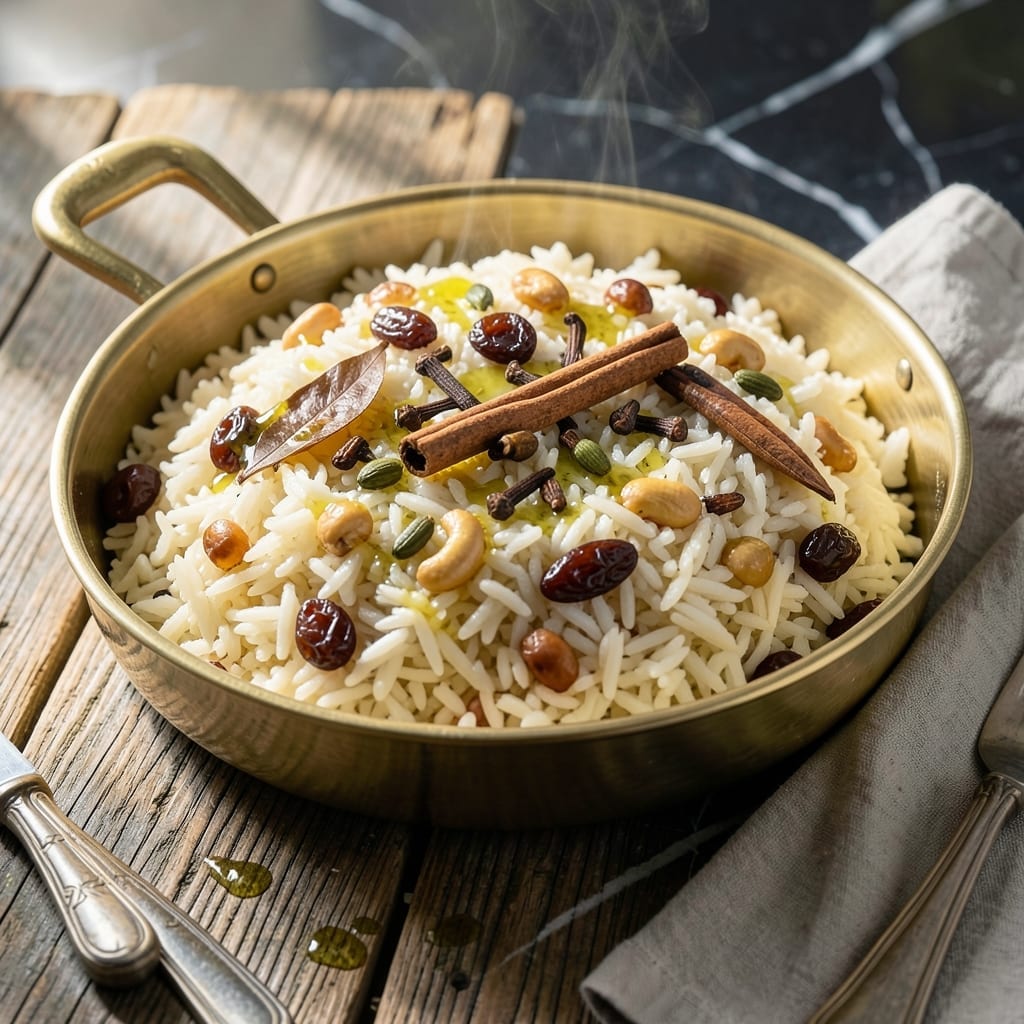
This fragrant rice dish captures the essence of Bengali celebrations, with each grain of Gobindobhog rice absorbing rich spices and ghee. The traditional preparation transforms simple ingredients into an aromatic masterpiece.
What makes this pulao special is its balance of subtle sweetness and warm spices. The rice stays separate yet infused with flavor, creating a dish that’s as beautiful to look at as it is to eat.
Ingredients for Gobindobhog Rice Pulao
Fragrant Gobindobhog rice meets warm spices and ghee for a Bengali celebration in every bite.
| Ingredient | Amount | Notes |
|---|---|---|
| Gobindobhog Rice 🍚 | 1 ½ cups | Rinsed until water runs clear |
| Ghee 🧈 | 3 tbsp | Clarified butter, preferably cow's |
| Bay Leaves 🍃 | 2 whole | Dried, whole leaves |
| Green Cardamom Pods 🌿 | 4 pieces | Lightly crushed for aroma |
| Cloves 🌰 | 4 pieces | Whole, for infusion |
| Cinnamon Stick 🌳 | 1 piece | About 2 inches long |
| Cumin Seeds 🌿 | 1 tsp | Toasted for nuttiness |
| Sugar 🍬 | 1 tsp | For balancing flavors |
| Salt 🧂 | 1 tsp | Adjust to taste |
| Cashew Nuts 🌰 | ¼ cup | Whole or halved |
| Raisins 🍇 | ¼ cup | Golden or black variety |
| Fresh Ginger Paste 🌿 | 1 tbsp | Peeled and ground |
| Water 💧 | 3 cups | For cooking rice |
The rice is non-negotiable here. Gobindobhog—a short-grain, fragrant Bengali variety—absorbs flavors beautifully while staying separate. Find it at Indian grocery stores or online at Patel Brothers. Ghee is equally essential; Amul or Gowardhan are trusted brands. Whole spices like cardamom, cloves, and cinnamon should be fresh (check the aroma—if it’s faint, replace them).
No Gobindobhog? Short-grain Basmati works in a pinch, though the flavor won’t be as distinct. Out of ghee? Clarified butter is the closest substitute, but regular butter lacks the same depth. For a lighter touch, skip the cashews or swap in almonds. Raisins can be omitted if you prefer a less sweet profile, but they add a lovely contrast to the spices.
Store uncooked rice in an airtight container for up to 6 months. Ghee keeps indefinitely at room temperature in a cool, dark place. Leftovers taste even better the next day—reheat gently with a splash of water to restore moisture. Best consumed within 3 days.
Why You’ll Love This Recipe
- One-Pot Magic: Honestly, I just dump everything in—gobindobhog rice, ghee, and whole spices—and let the pot do the work.
- Aromatic Heaven: The ghee-toasted bay leaves, cardamom, and cloves fill my kitchen with a scent that’s pure comfort.
- Crowd Pleaser: I serve this at family gatherings, and even the picky eaters come back for seconds.
- Budget Stretcher: A small bag of gobindobhog rice and a few pantry spices feed my family for days.
Step-by-Step Instructions for Gobindobhog Rice Pulao
Master this fragrant rice preparation with precise technique for perfectly separate, aromatic grains.
Step 1: Rinse and Soak the Rice
Place the 1.5 cups Gobindobhog Rice in a fine-mesh strainer and rinse under cold running water. Continue until the water runs completely clear—this removes excess starch and prevents the rice from becoming gummy during cooking.
Once rinsed, transfer the rice to a bowl and cover with fresh water. Let it soak for 20-30 minutes. This step is crucial as it allows the grains to absorb moisture evenly, ensuring they cook uniformly and remain distinct when finished.
Step 2: Temper the Whole Spices and Aromatics
Heat the 3 tbsp Ghee in a heavy-bottomed pot over medium heat. When the ghee melts and becomes shimmering but not smoking, add the 2 whole Bay Leaves, 4 pieces Green Cardamom Pods, 4 pieces Cloves, and 1 piece Cinnamon Stick.
Sauté for 30-45 seconds until the spices become fragrant. The ghee will carry their essential oils, infusing the base with warm, complex aromas. Next, add the 1 tsp Cumin Seeds and 1 tbsp Fresh Ginger Paste, stirring constantly for another 30 seconds to deepen the flavors.
Step 3: Toast the Nuts and Raisins
Add the 0.25 cup Cashew Nuts to the pot and stir frequently. The cashews should turn a light golden brown in about 2-3 minutes. Watch closely to prevent burning—once they’re fragrant and just beginning to color, add the 0.25 cup Raisins.
Cook for an additional 1 minute, allowing the raisins to plump slightly. The residual heat and ghee will soften them without making them mushy. At this point, your kitchen should be filled with the sweet, nutty aroma that defines this dish.
Step 4: Cook the Rice to Perfection
Drain the soaked rice thoroughly and add it to the pot, stirring gently to coat each grain with the spiced ghee. Pour in the 3 cups Water, then add the 1 tsp Sugar and 1 tsp Salt. Stir once to distribute the seasonings evenly.
Increase the heat to high and bring the mixture to a rolling boil. Once boiling, reduce the heat to low, cover the pot, and let it cook undisturbed for 15 minutes. Resist the urge to peek—the steam trapped inside is what cooks the rice evenly.
Step 5: Rest and Fluff the Pulao
After 15 minutes, turn off the heat and let the pulao rest, covered, for an additional 10 minutes. This allows the rice to absorb any remaining moisture and the flavors to meld together.
Finally, uncover the pot and gently fluff the rice with a fork, taking care not to break the grains. The rice should be light, fragrant, and each grain separate, with the cashews and raisins scattered like jewels throughout. Serve warm for the best experience.
Pro Tips For Making Gobindobhog Rice Pulao
- Soak the Rice: Gobindobhog rice needs a good 20-30 minute soak in cold water—it keeps the grains from turning mushy and guarantees that perfect, separate texture in the pulao.
- Heat the Ghee Slow: I learned this the hard way—let the ghee melt on low heat until it’s just warm, not smoking, or the whole spices will burn and turn bitter.
- Skip the Over-Stirring: After adding the rice, resist the urge to stir constantly; one gentle mix is enough to distribute the spices, and too much stirring breaks the grains.
- Use Fresh Whole Spices: Sounds obvious, but old cardamom pods and cloves lose their punch—toss them in dry to the ghee first to wake up the aroma before adding anything else.
Common Mistakes When Making Great gobindobhog rice pulao
Skipping the Soak
I know it’s tempting to skip soaking the rice, but this step is non-negotiable. Without 20-30 minutes of soaking, the grains won’t absorb moisture evenly, leading to uneven cooking. Trust me, the texture suffers when you rush this.
Overheating the Ghee
Ghee should shimmer, never smoke. If it gets too hot, it burns the spices and creates a bitter taste. Keep it at medium heat and watch for that perfect moment when the whole spices release their aroma without burning.
Peeking While Cooking
Every time you lift the lid, you release precious steam that’s essential for even cooking. Once you cover the pot after adding water, let it cook undisturbed for the full 15 minutes. Patience pays off with perfectly separate grains.
Inconsistent Spice Sizes
Whole spices must be uniform in size for even flavor infusion. Use 4 cardamom pods and 4 cloves as specified—crushing them unevenly leads to some bites being overpowering while others taste bland. 💡
Overloading the Pot
Adding too many cashews or raisins can make your pulao too heavy. Stick to ¼ cup each of cashews and raisins. This maintains the perfect balance of texture and sweetness that defines this dish.
Skipping the Rest
The final 10-minute rest is when magic happens. The rice absorbs residual moisture and the flavors meld. Skip this, and you’ll serve a good pulao—but not the extraordinary one this recipe deserves.
Nutrition Facts
Frequently Asked Questions
Can I use regular basmati rice instead?
Short-grain basmati works in a pinch, but the flavor won’t match Gobindobhog’s unique aroma. Stick to the specified 1.5 cups of the traditional variety for authentic taste.
Why do I need to soak the rice?
Soaking for 20-30 minutes ensures even moisture absorption, preventing uneven cooking. Skipping this step leads to gummy or undercooked grains.
Can I reduce the ghee for a lighter version?
You can use 2 tbsp instead of 3 tbsp, but the flavor depth will be less pronounced. Ghee carries the spices, so don’t eliminate it completely.
What if my rice turns mushy?
This usually means too much water or stirring during cooking. Use exactly 3 cups water and avoid peeking for the full 15 minutes.

- El Pollo Loco Spanish Rice Recipe: Smoky Tomato-Infused Side Dish - October 11, 2026
- Fresh Black Beans and Rice Recipe: Latin-Inspired One-Bowl Heartiness - October 11, 2026
- Empire Ghee Rice Recipe: Fragrant Basmati With Golden Clarity - October 11, 2026