
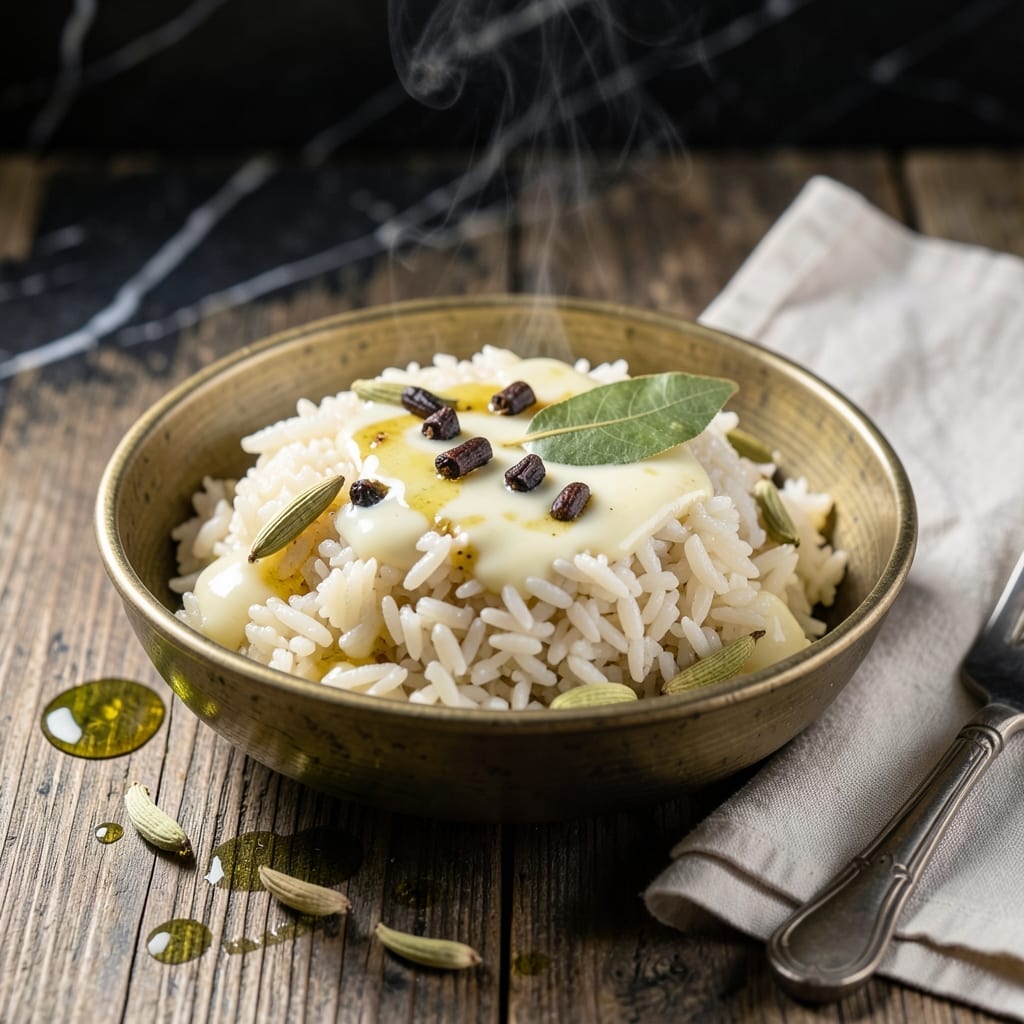
This traditional Bengali rice dish transforms simple ingredients into a fragrant, sweet masterpiece. The short-grain rice absorbs ghee, sugar, and cardamom to create perfectly scented grains that melt in your mouth.
I’ve refined this method to ensure every bite delivers the authentic taste of Gobindobhog. It’s a dish that carries the warmth and sweetness of Bengali celebrations in every serving.
Ingredients for Gobindobhog Rice
Short-grain rice, ghee, and warming spices create this fragrant Bengali sweet rice dish.
| Ingredient | Amount | Notes |
|---|---|---|
| Gobindobhog Rice 🍚 | 1 ½ cups | Short-grain Bengali variety preferred |
| Ghee 🧈 | ½ cup | Clarified butter, pure preferred |
| Sugar 🍚 | ¾ cup | Granulated white for sweetness |
| Green Cardamom Pods 🌿 | 6 whole | Lightly crushed to release seeds |
| Bay Leaf 🍃 | 1 whole | Indian bay leaf if available |
| Cloves 🌰 | 4 whole | Whole for infusion |
| Cinnamon Stick 🌿 | 1 whole | Ceylon preferred for aroma |
| Milk 🥛 | 2 cups | Whole milk for creaminess |
| Cashew Nuts 🌰 | ¼ cup | Split or whole, lightly fried |
| Raisins 🍇 | ¼ cup | Golden or black, soaked |
| Rose Water 🌹 | 1 tsp | Optional for floral aroma |
| Salt 🧂 | ¼ tsp | Adjust to taste |
The rice is everything here—Gobindobhog short-grain rice is traditional, but any short-grain variety works. Find it at Indian grocery stores or online speciality shops. Ghee quality matters; opt for pure, grass-fed for the richest aroma. Cardamom should be fresh (green pods, not white or black) for that signature Bengali perfume.
No Gobindobhog rice? Basmati works in a pinch but reduce milk slightly. Swap ghee for clarified butter if needed. For a richer dish, use condensed milk at half the quantity of regular milk. The dried fruits can be swapped—dates or pistachios add a lovely variation.
Store dry ingredients in airtight containers for up to 6 months. The dish reheats beautifully—add a splash of milk to revive texture. Keeps 3-4 days in the fridge, though it’s best served fresh and warm.
Why You’ll Love This Recipe
- I’ll be real: it tastes even better the next day, and reheating takes seconds—no soggy rice here.
- One Pot Magic: I just dump everything in a single pot—gobindobhog rice, ghee, sugar, and those fragrant cardamom pods—and let it work its magic.
- Heavenly Aroma: The ghee and cardamom fill my kitchen with a scent so good, my neighbors probably wonder what I’m cooking.
- Festival Ready: Honestly, this is my go-to for pujas, birthdays, or even when I need to impress my in-laws with minimal effort.
Step-by-Step Instructions for Gobindobhog Rice
Master the technique for perfectly fragrant, sweet rice with ideal texture every time.
Step 1: Prepare and Toast the Rice and Whole Spices
Rinse the 1.5 cups Gobindobhog Rice thoroughly under cold water until the water runs clear. This removes excess starch and prevents the grains from becoming gummy during cooking. Drain completely in a fine-mesh sieve.
In a heavy-bottomed pot, heat the 0.5 cup Ghee over medium heat until it shimmers. Add the 6 whole Green Cardamom Pods, 1 whole Bay Leaf, 4 whole Cloves, and 1 whole Cinnamon Stick. Toast for 30-45 seconds until the spices release their aroma—you’ll notice the ghee taking on a golden hue and the air filling with their fragrance.
Immediately add the drained rice and stir for 2-3 minutes until the grains turn translucent at the edges. This toasting step enhances the nutty flavor of the rice and ensures it absorbs the spice-infused ghee evenly.
Step 2: Infuse the Milk and Sweeten the Mixture
Pour in the 2 cups Milk and 0.75 cup Sugar, stirring gently to dissolve the sugar completely. The milk should come to a gentle simmer within 3-4 minutes—watch for small bubbles forming at the edges of the pot.
At this stage, add the 0.25 tsp Salt to balance the sweetness. I maintain the heat at a low simmer to prevent the milk from scorching at the bottom. The rice should be partially submerged, with the liquid just covering the grains.
Step 3: Cook the Rice to Perfection
Cover the pot with a tight-fitting lid and reduce the heat to low. Cook for 15-18 minutes, stirring gently every 5 minutes to prevent sticking. The rice is done when the grains are tender and the liquid has been absorbed, leaving a creamy, porridge-like consistency.
Toward the end of cooking, the mixture will thicken noticeably. If it appears too dry before the rice is fully cooked, add a splash of warm milk and continue cooking. The grains should be plump and glistening, with no hard center when pressed between your fingers.
Step 4: Add the Finishing Touches
Once the rice is cooked, remove the pot from heat. Stir in the 0.25 cup Cashew Nuts, 0.25 cup Raisins, and 1 tsp Rose Water. The rose water adds a delicate floral note that complements the warm spices—use a light hand to avoid overpowering the dish.
Cover the pot and let it rest for 10 minutes. This allows the flavors to meld and the rice to reach its final, luxurious texture. The cashews will soften slightly, and the raisins will plump up, distributing their sweetness throughout the dish.
Pro Tips For Making Gobindobhog Rice
- Soak the Rice: I learned this the hard way—soak the gobindobhog rice for at least 20 minutes before cooking to guarantee even cooking and that perfect fluffy texture.
- Toast the Cardamom: Lightly crush the green cardamom pods and toast them in ghee for 30 seconds before adding rice—it coaxes out way more aroma than just tossing them in raw.
- Skip the Over-Stirring: Resist the urge to stir the rice once it’s cooking; it breaks the grains and turns your dish gluey instead of light.
- Use Fresh Ghee: Sounds weird, but it works: fresh ghee (not the old jar at the back of the pantry) makes a real difference in the final fragrance and flavor.
Serving Suggestions for Leftovers
Traditional Presentation
Serve this dish warm in a shallow clay bowl or on a banana leaf for an authentic Bengali touch. The natural earthiness of clay enhances the aromatic spices. I love how the leaf adds a subtle, fresh fragrance to the meal. 💛
Garnish Ideas
Sprinkle with 2 tbsp chopped pistachios or 1 tbsp silvered almonds for extra crunch and visual appeal. A few saffron strands soaked in 1 tbsp warm milk can be drizzled on top for a luxurious finish.
Pairing Suggestions
This sweet rice pairs beautifully with Bengali curries like cholar dal or begun bhaja. The contrast between the savory main and sweet rice creates a perfect balance. I often serve it with a side of plain yogurt to cut through the richness.
Beverage Pairings
A cup of masala chai complements the warm spices in the rice. For a refreshing contrast, try mango lassi—its cool, creamy sweetness mirrors the dish’s flavors. Avoid strong black coffees that might overpower the delicate aromas.
Serving Temperature
This dish is best enjoyed warm, not piping hot. Let it sit for 5-10 minutes after cooking before serving. If reheating, warm gently on the stove with a splash of milk to restore creaminess.
Portion Sizes
As a sweet side, ½ cup per person is ideal. For a dessert serving, increase to ¾ cup. I always make extra—leftovers taste even better the next day as the flavors deepen. ✨
Nutrition Facts
Frequently Asked Questions
Can I use basmati rice instead?
Yes, but reduce milk to 1.5 cups since basmati absorbs less liquid. The texture will be slightly different but still delicious.
Why does my rice turn mushy?
Over-stirring or using too much liquid causes this. Stick to 15-18 minutes cooking time and stir only every 5 minutes.
How do I store leftovers?
Keep in an airtight container in the fridge for up to 3-4 days. Reheat gently with a splash of milk.
Can I skip the rose water?
It’s optional, but adds a lovely floral note. The dish will still taste great without it.

- Gobi Fried Rice Recipe: Spiced Cauliflower Wok Delight - October 8, 2026
- Glutinous Rice Roll Recipe: Chewy Pillows With Savory Fillings - October 8, 2026
- Garlic Jasmine Rice Recipe: Fragrant Grains with Aromatic Depth - October 8, 2026