
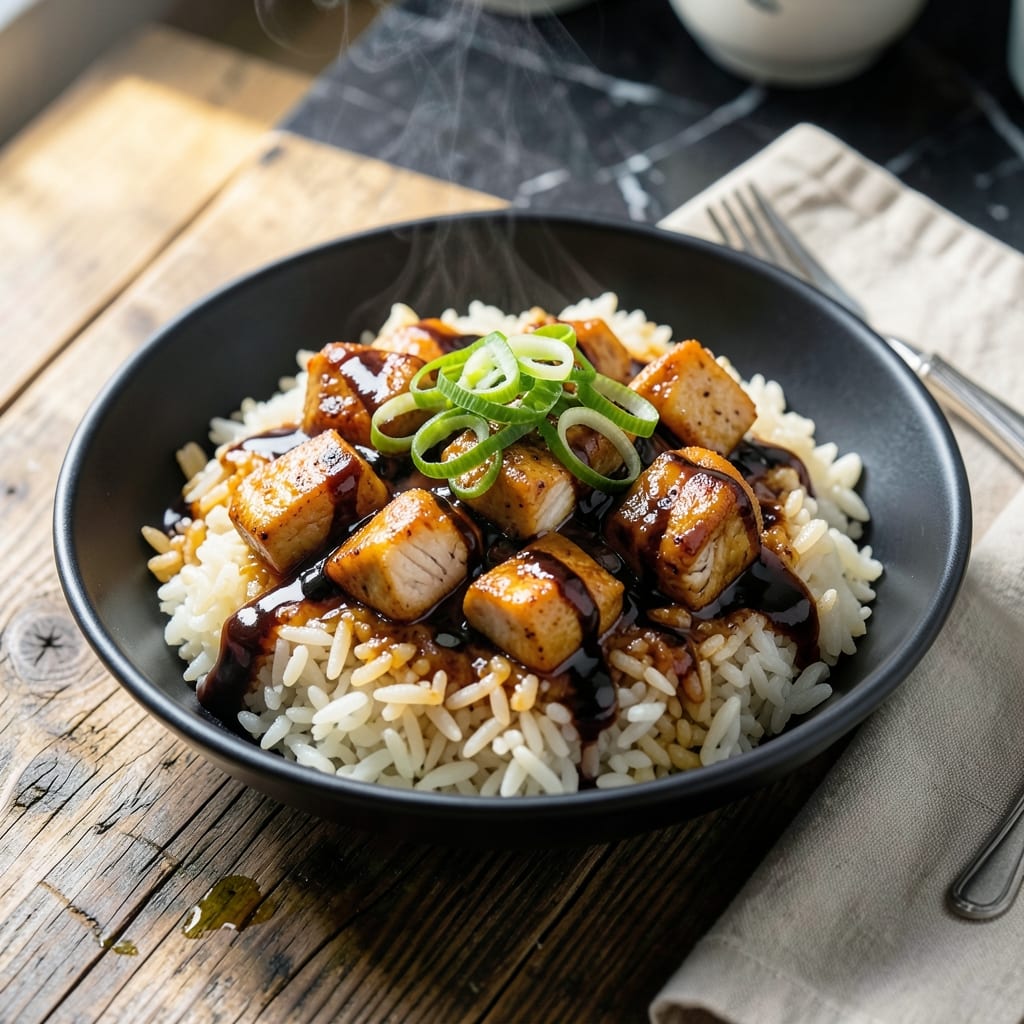
This Korean-inspired dish brings bold, spicy flavors to your weeknight table with minimal effort. The gochujang paste delivers a perfect balance of heat and sweetness that transforms simple ingredients.
With tender chicken, crisp vegetables, and a sauce that clings to every grain, this fried rice comes together in one pan. It’s a foolproof way to turn leftovers into something extraordinary.
Ingredients for Gochujang Chicken Fried Rice
Bold Korean flavors meet everyday ingredients for a weeknight win with minimal effort.
| Ingredient | Amount | Notes |
|---|---|---|
| Boneless Skinless Chicken Thighs 🍗 | 1 ½ lb | Cut into small cubes |
| Cooked White Rice 🍚 | 4 cups | Day-old, chilled preferred |
| Gochujang Paste 🌶️ | 3 tbsp | Korean chili paste essential |
| Soy Sauce 🫒 | 3 tbsp | Low-sodium recommended |
| Sesame Oil 🫒 | 1 tbsp | Toasted variety preferred |
| Garlic Cloves 🧄 | 4 cloves | Minced finely |
| Fresh Ginger 🌿 | 1 tbsp | Grated or minced |
| Green Onions 🧅 | 4 whole | Thinly sliced, white and green parts |
| Carrots 🥕 | 1 cup | Diced into small cubes |
| Frozen Peas 🌱 | ¾ cup | Thawed preferred |
| Large Eggs 🥚 | 2 whole | Lightly beaten |
| Neutral Cooking Oil 🫒 | 2 tbsp | Vegetable or canola oil |
| Rice Vinegar 🍋 | 1 tbsp | For brightness |
| Granulated Sugar 🍚 | 1 tsp | Balances the heat |
The gochujang is non-negotiable here. Look for it in the Asian aisle at major grocery stores or at H Mart or Korean markets—it’s the soul of this dish. Sunchang is a reliable brand, but most store brands work fine. For the rice, day-old is key (fresh rice turns mushy). Use jasmine or short-grain for authentic texture. Chicken thighs stay juicier than breasts in the high heat.
No gochujang? Sriracha plus a spoon of miso paste gets you 70% there (use 2 tbsp sriracha + 1 tbsp miso). Out of sesame oil? Toasted peanut oil works in a pinch. Want more veg? Add bell peppers or zucchini. The soy sauce can be tamari for gluten-free. For extra richness, swap the eggs for extra firm tofu—press and crumble it first.
This keeps 3-4 days in the fridge—reheat in a skillet with a splash of water to refresh. Freezes for 2 months (thaw in fridge overnight). Leftovers taste even better as the flavors meld. Always store gochujang in the fridge after opening.
Why You’ll Love This Recipe
- One Pan Wonder: I toss everything in a single skillet—chicken, rice, and that spicy-sweet gochujang—so cleanup is a breeze.
- Flavor Bomb: The mix of gochujang, soy sauce, and sesame oil hits all the notes: smoky, umami, with just the right kick.
- Weeknight Hero: Honestly, it’s my Tuesday lifesaver—ready faster than takeout and way more satisfying.
- Leftovers Win: Between us, it tastes even better the next day when the flavors meld overnight.
Step-by-Step Instructions for Gochujang Chicken Fried Rice
Here’s the method. Straightforward, tested, works every time.
Step 1: Cook and Season the Chicken
Heat 1 tablespoon neutral cooking oil in a large wok or skillet over medium-high heat until shimmering. Add the 1.5 lb boneless skinless chicken thighs (cut into small cubes) and cook for 5-6 minutes, stirring occasionally, until fully cooked through and lightly browned.
Season the chicken with 1 tablespoon soy sauce and ½ tablespoon gochujang paste during cooking. I press down gently on the pieces with my spatula to ensure even browning and prevent sticking. The chicken should be golden at the edges when done. Transfer to a plate and set aside.
Step 2: Sauté Aromatics and Vegetables
In the same wok, add the remaining 1 tablespoon neutral cooking oil. Add the 4 cloves minced garlic cloves, 1 tablespoon grated fresh ginger, and 1 cup diced carrots. Stir-fry for 2-3 minutes until the carrots begin to soften and the aromatics are fragrant.
Add the 0.75 cup frozen peas and cook for another 1-2 minutes until heated through. The peas should turn bright green and the carrots should be tender-crisp. Push the vegetable mixture to one side of the wok to make room for the next step.
Step 3: Scramble Eggs and Combine with Rice
Pour the 2 whole lightly beaten large eggs into the cleared space in the wok. Scramble gently with a spatula until just set—about 1-2 minutes. You want soft, slightly runny curds that will blend seamlessly into the rice.
Add the 4 cups cooked white rice, breaking up any clumps with your spatula. Stir-fry for 2-3 minutes until the rice is hot throughout and begins to crisp slightly in the pan. The grains should be separate and glossy from the residual oil.
Step 4: Build Flavor with Sauce and Finish
In a small bowl, whisk together the remaining 2.5 tablespoons gochujang paste, 2 tablespoons soy sauce, 1 tablespoon sesame oil, 1 tablespoon rice vinegar, and 1 teaspoon granulated sugar. Pour this sauce over the rice mixture in the wok.
Return the cooked chicken to the wok. Add the 4 whole thinly sliced green onions. Stir-fry everything together for 2-3 minutes until the rice is evenly coated and deeply colored with the sauce. The green onions should wilt slightly but retain some bite.
Taste and adjust seasoning if needed. The dish should have a balance of spicy, savory, and slightly sweet flavors with a hint of tang from the vinegar.
Pro Tips For Making Gochujang Chicken Fried Rice
- Chill Your Rice: Use day-old, cold rice straight from the fridge—fresh rice turns to mush when fried. I learned this the hard way after my first batch turned into a sticky, sad pile.
- Velvet the Chicken: Toss the chicken thighs with 1 teaspoon of cornstarch and a splash of soy sauce before cooking. Sounds weird, but it keeps the meat absurdly tender and prevents chewy bits in your fried rice.
- Bloom the Gochujang: Cook the gochujang paste in a little sesame oil for 30 seconds before adding other ingredients. After burning three batches, I finally figured out this step mellows the heat and deepens the flavor.
- Finish with Sesame: Drizzle the sesame oil at the very end, off the heat. My grandmother swore by this, and she was right: it keeps the aroma bright and fresh instead of bitter from high heat.
Essential Equipment for gochujang chicken fried rice
Wok Essentials
A carbon steel wok is my top pick for even heat distribution and that classic wok hei flavor. I use a 14-inch flat-bottom wok from Made In—it works on both gas and electric stoves. The high, sloped sides make tossing ingredients effortless. 🔥
High-Heat Cookware
If you don’t have a wok, a large cast iron skillet (like Lodge 12-inch) is an excellent substitute. It retains heat beautifully and develops a natural non-stick surface over time. Just preheat it well before adding oil to prevent sticking.
Spatula Matters
A wok spatula with a long handle and thin metal edge is perfect for flipping and stirring. I prefer the stainless steel wok spatula from Mercer Culinary—it’s durable and won’t scratch your pan. The thin edge helps break up rice clumps easily.
Prep Tools
For fast prep, I rely on my OXO Good Grips 8-inch chef’s knife for dicing chicken and veggies. A microplane makes quick work of grating the ginger. Have all ingredients prepped and measured before you start cooking—fried rice comes together fast once the heat is on.
Sauce Helper
A small whisk and 2-cup glass measuring cup are perfect for mixing the sauce. I also keep a 1-tablespoon measure handy for the gochujang and soy sauce. This ensures accurate measurements without overpowering the dish.
Serving Ready
Have tongs and a large serving platter ready for the final presentation. I love using a warm stoneware bowl to keep the dish hot at the table. The deep red color of the gochujang looks stunning against white or neutral serveware. ✨
Nutrition Facts
Frequently Asked Questions
Can I use fresh rice instead of day-old?
Fresh rice is too moist and will turn mushy. Use day-old chilled rice for the best texture. If in a hurry, spread freshly cooked rice on a tray and refrigerate for 30 minutes to dry it out.
How spicy is this dish?
Gochujang adds moderate heat with a sweet, umami depth. For milder flavor, reduce to 1 tablespoon. For more kick, add 1/2 teaspoon red pepper flakes or extra gochujang.
Can I substitute chicken breasts?
Yes, but thighs stay juicier. If using breasts, cook for 4-5 minutes to avoid dryness. Cut into small cubes for even cooking.
How do I store leftovers?
Keep in an airtight container in the fridge for 3-4 days. Reheat in a skillet with a splash of water to restore moisture. Freezes well for up to 2 months.

- Jollof Rice Sauce Recipe: West African Tomato and Spice Infusion - September 25, 2026
- Japanese Rice Soup Recipe: Umami-Rich Comfort in a Bowl - September 25, 2026
- Homemade Cream Of Rice Recipe: Silk-Smooth Breakfast in Minutes - September 25, 2026