
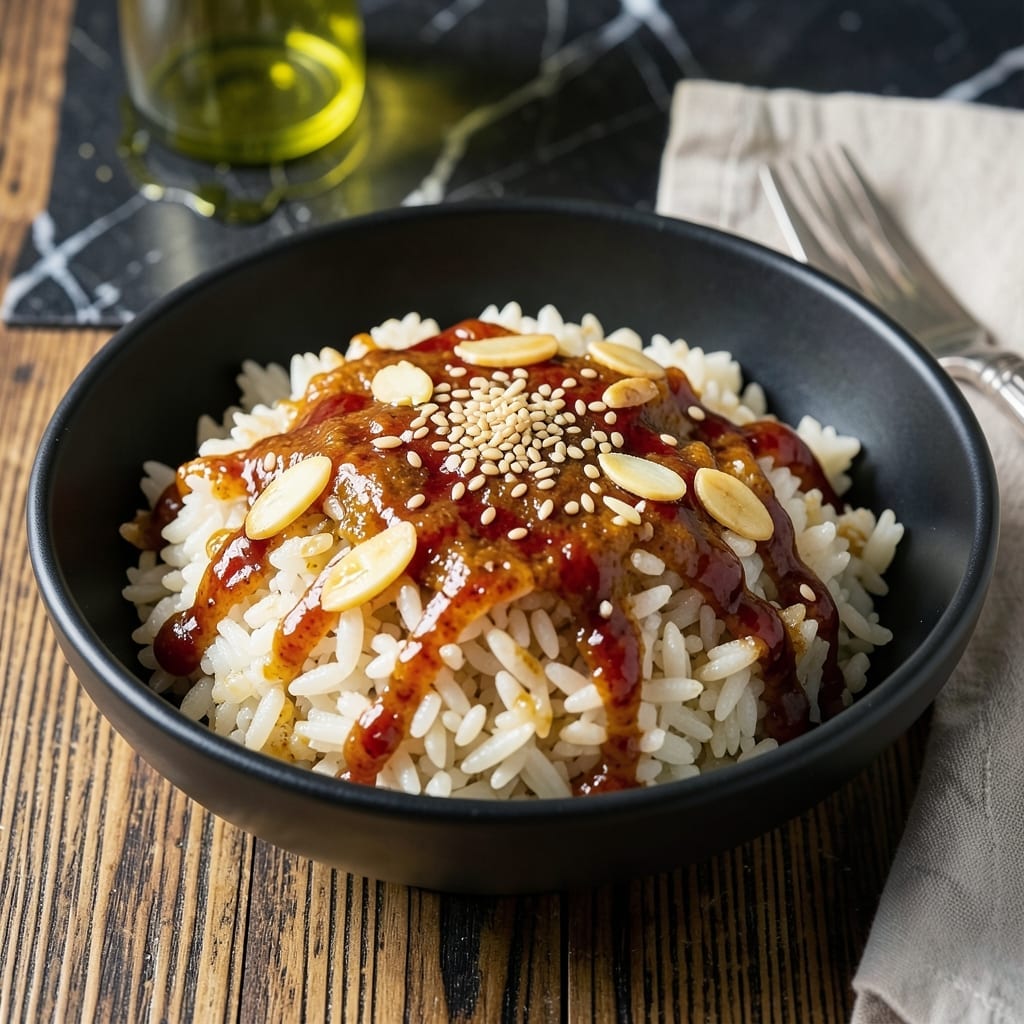
This rice cooker method transforms plain grains into a spicy, savory one-pot meal with minimal effort. The gochujang infuses each bite with deep, fermented heat while keeping the process hands-off.
You’ll get perfectly cooked rice with a sticky, flavorful coating that’s ready in 30 minutes. The technique works with any rice variety, making it a versatile base for proteins or vegetables.
Ingredients for Gochujang Rice Cooker
Simple pantry staples deliver bold, complex flavors in this hands-off rice cooker method.
| Ingredient | Amount | Notes |
|---|---|---|
| Jasmine Rice 🍚 | 2 cups | Rinsed until water runs clear |
| Gochujang 🌶️ | 3 tbsp | Korean fermented chili paste |
| Soy Sauce 🫒 | 2 tbsp | Low-sodium preferred for balance |
| Sesame Oil 🫒 | 1 tbsp | Toasted for nutty aroma |
| Garlic Cloves 🧄 | 4 cloves | Minced for even distribution |
| Fresh Ginger 🌿 | 1 tbsp | Finely grated or minced |
| Green Onions 🧅 | 4 whole | Thinly sliced for garnish |
| Water 💧 | 2 ½ cups | Adjust for rice variety |
| Rice Vinegar 🍶 | 1 tbsp | Balances spice and sweetness |
| Brown Sugar 🍯 | 1 tbsp | Optional for sweetness |
| Sesame Seeds 🌰 | 1 tsp | Toasted for garnish |
| Vegetable Oil 🫒 | 1 tsp | For rice cooker bowl |
The gochujang is non-negotiable here. Look for Korean brands like Sempio or CJ at H Mart or the international aisle—avoid anything labeled just ‘chili paste.’ Jasmine rice gives the best texture, but short-grain works too (adjust water by 2 tbsp). The soy sauce should be low-sodium to let the gochujang’s saltiness shine. I always keep a jar of toasted sesame oil in the fridge for dishes like this.
No gochujang? Sriracha mixed with miso paste (1:1 ratio) gets you close, though the depth won’t be the same. Swap jasmine rice for basmati if that’s what’s on hand, but reduce water by 1/4 cup. Brown sugar can be honey or maple syrup—use the same amount. For extra umami, a dash of fish sauce (or vegan fish sauce) works wonders, but it’s not traditional.
Leftover rice keeps 4-5 days in the fridge—reheat with a splash of water to restore moisture. The cooked rice freezes for up to 3 months in airtight containers. Toast the sesame seeds just before serving (they lose crunch fast).
Why You’ll Love This Recipe
- One Pot Wonder: I dump everything—jasmine rice, gochujang, soy sauce, garlic—in the rice cooker and walk away.
- Flavor Bomb: The sesame oil and gochujang create this rich, spicy-savory depth that lingers.
- Meal Prep Hero: I make a big batch on Sunday and it reheats beautifully all week.
- Budget Stretcher: Honestly, a bag of jasmine rice and a jar of gochujang feed my family for days.
Step-by-Step Instructions for Gochujang Rice Cooker Rice
This one-pot method delivers perfectly seasoned grains with minimal effort and maximum flavor.
Step 1: Rinse and Prepare the Rice
Place the 2 cups Jasmine Rice in a fine-mesh strainer and rinse under cold water, swirling with your fingers, until the water runs completely clear. This removes excess starch that would otherwise make the rice gummy. Drain thoroughly—any residual water will throw off your liquid ratios.
Transfer the rinsed rice to your rice cooker bowl. The grains should look clean and separate, not cloudy. I always give the strainer a final shake to remove every last drop of water before proceeding.
Step 2: Create the Flavor Base
Add the 1 tsp Vegetable Oil to the rice cooker bowl and swirl to coat the bottom. This prevents sticking and adds a subtle richness. Then add the 3 tbsp Gochujang, 2 tbsp Soy Sauce, 1 tbsp Sesame Oil, 1 tbsp Rice Vinegar, and 1 tbsp Brown Sugar.
Next, stir in the 4 cloves minced Garlic Cloves and 1 tbsp Fresh Ginger. Mix everything thoroughly with the rice until the grains are evenly coated with the vibrant red sauce. The mixture should look glossy and well-distributed, with no dry spots.
Step 3: Add Liquid and Cook
Pour in the 2.5 cups Water and stir once more to incorporate. The liquid should come about 1 inch above the rice level. Gently press down on the rice to ensure it’s fully submerged—this prevents dry spots during cooking.
Close the rice cooker lid and select the standard white rice setting. The cooker will handle the timing, but you’ll know it’s working when you start to smell the aromatic blend of garlic, ginger, and gochujang. Resist the urge to open the lid during cooking, as this releases essential steam.
Step 4: Rest and Garnish
Once the rice cooker switches to the “keep warm” setting, let the rice rest for 10 minutes. This allows the grains to absorb any remaining liquid and the flavors to meld fully. The rice should be tender with a slight chew, and the color should be a uniform reddish hue from the gochujang.
Fluff the rice gently with a fork, then transfer to serving bowls. Garnish with the thinly sliced 4 whole Green Onions and 1 tsp Sesame Seeds for a fresh, nutty finish. The green onions add a bright contrast to the rich, spicy rice.
Pro Tips For Making Gochujang Rice Cooker
- Mix Gochujang First: Whisk the gochujang, soy sauce, sesame oil, and minced garlic together before adding to the rice cooker—this prevents clumps and ensures even flavor distribution.
- Rinse the Rice: Always rinse the jasmine rice until the water runs clear, or your gochujang rice will turn out gummy instead of fluffy.
- Add Water Last: Pour the water in after the gochujang mixture is stirred into the rice, so you can adjust the liquid based on how thick your sauce is.
- Let It Steam: After the cooker switches to warm, let the rice sit for 10 minutes with the lid closed—this lets the flavors meld and the grains firm up.
Common Mistakes When Making Perfect Results
Skipping the Rice Rinse
I know it’s tempting to skip this step, but unrinsed rice releases excess starch that turns your dish into a gummy mess. Take the 2 minutes to rinse your 2 cups Jasmine Rice until the water runs clear—it’s the difference between perfect grains and a sticky clump. 💡
Overpacking the Cooker
Never exceed your rice cooker’s maximum capacity line. For most standard models, that’s about 4 cups uncooked rice. This recipe uses 2 cups, leaving plenty of room for expansion. Overpacking leads to uneven cooking and potential overflow.
Incorrect Liquid Ratios
Using the standard 1:1 rice-to-water ratio won’t work here—the gochujang and other ingredients add moisture. Stick with 2.5 cups Water for the 2 cups Jasmine Rice. Too much liquid results in mushy rice; too little leaves it undercooked.
Opening the Lid Early
Every time you lift that lid, you release steam and drop the internal temperature, adding 10-15 minutes to your cook time. Trust the process—your rice cooker knows what it’s doing. The aroma might tempt you, but resist until it switches to “keep warm.”
Skipping the Rest Time
That final 10-minute rest isn’t optional. It lets the rice absorb lingering liquid and the flavors meld. I’ve ruined batches by rushing this step—the texture suffers every time. The grains need that time to reach their full potential.
Uneven Sauce Distribution
Don’t just dump your 3 tbsp Gochujang and other seasonings on top. Mix thoroughly with the rice before adding water to ensure every grain gets coated. You’ll end up with pockets of bland rice if you skip this step. Use a spatula to scrape the bowl’s sides.
Nutrition Facts
Frequently Asked Questions
Can I use a different type of rice?
Short-grain rice works well but reduce water by 1/4 cup. Basmati needs less water too. Jasmine gives the best texture, but the recipe adapts easily to most varieties.
How spicy will the rice be?
The heat level is moderate with 3 tbsp gochujang. For milder flavor, use 2 tbsp. For extra heat, add 1/2 tsp red pepper flakes. Balance the spice with the brown sugar.
Can I make this without a rice cooker?
Yes! Use a pot with a tight lid. Bring to boil, then reduce to simmer for 15 minutes. Turn off heat and let sit 10 minutes before fluffing.
How long does it keep in the fridge?
Store in an airtight container for 4-5 days. Reheat with a splash of water to restore moisture. Freeze for up to 3 months if needed.

- Cream of Wild Rice Soup Recipe: Earthy Grains in Silky Broth - October 9, 2026
- Filipino Garlic Rice Recipe: Crispy Fried Aroma With Every Bite - October 9, 2026
- Gobi Manchurian Rice Recipe: Indo-Chinese Fusion in One Bowl - October 9, 2026