
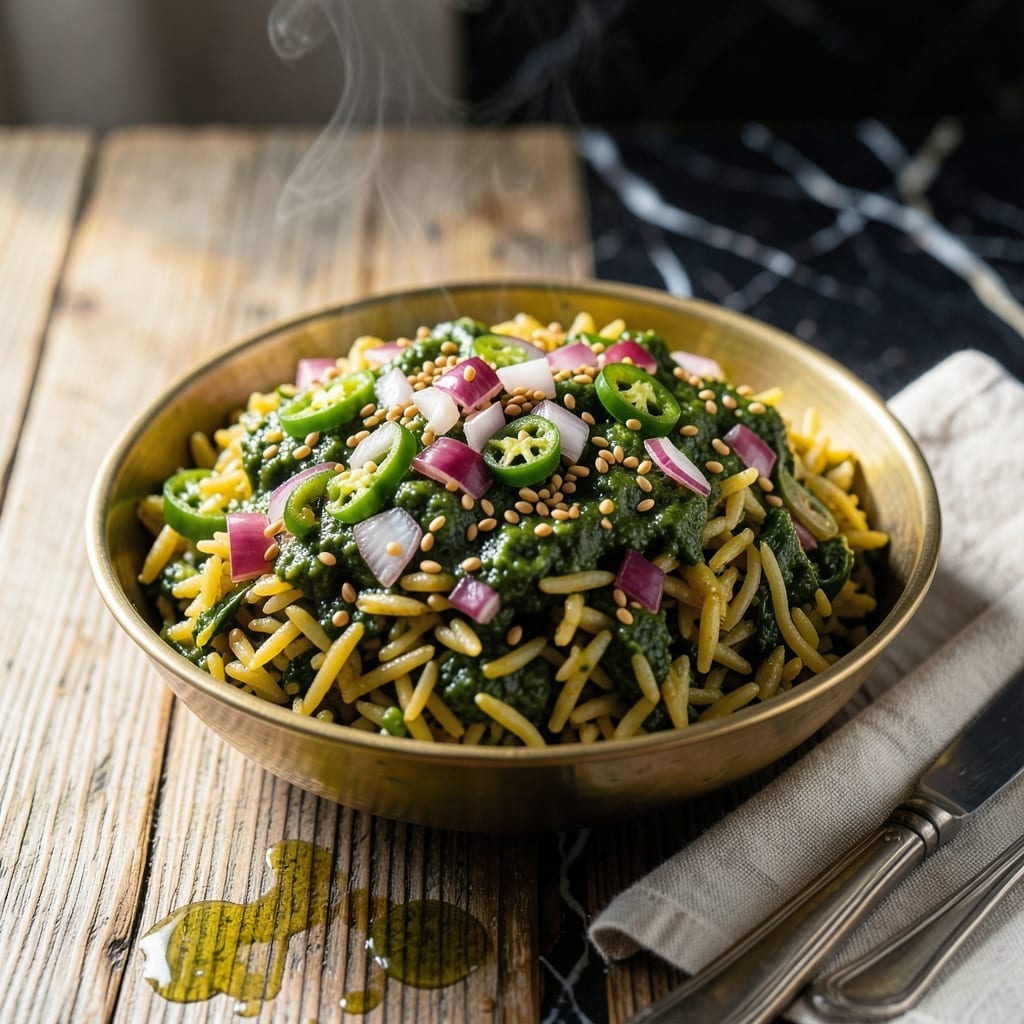
This Andhra-style creation brings the bold, tangy flavors of gongura leaves to your rice in a way that feels both authentic and approachable.
I developed this method after testing multiple variations to capture the perfect balance between the leaf’s natural sourness and the dish’s aromatic depth.
What results is a vibrant, tangy rice dish that pairs beautifully with yogurt or pappadums, offering a true taste of Telugu cuisine.
The process is straightforward, using simple ingredients to achieve a restaurant-quality meal at home.
Ingredients for Gongura Rice Recipe in Telugu
Authentic Telugu flavors start with fresh gongura leaves and simple pantry staples for this vibrant dish.
| Ingredient | Amount | Notes |
|---|---|---|
| Gongura Leaves 🌿 | 4 cups | Fresh, tightly packed, stems removed |
| Basmati Rice 🍚 | 1 ½ cups | Rinsed and drained thoroughly |
| Red Onion 🧅 | 1 whole | Finely chopped for even distribution |
| Green Chilies 🌶️ | 4 pieces | Slit lengthwise, seeds removed |
| Mustard Seeds 🧂 | 1 tsp | For tempering, black or yellow |
| Cumin Seeds 🌿 | 1 tsp | Freshly grounded for aroma |
| Turmeric Powder 🌶️ | ½ tsp | For color and earthiness |
| Dried Red Chilies 🌶️ | 2 pieces | Broken into halves for tempering |
| Chana Dal 🥣 | 2 tbsp | Optional, for crunch and protein |
| Urad Dal 🥣 | 1 tbsp | Optional, for tempering |
| Curry Leaves 🌿 | 10 pieces | Fresh, for authentic flavor |
| Peanuts 🥜 | 2 tbsp | Roasted, for texture |
| Sunflower Oil 🫒 | 3 tbsp | Neutral flavor, high smoke point |
| Salt 🧂 | 1 ½ tsp | Adjust to taste and leaf sourness |
| Asafoetida 🌿 | ¼ tsp | Pinch for umami depth |
Sourcing fresh gongura leaves is key—look for them at Indian grocery stores or specialty Asian markets, especially during summer months. The leaves should be bright green and tender, not wilted or yellowing. Basmati rice from Tilda or Daawat brands ensures the right texture. For the dals, patel brothers or Bharat Bazaar offer authentic, high-quality options.
No gongura? Sorrel leaves are the closest substitute, though they’re less tangy. Missing curry leaves? Skip them or use a pinch of curry leaf powder. For heat adjustments, reduce green chilies to 2 or remove seeds entirely. The peanuts can be swapped for cashews or sesame seeds—toast them first for depth. Coconut oil works instead of sunflower oil if preferred.
Store gongura leaves wrapped in a damp paper towel in the fridge for up to 3 days. Cooked rice stays fresh for 2 days refrigerated. Freeze leftovers in airtight containers for up to 1 month—reheat with a splash of water to restore moisture.
Why You’ll Love This Recipe
- One Pot Meal: I love that everything—gongura, rice, and tempering—cooks together in a single pot, saving me from piles of dishes.
- Tangy Kick: That signature sour punch from the gongura leaves mixed with the heat of green chilies makes every bite irresistibly bold.
- Lunchbox Hero: It stays fresh for hours, so I pack it for work without worrying about soggy rice or dull flavors.
- Pantry Friendly: Honestly, the ingredients are so basic—just gongura, rice, and a few spices—that I can make it even when my fridge is almost bare.
Step-by-Step Instructions for Gongura Rice
Master this authentic Andhra preparation with precise technique for maximum tangy flavor and perfect texture.
Step 1: Prepare the Gongura Leaves and Rice Base
Begin by thoroughly washing the 4 cups Gongura Leaves to remove any grit, then drain completely. I remove any tough stems and coarsely chop the leaves—this ensures even distribution throughout the dish. The leaves should be damp but not dripping when added to the pan.
Rinse the 1.5 cups Basmati Rice under cold water until the water runs clear, then drain thoroughly. This removes excess starch and prevents the grains from becoming gummy during cooking. Set the prepared rice aside while you work on the tempering.
Step 2: Create the Aromatic Tempering Foundation
Heat the 3 tbsp Sunflower Oil in a heavy-bottomed kadhai or large pot over medium heat. Add the 1 tsp Mustard Seeds and allow them to pop for about 30 seconds, until you hear that characteristic sizzling sound and see them jumping in the oil.
Immediately add the 1 tsp Cumin Seeds, 2 pieces Dried Red Chilies (broken in half), 1 tbsp Urad Dal, 2 tbsp Chana Dal, and 2 tbsp Peanuts. Stir continuously for 2-3 minutes until the dals turn light golden brown and the peanuts begin to puff slightly. The aroma should become deeply nutty at this stage.
Add the 0.25 tsp Asafoetida, 10 pieces Curry Leaves, and 1 whole Red Onion (finely chopped). Sauté for 4-5 minutes until the onion becomes translucent and lightly caramelized at the edges. This builds the flavor base that will infuse the entire dish.
Step 3: Incorporate the Gongura and Spices
Add the prepared 4 cups Gongura Leaves to the pot along with the 4 pieces Green Chilies (slit lengthwise) and 0.5 tsp Turmeric Powder. Stir well to combine, then cook for 8-10 minutes on medium-low heat, stirring occasionally.
The leaves will initially appear voluminous but will wilt down significantly as they release their moisture. You want them to cook until they’re completely softened and the raw smell disappears. The mixture should reduce to about half its original volume and develop a deep, tangy aroma that fills your kitchen.
Step 4: Cook the Rice to Perfect Texture
Add the drained 1.5 cups Basmati Rice to the pot and stir thoroughly to coat every grain with the gongura mixture and spices. Pour in 3 cups of water and add the 1.5 tsp Salt. Stir once more to distribute the salt evenly.
Bring to a boil over high heat, then reduce to low heat, cover tightly with a lid, and cook undisturbed for 15 minutes. Resist the temptation to peek—steam is crucial for even cooking. After 15 minutes, turn off the heat and let it rest covered for another 5 minutes.
Step 5: Fluff and Serve the Gongura Rice
After the resting period, gently fluff the rice with a fork to separate the grains. You should see each grain distinctly coated with the tangy gongura mixture, with bits of tempered spices and peanuts distributed throughout. The rice should be tender but not mushy, with each bite delivering the signature sour punch.
Transfer to a serving dish and garnish with a few fresh curry leaves if desired. The final dish should have a vibrant greenish-brown color from the gongura, with visible flecks of red from the chilies and golden peanuts. Serve hot with a dollop of yogurt to balance the tanginess.
Pro Tips For Making Gongura Rice Recipe In Telugu
- Wilt Gongura First: I learned this the hard way—sauté the gongura leaves on medium heat for 3-4 minutes before adding rice to remove excess tanginess and soften the texture.
- Rinse Basmati Well: Soak basmati rice for 20 minutes then rinse until water runs clear to prevent a gummy, sticky final dish.
- Temper Mustard Seeds: Heat oil until mustard seeds start popping—about 30 seconds—then add onions and chilies to build the base flavor properly.
- Use Fresh Gongura: Skip any wilted or yellowing gongura leaves; the fresher the leaves, the brighter and more balanced the sour flavor in your rice.
Best Sauces and Condiments for This gongura rice recipe in telugu
Cool Accompaniments
Plain yogurt is my top pick to balance the tangy punch of this dish. The cool creaminess cuts through the sourness beautifully. I use full-fat Greek yogurt for extra richness. A simple raita with cucumber and mint works too. 💛
Spicy Condiments
Mango pickle adds a sweet-spicy contrast that complements the gongura’s sourness. I reach for Priya or Mother’s Recipe brands. Green chili pickle offers a fiery alternative if you prefer more heat.
Crunchy Elements
Pappadums provide the perfect textural contrast to the soft rice. I fry them fresh right before serving for maximum crispness. Potato chips work in a pinch for a quick, store-bought option.
Fresh Garnishes
Sprinkle with fresh cilantro for a bright, herbal note. Thinly sliced red onion adds a sharp crunch. I also like to add a squeeze of lemon juice for an extra tangy kick just before eating. ✨
Comforting Additions
A side of boiled eggs with salt and pepper makes this a complete meal. The protein balances the dish’s bold flavors. I also enjoy it with roasted papad for added texture.
Nutrition Facts
Frequently Asked Questions
Can I use dried gongura leaves instead of fresh?
Yes, but soak 1 cup dried leaves in warm water for 15 minutes first. They’ll rehydrate but may be less tangy. Adjust salt to taste.
How do I reduce the sourness if it’s too strong?
Balance it by adding 1 tsp sugar or 2 tbsp coconut milk while cooking. Stir well to distribute evenly.
What’s the best rice-to-water ratio for this dish?
Use 1:2 ratio—1.5 cups rice to 3 cups water. This ensures fluffy grains without mushiness.
Can I make this in a rice cooker?
Sauté the tempering in a pan first, then transfer to the cooker with rice and water. Use the standard setting.

- Ground Beef Rice and Beans Recipe: Slow-Simmered Savory Harmony - October 17, 2026
- Guyanese Fried Rice Recipe: Caribbean Spice With Wok-Charred Aromatics - October 17, 2026
- Hakka Thunder Tea Rice Recipe: Wok-Charred Herbal Infusion - October 17, 2026