
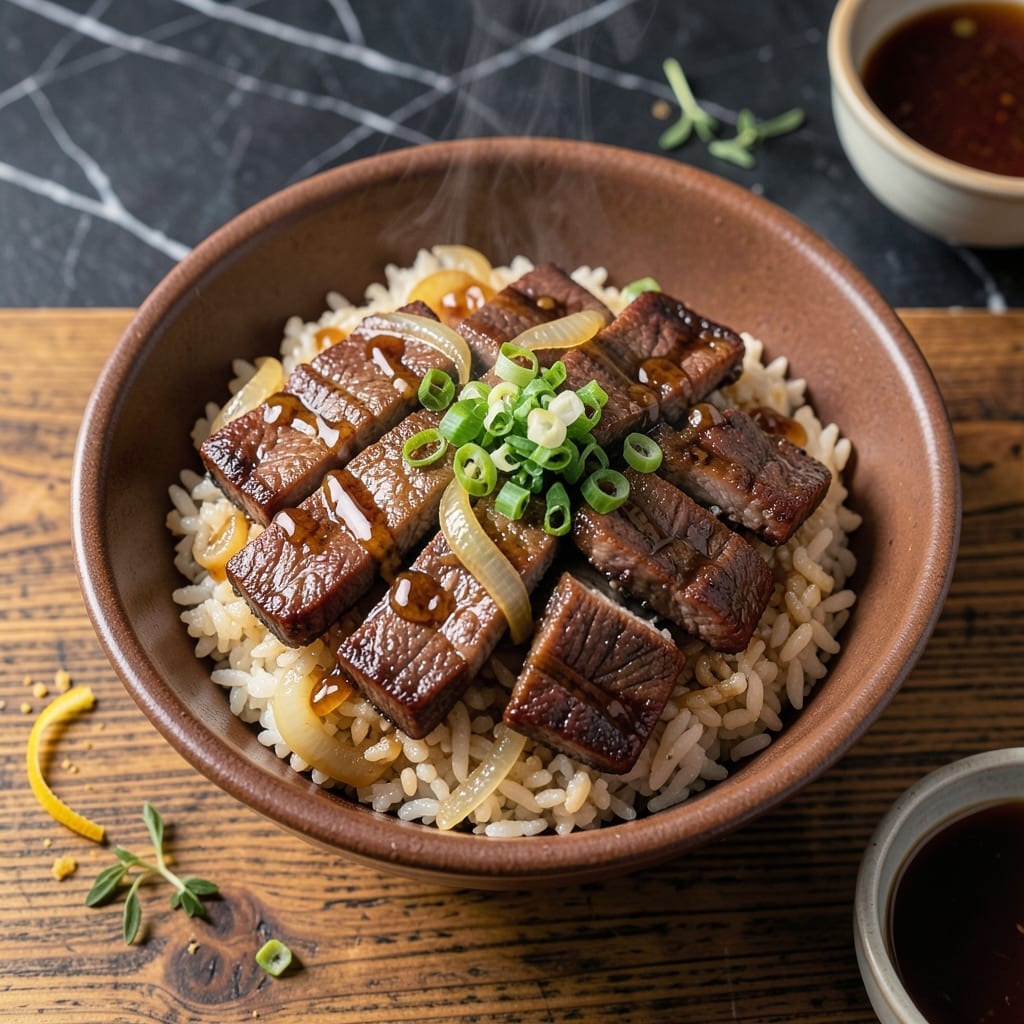
This Japanese beef bowl delivers tender slices of meat and sweet onions in a savory sauce over steamed rice. A comforting meal that comes together quickly with simple ingredients.
I developed this version to capture the authentic flavors of traditional gyudon while keeping the preparation straightforward. The result is a satisfying dish that feels like a warm hug in a bowl.
Ingredients for Gyudon Rice Bowl
Simple ingredients come together for authentic Japanese comfort food in minutes.
| Ingredient | Amount | Notes |
|---|---|---|
| Thinly Sliced Beef 🥩 | 1 lb | Ribeye or sirloin recommended |
| Yellow Onions 🧅 | 2 whole | Thinly sliced into half-moons |
| Japonica Short-Grain Rice 🍚 | 2 cups | Uncooked, rinsed until clear |
| Dashi Stock 🍜 | 1 ½ cups | Japanese kombu and bonito based |
| Soy Sauce 🫕 | ¼ cup | Japanese variety preferred |
| Mirin 🍶 | 2 tbsp | Sweet cooking rice wine |
| Sake 🍶 | 2 tbsp | Dry Japanese rice wine |
| Granulated Sugar 💧 | 1 tbsp | Balances the savory sauce |
| Fresh Ginger 🌿 | 1 piece | 2-inch knob, grated |
| Garlic Cloves 🧄 | 3 cloves | Minced for depth of flavor |
| Green Onions 🧅 | 3 whole | Thinly sliced for garnish |
| Soft-Boiled Eggs 🥚 | 4 whole | Optional but traditional topping |
| Pickled Red Ginger 🌸 | ¼ cup | For serving, optional garnish |
| Neutral Oil 🛢️ | 1 tbsp | For cooking beef and onions |
The beef is the star—ribeye or sirloin sliced paper-thin ensures tenderness. For authentic flavor, seek out Japanese dashi stock (kombu and bonito based) at Asian markets or the international aisle. The rice must be short-grain Japonica for that sticky, slightly sweet texture. Koshihikari or Nishiki brands are excellent choices if available.
No dashi? Substitute with chicken or vegetable stock plus a splash of fish sauce for umami. Mirin can be replaced with 1 tbsp sugar plus 1 tbsp water in a pinch. For a gluten-free version, use tamari instead of soy sauce. The soft-boiled eggs are traditional but optional—omit or use tofu for a vegan adaptation.
Store dashi stock in the fridge for up to 1 week or freeze for 3 months. Cooked rice keeps 3-4 days refrigerated. The pickled ginger stays fresh in its jar for 6-12 months unopened. Always bring rice to room temperature before reheating to prevent dryness.
Why You’ll Love This Recipe
- One Pot Meal: I love that everything cooks in a single pan—beef, onions, and that savory dashi-soy broth.
- Umami Bomb: The dashi and soy sauce create this ridiculous depth of flavor that makes the beef taste way more expensive than it is.
- Weeknight Hero: Honestly, it’s my go-to when I need dinner on the table in 20 minutes with zero fuss.
- Budget Stretcher: A little beef goes a long way here, and the rice fills it out perfectly for leftovers the next day.
Step-by-Step Instructions for Gyudon Rice Bowl
Master the technique behind this comforting dish with precise timing and layering of flavors.
Step 1: Prepare and Cook the Rice
Rinse the 2 cups Japonica short-grain rice under cold water until the water runs clear, which removes excess starch and prevents gummy texture. I use a fine-mesh strainer for this and typically rinse 3-4 times.
Combine the rinsed rice with 1.5 cups dashi stock in a rice cooker or heavy pot. Cook according to your rice cooker’s instructions or simmer covered for 15-18 minutes until all liquid is absorbed and the rice is tender. Let it steam undisturbed for 10 minutes after cooking.
Step 2: Sauté Aromatics and Beef
Heat the 1 tbsp neutral oil in a large skillet over medium-high heat. Add the 2 whole yellow onions, thinly sliced, and cook for 5-6 minutes until they soften and turn translucent. Stir occasionally to prevent burning.
Push the onions to one side of the pan and add the 1 lb thinly sliced beef. Cook just until the beef loses its raw color, about 2-3 minutes. The beef should remain tender—overcooking at this stage will make it tough. Grate the 1 piece fresh ginger and mince the 3 cloves garlic cloves directly over the pan.
Step 3: Create the Gyudon Sauce
Pour in the 0.25 cup soy sauce, 2 tbsp mirin, 2 tbsp sake, and 1 tbsp granulated sugar. Stir to combine and bring to a gentle simmer. Reduce heat to medium-low and let it cook for 8-10 minutes until the onions are caramelized and the sauce has thickened slightly.
The sauce should coat the back of a spoon with a glossy sheen. Taste and adjust seasoning if needed, though the combination of soy, mirin, and sake should provide a perfect balance of savory, sweet, and umami. The beef will absorb these flavors as it finishes cooking in the sauce.
Step 4: Assemble and Serve
Divide the cooked rice among four bowls. Spoon the beef and onion mixture with its sauce over each portion of rice. The rice should be hot enough to continue lightly cooking the beef in its residual heat, ensuring maximum tenderness.
Slice the 3 whole green onions thinly and sprinkle over each bowl. Top with a soft-boiled egg if using, and serve with 0.25 cup pickled red ginger on the side for a refreshing contrast. The egg yolk should be runny to mix into the dish, adding richness to each bite.
Pro Tips For Making Gyudon Rice Bowl
- Pre-cook the onions: Sauté the yellow onions until soft and translucent before adding the beef—this builds a sweeter base and prevents crunchy bites.
- Use cold beef: Add the thinly sliced beef straight from the fridge to the pan; it cooks more evenly and releases less moisture, keeping the sauce rich.
- Skip the overcrowding: I learned this the hard way—cook the beef in a single layer so it sears instead of steams, or you’ll end up with a watery, bland mess.
- Simmer the sauce: After adding dashi and soy sauce, let it reduce for 2-3 minutes on medium-low heat to thicken slightly and deepen the flavor.
Perfect Pairings for These Flavors
Traditional Sides
Serve with miso soup made from 2 cups dashi and 2 tbsp miso paste for an authentic combo. I love adding tofu cubes and wakame seaweed. The light broth complements the rich beef perfectly. 🥣
Fresh Accompaniments
A simple cucumber sunomono with rice vinegar and sesame seeds adds a refreshing crunch. Thinly slice 1 English cucumber and toss with 2 tbsp vinegar and 1 tsp sugar. It cuts through the savory sauce beautifully.
Beverage Pairings
Green tea is the classic choice—sencha or genmaicha both work wonderfully. For beer lovers, a crisp Japanese lager like Sapporo or Asahi cleanses the palate. The carbonation contrasts nicely with the tender beef. 🍵
Extra Toppings
Add shredded nori for umami depth or crispy fried shallots for texture. I keep both on hand for customization. A drizzle of sriracha adds heat if you like spice. These small additions elevate the dish without overpowering it.
Nutrition Facts
Frequently Asked Questions
Can I use a different cut of beef?
Yes! Ribeye or sirloin work best, but flank steak or even ground beef can substitute in a pinch. For best results, freeze the beef for 20-30 minutes first to make thin slicing easier.
What if I don’t have dashi stock?
Substitute with chicken or vegetable stock plus 1 tsp fish sauce for umami. For a vegetarian version, add 1 tbsp soy sauce extra to the stock.
How do I prevent the rice from getting mushy?
Rinse the rice 3-4 times until water runs clear to remove excess starch. Use the exact water-to-rice ratio and avoid peeking while cooking. Let it steam undisturbed for 10 minutes after.
Can I make this ahead of time?
Cook the beef mixture and store in an airtight container for up to 3 days. Reheat gently with a splash of water to prevent drying. Cook rice fresh for best texture.

- Ground Beef Rice and Beans Recipe: Slow-Simmered Savory Harmony - October 17, 2026
- Guyanese Fried Rice Recipe: Caribbean Spice With Wok-Charred Aromatics - October 17, 2026
- Hakka Thunder Tea Rice Recipe: Wok-Charred Herbal Infusion - October 17, 2026