
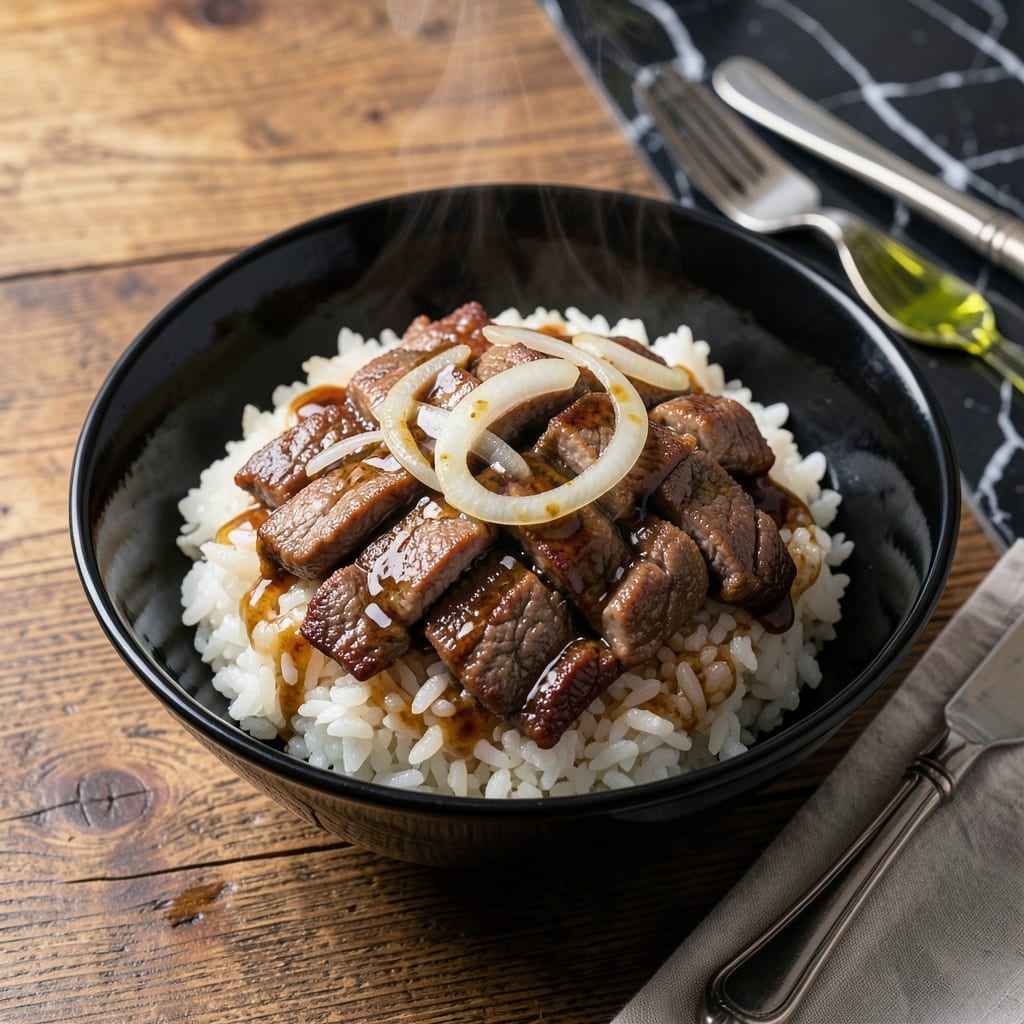
This rice cooker gyudon delivers authentic Japanese flavors with minimal effort. The one-pot method combines tender beef, sweet onions, and savory sauce while the rice cooks beneath.
I developed this technique after years of testing, and it never fails to produce perfectly steamed rice with a rich, beefy topping. The secret is layering the ingredients in the right order and timing.
You’ll end up with a comforting bowl where every bite has melt-in-your-mouth beef, caramelized onions, and rice that soaks up all the flavorful sauce. It’s restaurant quality at home.
This dish comes together in under 45 minutes with ingredients you likely have on hand. The rice cooker does most of the work for you.
Ingredients for Gyudon Rice Cooker
Tender beef, sweet onions, and savory broth come together in this one-pot wonder.
| Ingredient | Amount | Notes |
|---|---|---|
| Thinly Sliced Beef 🥩 | 1 lb | Ribeye or sirloin recommended |
| White Onion 🧅 | 2 whole | Thinly sliced, large |
| Short-Grain White Rice 🍚 | 2 cups | Rinsed until water runs clear |
| Dashi Stock 🍜 | 2 cups | Japanese-style preferred |
| Soy Sauce 🥢 | ¼ cup | Low-sodium for control |
| Mirin 🍶 | 2 tbsp | Sweet rice wine essential |
| Sake 🍶 | 2 tbsp | Dry cooking sake |
| Granulated Sugar 🍚 | 1 tbsp | Balances savory flavors |
| Fresh Ginger 🌿 | 1 piece | 1-inch knob, grated |
| Garlic Cloves 🧄 | 2 cloves | Minced finely |
| Green Onions 🧅 | 3 whole | Thinly sliced for garnish |
| Large Eggs 🥚 | 4 whole | Optional topping, soft-boiled |
| Vegetable Oil 🫒 | 1 tbsp | For cooking beef |
| Sesame Seeds 🌰 | 1 tsp | Toasted for garnish |
| Red Pepper Flakes 🌶️ | ¼ tsp | Optional for heat |
The beef is key—ribeye or sirloin cut thinly against the grain gives that melt-in-your-mouth texture. Japanese markets often sell pre-sliced beef for sukiyaki, which works perfectly. For dashi, Kikkoman or Ajinomoto are reliable brands at most Asian grocery stores. The rice should be short-grain (sushi rice works) for that sticky, comforting bite. Rinse it well to remove excess starch.
No dashi? Chicken or beef broth plus a pinch of MSG gets you close. Mirin is non-negotiable for authentic flavor, but 1 tbsp sugar plus 1 tbsp water in a pinch. Sake can be swapped with dry white wine. For a quicker version, pre-sliced beef from Trader Joe’s saves time. The eggs are traditional but skip if you prefer—extra sesame seeds add nice crunch.
Leftovers keep 3-4 days in the fridge. Reheat with a splash of water to loosen the sauce. The dashi and mirin last months unopened, but check labels once opened. I always make extra rice—freezes beautifully for another meal.
Why You’ll Love This Recipe
- One-Pot Wonder: I throw everything—beef, onions, rice, and dashi—into the rice cooker and walk away. No stove babysitting, no burnt bits.
- Umami Bomb: The soy-dashi combo soaks into the beef and rice so every bite tastes like a cozy Japanese diner. Honestly, it’s ridiculous how good it is.
- Weeknight Hero: Between us, this is my Tuesday night lifesaver when I need dinner fast and filling. Leftovers? Even better the next day.
- Budget Friendly: Thinly sliced beef stretches further than you’d think, and a little goes a long way with rice and onions. I’ll be real: it’s a wallet-friendly win.
Step-by-Step Instructions for Beef and Onion Rice Bowl
This one-pot method delivers tender beef, caramelized onions, and perfectly cooked rice with minimal effort.
Step 1: Prepare the Rice and Aromatics
Rinse the 2 cups short-grain white rice in a fine-mesh strainer under cold water until the water runs clear. This removes excess starch and prevents the rice from becoming gummy. Drain thoroughly—you want the grains to be damp but not wet.
Grately peel and grate the 1 piece fresh ginger and finely mince the 2 cloves garlic cloves. Thinly slice the 2 whole white onion into half-moons. These aromatics form the flavor base of your dish, so take your time with the prep.
Step 2: Cook the Beef and Onions
Set your rice cooker to the sauté function (or use a skillet if yours lacks this feature). Heat the 1 tbsp vegetable oil until shimmering, then add the 1 lb thinly sliced beef. Cook for 3-4 minutes until no longer pink, breaking it up with a wooden spoon.
Add the sliced white onion and cook for another 5-6 minutes until softened and just beginning to caramelize. Stir in the grated fresh ginger, minced garlic cloves, 1 tbsp granulated sugar, 0.25 cup soy sauce, 2 tbsp mirin, and 2 tbsp sake. Cook for 1-2 minutes until the mixture thickens slightly and becomes fragrant.
Step 3: Add Rice and Liquid
Transfer the beef and onion mixture to the rice cooker pot. Add the rinsed 2 cups short-grain white rice and stir to combine, ensuring the rice is well coated with the beef mixture. Pour in the 2 cups dashi stock and stir once more.
Make sure the rice is evenly distributed in the liquid—no dry spots. The liquid should come about ½ inch above the rice. This ratio ensures the rice cooks perfectly without becoming mushy or underdone.
Step 4: Cook and Rest
Close the rice cooker lid and set it to the standard white rice setting. Let it cook undisturbed for the full cycle, which should take about 20-25 minutes. The rice cooker will automatically switch to keep-warm once done.
Once the cooking cycle completes, let the rice rest for 10 minutes with the lid closed. This allows the steam to redistribute, ensuring every grain is tender and flavorful. The beef and onions will have infused the rice with their savory, slightly sweet flavor.
Step 5: Garnish and Serve
Thinly slice the 3 whole green onions and sprinkle them over the top. If using, soft-boil the 4 whole large eggs for 6-7 minutes and place one on each serving. Drizzle with a little extra soy sauce if desired.
Sprinkle with 1 tsp sesame seeds and, if you like heat, a pinch of 0.25 tsp red pepper flakes. Fluff the rice gently with a fork before serving to distribute the beef and onions evenly. Each bite should be a perfect balance of tender beef, sweet onions, and savory rice.
Pro Tips For Making Gyudon Rice Cooker
- Slice Beef Thinly: Freeze the beef for 20-30 minutes before slicing—it firms up just enough to get paper-thin cuts that melt into the dashi broth. I learned this the hard way after chewing through rubbery strips in my first few attempts.
- Layer Onions First: Place the onions at the bottom of the rice cooker under the beef so they soften into a sweet, jammy base. Sounds weird, but it works: this keeps the beef from sticking and adds depth to every bite.
- Skip Overcrowding: Use only a single layer of beef and onions—piling it all in steams the meat instead of letting it absorb the soy-dashi flavor. After burning three batches, I finally figured out less is more here.
- Use Fresh Dashi: If you’re using instant dashi, dissolve it in hot water first to avoid grainy bits in your broth. My grandmother swore by this, and she was right: it makes a real difference in the final texture.
Common Mistakes When Making Perfect Results
Overcrowding the Pot
Many home cooks dump all ingredients at once, but this leads to uneven cooking. I always sauté the 1 lb thinly sliced beef and 2 whole white onion first to develop deep flavor. If your rice cooker lacks a sauté function, use a skillet instead. 🔥
Skipping the Rice Rinse
Unrinsed 2 cups short-grain white rice releases excess starch, resulting in gummy texture. Rinse until water runs clear—this takes about 3-4 washes. I use a fine-mesh strainer for this step.
Wrong Liquid Ratio
The 2 cups dashi stock must cover the rice by about ½ inch. Too little leaves dry spots; too much makes mushy rice. I measure with my finger for accuracy.
Lifting the Lid
Resist peeking during the 20-25 minute cook cycle. Each time you open the lid, you lose precious steam and add 5-10 minutes to cooking time. Trust the process.
Skipping the Rest
After cooking, let it rest for 10 minutes with the lid closed. This lets steam redistribute, ensuring every grain absorbs the beefy, onion-infused flavor. I set a timer to avoid rushing this step.
Over-Stirring Before Cooking
Stir just enough to combine the beef mixture with rice. Over-stirring can crush the grains. A gentle fold with a rice paddle does the trick without damaging the texture.
Nutrition Facts
Frequently Asked Questions
Can I use a different type of rice?
Stick with short-grain white rice for best results. Jasmine or basmati won’t absorb the sauce as well and may turn mushy.
What if my rice cooker doesn’t have a sauté setting?
Brown the beef and onions in a skillet first, then transfer to the rice cooker with the other ingredients. This ensures proper caramelization.
Can I make this ahead of time?
Yes! It keeps well for 3-4 days refrigerated. Reheat with a splash of water to restore moisture.
What’s a good substitute for dashi?
Use chicken or beef broth with a pinch of MSG for similar depth. Avoid water, as it will dilute the flavor.

- Ground Beef Rice and Beans Recipe: Slow-Simmered Savory Harmony - October 17, 2026
- Guyanese Fried Rice Recipe: Caribbean Spice With Wok-Charred Aromatics - October 17, 2026
- Hakka Thunder Tea Rice Recipe: Wok-Charred Herbal Infusion - October 17, 2026