
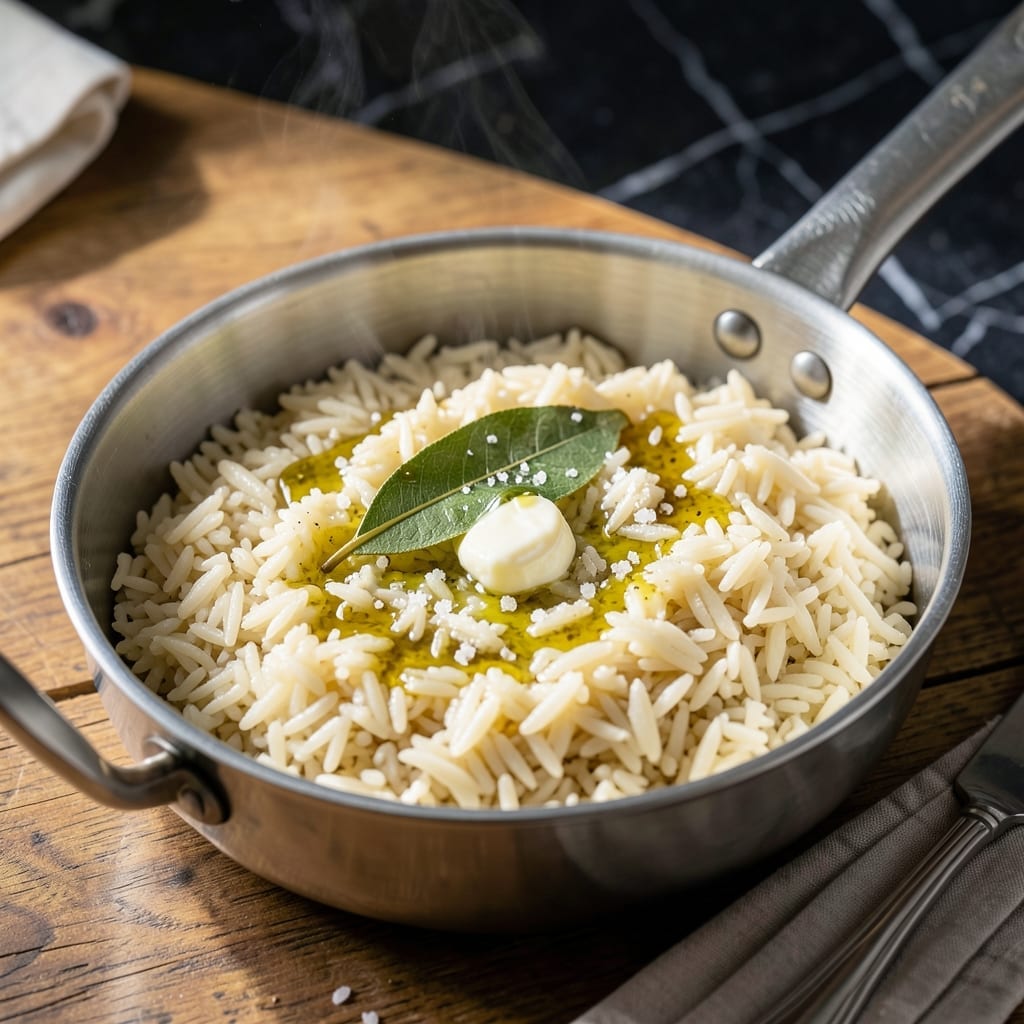
Mastering perfect rice is simpler than most assume—Gordon Ramsay’s method proves it. This technique delivers fluffy, separate grains every time with minimal effort.
The secret lies in the ratio and timing. Equal parts water to rice with a pinch of salt creates the ideal cooking environment. A tight lid and gentle heat do the rest.
By following this precise approach, you’ll achieve restaurant-quality results at home. The grains remain distinct, tender, and never mushy or sticky.
This foundational skill transforms any meal. Once you try it, you’ll never go back to guesswork cooking methods.
Ingredients for Gordon Ramsay Rice
Minimal ingredients, maximum precision. This delivers restaurant-quality grains every time.
| Ingredient | Amount | Notes |
|---|---|---|
| Long-Grain White Rice 🌾 | 2 cups | Rinsed until water runs clear |
| Water 💧 | 4 cups | Filtered or spring preferred |
| Kosher Salt 🧂 | ½ tsp | Diamond Crystal recommended |
| Unsalted Butter 🧈 | 1 tbsp | European-style for richness |
| Extra-Virgin Olive Oil 🫒 | ½ tbsp | High-quality, fruity profile |
| Bay Leaf 🍃 | 1 whole | Dried, for aromatic depth |
| Fresh Thyme Sprigs 🌿 | 2 sprigs | Optional but recommended |
| Garlic Clove 🧄 | 1 clove | Peeled, smashed lightly |
| Lemon Zest 🍋 | ½ tsp | Finely grated for brightness |
The rice selection is critical. Basmatis or jasmines yield the most distinct, fluffy grains—avoid instant or short-grain varieties. Diamond Crystal kosher salt is preferred for its clean, consistent flavor and even distribution. For the butter, Plugrá or Kerrygold offer superior richness. The bay leaf and thyme add subtle depth without overpowering the dish.
Substitutions are limited but possible. For a neutral oil, avocado or grapeseed oil works in place of olive oil. If avoiding dairy, vegan butter maintains the richness. Omit the aromatics (bay, thyme, garlic) if you prefer a cleaner rice profile. The 2:1 water-to-rice ratio is non-negotiable—this is where the chef-level precision comes into play.
Store rice in an airtight container in a cool, dark place for up to 1 year. Cooked rice keeps in the fridge for 4-5 days or freezes for 3 months. Reheat with a splash of water or steam to restore moisture and prevent dryness.
Why You’ll Love This Recipe
- Ready in 15: I can start this rice and have it done before the chicken finishes roasting.
- Buttery Perfection: The combo of butter and olive oil gives it a rich, nutty depth that plain rice just can’t touch.
- Pairs with Anything: Honestly, it’s my go-to side for everything from grilled salmon to stir-fry leftovers.
- Budget Stretch: A pound of long-grain rice makes multiple meals, and it costs less than a coffee.
Step-by-Step Instructions for Perfect Long-Grain White Rice
Master this technique and you’ll achieve restaurant-quality rice with distinct, fluffy grains every time.
Step 1: Rinse and Prepare the Rice
Place the 2 cups Long-Grain White Rice in a fine-mesh strainer and rinse under cold running water until the water runs completely clear. This removes excess starch that would otherwise make the rice gummy. I like to swirl the rice with my hand to help release the starch more effectively.
While rinsing, use your other hand to agitate the grains gently. This process typically takes 2-3 minutes. Once the water runs clear, give the strainer a final shake to remove excess water—you want the grains damp but not dripping.
Step 2: Toast the Aromatics
In a medium saucepan with a tight-fitting lid, combine the 0.5 tbsp Extra-Virgin Olive Oil and 1 tbsp Unsalted Butter over medium heat. Once the butter melts and begins to foam, add the 1 whole Bay Leaf, 2 sprigs Fresh Thyme Sprigs, 1 clove Garlic Clove, and 0.5 tsp Lemon Zest.
Cook for 1-2 minutes, stirring occasionally, until the garlic becomes fragrant and just begins to turn golden at the edges. Be careful not to let the garlic burn—it should smell aromatic, not acrid. This toasting step infuses the fat with flavor that will permeate the rice.
Step 3: Add Rice and Water
Add the rinsed 2 cups Long-Grain White Rice to the saucepan and stir to coat the grains in the fragrant fat. Cook for 1 minute, stirring constantly, until the rice becomes slightly translucent at the edges. This brief toasting enhances the nutty flavor of the grains.
Pour in the 4 cups Water and add the 0.5 tsp Kosher Salt. Stir once to distribute the rice evenly, then bring to a full, rolling boil over medium-high heat. Watch for the moment when bubbles break the surface consistently across the entire pan.
Step 4: Cook with Precision
Once boiling, immediately reduce the heat to low, cover the saucepan with its lid, and let it cook undisturbed for 15 minutes. It’s crucial not to lift the lid during this time—steam is your ally for even cooking. The rice should absorb all the liquid without stirring.
After 15 minutes, turn off the heat but keep the lid on. Let the rice steam off the heat for an additional 10 minutes. This resting period allows the grains to finish cooking gently and absorb any remaining moisture.
Step 5: Fluff and Serve
Remove the lid and use a fork to fluff the rice gently, separating any grains that may have stuck together. The rice should be tender with individual grains that hold their shape. Discard the Bay Leaf and Thyme Sprigs before serving.
Taste and adjust seasoning if needed, though the initial 0.5 tsp Kosher Salt should provide perfect balance. The rice will have a subtle fragrance from the garlic and lemon zest, with each grain distinct and perfectly cooked. Serve immediately while hot and fluffy.
Pro Tips For Making Gordon Ramsay Rice
- Rinse the Rice: I learned this the hard way—always rinse your long-grain rice until the water runs clear to remove excess starch, otherwise it’ll turn gummy. Sounds tedious, but it actually changes the texture.
- Toast the Grains: Heat the rice in a dry pot for 1-2 minutes before adding liquid; this adds a subtle nutty flavor and prevents mushy rice. My grandmother swore by this, and she was right.
- Use the Right Ratio: Stick to a 2:1 water-to-rice ratio—any more and you’ll end up with soggy grains. After burning a few batches, I finally figured out that precision here is non-negotiable.
- Finish with Butter: Stir in a pat of cold unsalted butter at the end, off the heat, so it melts evenly for a silky finish. I was skeptical until I tried it—now I never skip this step.
Essential Equipment for This Recipe
Quality Saucepan
A heavy-bottomed saucepan with a tight-fitting lid is non-negotiable. I swear by my All-Clad Stainless Steel 3-Quart—it distributes heat evenly and prevents hot spots that can burn rice. The tight lid traps steam, which is essential for perfect cooking. 💡
Fine-Mesh Strainer
For rinsing rice, a fine-mesh strainer is your best friend. I use the OXO Good Grips model—it fits perfectly over my sink and the fine mesh prevents even the smallest grains from slipping through. Rinsing removes excess starch, which is key to fluffy results.
Accurate Measuring Cups
The 2:1 water-to-rice ratio must be precise. I recommend OXO Good Grips measuring cups—they’re durable, easy to read, and have a comfortable grip. A 4-cup measure for water and a 1-cup measure for rice ensures accuracy every time.
Wooden Spoon or Rice Paddle
Use a wooden spoon or rice paddle to stir the rice when toasting it in the fat. Wood won’t scratch your saucepan, and the flat surface of a paddle is perfect for fluffing cooked grains. I keep both on hand for different stages of the process.
Instant-Read Thermometer
While not strictly necessary, a ThermoWorks Thermapen helps me monitor water temperature. I aim for a rolling boil at 212°F before reducing heat. This extra step ensures consistency, especially if you’re cooking at high altitudes. ✨
Microplane for Zest
A Microplane is ideal for grating the ½ tsp lemon zest. It removes just the fragrant outer layer without the bitter pith. I’ve tried cheaper graters, but the Microplane Premium gives the finest, most consistent zest for maximum flavor.
Nutrition Facts
Frequently Asked Questions
Why rinse the rice before cooking?
Rinsing removes excess starch to prevent sticky, gummy grains. Continue until water runs clear, typically 2-3 minutes.
Can I use a different rice variety?
Long-grain types like basmati or jasmine work best. Avoid short-grain or instant rice, as they won’t achieve the same fluffy texture.
What if my rice is undercooked after 15 minutes?
Add 2 tablespoons water, cover, and cook on low heat for another 5 minutes. Then rest for 10 minutes before checking.
How do I store leftover rice?
Keep in an airtight container in the fridge for up to 4-5 days. Freeze for up to 3 months for longer storage.

- Jollof Rice Sauce Recipe: West African Tomato and Spice Infusion - September 25, 2026
- Japanese Rice Soup Recipe: Umami-Rich Comfort in a Bowl - September 25, 2026
- Homemade Cream Of Rice Recipe: Silk-Smooth Breakfast in Minutes - September 25, 2026