
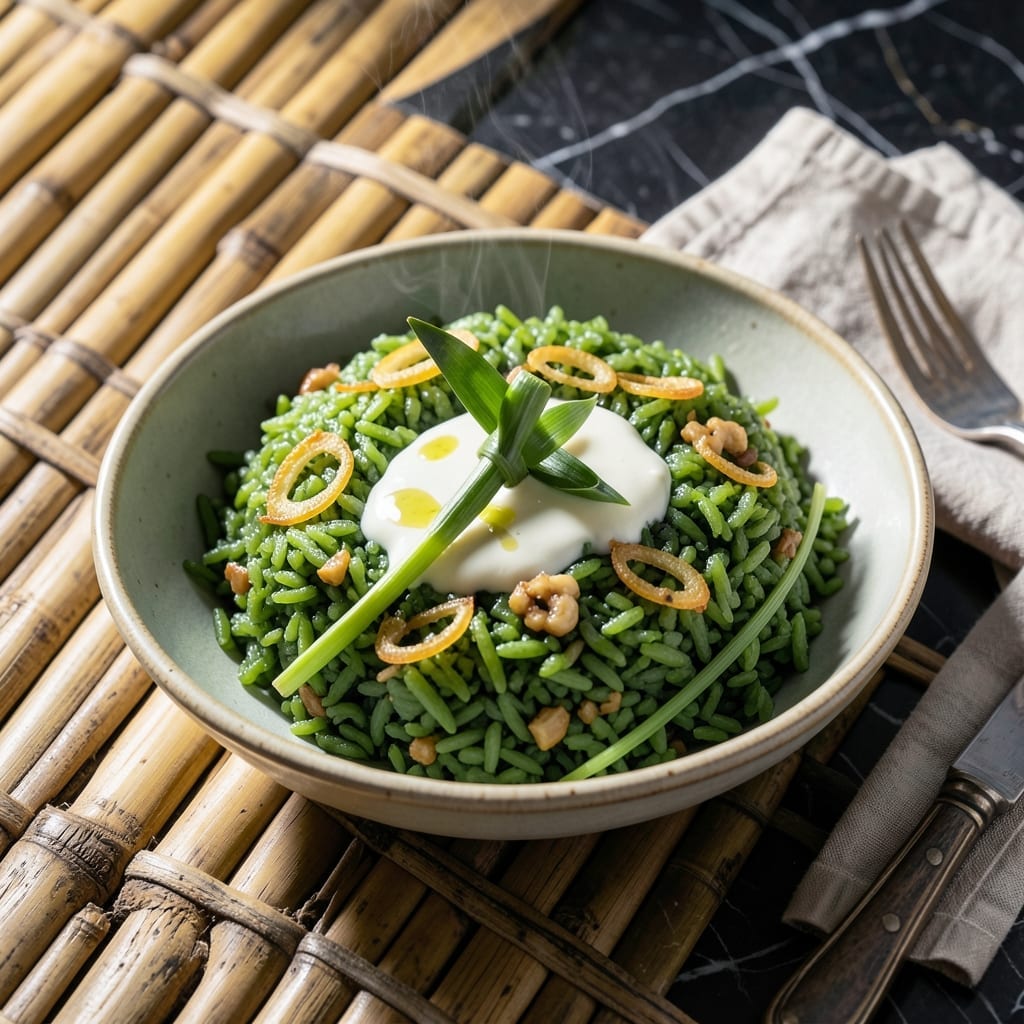
This dish transforms everyday rice into something extraordinary through traditional Southeast Asian techniques. The vibrant green hue comes from natural pandan leaf infusion, creating fragrant grains that pair beautifully with proteins or vegetables.
I developed this method after discovering green bamboo rice at a specialty market, testing it repeatedly to perfect the texture and flavor balance. The process requires patience but rewards with aromatic, slightly sweet rice that stands apart from plain varieties.
Each bite delivers subtle floral notes from the pandan, with the rice maintaining its distinct chew. The visual impact alone makes this a centerpiece-worthy dish for special occasions.
Serve with grilled meats or stir-fried vegetables to let the rice shine. Here’s how to make this unique creation.
Ingredients for Green Bamboo Rice
Fragrant jasmine rice meets vibrant pandan leaves for a dish that’s both aromatic and visually stunning.
| Ingredient | Amount | Notes |
|---|---|---|
| Jasmine Rice 🌾 | 2 cups | Rinsed until water runs clear |
| Pandan Leaves 🌿 | 8 whole | Fresh or frozen, washed |
| Coconut Milk 🥥 | 1 cup | Full-fat for creaminess |
| Water 💧 | 2 ½ cups | For cooking rice |
| Shallots 🧅 | 2 whole | Finely minced for aroma |
| Garlic Cloves 🧄 | 4 cloves | Peeled and minced |
| Green Onions 🧅 | 4 whole | Thinly sliced for garnish |
| Vegetable Oil 🫒 | 2 tbsp | Neutral flavor preferred |
| Salt 🧂 | 1 tsp | Sea salt or kosher salt |
| Sugar 🍚 | 1 tsp | Optional for balancing flavors |
| Lemon Grass Stalk 🌿 | 1 whole | Bruised for infusion |
| Kaffir Lime Leaves 🍋 | 2 whole | Torn for fragrance |
The pandan leaves are non-negotiable for authentic flavor and color. Asian grocery stores carry fresh or frozen—avoid dried, which lack potency. Jasmine rice should be Thai hom mali variety for optimal texture. Whole Foods or Trader Joe’s often stock both. If using frozen pandan, thaw and rinse before use to remove any ice crystals that might mute the fragrance.
No pandan leaves? Pandan extract (1 tsp) works in a pinch but lacks depth—use sparingly to avoid artificial taste. Coconut milk can be light coconut milk for a subtler flavor, though full-fat yields the best results. Shallots and garlic are foundational; yellow onions can substitute if necessary. For a nutty twist, toast the rice in oil before adding liquid.
Cooked rice keeps well for 3-4 days in the fridge, though the green hue may fade slightly. Reheat with a splash of water to restore moisture. For longer storage, freeze portions for up to 3 months—thaw overnight before reheating. Always store pandan leaves in the freezer to preserve freshness.
Why You’ll Love This Recipe
- One Pot Wonder: I just dump everything in, let the jasmine rice soak up that coconut milk, and the pandan leaves do all the flavor work for me.
- Fragrant Comfort: The coconut and pandan create this sweet, earthy aroma that makes my kitchen smell like a tropical escape.
- Weeknight Hero: Honestly, it’s my go-to when I need something ready before the kids start asking what’s for dinner.
- Budget Friendly: A handful of cheap ingredients stretches to feed four, and leftovers taste even better the next day.
Step-by-Step Instructions for Pandan-Infused Jasmine Rice
Master the technique for perfectly fragrant rice with layered Southeast Asian flavors.
Step 1: Prepare the Aromatic Base
Finely mince the 2 whole Shallots and peel then mince the 4 cloves Garlic Cloves. Bruise the 1 whole Lemon Grass Stalk by smashing it lightly with the side of your knife. Wash the 8 whole Pandan Leaves thoroughly, then tie them into a knot for easy removal later.
Tear the 2 whole Kaffir Lime Leaves to release their essential oils. Thinly slice the 4 whole Green Onions, separating the white and green parts—you’ll use the white parts for cooking and reserve the green tops for garnish. This preparation ensures each aromatic contributes its full character to the dish.
Step 2: Bloom the Aromatics in Oil
Heat 2 tbsp Vegetable Oil in a large pot over medium heat until it shimmers. Add the minced shallots and cook for 2-3 minutes until they soften and become translucent. The shallots should sizzle gently but not brown—this develops their sweetness without bitterness.
Add the minced garlic, bruised lemongrass, torn kaffir lime leaves, and knotted pandan leaves. Sauté for 1-2 minutes until the garlic is fragrant and just beginning to turn light golden. The oil will take on a vibrant green hue from the pandan, signaling the flavors are infusing properly. Stir frequently to prevent burning.
Step 3: Toast the Rice and Add Liquids
Add the rinsed 2 cups Jasmine Rice to the pot and stir to coat the grains in the aromatic oil. Toast for 1-2 minutes until the rice appears slightly translucent at the edges. This step removes excess moisture from the rice surface, ensuring each grain absorbs the cooking liquid evenly.
Pour in the 1 cup Coconut Milk and 2.5 cups Water, then add the 1 tsp Salt and 1 tsp Sugar. Stir well to distribute the rice and aromatics evenly. The liquid should come to a gentle simmer—if it’s boiling vigorously, reduce the heat immediately to prevent the rice from cooking unevenly.
Step 4: Simmer and Steam to Perfection
Once the liquid reaches a simmer, reduce the heat to low, cover the pot with a tight-fitting lid, and let it cook undisturbed for 15-18 minutes. You’ll see steam escaping from under the lid and hear a gentle hissing sound, which indicates proper cooking temperature.
The rice is done when all liquid has been absorbed and small craters appear on the surface. Remove from heat and let it sit covered for 10 minutes. This resting period allows the rice to steam in its own moisture, resulting in fluffy, separate grains. Do not peek or stir during this time—it disrupts the steaming process.
Step 5: Fluff and Garnish for Serving
After resting, remove the lid and discard the pandan leaves, lemongrass, and kaffir lime leaves. Gently fluff the rice with a fork, lifting from the bottom to separate the grains. The rice should be tender but not mushy, with each grain distinct and infused with fragrant notes.
Sprinkle the reserved green onion tops over the rice and serve immediately. The rice will have a vibrant green tint from the pandan and a rich, coconut aroma that pairs beautifully with the bright citrus notes from the lemongrass and kaffir lime. The texture should be light and fluffy, with a subtle sweetness balanced by the salt.
Pro Tips For Making Green Bamboo Rice
- Soak the Rice: Rinse jasmine rice until the water runs clear, then soak for 20-30 minutes—this keeps the grains from clumping and guarantees even absorption of the coconut milk.
- Bruise the Pandan: Tie the pandan leaves into a knot and lightly bruise them with the flat of your knife before adding; it releases way more aroma than just tossing them in whole.
- Watch the Simmer: Once it starts bubbling, drop the heat to low immediately—I learned this the hard way after scorching two batches trying to rush the process.
- Toast the Shallots: Fry minced shallots in a little oil until golden before adding the rice; it adds a deep, savory base that plain coconut milk can’t deliver on its own.
Troubleshooting This Recipe
Pandan Leaf Problems
If your rice lacks its signature green color, your pandan leaves may be old or dried out. I once used month-old leaves from my freezer and got barely a tint. Always use fresh or recently frozen leaves for maximum color and flavor impact. 💡
Rice Texture Troubles
Mushy rice usually means too much liquid or stirring during cooking. Stick to the 2.5 cups water ratio and resist the urge to peek. If your rice is undercooked, add 2 tbsp hot water, cover, and steam for 5 more minutes.
Coconut Milk Separation
If your coconut milk separates, warm it slightly and stir before adding to the pot. I learned this the hard way when my first batch had oily streaks. Full-fat coconut milk works best—light versions can make your rice dry and less fragrant.
Flavor Too Mild
For bolder flavor, increase the pandan leaves to 10-12 or add 1 more lemongrass stalk. If using frozen pandan, thaw completely and bruise the leaves slightly to release more aroma before adding to the oil.
Color Fading Fast
The vibrant green will fade slightly as the rice cools. To preserve color, serve immediately after fluffing. If storing, keep covered and reheat with a splash of water. The flavor remains strong even if the color softens.
This happens naturally with pandan-infused dishes. 🌿
Nutrition Facts
Frequently Asked Questions
Can I use dried pandan leaves?
Dried leaves won’t give the same vibrant color or strong flavor. Use 8-10 fresh or frozen leaves for best results. If you must use dried, soak them in warm water first to rehydrate.
Why did my rice turn out gray instead of green?
Old or weak pandan leaves often cause this. Ensure your leaves are fresh and the oil turns green during sauteing. Cooking time or temperature won’t affect the color.
Can I make this in a rice cooker?
Yes! Sauté the aromatics first, then transfer everything to the rice cooker. Use the same liquid ratio and cook on the standard setting. Let it rest 10 minutes after cooking.
How do I store leftovers?
Keep in an airtight container in the fridge for up to 3-4 days. The green color may fade, but the flavor stays fresh. Reheat with a splash of water to restore moisture.

- Ground Beef Rice and Beans Recipe: Slow-Simmered Savory Harmony - October 17, 2026
- Guyanese Fried Rice Recipe: Caribbean Spice With Wok-Charred Aromatics - October 17, 2026
- Hakka Thunder Tea Rice Recipe: Wok-Charred Herbal Infusion - October 17, 2026