
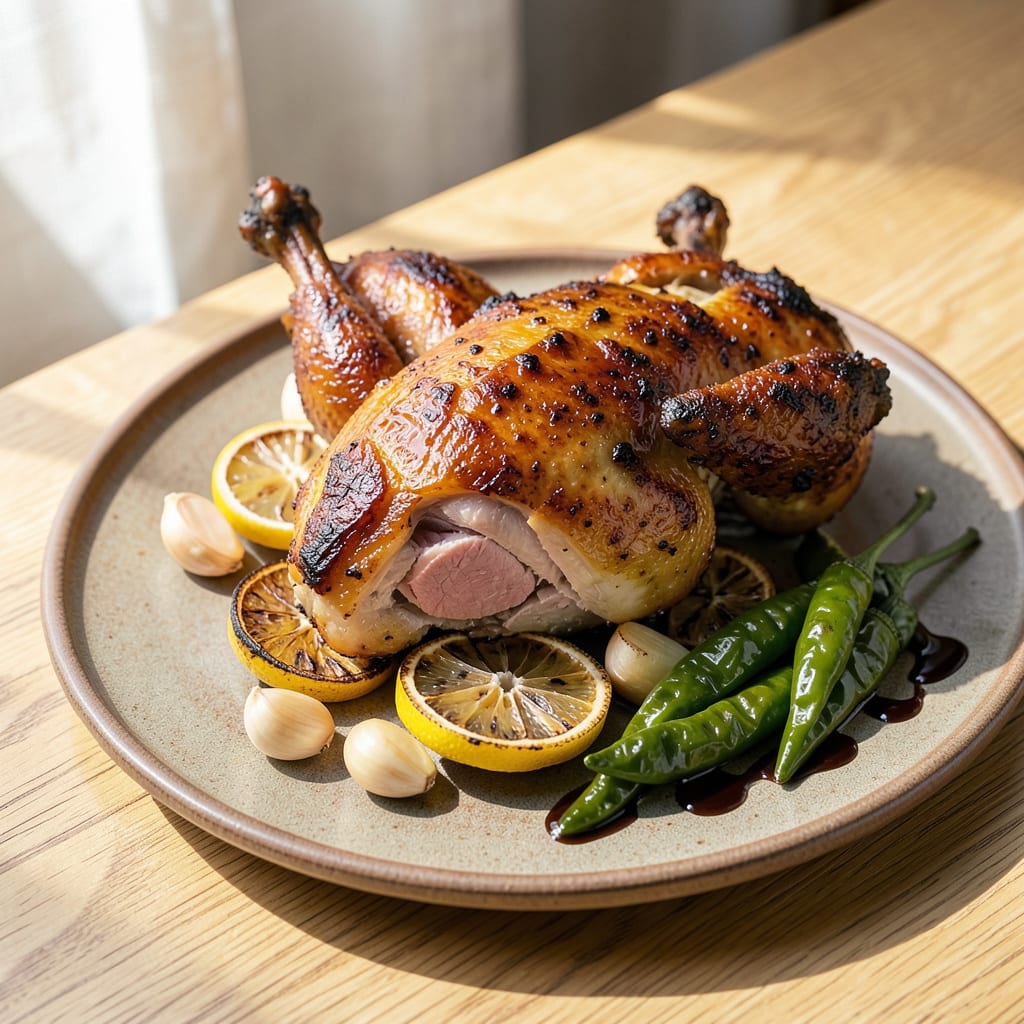
Gristle in chicken refers to the tough, chewy cartilage found near joints or bones. It’s harmless but unappetizing—best removed before cooking or trimmed during preparation for smoother texture and better eating experience.
You’ll most often encounter this rubbery connective tissue in chicken wings, drumsticks, and along the breastbone. While it’s completely safe to eat, the dense collagen fibers make it resistant to breaking down during normal cooking. 🔥 I’ve found that even slow-cooking methods like braising won’t fully soften gristle—it requires physical removal for that perfect bite. The good news is that with a sharp boning knife or kitchen shears, you can easily trim it away without wasting any of the delicious meat.
💡 In This Article
- Why Chicken Gristle Forms and Where It’s Found
- Safe and Easy Ways to Remove Chicken Gristle
Why Chicken Gristle Forms and Where It’s Found
Chicken gristle isn’t just random tough tissue—it’s actually a form of cartilage that serves critical biological functions. In poultry, it develops as part of the skeletal system, providing flexible support at joint connections (like knees and elbows) where bones meet.
This cartilage contains dense collagen fibers arranged in a matrix that resists compression, allowing chickens to move efficiently. Unlike muscle tissue, gristle doesn’t break down easily because its primary job is structural support, not energy storage.
You’ll consistently find gristle in three key areas: the wing tips (where the cartilage extends into the “drumette”), the knee joints of drumsticks, and along the breastbone’s keel. Older chickens develop thicker, more pronounced gristle because their connective tissues mature and harden over time.
Processing methods matter too—commercially raised broilers (harvested at 6-8 weeks) have softer gristle than free-range birds (often processed at 12+ weeks), where the cartilage becomes more fibrous and noticeable.
The science behind its texture lies in the collagen composition. Gristle contains Type II collagen (unlike skin’s Type I), which forms tighter, more elastic fibers. When cooked, these fibers contract but don’t dissolve like gelatin-rich connective tissues in slow-cooked meats.
That’s why even after 2 hours of braising at 300°F, gristle remains chewy while surrounding meat becomes tender. The collagen’s triple-helix structure requires temperatures above 212°F for partial breakdown, but home cooking rarely sustains that long enough for complete transformation.
Interestingly, gristle concentration varies by cut due to anatomical differences. Wings contain the highest percentage (up to 15% of the tip section) because they’re weight-bearing during flight. Drumsticks have localized deposits at the knee joint, while breasts feature thin cartilage sheets along the sternum.
Factory processing often leaves some gristle intact because removing it entirely would require precision butchery that increases costs. That’s why you’ll frequently find it in pre-cut pieces from grocery stores.
Age isn’t the only factor—diet influences gristle development too. Chickens raised on high-protein feeds develop denser connective tissues, while pasture-raised birds may have slightly more pliable cartilage due to varied movement patterns. This explains why heritage breeds sometimes present more noticeable gristle than conventional broilers.
The next time you encounter it, remember it’s not a flaw—it’s evidence of the chicken’s biological design in action. ✨
For home cooks, understanding these locations helps with efficient trimming. Focus on the wing’s second joint, the drumstick’s knobby end, and the breastbone’s center ridge. A quick run of your finger along these areas before cooking will reveal the gristle’s signature bumpy texture, making it easier to target with your knife.
This knowledge turns what seems like an annoyance into a predictable part of chicken anatomy you can work with confidently.

- Jollof Rice Sauce Recipe: West African Tomato and Spice Infusion - September 25, 2026
- Japanese Rice Soup Recipe: Umami-Rich Comfort in a Bowl - September 25, 2026
- Homemade Cream Of Rice Recipe: Silk-Smooth Breakfast in Minutes - September 25, 2026