
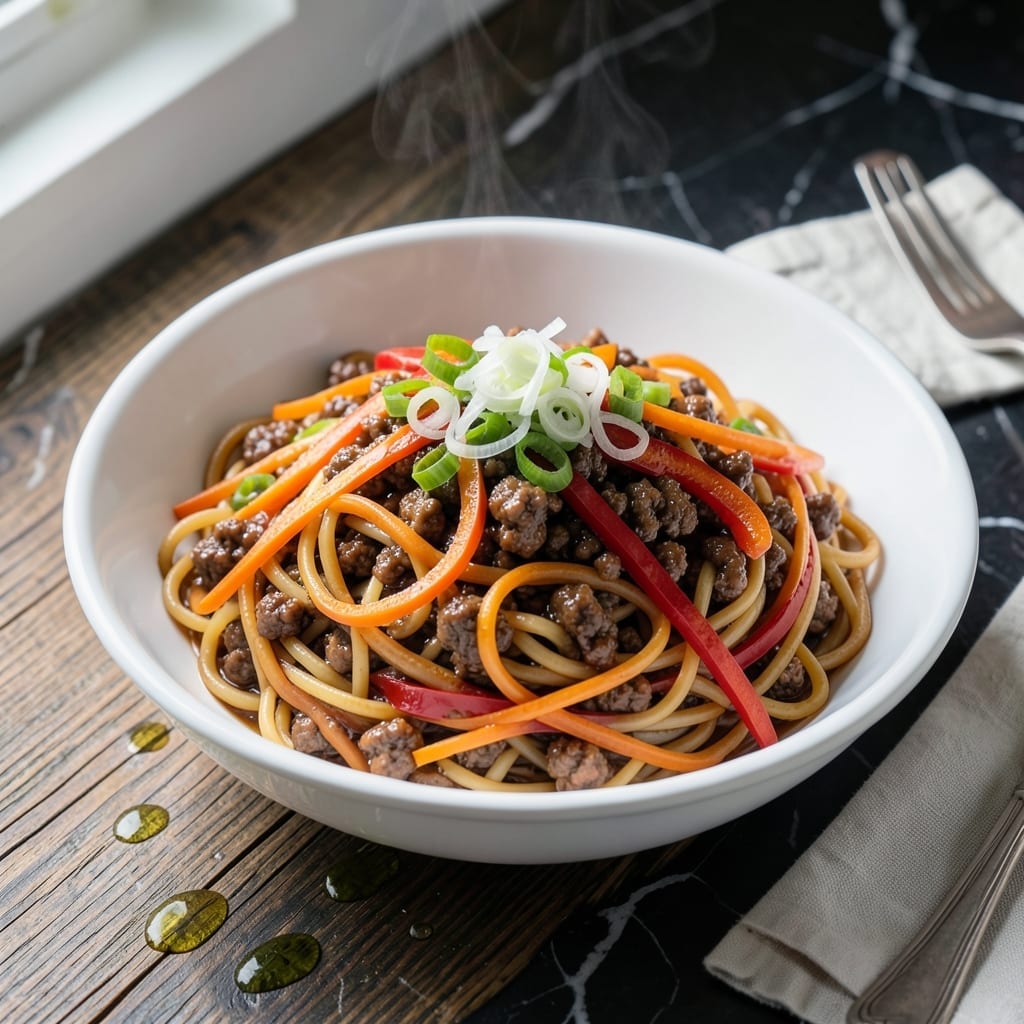
This stir-fry combines tender ground beef and chewy rice noodles in a dish packed with savory depth. I developed this recipe after testing multiple variations to achieve the perfect balance of textures and flavors.
The key is high-heat cooking, which creates a caramelized crust on the beef while keeping the noodles springy. A simple sauce with soy, garlic, and ginger ties everything together with bold umami notes.
You’ll end up with a hearty bowl where each bite delivers rich, meaty flavor and satisfying chew. The noodles soak up the sauce beautifully, making every forkful flavorful.
Ready in 20 minutes, this works as a quick weeknight meal or a filling lunch. Here’s how to make it right.
Ingredients for Ground Beef and Rice Noodles
Ground beef, rice noodles, and bold Asian flavors make this dish sing.
| Ingredient | Amount | Notes |
|---|---|---|
| Ground Beef 🥩 | 1 lb | 80/20 blend preferred for flavor |
| Rice Noodles 🍜 | 8 oz | Dried, flat pad Thai style |
| Soy Sauce 🫒 | ⅓ cup | Low-sodium for control |
| Oyster Sauce 🫒 | 2 tbsp | Vegan oyster sauce if needed |
| Garlic Cloves 🧄 | 4 cloves | Minced for maximum flavor |
| Fresh Ginger Root 🌿 | 1 tbsp | Finely grated, peeled |
| Brown Sugar 🍚 | 1 tbsp | Light or dark works |
| Sesame Oil 🫒 | 1 tbsp | Toasted for depth |
| Green Onions 🧅 | 4 whole | Thinly sliced, white and green parts |
| Red Bell Pepper 🌶️ | 1 whole | Thinly sliced for crunch |
| Carrot 🥕 | 1 whole | Julienned for texture |
| Vegetable Oil 🫒 | 2 tbsp | High smoke point for stir-frying |
| Cornstarch 🌾 | 1 tbsp | For thickening sauce |
| Water 💧 | ¼ cup | For sauce consistency |
The beef is the foundation—80/20 ground chuck gives you that rich, meaty flavor and juicy texture. Whole Foods or Costco have great options, but any grocery store’s standard ground beef works. For the rice noodles, look for the flat pad Thai style (about 1/4-inch wide). Thai Kitchen is a reliable brand if your store carries it.
No oyster sauce? Hoisin sauce at half the amount works in a pinch. Fresh ginger is ideal, but ground ginger at one-quarter the quantity can substitute if you’re desperate. The red bell pepper can be swapped for any color bell pepper (or even snap peas for a different crunch). Low-sodium soy sauce lets you control the saltiness, but regular is fine too.
This keeps 3-4 days in the fridge—reheat with a splash of water to loosen the noodles. Doesn’t freeze well due to the rice noodles’ texture. Leftovers taste even better the next day once the flavors meld.
Why You’ll Love This Recipe
- One Pan Meal: I brown the beef, toss in the noodles and sauces, and it’s done—no extra pots, no stress.
- Umami Bomb: The oyster sauce and soy sauce create this deep, savory flavor that clings to every noodle.
- Weeknight Hero: Honestly, it’s my go-to when I need something hearty and fast after work.
- Stretches Far: Between us, this feeds my family for two nights without breaking the bank.
Step-by-Step Instructions for Ground Beef and Rice Noodles
Here’s how to nail this stir-fry with perfect texture and bold flavor every time.
Step 1: Prep Vegetables and Soak Noodles
Thinly slice the green onions, keeping white and green parts separate. Julienne the carrot into matchsticks and slice the red bell pepper into thin strips. I like to stack the pepper slices and cut them into uniform pieces for even cooking.
Place the 8 oz Rice Noodles in a large bowl and cover with hot water. Soak for 8-10 minutes until pliable but still slightly firm. Drain and rinse with cold water to stop the cooking process. This prevents them from turning mushy when stir-fried later.
Step 2: Cook the Ground Beef and Aromatics
Heat 1 tablespoon Vegetable Oil in a wok or large skillet over high heat until shimmering. Add the 1 lb Ground Beef and cook, breaking it into small pieces with a spatula, for 4-5 minutes until browned and cooked through.
Push the beef to one side and add the remaining 1 tablespoon Vegetable Oil to the empty space. Add the minced 4 cloves Garlic Cloves and 1 tbsp Fresh Ginger Root, stirring constantly for 30 seconds until fragrant. This prevents the aromatics from burning while building layers of flavor.
Step 3: Stir-Fry Vegetables and Combine
Add the prepared red bell pepper and carrot to the wok. Stir-fry for 3-4 minutes until the vegetables are tender-crisp. The carrots should still have a slight bite to them, not be completely soft.
Return the beef to the center of the wok and add the drained Rice Noodles. Toss everything together with tongs for 1-2 minutes to combine. This is where the dish starts to come alive with all those beautiful textures.
Step 4: Create and Incorporate the Sauce
In a small bowl, whisk together the 0.33 cup Soy Sauce, 2 tbsp Oyster Sauce, 1 tbsp Brown Sugar, and 1 tbsp Cornstarch. Slowly whisk in the 0.25 cup Water until smooth. Pour this mixture over the stir-fry in the wok.
Stir everything together and cook for 1-2 minutes until the sauce thickens and coats all the ingredients. The sauce should be glossy and cling to the noodles, not watery. If it thickens too much, add a splash of water to loosen it.
Step 5: Finish and Serve
Remove from heat and stir in the 1 tbsp Sesame Oil and the sliced green onions. The sesame oil adds a nutty depth that ties all the flavors together. Toss one final time to distribute everything evenly.
Divide among bowls and serve immediately while hot. The noodles should be tender with a slight chew, the beef perfectly seasoned, and the vegetables still vibrant. The sauce will be rich, umami-packed, and just the right consistency to coat every bite.
Pro Tips For Making Ground Beef And Rice Noodles
- Brown the Beef Fast: Use high heat and resist the urge to stir constantly—let the beef develop a deep brown crust before breaking it up. I learned this the hard way after years of gray, steamed ground beef.
- Soak Noodles Properly: Cover rice noodles with hot water and let them sit for 8-10 minutes, no longer. They’ll finish cooking in the sauce, and over-soaking turns them to mush.
- Bloom the Garlic: Cook minced garlic in oil for 30 seconds until fragrant, but pull it off before it browns. Burnt garlic ruins the whole dish—I know from experience.
- Sauce Last: Add soy and oyster sauces at the very end of cooking the beef. Adding them too early makes the beef steam instead of sear, and the flavors dull.
Common Mistakes When Making This Recipe
Overcooking the Noodles
Soaking rice noodles too long makes them gummy. Follow the 8-10 minute soak exactly, then rinse with cold water. I learned this the hard way in my tiny Boston kitchen—mushy noodles ruined my first three attempts. 💡
Using Cold Ingredients
Cold ground beef steams instead of searing. Take it out of the fridge 15-20 minutes before cooking. This ensures a proper brown crust forms, which is crucial for that deep, meaty flavor we love in this dish.
Skipping High Heat
Stir-frying requires high heat to achieve that signature wok hei flavor. If your pan isn’t hot enough, the beef will release juices and boil instead of browning. A screaming hot wok makes all the difference.
Overcrowding the Pan
Cook the beef in batches if needed. Overcrowding lowers the temperature, causing the meat to steam. I use my largest skillet or wok to give everything room to develop that beautiful caramelization.
Neglecting the Sauce
Always mix the sauce ingredients before adding to the wok. Adding cornstarch directly can create lumps. Whisk the cornstarch with cold water first for a smooth, glossy sauce that clings perfectly to the noodles.
Forgetting to Taste
Seasonings can vary by brand. Taste before serving and adjust with a splash of soy sauce or pinch of sugar. This final check ensures the flavors are balanced and bold, just like Nonna would want. ✨
Nutrition Facts
Frequently Asked Questions
Can I use a different type of noodle?
Yes, you can substitute with udon or egg noodles if needed. Rice noodles are ideal for their chewy texture, but other noodles will work in a pinch. Adjust cooking times as different noodles have varying doneness points.
How do I make this dish less salty?
Use low-sodium soy sauce and reduce the oyster sauce by half. You can always add more to taste at the end. Balancing flavors is key—taste as you go and adjust gradually.
Can I prepare this in advance?
Cook the noodles and prep the vegetables ahead, but keep them separate. Stir-fry everything together just before serving to maintain the perfect texture. Leftovers keep 3-4 days in the fridge.

- Ground Beef Rice and Beans Recipe: Slow-Simmered Savory Harmony - October 17, 2026
- Guyanese Fried Rice Recipe: Caribbean Spice With Wok-Charred Aromatics - October 17, 2026
- Hakka Thunder Tea Rice Recipe: Wok-Charred Herbal Infusion - October 17, 2026