
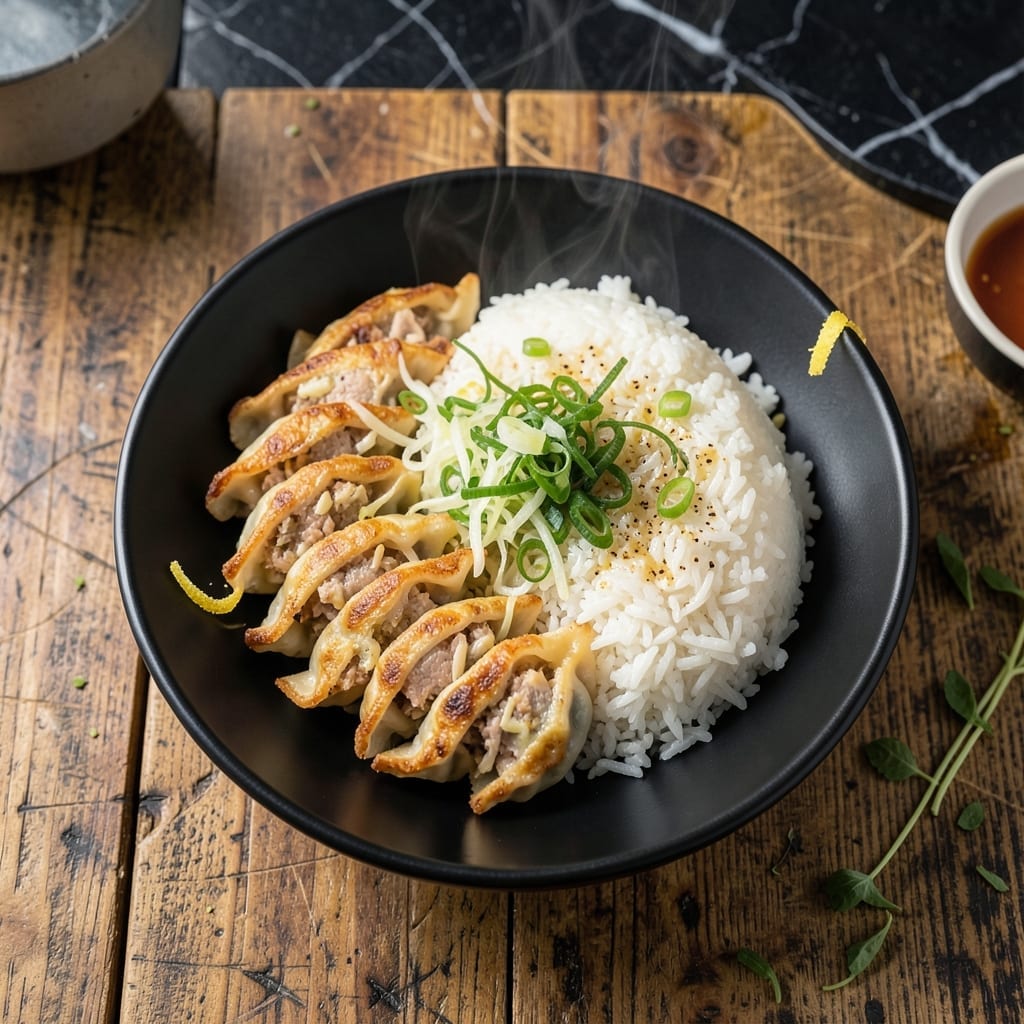
There’s nothing quite like the comfort of pan-seared gyoza with perfectly steamed rice for a satisfying meal. This dish brings together crispy, golden dumplings and fluffy rice that soak up every flavorful bite.
I’ve refined this method to ensure the gyoza develop a crisp bottom while staying juicy inside, paired with rice cooked to ideal tenderness. It’s a match made for cozy dinners at home.
Ingredients for Gyoza and Rice
Crispy dumplings and fluffy rice come together for ultimate comfort in this dish.
| Ingredient | Amount | Notes |
|---|---|---|
| Ground Pork 🥩 | 1 lb | Or substitute ground chicken or turkey |
| Gyoza Wrappers 🥟 | 40 pieces | Round dumpling wrappers, thawed if frozen |
| Napa Cabbage 🥬 | 2 cups | Finely shredded and salted |
| Green Onions 🧅 | 4 whole | Thinly sliced, white and green parts separated |
| Garlic Cloves 🧄 | 3 cloves | Minced for filling |
| Fresh Ginger 🌿 | 1 tbsp | Grated or finely minced |
| Soy Sauce 🫒 | 2 tbsp | Low-sodium preferred for filling |
| Sesame Oil 🫒 | 1 tsp | Toasted sesame oil for depth |
| Jasmine Rice 🍚 | 2 cups | Uncooked, rinsed before cooking |
| Neutral Oil 🫒 | 3 tbsp | For pan-searing gyoza (avocado or vegetable oil) |
| Rice Vinegar 💧 | 1 tbsp | For dipping sauce |
| Chili Oil 🌶️ | 1 tsp | Optional for heat in dipping sauce |
| Water 💧 | ¼ cup | For sealing gyoza and steaming |
| Salt 🧂 | 1 tsp | Divided for filling and rice |
| Black Pepper 🌶️ | ½ tsp | Freshly ground |
The pork is the foundation of the gyoza filling—opt for 80/20 ground pork for the best fat-to-meat ratio, ensuring juicy dumplings. Asian grocery stores carry authentic gyoza wrappers, but most supermarkets stock them in the freezer section (just thaw before using). For the cabbage, Napa is ideal for its mild sweetness, but regular green cabbage works in a pinch. Always salt and drain the cabbage to prevent soggy gyoza.
No pork? Ground chicken or turkey are excellent alternatives, though they lean slightly drier—add an extra teaspoon of sesame oil to compensate. For a vegetarian twist, mushrooms and tofu mimic the texture beautifully. If you can’t find gyoza wrappers, wonton wrappers can be cut into circles (though they’re thicker). The rice vinegar in the dipping sauce can be swapped for apple cider vinegar if needed.
Store uncooked gyoza on a floured tray in the fridge for up to 24 hours before cooking. Cooked gyoza keep in the fridge for 3-4 days and freeze beautifully for 1 month. Reheat in a skillet with a splash of water to revive the crisp bottom.
Why You’ll Love This Recipe
- One Pan Meal: I can crisp the gyoza and steam the rice in the same skillet. Honestly, less cleanup than takeout containers.
- Garlic-Pork Magic: That sizzle when the pork and garlic hit the pan? It fills the kitchen with the most intoxicating smell.
- Feeds a Crowd: My whole family devours these—even the picky one who normally skips veggies asks for seconds of the cabbage filling.
- Leftovers? Yes Please: The dumplings reheat beautifully in a dry pan, and the rice soaks up any leftover dipping sauce for lunch the next day.
Step-by-Step Instructions for Gyoza and Steamed Rice
Master the technique for perfectly crisp-bottomed dumplings served with fluffy jasmine rice.
Step 1: Prepare the Gyoza Filling
In a large bowl, combine 1 lb Ground Pork, 2 cups Napa Cabbage, the white parts of 4 whole Green Onions, 3 cloves Garlic Cloves, and 1 tbsp Fresh Ginger. I use my hands for this—it gives you the best control over texture.
Add 2 tbsp Soy Sauce, 1 tsp Sesame Oil, 0.5 tsp Black Pepper, and ½ tsp Salt (reserving the other half for the rice). Mix thoroughly until the filling becomes slightly sticky. This consistency helps it adhere to the gyoza wrappers and prevents dry dumplings.
Step 2: Assemble the Gyoza
Place a gyoza wrapper in your palm and add 1 tablespoon of filling to the center. Dip your finger in 0.25 cup Water and moisten the edge of the wrapper—this acts as the glue for sealing.
Fold the wrapper in half to create a half-moon shape, then pleat the edges by pinching small folds along the sealed side. Press firmly to ensure a tight seal that prevents filling from leaking during cooking. Repeat with remaining 40 pieces Gyoza Wrappers and filling, keeping finished dumplings covered with a damp towel to prevent drying.
Step 3: Pan-Sear and Steam the Gyoza
Heat 2 tbsp Neutral Oil in a large non-stick skillet with a lid over medium-high heat. When the oil shimmers, arrange the gyoza in a single layer, flat side down. Cook undisturbed for 3-4 minutes until the bottoms turn golden brown.
Carefully add ¼ cup Water to the pan and immediately cover with the lid. Reduce heat to medium and steam for 6-8 minutes until the water has evaporated and the wrappers are translucent. Remove the lid and cook for an additional 1-2 minutes to crisp the bottoms again.
Step 4: Cook the Jasmine Rice
Rinse 2 cups Jasmine Rice under cold water until the water runs clear. In a medium saucepan, combine the rice with 2½ cups water (use the remaining ½ tsp Salt) and bring to a boil over high heat.
Once boiling, reduce heat to low, cover, and simmer for 15 minutes. Remove from heat and let it rest, covered, for 10 minutes. Fluff with a fork before serving—this releases steam and prevents clumping.
Step 5: Prepare the Dipping Sauce and Serve
While the rice cooks, whisk together 1 tbsp Rice Vinegar, 1 tbsp Soy Sauce, and 1 tsp Chili Oil in a small bowl. Adjust the heat level by adding more or less chili oil to taste.
Serve the gyoza hot, crispy side up, alongside the steamed jasmine rice and dipping sauce. Garnish with the reserved green onion tops for a fresh finish. The contrast of textures—crispy bottoms, tender filling, and fluffy rice—creates the ultimate comfort experience.
Pro Tips For Making Gyoza And Rice
- Chill the Filling: After mixing the pork, cabbage, and aromatics, refrigerate the filling for 20-30 minutes. I learned this the hard way—it makes wrapping way easier and prevents the wrappers from tearing.
- Salt the Cabbage: Sprinkle the shredded napa cabbage with 1 teaspoon of salt, let it sit for 10 minutes, then squeeze out all the water. Sounds tedious, but it keeps your gyoza from turning into soggy dumplings.
- Seal with Cornstarch: Mix a little cornstarch with water to use as a “glue” for the gyoza edges—about 1 teaspoon cornstarch to 2 tablespoons water. My grandmother swore by this, and it beats egg wash for a crisp, tight seal.
- Hot Pan, Cold Oil: Heat the pan until it’s almost smoking, then add the oil and immediately place the gyoza in. After burning three batches, I finally figured out this is how you get that perfect golden crust without sticking.
Common Mistakes When Making Great gyoza and rice
Overfilling the Wrappers
Using too much filling causes gyoza to burst during cooking. Stick to 1 tablespoon per wrapper and pleat edges tightly. I learned this the hard way after my first batch exploded in the pan. 💡
Skipping the Cabbage Drain
Salt and drain 2 cups Napa Cabbage for 10 minutes to remove excess moisture. Un-drained cabbage makes soggy dumplings and weak seals. Press between paper towels for best results.
Crowding the Pan
Give each dumpling ½ inch of space in the skillet. Crowding causes steaming instead of crisping. Cook in batches if needed—I never exceed 15 gyoza in my 12-inch pan.
Peeking Too Soon
Resist lifting the lid during the 6-8 minute steam. Early peeking releases steam and prevents proper cooking. The wrappers should turn translucent when ready.
Underseasoned Rice
Don’t forget the remaining ½ tsp Salt in the rice water. Bland rice undermines the whole dish. I stir it in before boiling for even distribution.
Dry Dipping Sauce
Adjust your sauce ratios—1 tbsp Rice Vinegar to 1 tbsp Soy Sauce creates balance. Too much vinegar overpowers; too little makes it flat. Add chili oil last to control heat. 🌶️
Nutrition Facts
Frequently Asked Questions
Can I use frozen gyoza wrappers?
Yes, just thaw them completely in the fridge for 2-3 hours first. Keep them covered with a damp towel while working to prevent drying.
What’s the best rice-to-water ratio?
For jasmine rice, use 1:1.25 rice-to-water ratio. For 2 cups rice, that means 2½ cups water for perfect fluffiness.
How do I store leftover gyoza?
Cool completely, then refrigerate in an airtight container for up to 3 days. Reheat in a skillet with a splash of water to restore crispness.
Can I bake gyoza instead of pan-frying?
Yes, brush with oil and bake at 400°F for 12-15 minutes. They won’t be as crispy, but it’s a healthier option.

- Rice Pudding Recipe With Eggs and Milk: Old-Fashioned Custard-Style Comfort - September 30, 2026
- Rice Noodle Sauce Recipe: Bold Umami Depth for Authentic Stir-Fry - September 30, 2026
- Rice Pilaf Recipe: Fragrant Basmati With Toasted Vermicelli - September 30, 2026