
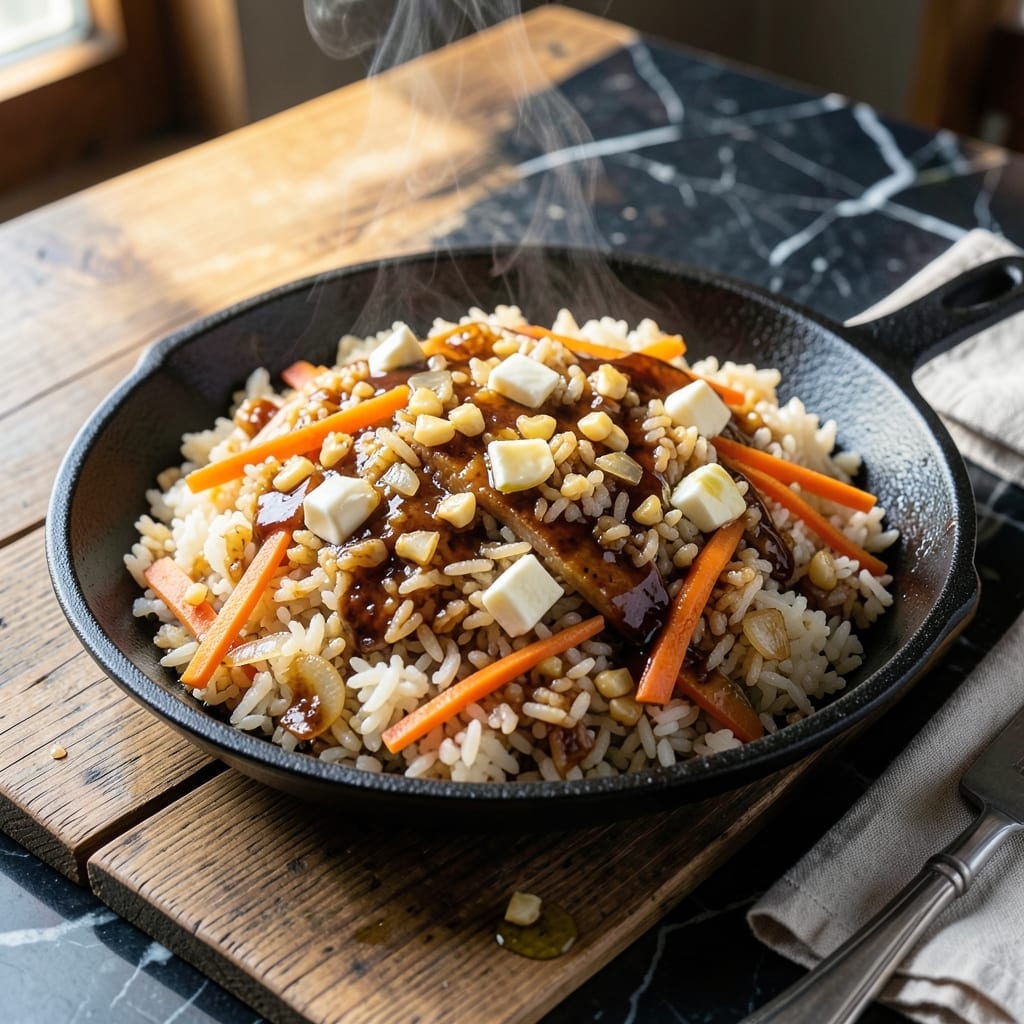
This hibachi-style rice delivers the signature smoky, savory flavor of Japanese steakhouse cooking right to your kitchen. The technique is simple but precise, using high heat to create that coveted charred taste and texture.
What sets this dish apart is the combination of butter, soy sauce, and a touch of garlic, which transforms plain rice into something extraordinary. Fresh vegetables add color and crunch, making it a complete meal in one pan.
You’ll achieve restaurant-quality results with tender rice, slightly caramelized edges, and a rich umami depth that pairs perfectly with any protein. The process takes less than 30 minutes from start to finish.
The final touch is a sprinkle of sesame seeds for nutty aroma and visual appeal. This method works reliably every time with standard kitchen tools.
Ingredients for Habachi Rice
Standard kitchen staples plus fresh vegetables create this restaurant-quality hibachi-style dish.
| Ingredient | Amount | Notes |
|---|---|---|
| Cooked White Rice 🍚 | 4 cups | Day-old, chilled preferred |
| Unsalted Butter 🧈 | 4 tbsp | Divided for cooking and finishing |
| Soy Sauce 🫒 | ⅓ cup | Low-sodium preferred |
| Garlic Cloves 🧄 | 3 cloves | Minced finely |
| Onion 🧅 | ½ whole | Diced, medium yellow |
| Carrots 🥕 | 2 whole | Julienned or diced |
| Zucchini 🥒 | 1 whole | Diced into small pieces |
| Mushrooms 🍄 | 1 cup | Sliced, white or cremini |
| Green Onions 🧅 | ½ cup | Sliced, for garnish |
| Sesame Seeds 🌰 | 2 tbsp | Toasted for garnish |
| Vegetable Oil 🫒 | 2 tbsp | High smoke point for wok |
| Salt 🧂 | ½ tsp | Kosher or sea salt |
| Black Pepper 🌶️ | ¼ tsp | Freshly ground |
The rice is critical here. Day-old, chilled rice from your fridge works best—freshly cooked rice can turn mushy. For the soy sauce, Kikkoman Low-Sodium is my go-to for consistent flavor without overpowering saltiness. The butter should be unsalted so you control the seasoning. Most supermarkets carry everything you need, but Asian markets often have better-quality soy sauce options.
No day-old rice? Cook fresh rice and spread it on a tray to cool and dry for 20 minutes. Swap carrots for bell peppers if you prefer a sweeter crunch. Zucchini can be replaced with eggplant for a meatier texture. For a gluten-free version, tamari works perfectly in place of soy sauce. The mushrooms can be any variety, but cremini add more depth.
Leftovers keep well in the fridge for 3-4 days. Reheat in a wok or skillet with a splash of water to restore moisture. For best results, avoid microwaving as it can make the rice soggy. The sesame seeds can be stored in your pantry for 6 months if kept in an airtight container.
Why You’ll Love This Recipe
- 20-Minute Meal: I can have this on the table faster than takeout arrives—just rice, butter, and a quick sizzle of garlic and onion.
- Buttery Umami Bomb: The soy sauce and butter create this rich, savory depth that makes every bite taste like the best hibachi restaurant.
- Feeds a Hungry Crowd: Honestly, it’s my go-to for game nights or when the kids bring friends over—cheap, filling, and everyone cleans their plate.
- Even Better Tomorrow: Leftovers taste just as good reheated, and I love sneaking a bite straight from the fridge when no one’s looking.
Step-by-Step Instructions for Hibachi Rice
Here’s the method. Straightforward, tested, works every time.
Step 1: Prepare the Vegetables and Aromatics
Finely mince the 3 cloves garlic cloves and dice the 0.5 whole onion into small, even pieces. This ensures they cook quickly and distribute flavor evenly throughout the dish.
Julienne or dice the 2 whole carrots, dice the 1 whole zucchini into small pieces, and slice the 1 cup mushrooms. Keep all vegetables uniform in size so they cook at the same rate. Slice the 0.5 cup green onions for garnish and set aside.
Step 2: Sauté Vegetables Until Tender
Heat a wok or large skillet over medium-high heat and add the 2 tbsp vegetable oil. Once shimmering, add the diced onion, carrots, zucchini, and mushrooms. Stir-fry for 5-6 minutes until the vegetables are tender-crisp and the onions are translucent.
Add the minced garlic and cook for an additional 30 seconds until fragrant. Be careful not to burn the garlic, as it can turn bitter quickly. Season with 0.5 tsp salt and 0.25 tsp black pepper to enhance the flavors.
Step 3: Incorporate Rice and Soy Sauce
Add the 4 cups cooked white rice to the wok, breaking up any clumps with your spatula. The rice should be day-old or chilled to prevent it from becoming mushy during cooking. Stir-fry for 2-3 minutes until the rice is heated through and slightly toasted.
Create a well in the center of the wok and add 2 tbsp unsalted butter. Once melted, pour in the 0.33 cup soy sauce and stir to coat the rice and vegetables evenly. Cook for another 2 minutes until everything is well combined and the rice has a light golden color.
Step 4: Finish and Garnish
Taste and adjust seasoning if needed. If you prefer a stronger umami flavor, add a little more soy sauce, but be mindful of the salt content. Stir in the remaining 2 tbsp unsalted butter for a rich, glossy finish.
Remove from heat and transfer to a serving dish. Garnish with the sliced 0.5 cup green onions and 2 tbsp sesame seeds for added texture and visual appeal. Serve immediately while hot, with the vegetables evenly distributed throughout.
Pro Tips For Making Habachi Rice
- Use Cold Rice: I learned this the hard way—fresh, warm rice turns mushy. Spread leftover rice on a tray and refrigerate for at least 2 hours so it fries up fluffy and separate.
- Mince the Garlic Fine: Sounds obvious, but big garlic chunks burn fast in the hot pan. Grate or finely mince 2-3 cloves so every bite has that sweet, nutty flavor without bitterness.
- Crank the Heat High: Hibachi rice needs a screaming-hot pan to get that signature slight char. If your butter isn’t sizzling when the rice hits, it’s not hot enough—turn it up.
- Salt the Butter First: After burning a batch, I started salting the melted butter before adding rice. Use ¼ teaspoon per 2 tablespoons of butter—it seasons evenly instead of just sitting on top.
Serving Suggestions for Leftovers
Family-Style Plating
Serve this dish on a large, pre-warmed platter with the rice mounded slightly in the center. Arrange the vegetables in a ring around the base for a restaurant-style presentation. I love how the colors pop against the golden rice.
Individual Portions
For a more intimate dining experience, use shallow bowls and create a small well in the center of each rice serving. This helps contain the vegetables and makes the dish look more intentional. The butter and soy sauce create a beautiful sheen.
Protein Pairings
This rice pairs perfectly with hibachi chicken or shrimp cooked in the same wok. Simply push the rice to one side, add a bit more oil, and cook your protein with the same seasoning. The flavors will meld beautifully. 🔥
Garnish Placement
Sprinkle the green onions and sesame seeds just before serving—they lose their freshness quickly. I like to add a few extra sesame seeds in a small pile on top for visual impact. The contrast of dark and light colors is stunning.
Side Accompaniments
A simple miso soup or edamame makes a great starter. The light, clean flavors balance the richness of the rice. For a complete meal, add a side of steamed broccoli with a drizzle of the same soy-butter mixture. ✨
Temperature Note
Serve immediately while hot—the texture changes as it cools. If preparing for a crowd, keep the rice warm in the wok on low heat for up to 15 minutes, stirring occasionally. The edges will develop even more character.
Nutrition Facts
Frequently Asked Questions
Can I use fresh rice instead of day-old?
Yes, but spread freshly cooked rice on a tray to cool and dry for 20 minutes first. This prevents mushiness when stir-frying.
What vegetables work best?
Carrots, zucchini, and mushrooms are classic. Swap in bell peppers or eggplant for variety. Keep pieces small and uniform for even cooking.
How do I prevent soggy rice?
Use high heat and avoid overcrowding the pan. Cook in batches if needed, and keep the rice moving constantly.
Can I make this gluten-free?
Replace soy sauce with tamari (naturally gluten-free). Check all labels to ensure no cross-contamination.

- Rice Pudding Recipe With Eggs and Milk: Old-Fashioned Custard-Style Comfort - September 30, 2026
- Rice Noodle Sauce Recipe: Bold Umami Depth for Authentic Stir-Fry - September 30, 2026
- Rice Pilaf Recipe: Fragrant Basmati With Toasted Vermicelli - September 30, 2026