
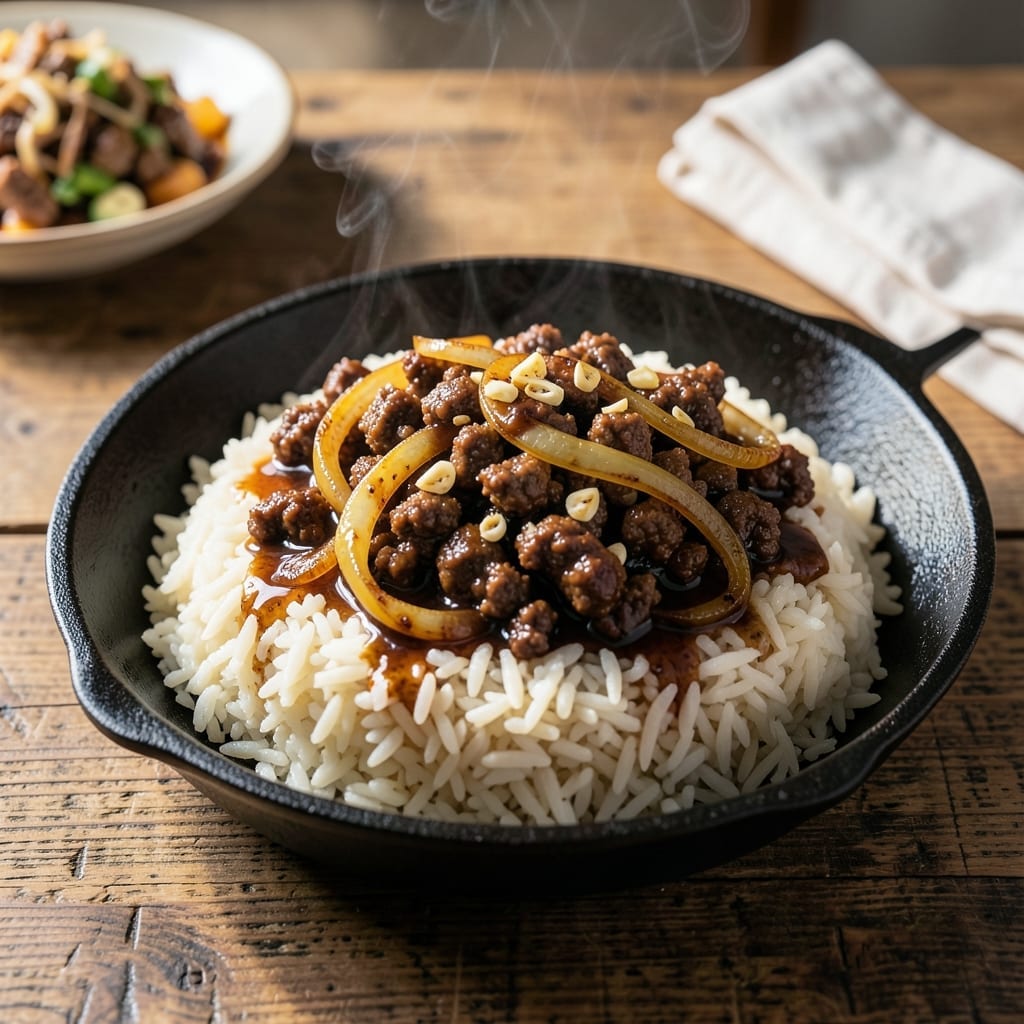
This one-pot creation combines ground beef, rice, and soy sauce into a deeply satisfying meal with minimal cleanup. The soy sauce infuses every bite with rich umami flavor while the rice soaks up all the savory juices.
In 30 minutes, you’ll have a complete dish that’s hearty, flavorful, and perfect for busy weeknights. The secret is letting the ingredients cook together to build layers of taste in every serving.
Ingredients for Hamburger Rice Soy Sauce
Ground beef, rice, and soy sauce come together for a flavorful one-pot meal.
| Ingredient | Amount | Notes |
|---|---|---|
| Ground Beef 🥩 | 1 lb | 80/20 lean-to-fat ratio preferred |
| Long-Grain White Rice 🍚 | 1 ½ cups | Uncooked, rinsed before use |
| Soy Sauce 🫕 | ½ cup | Low-sodium or regular variety |
| Beef Broth 🍲 | 2 ½ cups | Low-sodium preferred for control |
| Yellow Onion 🧅 | 1 whole | Medium-sized, finely diced |
| Garlic Cloves 🧄 | 3 cloves | Minced for maximum flavor |
| Worcestershire Sauce 🫕 | 1 tbsp | Adds depth to umami profile |
| Tomato Paste 🍅 | 2 tbsp | For richness and color |
| Vegetable Oil 🫒 | 2 tbsp | For browning ground beef |
| Kosher Salt 🧂 | 1 tsp | Adjust to taste after cooking |
| Black Pepper 🌶️ | ½ tsp | Freshly ground preferred |
| Green Onions 🧅 | ½ cup | Thinly sliced, for garnish |
| Sesame Oil 🫒 | 1 tsp | Toasted, for finishing |
The ground beef is the foundation here. 80/20 ratio gives the best flavor and juiciness—Costco or Sam’s Club have great options in bulk. For the rice, long-grain white absorbs the soy sauce perfectly. Jasmine or basmati work well too. The soy sauce should be fresh; check the label for no added preservatives if you’re picky about quality.
No Worcestershire? Extra soy sauce plus a dash of vinegar gets you close. Out of tomato paste? Ketchup in a pinch (use half the amount). Swap yellow onion for white or red if that’s what’s on hand. The beef broth can be homemade or store-bought—Better Than Bouillon is a solid choice for depth without the canned taste.
Leftovers keep 4-5 days in the fridge, and the flavors actually improve overnight. Freezes well for up to 3 months—just thaw in the fridge before reheating. The green onions are best added fresh, so save those for serving day.
Why You’ll Love This Recipe
- One Pan Wonder: I brown the beef, sauté the onion, then let the rice soak up all that soy sauce and broth flavor—just one pot to wash.
- Umami Bomb: The soy sauce caramelizes with the beef and onions, creating this deep, savory richness that makes the rice taste almost meaty.
- Feeds a Crowd: I double the batch and it reheats beautifully for lunches all week—my husband swears it tastes better the next day.
- Budget Hero: Ground beef and rice stretch so far, and that soy sauce adds big flavor without the cost. Honestly, it’s my cheapest comfort meal.
Step-by-Step Instructions for Hamburger Rice Soy Sauce
This one-pot method delivers maximum flavor with minimal cleanup and effort.
Step 1: Brown the Ground Beef with Aromatics
Heat the 2 tablespoons vegetable oil in a large pot or deep skillet over medium-high heat. Add the 1 lb ground beef and cook, breaking it up with a wooden spoon, for 5-6 minutes until browned and crumbly.
Stir in the finely diced yellow onion and cook for another 3 minutes until the onion softens and becomes translucent. Add the minced garlic cloves and cook for 30 seconds until fragrant. This builds the flavor foundation for the entire dish.
Step 2: Toast the Rice and Build Flavor Layers
Add the 1.5 cups long-grain white rice to the pot and stir to coat the grains with the beef fat and aromatics. Toast the rice for 2 minutes until it turns slightly opaque and begins to smell nutty. This step prevents the rice from turning mushy.
Stir in the 2 tablespoons tomato paste and cook for 1 minute to deepen its flavor. Then add the 1 tablespoon Worcestershire sauce, 0.5 cup soy sauce, 1 teaspoon kosher salt, and 0.5 teaspoon black pepper. These umami-rich ingredients create the signature savory profile.
Step 3: Add Liquids and Simmer Until Tender
Pour in the 2.5 cups beef broth and stir to combine. Bring the mixture to a boil, then reduce the heat to low, cover the pot, and let it simmer for 18-20 minutes. Resist the urge to stir during this time—it disrupts the rice’s cooking process.
After 18 minutes, check the rice. It should be tender and the liquid mostly absorbed. If the rice is still firm or the mixture is too dry, add ¼ cup water and cook for another 2-3 minutes until the rice is fully cooked.
Step 4: Rest and Finish with Fresh Garnishes
Remove the pot from heat and let it sit covered for 5 minutes. This allows the rice to steam and absorb any remaining liquid, ensuring even texture throughout.
Fluff the rice gently with a fork, then drizzle with the 1 teaspoon sesame oil and stir to incorporate. Top with the 0.5 cup green onions just before serving. The green onions add a fresh, bright contrast to the rich, savory dish.
Pro Tips For Making Hamburger Rice Soy Sauce
- Brown the Beef Well: Cook the ground beef until deeply browned, not just gray—this builds a rich flavor base that soy sauce can’t replicate. I learned this the hard way after serving bland batches to skeptical friends.
- Rinse the Rice First: Give the long-grain white rice a quick rinse to remove excess starch, so it absorbs the beef broth and soy sauce better instead of turning gummy.
- Skip Over-Salting: Soy sauce is salty enough—taste the mixture before adding extra salt, or you’ll end up with a dish that’s unpleasantly briny. After ruining a pot this way, I now hold back until the end.
- Bloom the Onions: Cook the yellow onions until soft and slightly caramelized before adding the beef—it sweetens the dish and balances the saltiness of the soy sauce. Sounds like extra work, but it’s worth the 5 minutes.
Regional Styles of hamburger rice soy sauce
Japanese-Inspired Style
For a Japanese twist, swap the Worcestershire for 1 tbsp mirin and add 1 tsp grated ginger with the garlic. Use short-grain rice for a stickier texture. Top with soft-boiled eggs and nori strips for an authentic touch. 🗺️
Korean Fusion
Add 2 tbsp gochujang paste with the tomato paste for a spicy kick. Replace green onions with 1 cup chopped kimchi and sprinkle toasted sesame seeds on top. The fermented flavors deepen the umami profile.
Chinese Takeout Style
Increase soy sauce to ¾ cup and add 1 tbsp oyster sauce and 1 tsp five-spice powder. Stir in 1 cup frozen peas and carrots with the broth for a classic takeout feel. Finish with a drizzle of chili oil.
Hawaiian Plate Lunch
Prepare the base recipe, then serve with sliced Spam and pineapple chunks on the side. The sweetness balances the savory perfectly. Add 1 tbsp brown sugar to the soy sauce for a local touch.
Filipino Adobo Style
Replace beef broth with 2 cups coconut milk and add 3 bay leaves and 1 tbsp vinegar. The result is creamy with a tangy finish. Serve with steamed bok choy for a complete meal.
Thai Coconut Version
Use 1 can coconut milk instead of beef broth and add 1 tbsp red curry paste with the aromatics. Garnish with fresh Thai basil and lime wedges. The creamy coconut perfectly complements the soy sauce. ✨
Nutrition Facts
Frequently Asked Questions
Can I use a different type of rice?
Yes! Long-grain white works best, but you can use basmati or jasmine for similar results. Avoid instant rice as it may turn mushy. For a stickier texture, try short-grain rice but reduce broth by ¼ cup.
What if my rice is still undercooked?
If the rice is firm after 20 minutes, add ¼ cup water or broth and cook covered for another 5 minutes. Keep the heat low to prevent burning. Resist Stirring to maintain texture.
Can I make this dish ahead of time?
Store in an airtight container in the fridge for up to 5 days. Flavors deepen overnight. Reheat with a splash of water to restore moisture.

- Rice Pudding Recipe With Eggs and Milk: Old-Fashioned Custard-Style Comfort - September 30, 2026
- Rice Noodle Sauce Recipe: Bold Umami Depth for Authentic Stir-Fry - September 30, 2026
- Rice Pilaf Recipe: Fragrant Basmati With Toasted Vermicelli - September 30, 2026