
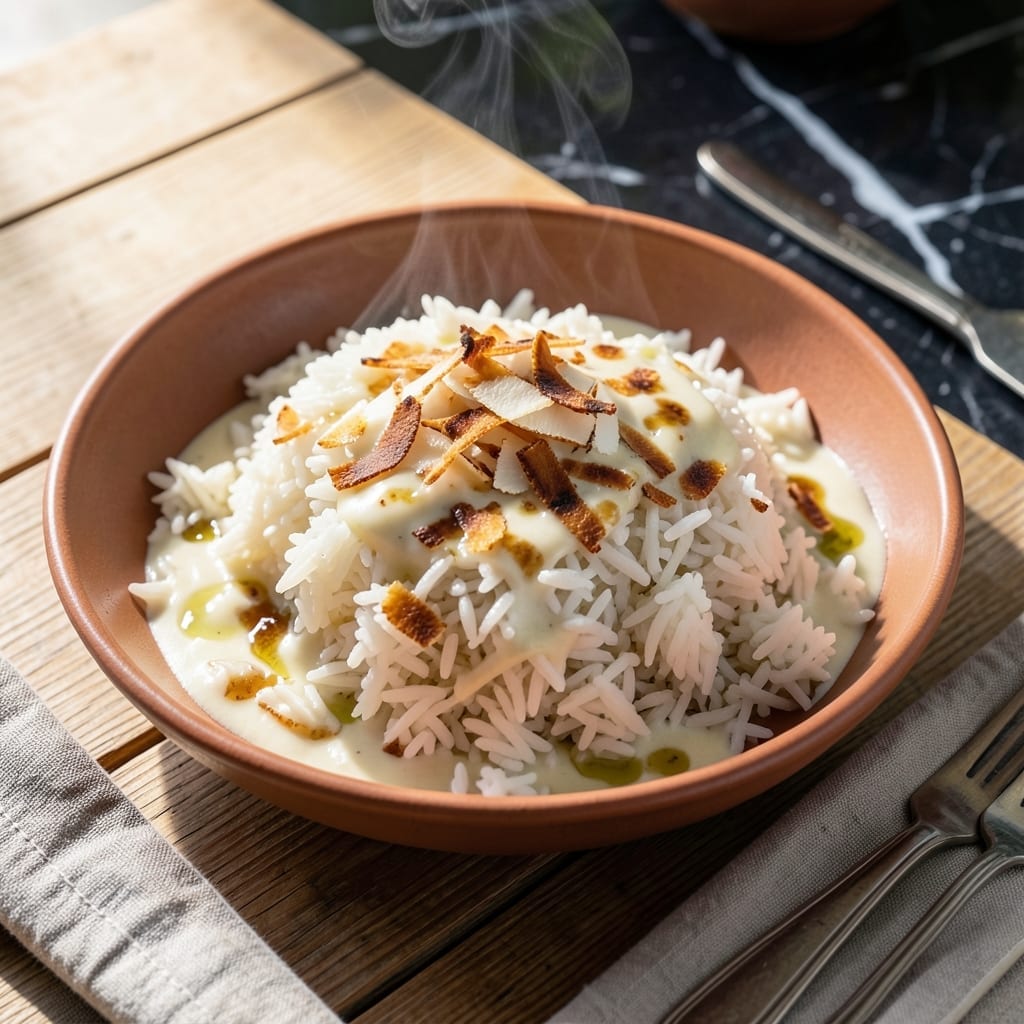
This tropical-inspired rice dish brings the flavors of Hawaii to your kitchen with fluffy grains and rich coconut aroma. The secret lies in using both coconut milk and water for the perfect balance of creaminess and lightness.
With minimal effort and simple ingredients, you’ll create a side that pairs beautifully with grilled proteins or stands alone as a fragrant main. The result is always comforting, always delicious.
Ingredients for Hawaiian Coconut Rice
Simple pantry staples and fresh tropical accents create this fragrant dish.
| Ingredient | Amount | Notes |
|---|---|---|
| Jasmine Rice 🍚 | 2 cups | Rinsed until water runs clear |
| Full-Fat Coconut Milk 🥥 | 1 can | 13.5 oz can, well-shaken |
| Water 💧 | 1 ½ cups | For balancing coconut richness |
| Coconut Sugar 🍚 | 1 tbsp | Or substitute brown sugar |
| Sea Salt 🧂 | ½ tsp | Fine grain preferred |
| Unsweetened Shredded Coconut 🥥 | ½ cup | Toasted for garnish (optional) |
| Fresh Lime 🍈 | 1 whole | Zested and juiced |
| Fresh Cilantro 🌿 | ¼ cup | Chopped, for garnish |
| Macadamia Nuts 🌰 | ¼ cup | Chopped, for topping |
| Green Onions 🧅 | 3 whole | Thinly sliced for garnish |
| Garlic Cloves 🧄 | 2 cloves | Minced for depth of flavor |
The coconut milk is key here—full-fat gives you that rich, creamy texture that defines this dish. I always grab Thai Kitchen or Native Forest brands from the international aisle at Kroger. Jasmine rice is traditional, but basmati works if that’s what you have on hand. Just avoid instant rice—it’ll turn to mush. The shredded coconut for topping? Look for unsweetened in the baking section.
No coconut milk? Coconut cream thinned with water works in a pinch. Out of jasmine rice? Long-grain white rice is your next best bet. The lime can be swapped for lemon (less authentic but still bright). Skip the macadamia nuts if they’re too pricey—cashews or almonds add a similar crunch. For a sweeter touch, bump the coconut sugar to 2 tablespoons.
Rice is best served fresh, but leftovers reheat nicely with a splash of water. Store in an airtight container for up to 4 days in the fridge. The toasted coconut and nuts keep for 2 weeks at room temperature—make extra for future batches.
Why You’ll Love This Recipe
- One Pot Wonder: I toss everything in—jasmine rice, coconut milk, a pinch of salt—and let the rice cooker do the work.
- Rich & Creamy: The full-fat coconut milk makes it so luxuriously smooth, with just a hint of sweetness from the coconut sugar.
- Pairs With Anything: It’s my go-to side for grilled chicken, shrimp, or even just a simple veggie stir-fry.
- Budget Stretcher: A can of coconut milk and a bag of rice feed my whole family for pennies—leftovers taste even better the next day.
Step-by-Step Instructions for Hawaiian Coconut Rice
Here’s how I create perfectly fragrant rice with tropical notes every single time.
Step 1: Rinse and Toast the Jasmine Rice
Place the 2 cups Jasmine Rice in a fine-mesh strainer and rinse under cold water until the water runs completely clear. This removes excess starch that could make your rice gummy rather than fluffy.
In a medium saucepan with a tight-fitting lid, heat the drained rice over medium heat for 2-3 minutes, stirring constantly. You’ll notice the rice becomes slightly translucent and emits a nutty aroma. This toasting step enhances the natural flavor of the jasmine rice.
Step 2: Build the Coconut Infusion
Add the 1 can Full-Fat Coconut Milk, 1.5 cups Water, 1 tbsp Coconut Sugar, 0.5 tsp Sea Salt, and minced 2 cloves Garlic Cloves to the toasted rice. Stir well to combine and dissolve the sugar.
Bring the mixture to a gentle boil over medium-high heat. Watch for small bubbles breaking the surface consistently—that’s your signal it’s ready. The coconut milk will create a rich, creamy base that transforms simple rice into something extraordinary.
Step 3: Simmer to Fluffy Perfection
Once boiling, immediately reduce heat to low, cover the saucepan with its lid, and let it simmer for 15-18 minutes. Resist the urge to peek during this time—releasing steam interrupts the cooking process.
After the time has elapsed, remove from heat and let it sit, still covered, for an additional 10 minutes. This resting period allows the rice to steam in its own moisture, ensuring every grain is perfectly tender and separate.
Step 4: Fluff and Finish with Tropical Garnishes
Gently fluff the rice with a fork, breaking up any clumps while maintaining the individual grain structure. The rice should be tender with a slight chew, and the coconut aroma should be prominent but not overpowering.
Zest and juice the 1 whole Fresh Lime over the rice, then stir gently to distribute. This bright citrus note cuts through the richness of the coconut beautifully. Taste and adjust seasoning if needed—the lime should add vibrancy without overpowering.
Step 5: Garnish and Serve Warm
Transfer the coconut rice to a serving bowl. Top with 0.5 cup Unsweetened Shredded Coconut, chopped 0.25 cup Fresh Cilantro, chopped 0.25 cup Macadamia Nuts, and thinly sliced 3 whole Green Onions.
Serve immediately while warm. The contrast of textures—creamy rice, crunchy nuts, and fresh herbs—creates a perfect bite. The macadamia nuts add a buttery richness that complements the coconut beautifully, while the green onions add a mild, fresh bite.
Pro Tips For Making Hawaiian Coconut Rice
- Rinse the Rice: Always rinse jasmine rice until the water runs clear—this removes excess starch and prevents gummy coconut rice. I learned this the hard way after ending up with a sticky mess.
- Use Full-Fat Only: Skip the light coconut milk; full-fat is non-negotiable for that rich, creamy texture. Sounds obvious, but I once tried the low-fat version and it was watery and sad.
- Simmer Low and Slow: Once it starts bubbling, drop the heat to low and cover it tight. After burning two batches, I finally figured out that high heat turns coconut milk into a bitter, separated disaster.
- Sweeten at the End: Stir in the coconut sugar after cooking—adding it too early can make the rice burn. I was skeptical until I tried it, but now my rice is perfectly sweet every time.
Regional Styles of This Dish
Oahu Island Style
On Oahu, this dish often includes haole koa (Hawaiian salt) for a mineral-rich finish. Locals use freshly grated coconut instead of canned milk when available, creating a more authentic texture. The rice is typically served with kalua pork at luaus. 🌺
Maui Variation
Maui chefs add 1 tsp toasted sesame seeds and 1 tbsp soy sauce to the cooking liquid for an umami depth. The island’s Japanese influence shows in this adaptation, often paired with teriyaki-glazed fish. I love this version for its savory balance.
Big Island Approach
The Big Island prefers a sweeter profile, using 2 tbsp coconut sugar and 1 cinnamon stick during cooking. They also toast the shredded coconut with 1 tsp macadamia nut oil for extra richness. This version pairs wonderfully with grilled mahi-mahi. 💛
Kauai Tradition
Kauai’s version incorporates 1 cup diced pineapple and 1 tbsp minced ginger for a brighter, fruit-forward taste. The pineapple’s acidity cuts through the coconut’s creaminess beautifully. I like to add a pinch of Hawaiian chili pepper for heat.
Modern Fusion
In Honolulu’s food scene, you might find this rice served with miso-glazed eggplant or furikake seasoning. Some chefs even use coconut water instead of plain water for an extra tropical note. The city’s diverse influences create exciting variations.
Nutrition Facts
Frequently Asked Questions
Can I use a different type of rice?
Jasmine rice works best, but long-grain white rice is a good substitute. Avoid instant rice as it may turn mushy. For best results, stick to varieties that hold their shape well.
Why toast the rice first?
Toasting enhances the nutty flavor of the rice and prevents a gummy texture. 2-3 minutes over medium heat is all you need to bring out its natural aroma before adding liquids.
How do I prevent the rice from sticking?
Use a heavy-bottomed pot with a tight lid and resist stirring once boiling. The 10-minute rest after cooking also helps the grains separate naturally.
Can I make this ahead of time?
Yes! Cooked rice stays fresh in an airtight container for 4 days. Reheat with a splash of water to restore moisture and fluffiness.

- Ground Beef Rice and Beans Recipe: Slow-Simmered Savory Harmony - October 17, 2026
- Guyanese Fried Rice Recipe: Caribbean Spice With Wok-Charred Aromatics - October 17, 2026
- Hakka Thunder Tea Rice Recipe: Wok-Charred Herbal Infusion - October 17, 2026