
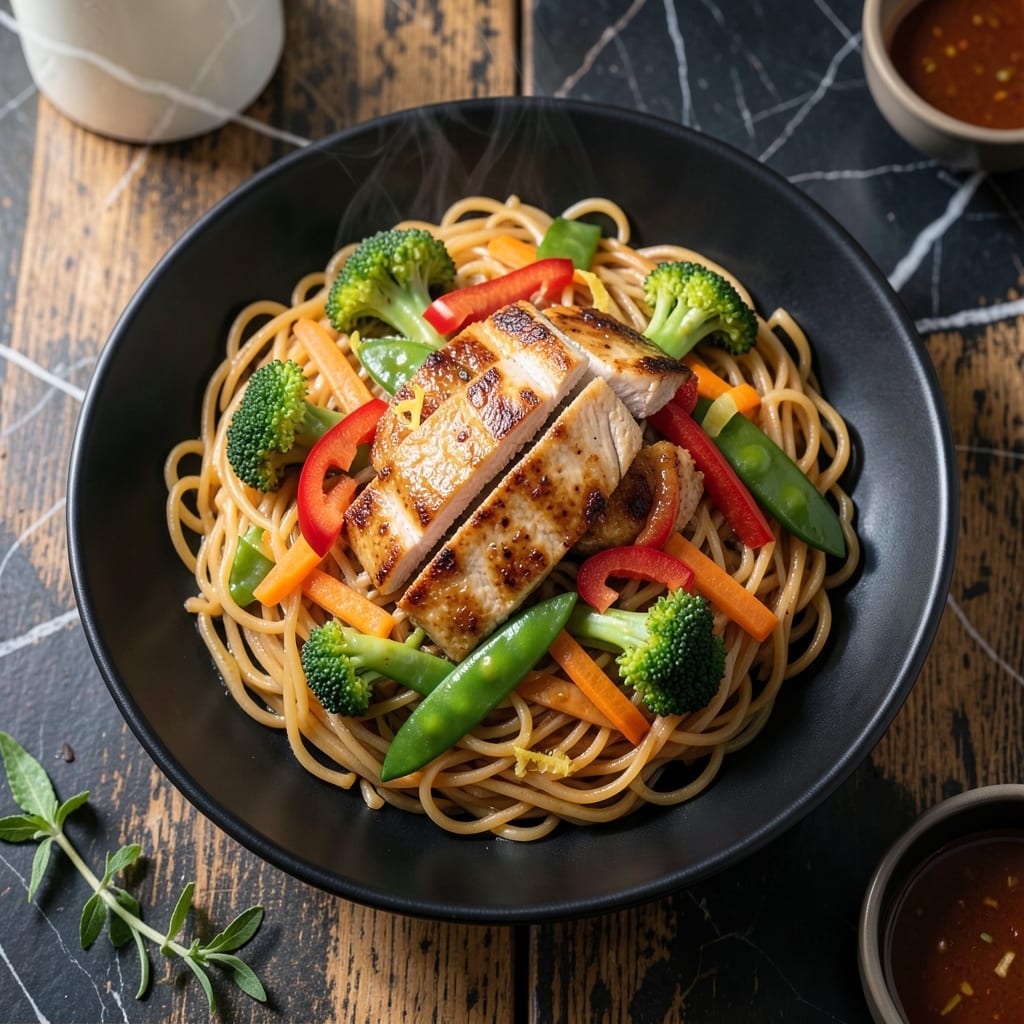
I’ve perfected a lighter take on classic lo mein that doesn’t sacrifice flavor for nutrition. This dish swaps heavy sauces for a low-sodium blend while packing in lean protein and crisp vegetables.
Using fresh chicken breast and an abundance of colorful veggies, this recipe keeps the wok-tossed texture you love with fewer calories. The sauce is light but still deeply savory, coating every strand of noodle without weighing it down.
It’s a balanced meal that comes together quickly, proving healthy eating can be both satisfying and delicious. The key is high heat and constant motion to lock in freshness.
Ready in under 30 minutes, it’s a weeknight solution that feels like a restaurant-quality dish.
Ingredients for Healthy Chicken Lo Mein
Lean protein, crisp veggies, and light sauce make this wok dish come alive.
| Ingredient | Amount | Notes |
|---|---|---|
| Chicken Breast 🍗 | 1 ¼ lb | Boneless, skinless, thinly sliced |
| Lo Mein Noodles 🍜 | 12 oz | Fresh or dried, cooked al dente |
| Red Bell Pepper 🌶️ | 1 whole | Thinly sliced into strips |
| Broccoli Crowns 🥦 | 2 cups | Cut into small florets |
| Carrots 🥕 | 2 whole | Julienned or thinly sliced |
| Snap Peas 🌱 | 1 cup | Fresh or frozen, thawed |
| Garlic Cloves 🧄 | 4 cloves | Minced finely |
| Fresh Ginger 🌿 | 1 tbsp | Grated or minced |
| Low-Sodium Soy Sauce 🫒 | 3 tbsp | Or tamari for gluten-free |
| Oyster Sauce 🍲 | 1 tbsp | Vegan oyster sauce optional |
| Sesame Oil 🫒 | 1 tsp | Toasted for best flavor |
| Rice Vinegar 🍯 | 1 tbsp | White or apple cider works too |
| Cornstarch 🌾 | 1 tsp | For thickening sauce |
| Green Onions 🧅 | ½ cup | Thinly sliced for garnish |
| Neutral Cooking Oil 🫒 | 2 tbsp | Peanut or vegetable oil preferred |
The chicken is the backbone here—fresh, high-quality breast meat stays juicy when sliced thin and cooked hot and fast. Look for air-chilled chicken at Whole Foods or Trader Joe’s (it’s plumper and tastes cleaner). For the lo mein noodles, fresh is ideal, but dried works in a pinch (just undercook them slightly—al dente is key). The veggies should be vibrant and crisp; organic bell peppers and broccoli often have better texture.
Need a swap? Shrimp or tofu works great instead of chicken—just adjust cook times. No oyster sauce? Hoisin or extra soy adds depth. Fresh ginger is worth the effort (powdered lacks punch), but in a rush, one-third the amount of ground ginger can work. Snap peas can be swapped for snow peas or thinly sliced zucchini. The sauce is forgiving—add more cornstarch if you prefer it thicker.
Store prepped veggies in the fridge for up to 2 days (keep them dry to avoid sogginess). Cooked lo mein keeps for 3-4 days in the fridge—reheat in a skillet to revive the texture. This dish doesn’t freeze well, but the sauce can be made ahead and stored separately for 1 week.
Why You’ll Love This Recipe
- One Pan Wonder: I toss everything—the chicken, bell peppers, and noodles—in one skillet and it’s done in 20.
- Crave-Worthy Sauce: The ginger and garlic coat the noodles just right, and the veggies soak up every drop.
- Meal Prep Hero: I make a big batch on Sunday and it stays fresh all week for lunches.
- Budget Stretcher: Chicken breast and seasonal veggies keep this dish light on my wallet but heavy on flavor.
Step-by-Step Instructions for Chicken Lo Mein
Here’s the method I rely on for perfectly tender vegetables and juicy chicken every single time.
Step 1: Prepare and Marinate the Chicken
Slice the 1.25 lb Chicken Breast into thin strips against the grain. This ensures tenderness and even cooking. In a bowl, toss the chicken with 1 tbsp Fresh Ginger, 1 tbsp Rice Vinegar, and 1 tsp Cornstarch.
The cornstarch creates a light coating that helps the chicken retain moisture during cooking. Let it sit for 10 minutes while you prep the remaining ingredients—this short marinade makes a noticeable difference in texture.
Step 2: Cook the Lo Mein Noodles
Bring a large pot of water to a boil and cook the 12 oz Lo Mein Noodles according to package instructions until al dente. Drain immediately and rinse under cold water to stop the cooking process.
Toss the noodles with 1 tsp Sesame Oil to prevent sticking. This step is crucial for maintaining the right texture—they’ll finish cooking in the wok with the other ingredients. Set them aside while you work on the vegetables and chicken.
Step 3: Stir-Fry Vegetables and Chicken
Heat 1 tbsp Neutral Cooking Oil in a wok or large skillet over medium-high heat. Add the 1 whole Red Bell Pepper, 2 cups Broccoli Crowns, 2 whole Carrots, and 1 cup Snap Peas. Stir-fry for 3-4 minutes until the vegetables are crisp-tender.
Push the vegetables to the sides of the pan, add the remaining 1 tbsp Neutral Cooking Oil, then add the chicken. Cook for 4-5 minutes until the chicken is no longer pink and the vegetables have slightly softened. The high heat ensures everything cooks quickly while retaining color and crunch.
Step 4: Combine Everything with the Sauce
In a small bowl, whisk together the 3 tbsp Low-Sodium Soy Sauce and 1 tbsp Oyster Sauce. Pour this mixture over the chicken and vegetables in the wok. Add the cooked noodles and toss everything together using tongs.
Cook for an additional 2-3 minutes until everything is heated through and well coated. The sauce should lightly glaze the noodles without making them soggy. Taste and adjust seasoning if needed, though the combination of soy and oyster sauce should provide enough depth.
Step 5: Garnish and Serve
Remove from heat and stir in the 0.5 cup Green Onions. The residual heat will slightly wilt them while keeping their fresh, oniony bite. Transfer to serving plates immediately—this dish is best enjoyed fresh from the wok.
Each serving should have a balanced mix of noodles, chicken, and vegetables with a light, flavorful sauce coating everything evenly. The vegetables should retain some bite, and the chicken should be tender and juicy.
Pro Tips For Making Healthy Chicken Lo Mein
- Velvet the Chicken: Toss sliced chicken breast with 1 tsp cornstarch and 1 tbsp soy sauce before cooking—this keeps it juicy instead of dry. I learned this the hard way after making rubbery chicken too many times.
- Blanch the Broccoli: Parboil broccoli crowns for exactly 90 seconds in salted water, then shock in ice water. It stays crisp-tender when stir-fried, rather than turning to mush.
- Skip the Overcrowding: Cook the chicken in batches if needed—crowding the pan steams it instead of searing. Sounds tedious, but it actually changes the outcome.
- Use Pre-Cut Veggies: Buy pre-julienned carrots and sliced bell peppers to save 15 minutes of prep. Yes, it’s a shortcut, but the dish tastes just as good.
Regional Styles of These Flavors
Cantonese Style
This version stays true to the dish’s origins with a focus on wok hei—that coveted breath of the wok. I use high heat and peanut oil for authentic flavor. The sauce leans on light soy sauce and a touch of Shaoxing wine for depth.
Sichuan Spicy
For heat lovers, add 1 tbsp Sichuan peppercorns and 2 chopped Thai chilies to the stir-fry. The numbing spice of the peppercorns pairs perfectly with the dish’s savory notes. I also include doubanjiang (chili bean paste) in the sauce.
Taiwanese Adaptation
Taiwanese lo mein often includes cabbage and shitake mushrooms for extra texture. The sauce is slightly sweeter, with 1 tsp brown sugar added. I finish with a sprinkle of fried shallots for crunch. 🗺️
American Chinese
This is the version most US diners know, with a thicker, sweeter sauce. I add 1 tbsp hoisin sauce and 1 tsp sugar to the mix. Bean sprouts and bok choy are common veggie additions here.
Vegetable-Forward
For a lighter take, double the vegetables and use tofu instead of chicken. I love adding baby corn and water chestnuts for crunch. The sauce remains light, with just 2 tbsp soy sauce and 1 tsp sesame oil.
Gluten-Free Twist
Swap regular noodles for rice noodles or zucchini noodles. Use tamari instead of soy sauce and ensure all other ingredients are certified gluten-free. The cooking technique remains the same, just with these simple swaps.
Nutrition Facts
Frequently Asked Questions
Can I use a different protein instead of chicken?
Shrimp, tofu, or thinly sliced beef all work well. For shrimp, cook for just 2-3 minutes. Tofu should be pressed and patted dry first for best texture.
How do I keep the noodles from getting mushy?
Cook them al dente and rinse under cold water immediately after draining. This stops the cooking process and removes excess starch that can make them gummy.
Is there a way to make this dish even lower in sodium?
Yes! Use low-sodium soy sauce and reduce the amount by half. Boost flavor with extra garlic, ginger, or a splash of rice vinegar instead.

- Jollof Rice Sauce Recipe: West African Tomato and Spice Infusion - September 25, 2026
- Japanese Rice Soup Recipe: Umami-Rich Comfort in a Bowl - September 25, 2026
- Homemade Cream Of Rice Recipe: Silk-Smooth Breakfast in Minutes - September 25, 2026