
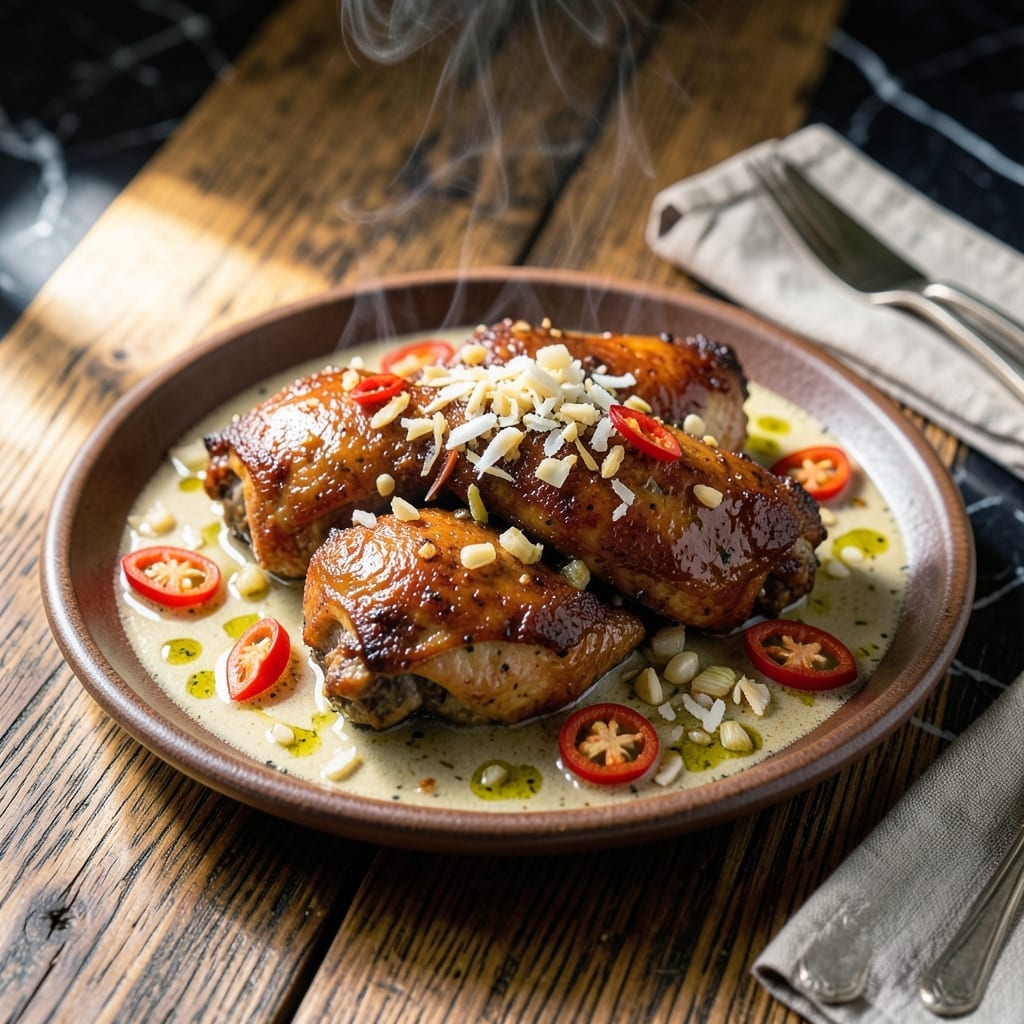
This traditional dish transforms chicken through a slow braising process in rich coconut milk and aromatic spices. The result is tender meat coated in a thick, deeply flavorful sauce that clings to every bite.
I’ve refined this method to balance authentic technique with home kitchen practicality. The key lies in patient simmering, allowing the coconut to reduce and the spices to meld into a complex, caramelized coating.
The dish delivers restaurant-quality depth with ingredients you can find at most grocery stores. Each step builds layers of flavor, from the initial spice paste to the final reduction.
Serve this with steamed rice to soak up every drop of the velvety sauce. The aroma alone will transport you straight to Southeast Asia.
Ingredients for Indonesian Chicken Rendang
Rich coconut milk and bold spices transform chicken into this deeply flavorful dish.
| Ingredient | Amount | Notes |
|---|---|---|
| Boneless Chicken Thighs 🍗 | 2 lb | Skin-on for richer flavor |
| Coconut Milk 🥥 | 2 cans | Full-fat for creaminess |
| Shallots 🧅 | 8 whole | Peeled and roughly chopped |
| Garlic Cloves 🧄 | 6 cloves | Peeled and minced |
| Fresh Ginger 🌿 | 2 tbsp | Peeled and grated |
| Fresh Galangal 🌿 | 1 tbsp | Peeled and grated, or substitute ginger |
| Lemongrass Stalks 🌿 | 2 whole | Bruised and cut into 2-inch pieces |
| Red Chilies 🌶️ | 4 whole | Seeds removed for less heat |
| Turmeric Powder 🌿 | 1 tsp | Ground, for golden color |
| Coriander Powder 🌿 | 1 tbsp | Ground, for earthy depth |
| Cumin Powder 🌿 | 1 tsp | Ground, for warmth |
| Palm Sugar 🍯 | 2 tbsp | Or substitute brown sugar |
| Fish Sauce 🫒 | 2 tbsp | Or substitute soy sauce for vegetarian |
| Kaffir Lime Leaves 🍃 | 4 whole | Fresh or frozen, torn |
| Salt 🧂 | 1 tsp | Adjust to taste |
Chicken thighs are non-negotiable here—they stay juicy through the long braise. Boneless, skin-on from Whole Foods or your butcher works best, but skinless is fine. Coconut milk needs to be full-fat; light versions won’t give you that luscious, caramelized sauce. For galangal and lemongrass, Asian markets have the freshest, but most supermarkets carry them frozen now.
No galangal? Double the ginger. Missing kaffir lime leaves? Lime zest plus a bay leaf gets you 80% there. Fish sauce can be soy sauce or tamari for a vegetarian twist. Palm sugar is traditional, but brown sugar works. If you can’t find fresh chilies, red pepper flakes or sriracha in a pinch (adjust to taste).
The sauce thickens as it cools, so it’ll be even better the next day. Keeps 4-5 days in the fridge, freezes for 3 months. Always reheat gently to keep that velvety texture intact.
Why You’ll Love This Recipe
- One Pot Wonder: I toss everything in a single pot and let the coconut milk and spices work their magic.
- Deeply Satisfying: The slow-simmered shallots, garlic, and ginger create layers of flavor that stick to the chicken.
- Meal Prep Hero: It reheats beautifully, so I make a big batch for lunches all week.
- Budget Stretcher: Boneless thighs stay juicy and affordable, and a little goes a long way with the rich sauce.
Step-by-Step Instructions for Indonesian Chicken Rendang
This method delivers rich, tender chicken with a complex coconut-spice sauce every time.
Step 1: Prepare the Spice Paste Base
In a food processor, combine the 8 whole Shallots, 6 cloves Garlic Cloves, 2 tbsp Fresh Ginger, and 1 tbsp Fresh Galangal. Pulse until finely minced, scraping down the sides as needed. The mixture should form a thick, fragrant paste.
Add the 4 whole Red Chilies, 1 tsp Turmeric Powder, 1 tbsp Coriander Powder, and 1 tsp Cumin Powder to the processor. Pulse again until fully incorporated and smooth. This spice blend is the foundation of your rendang’s deep flavor profile.
Step 2: Build the Coconut Braising Liquid
Heat a large Dutch oven over medium heat. Add the spice paste and cook for 5-7 minutes, stirring frequently, until the mixture darkens slightly and the raw aroma mellows. This step develops the base flavors before adding the liquids.
Pour in the 2 cans Coconut Milk, 2 tbsp Fish Sauce, 2 tbsp Palm Sugar, and 1 tsp Salt. Stir well to combine. Add the 2 whole Lemongrass Stalks and 4 whole Kaffir Lime Leaves, tearing the leaves slightly to release their citrusy aroma.
Step 3: Braise the Chicken to Perfection
Add the 2 lb Boneless Chicken Thighs to the pot, ensuring they’re mostly submerged in the coconut mixture. Bring to a gentle simmer, then reduce heat to medium-low. Cover and cook for 30 minutes, stirring occasionally.
After 30 minutes, uncover and continue simmering for another 30-40 minutes, stirring more frequently as the sauce reduces. The chicken is done when it’s fall-apart tender and the sauce has thickened to a rich, glossy consistency that coats the back of a spoon.
Step 4: Reduce to Ideal Consistency
Once the chicken is cooked through, increase heat to medium and continue cooking uncovered for 10-15 minutes. Stir constantly during this phase to prevent sticking as the sauce reduces further.
You’ll know it’s ready when the sauce has darkened to a deep brown and clings thickly to the chicken. The oil from the coconut milk may begin to separate slightly at the edges—this is normal and adds to the dish’s richness. Remove the lemongrass stalks before serving.
Pro Tips For Making Indonesian Chicken Rendang
- Brown the Chicken First: Sear the boneless thighs in batches until deeply browned—about 4-5 minutes per side. I learned this the hard way: skipping this step leaves the rendang pale and less flavorful.
- Toast the Spices: Cook the shallots, garlic, and ginger paste in the coconut milk for 8-10 minutes until the oil separates. This builds the base flavor that defines rendang.
- Simmer Low and Slow: Once the sauce reduces, drop the heat to low and let it bubble gently for 1-1.5 hours. Resist the urge to rush—high heat turns the coconut milk bitter.
- Use Full-Fat Coconut Milk: Skip the light versions; the fat in full-fat coconut milk carries the spices and thickens properly. My grandmother swore by this, and she was right.
Wine and Beer Pairings for These Flavors
Wine Pairings
An off-dry Riesling from Germany or Alsace balances the dish’s richness with bright acidity and a touch of sweetness. I love Dr. Loosen Blue Slate—its stone fruit notes complement the coconut beautifully. 🍷
Bold Whites
A Viognier with its floral aromatics and full body stands up to the spice complexity. Try Yalumba Eden Valley for peach and apricot notes that mirror the palm sugar’s caramelization.
Beer Pairings
A crisp German Pilsner like Warsteiner cleanses the palate between bites. The light body and subtle bitterness cut through the coconut’s creaminess without overwhelming the spices. 🍺
Wheat Beers
A Hefeweizen with banana and clove esters enhances the dish’s aromatic depth. I recommend Weihenstephaner—its effervescence refreshes while the flavors harmonize.
Non-Alcoholic
For a non-alcoholic option, try ginger beer with lime. The spicy kick and citrus notes echo the galangal and lime leaves. Fever-Tree is my go-to brand for bold flavor. ✨
Nutrition Facts
Frequently Asked Questions
Can I use chicken breast instead of thighs?
Thighs are ideal for their fat content, but you can use breasts if you prefer. Reduce cooking time to 20-25 minutes to prevent dryness, and consider brining them first.
How do I store leftovers?
Keep in an airtight container in the fridge for up to 4-5 days. The flavors deepen over time! Reheat gently on the stove with a splash of water.
What if my sauce isn’t thickening?
Uncover and simmer on medium heat for 10-15 minutes, stirring often. If needed, mash a few shallots into the sauce to help it reduce.
Can I make this in a slow cooker?
Yes! Cook on low for 6-7 hours or high for 3-4 hours. Skip the final reduction step, as slow cookers won’t evaporate enough liquid.

- Jollof Rice Sauce Recipe: West African Tomato and Spice Infusion - September 25, 2026
- Japanese Rice Soup Recipe: Umami-Rich Comfort in a Bowl - September 25, 2026
- Homemade Cream Of Rice Recipe: Silk-Smooth Breakfast in Minutes - September 25, 2026