
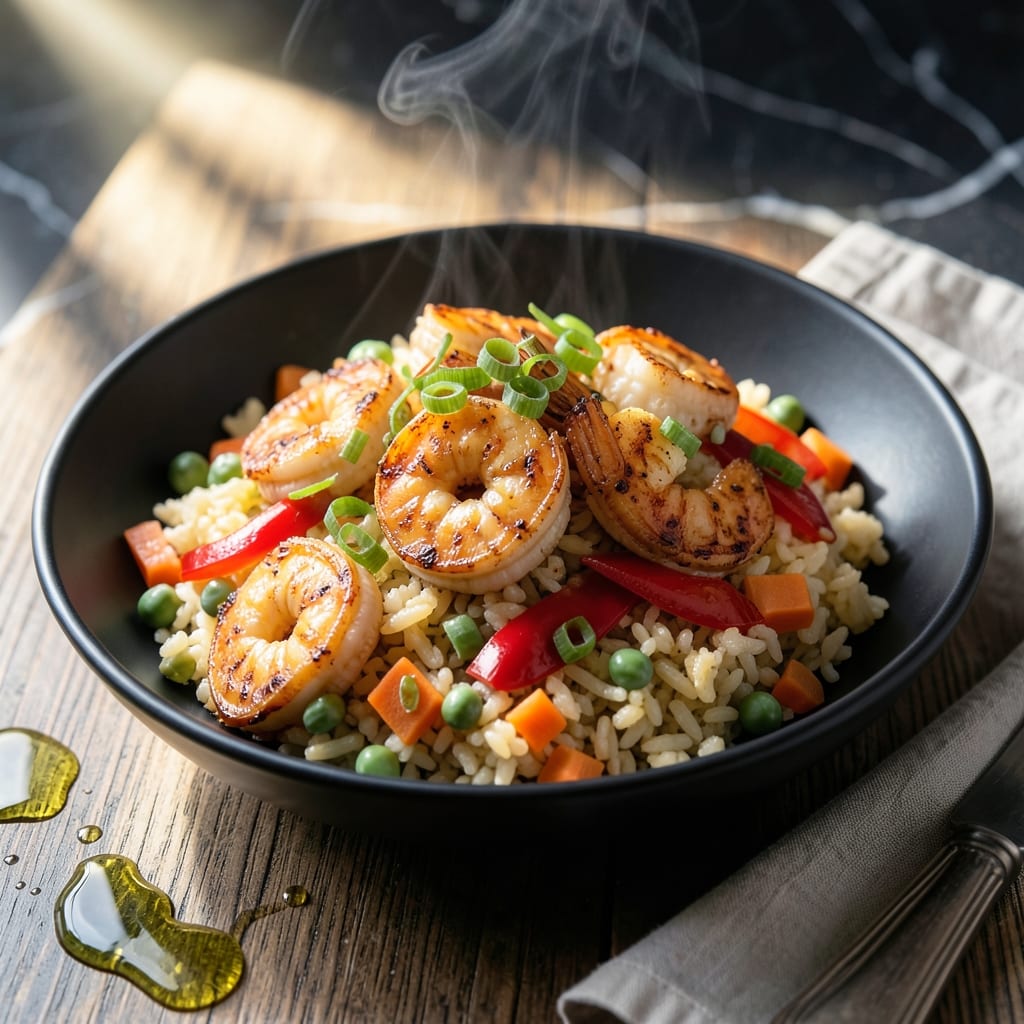
This lightened-up fried rice delivers all the flavor with none of the guilt. I’ve perfected a method that keeps the dish healthy without sacrificing texture or taste.
The secret is using cauliflower rice as a base and loading it with fresh vegetables. Shrimp adds lean protein, while a touch of sesame oil and soy sauce ensures it still tastes indulgent.
Cooking in a wok over high heat gives you that classic fried rice texture—slightly crispy edges and tender grains. Every bite packs in color, crunch, and restaurant-quality flavor.
Ready in 20 minutes, it’s a quick, balanced meal that’s as satisfying as it is nutritious. Let’s get started.
Ingredients for Healthy Shrimp Fried Rice
Fresh cauliflower rice, plump shrimp, and crisp veggies make this dish pop with color and flavor.
| Ingredient | Amount | Notes |
|---|---|---|
| Cauliflower Rice 🥦 | 4 cups | Fresh or frozen, thawed |
| Medium Shrimp 🍤 | 1 lb | Peeled, deveined, tail-off |
| Carrots 🥕 | 2 whole | Medium, diced small |
| Green Onions 🧅 | 4 whole | Thinly sliced, whites and greens separated |
| Red Bell Pepper 🌶️ | 1 whole | Diced into small cubes |
| Frozen Peas 🌱 | 1 cup | Thawed under running water |
| Large Eggs 🥚 | 2 whole | Lightly beaten |
| Low-Sodium Soy Sauce 🫒 | 3 tbsp | Or tamari for gluten-free |
| Sesame Oil 🫒 | 1 tbsp | Toasted variety preferred |
| Garlic Cloves 🧄 | 3 cloves | Minced finely |
| Fresh Ginger 🌿 | 1 tbsp | Grated or minced |
| Neutral Cooking Oil 🫒 | 2 tbsp | Avocado or vegetable oil |
| Salt 🧂 | ½ tsp | Kosher or sea salt |
| Black Pepper 🌶️ | ¼ tsp | Freshly ground |
The shrimp is the star here—wild-caught from Whole Foods or Costco is my go-to (thaw in cold water if frozen). Cauliflower rice works fresh or frozen; Trader Joe’s has great pre-riced options. For the veggies, grab whatever looks freshest at the market. The red bell pepper adds sweetness and crunch, but swap in snap peas or broccoli if that’s what you’ve got.
No shrimp? Chicken or tofu works in a pinch, though you’ll lose the pescatarian angle. Out of sesame oil? Toasted peanut oil gives a similar depth. Low-sodium soy sauce is key—regular can overpower everything. If you’re gluten-free, tamari is the perfect swap. The ginger and garlic are non-negotiable though—they build that restaurant-quality base.
Eat it fresh for the best texture—leftovers keep 3-4 days in the fridge. Reheat in a wok or skillet to bring back the crisp. Freezing isn’t ideal (cauliflower gets mushy), but you can prep the veggies ahead to save time. Always cook the shrimp last, as it overcooks fast.
Why You’ll Love This Recipe
- One Pan Meal: I love that everything—shrimp, cauliflower rice, and veggies—cooks together in one pan, so cleanup is a breeze.
- Umami Bomb: The shrimp and carrots soak up the garlic and soy sauce in a way that makes every bite ridiculously good.
- Weeknight Hero: Honestly, it’s my go-to for busy evenings when I need something healthy on the table in under 25 minutes.
- Budget Stretcher: A little shrimp goes a long way here, and cauliflower rice keeps it light on the wallet without skimping on flavor.
Step-by-Step Instructions for Shrimp Fried Rice
Here’s the method. Straightforward, tested, works every time.
Step 1: Prep and Sear the Shrimp
Pat the 1 lb Medium Shrimp dry with paper towels and season with 0.5 tsp Salt and 0.25 tsp Black Pepper. Heat 1 tbsp of the Neutral Cooking Oil in a large skillet or wok over medium-high heat until shimmering. Add the shrimp in a single layer—don’t overcrowd the pan.
Cook undisturbed for 1-2 minutes until the undersides turn opaque and pink. Flip and cook for another 1 minute until just cooked through. Transfer to a plate and set aside. The shrimp will finish cooking when added back to the dish later.
Step 2: Sauté Aromatics and Vegetables
In the same skillet, add the remaining 1 tbsp Neutral Cooking Oil. Toss in the 3 cloves Garlic Cloves and 1 tbsp Fresh Ginger, stirring constantly for 30 seconds until fragrant but not browned. This builds the flavor base—don’t let it burn.
Add the 2 whole Carrots, 1 whole Red Bell Pepper, and the white parts of the 4 whole Green Onions. Stir-fry for 4-5 minutes until the vegetables soften slightly but retain a crisp bite. Stir in the 1 cup Frozen Peas and cook for another 1 minute to heat through.
Step 3: Scramble Eggs and Combine with Cauliflower Rice
Push the vegetables to one side of the skillet and pour in the 2 whole Large Eggs. Scramble quickly with a spatula for 30-45 seconds until just set but still slightly runny. Immediately add the 4 cups Cauliflower Rice, breaking up any clumps with your spatula.
Drizzle the 1 tbsp Sesame Oil and 3 tbsp Low-Sodium Soy Sauce over the cauliflower rice. Toss everything together for 2-3 minutes until the cauliflower rice is heated through and begins to take on a light golden color. The rice should be tender but still have a slight bite.
Step 4: Finish with Shrimp and Green Onions
Return the cooked 1 lb Medium Shrimp to the skillet along with the green parts of the 4 whole Green Onions. Stir-fry for 1-2 minutes until everything is heated through and the shrimp are fully cooked. Taste and adjust seasoning if needed—this is your final chance to balance the flavors.
The cauliflower rice should be tender with a slight bite, the shrimp should be pink and opaque throughout, and the vegetables should retain some crispness. Serve immediately while hot, garnished with extra green onions if desired.
Pro Tips For Making Healthy Shrimp Fried Rice
- Dry Your Shrimp: Pat the shrimp completely dry with paper towels before cooking—this guarantees a good sear instead of steamed, rubbery pieces. I learned this the hard way after my first three batches came out soggy.
- Pre-Cook the Cauliflower: Sauté the cauliflower rice for 2-3 minutes first, then set it aside. This prevents it from turning mushy when you add it back with the shrimp and veggies.
- Skip the Crowding: Cook the shrimp in a single layer with space between each piece. Resist the urge to dump them all in at once, or they’ll steam instead of brown.
- Use Cold Rice: If you’re using leftover cauliflower rice, make sure it’s cold straight from the fridge. Freshly cooked or warm rice turns to mush in the wok—sounds weird, but it works.
Health Benefits of These Flavors
Low-Calorie Champion
By swapping white rice for cauliflower rice, this dish slashes calories to about 250 per serving while keeping the texture satisfying. The shrimp adds 24 grams of lean protein per serving, making it filling without the fat of traditional fried rice. 💪
Vitamin-Rich Veggies
The colorful veggies pack a nutritional punch. Red bell pepper delivers over 100% of your daily vitamin C, while carrots provide beta-carotene. Peas add fiber and plant-based protein, making every bite work for your health.
Heart-Healthy Fats
Sesame oil and shrimp contain healthy unsaturated fats that support heart health. The 1 tbsp sesame oil provides antioxidants like sesamol, while shrimp offers omega-3s. Together they create a balanced, heart-smart meal.
Low-Sodium Swap
Using low-sodium soy sauce keeps the flavor bold but reduces sodium by 40% compared to regular. At just 500mg per serving, this version lets you enjoy the taste without the guilt. Your blood pressure will thank you.
Fiber Boost
Cauliflower rice and the medley of vegetables provide about 8 grams of fiber per serving. This aids digestion and helps you feel full longer. The fiber also helps stabilize blood sugar levels after eating. 🌱
Rich in Antioxidants
Garlic, ginger, and bell peppers are all packed with antioxidants. These compounds combat oxidative stress and inflammation in your body. Eating this dish regularly can contribute to long-term health benefits.
Nutrition Facts
Frequently Asked Questions
Can I use regular rice instead of cauliflower?
Yes, but use 1 cup cooked brown rice for a healthier option. It has more fiber than white rice. Keep in mind this will increase the calorie count significantly.
How do I prevent soggy fried rice?
Cook over medium-high heat and avoid overcrowding the pan. Use thawed, well-drained cauliflower rice to remove excess moisture. Stir-fry in batches if needed.
What’s the best way to thaw frozen shrimp?
Place frozen shrimp in a colander under cold running water for 5-10 minutes. Alternatively, submerge in cold water in a bowl for 15-20 minutes. Never thaw at room temperature.
Can I make this ahead of time?
Best served fresh, but leftovers keep 3-4 days in the fridge. Reheat in a skillet over medium heat to restore texture. Freezing isn’t recommended as it makes cauliflower mushy.

- Indian Jasmine Rice Recipe: Fragrant Basmati-Free Elegance - October 19, 2026
- KFC Rizo Rice Recipe: Copycat Side Dish With Savory Spice Blend - October 19, 2026
- Jeerakasala Rice Recipe: Fragrant Cumin-Infused Kerala Delight - October 19, 2026